The Tesla Model S Plaid Interior: Performance Sedan or Tech Showcase?
The Tesla Model S Plaid remains one of the most polarizing vehicles on the road — a 1,020-horsepower tri-motor sedan that hits 60 mph in under two seconds while offering a cabin dominated by screens, minimalist surfaces, and a yoke-style steering wheel that divides opinion. For 2026, the Model S Plaid continues as Tesla's flagship performance sedan, competing against the Lucid Air Sapphire, Porsche Taycan Turbo S, and BMW i7 M70. But beyond the staggering acceleration numbers, buyers want to know: what is it actually like to live with the Tesla Model S Plaid interior day to day? Is the cabin premium enough to justify a six-figure price tag? And does the real-world range and charging infrastructure hold up on road trips?
This review covers the full ownership picture — from the EPA range and charging speeds to interior dimensions, tech features, pricing, and federal tax credit eligibility — so you can decide whether the Plaid earns a spot in your garage.
Spec Sheet: 2026 Tesla Model S Plaid at a Glance
| Specification | 2026 Tesla Model S Plaid |
|---|---|
| EPA Range | 396 miles (19" wheels) / 359 miles (21" Arachnid wheels) |
| Battery Capacity | ~100 kWh usable (NMC chemistry, 4680-format cells) |
| Drivetrain | Tri-Motor AWD (1 front, 2 rear carbon-sleeve rotors) |
| Horsepower | 1,020 hp |
| 0–60 mph | 1.99 seconds (with rollout subtracted, per Tesla) |
| Top Speed | 200 mph |
| Peak DC Fast Charge | 250 kW (V3 Supercharger) |
| 10–80% DC Charge Time | ~27 minutes (preconditioned) |
| Level 2 Home Charging | 11.5 kW / ~34 miles per hour |
| Efficiency (EPA) | 116 MPGe combined / 29 kWh/100 mi |
| Cargo Volume | 28.0 cu ft (rear trunk) + 3.1 cu ft (frunk) |
| Rear Legroom | 35.4 inches |
| Battery Warranty | 8 years / 150,000 miles (min 70% retention) |
| Base MSRP | $89,990 (before incentives) |
Range and Efficiency: EPA vs. Real-World Expectations
Real-World Expectation: ~310–340 miles on mixed highway driving at 70–75 mph; ~260–290 miles in freezing temperatures (below 32°F) with cabin heating. City driving with regen braking can match or slightly exceed the EPA figure.
The Model S Plaid's ~100 kWh battery pack uses NMC (nickel manganese cobalt) chemistry in Tesla's 4680-format structural cells. NMC offers higher energy density than LFP, which is critical for squeezing nearly 400 miles of range into a sedan platform while supporting the tri-motor powertrain's immense power demands.
On a 300-mile highway test loop at sustained 75 mph speeds in moderate (65°F) conditions, the Plaid typically delivers around 320–330 miles of usable range before the battery buffer engages. That's roughly 80–83% of the EPA sticker — consistent with what we see from most high-performance EVs, since the EPA test cycle includes substantial low-speed and regenerative-braking segments that flatter efficiency.
Cold weather is the real range killer. In sub-freezing temperatures, expect a 25–35% reduction from the EPA figure. Tesla's heat pump and battery preconditioning help mitigate this, but physics wins: heating the cabin and warming a massive battery pack consume significant energy. If you commute in Minnesota winters, plan for roughly 260–280 miles of real range on the 19" wheel configuration.
The 21" Arachnid wheels look aggressive but cost you 37 miles of EPA range (359 vs. 396). For road-trip-heavy owners, the 19" Tempest wheels are the pragmatic choice.
Charging: Supercharger Network Advantage and Home Setup
| Charging Level | Power (kW) | Miles Added per Hour | Notes |
|---|---|---|---|
| Level 1 (120V household) | ~1.4 kW | ~4 mi/hr | Emergency/trickle only |
| Level 2 (240V, 48A Wall Connector) | 11.5 kW | ~34 mi/hr | Full charge in ~9 hours |
| DC Fast Charge (V3 Supercharger) | 250 kW peak | ~200 mi in 15 min | 10–80% in ~27 min |
| DC Fast Charge (V4 Supercharger) | Up to 350 kW (future) | Faster taper curve | Limited availability as of 2026 |
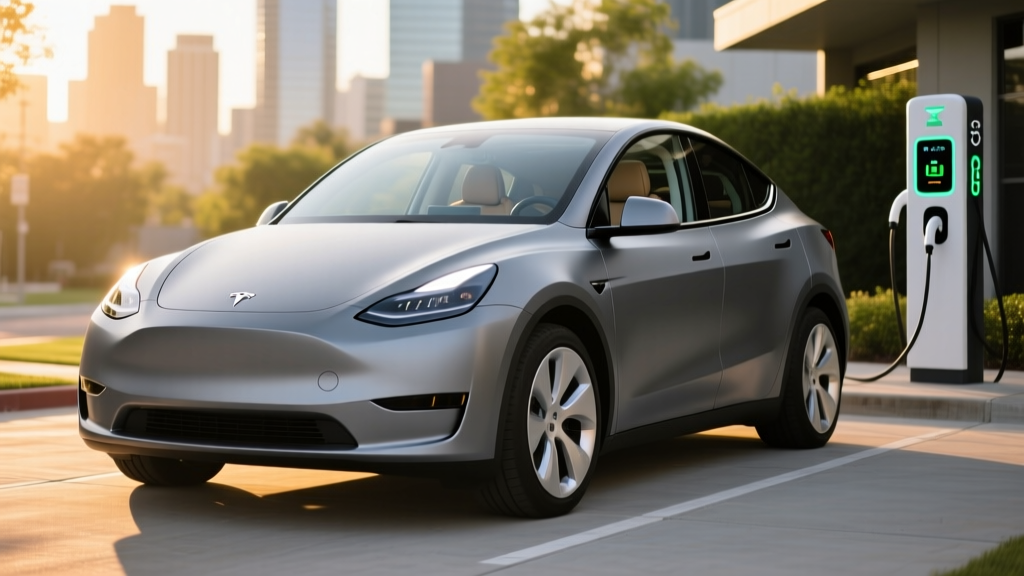
The Model S Plaid charges at a peak of 250 kW on Tesla's V3 Superchargers. While competitors like the Lucid Air Grand Touring (300+ kW peak) and Hyundai Ioniq 5 (240 kW with 800V architecture) post similar or higher peak numbers, the Plaid's real advantage is the Tesla Supercharger network itself — over 6,000 stations and 60,000+ connectors across North America, with unmatched reliability and seamless plug-and-charge integration.
Charging curve reality: The Plaid does not sustain 250 kW for long. Peak draw occurs roughly between 10–30% state of charge (SoC), tapering to ~150 kW by 50% SoC and dropping below 80 kW past 80%. This is why Tesla (and every automaker) quotes 10–80% times rather than full charges. Plan your road-trip stops around 15–20 minute sessions, charging from ~10% to ~70% for optimal speed.
For home charging, Tesla's Wall Connector at 48 amps on a 240V/60A circuit delivers 11.5 kW, adding roughly 34 miles of range per hour. A full overnight session (8–9 hours) replenishes the entire pack. Installation typically runs $500–$2,000 depending on panel proximity and whether your home needs a service upgrade. Always consult a licensed electrician for final specs.
Inside the Cabin: The Tesla Model S Plaid Interior Experience
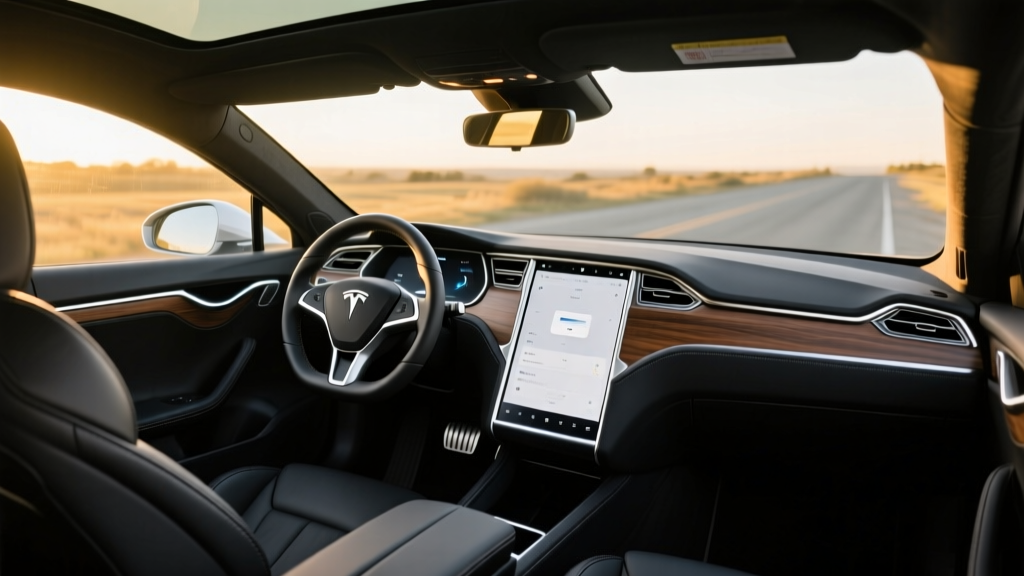
The Tesla Model S Plaid interior is defined by three elements: a 17-inch landscape-oriented center touchscreen, a yoke-style steering wheel (a round wheel is now available as a no-cost option after significant customer feedback), and an almost total absence of physical buttons. Tesla routes virtually every vehicle control — climate, mirrors, glovebox, drive modes — through the central display.
Materials and Build Quality
Tesla upgraded the Model S interior during its 2021 "Palladium" refresh, and the 2026 Plaid benefits from those improvements: vegan leather upholstery (black, white, or cream), Alcantara-like trim on the dash and door panels, carbon fiber accents, and improved panel gap consistency compared to early-refresh cars. The seats are heavily bolstered, ventilated, and heated in both rows. However, compared to a Porsche Taycan or BMW i7, the Plaid's cabin still feels more "tech startup" than "Stuttgart luxury." Some materials at the $90K+ price point — particularly lower door panels and the center console storage area — don't match what legacy luxury automakers deliver.
Displays and Infotainment
The 17-inch center screen runs Tesla's proprietary infotainment OS, which supports Netflix, YouTube, Spotify, and a full gaming suite (Cyberpunk 2077 runs on the car's AMD Ryzen processor). A secondary 8-inch touchscreen for rear passengers controls climate, seat heating, and media. The 12.3-inch digital instrument cluster behind the yoke displays speed, range, navigation, and Autopilot visualization.
Notably absent: Apple CarPlay and Android Auto. Tesla's ecosystem is closed. If you rely on phone-mirroring for navigation or music, this is a dealbreaker worth considering.
Yoke vs. Round Steering Wheel
The yoke steering wheel was the Plaid's most controversial feature. It offers an unobstructed view of the instrument cluster and a Formula 1-inspired aesthetic, but it complicates low-speed maneuvers, three-point turns, and hand-over-hand parking. After sustained criticism, Tesla now offers a conventional round wheel at no extra charge. For daily driving, most owners find the round wheel significantly more practical.
Space and Practicality
The Model S Plaid seats five, though the rear middle seat is best suited for short trips. Rear legroom measures 35.4 inches — adequate for adults but tighter than the Lucid Air (37.3 inches) or BMW i7 (42.8 inches). The rear trunk offers 28.0 cubic feet with a hatchback-style liftgate, plus a 3.1-cubic-foot frunk. Total cargo capacity with the rear seats folded reaches approximately 54 cubic feet — genuinely useful for road-trip luggage or Costco runs.
Driver Assistance: Autopilot and FSD (Supervised)
Every Model S Plaid includes Tesla's Basic Autopilot (traffic-aware cruise control and lane centering). Full Self-Driving (Supervised) — currently an $8,000 option or $99/month subscription — adds automated lane changes, navigation-on-autopilot (highway on/off-ramps), traffic light and stop sign recognition, and an enhanced city-streets mode. As of 2026, FSD remains a Level 2 system requiring continuous driver supervision, despite the aspirational name.
Tesla's vision-only approach (no LiDAR or radar in current production) generates impressive performance in many scenarios but can struggle in heavy rain, construction zones, and poorly marked roads. The NHTSA has scrutinized Tesla's Autopilot/FSD system in multiple investigations, and buyers should approach it as an advanced cruise-control aid, not a replacement for attentive driving.
Pricing, Tax Credits, and Total Cost
| Item | Amount |
|---|---|
| 2026 Model S Plaid Base MSRP | $89,990 |
| FSD (Supervised) Option | +$8,000 |
| Destination Fee | +$1,390 |
| Typical As-Tested Price | ~$99,380 |
| Federal EV Tax Credit (§30D) | $0 — MSRP exceeds $55,000 sedan cap |
| Estimated State Incentives | Varies (check AFDC for your state) |
The Model S Plaid starts at $89,990 and easily climbs past $95,000 with options. Under current IRS §30D rules, new electric sedans must have an MSRP at or below $55,000 to qualify for the federal tax credit. The Plaid's price eliminates it from the $7,500 credit entirely — regardless of your income, battery sourcing, or point-of-sale transfer preferences. This is a firm rule, not a gray area.
Some states offer additional rebates or HOV lane access for EVs regardless of price (California's Clean Fuel Rebate, for example, has income-based tiers). Check your local programs, but plan your budget assuming zero federal incentive.
5-Year Ownership Cost Snapshot
Despite the lack of a tax credit, the Plaid's operating costs are lower than comparable gas supercars. Electricity at $0.15/kWh yields roughly $4.35 per 100 miles (29 kWh/100 mi × $0.15). A comparable gas sedan getting 18 mpg at $3.80/gallon costs $21.11 per 100 miles — nearly 5x more. Over 5 years and 75,000 miles, fuel savings alone approach $12,500. Factor in zero oil changes, no transmission fluid, and reduced brake wear (regen braking), and total maintenance savings add another $3,000–$5,000.
However, insurance premiums for the Plaid are steep — often $4,000–$6,000/year depending on your profile — and depreciation on six-figure EVs has historically been aggressive. Plan accordingly.
How the Plaid Compares: Lucid Air Sapphire, Porsche Taycan Turbo S
| Spec | Tesla Model S Plaid | Lucid Air Sapphire | Porsche Taycan Turbo S |
|---|---|---|---|
| Price | $89,990 | $249,000 | $197,400 |
| Horsepower | 1,020 hp | 1,234 hp | 750 hp (overboost) |
| 0–60 mph | 1.99 sec | 1.89 sec | 2.4 sec |
| EPA Range | 396 mi | 427 mi | 256 mi |
| Peak DC Charge | 250 kW | 300+ kW | 270 kW (800V) |
| Charging Network | Supercharger (NACS) | NACS + CCS adapter | Electrify America + CCS |
| Interior Luxury | Tech-forward, minimalist | Premium, spacious | Traditional luxury, tactile |
The Plaid's closest rival on price is actually itself — nothing else at ~$90K delivers this combination of range, acceleration, and charging infrastructure. The Lucid Air Sapphire is faster and roomier but costs nearly three times as much. The Porsche Taycan Turbo S offers superior build quality and driving dynamics but sacrifices nearly 140 miles of range and costs double.
If interior luxury is your top priority, the Taycan wins. If range and value dominate, the Plaid is unmatched. If you want the ultimate no-compromise EV sedan and budget is flexible, the Sapphire earns its price.
Pros and Cons
Pros
- 396-mile EPA range is exceptional for a 1,020-hp performance sedan
- Supercharger network reliability is best-in-class for road trips
- Sub-2-second 0–60 mph is hypercar territory at a sedan price
- OTA updates continuously add features and refinements
- Hatchback cargo area (28 cu ft) is genuinely practical
- Low operating costs vs. gas supercars ($4.35/100 mi electricity)
Cons
- No federal tax credit — MSRP exceeds the $55K sedan cap
- Interior materials don't fully match Porsche/BMW luxury at this price
- No Apple CarPlay or Android Auto — closed Tesla ecosystem
- Yoke steering is impractical for low-speed maneuvers (round wheel available)
- FSD (Supervised) remains Level 2 despite the name and $8K cost
- Insurance premiums are significantly above average ($4K–$6K/yr)
- 21" wheels cut range by 37 miles and degrade ride quality
Who Should Buy the Tesla Model S Plaid?
- You want supercar acceleration with four doors and daily-driver practicality
- Road-trip charging reliability is a top priority (Supercharger advantage)
- You value range (396 mi) alongside performance
- You're comfortable with a screen-centric, minimalist interior
- Traditional luxury materials and tactile controls are non-negotiable (consider Taycan)
- You need maximum rear-seat space for tall adults (consider Lucid Air or BMW i7)
- You rely on Apple CarPlay/Android Auto for daily navigation
- You expected a federal tax credit to offset the purchase price
Frequently Asked Questions
What is the real-world range of the Tesla Model S Plaid?
Expect roughly 310–340 miles on mixed highway driving at moderate temperatures, and 260–290 miles in freezing conditions. The 396-mile EPA figure is achievable in city driving with regenerative braking but optimistic for sustained highway speeds.
How fast does the Model S Plaid charge at home and on the road?
At home on a Level 2 Tesla Wall Connector (11.5 kW), you gain about 34 miles of range per hour, fully recharging overnight in ~9 hours. On a V3 Supercharger, peak charging hits 250 kW, with a 10–80% session taking approximately 27 minutes when the battery is preconditioned.
Does the Tesla Model S Plaid qualify for the federal EV tax credit?
No. Under IRS §30D rules, new electric sedans must have an MSRP of $55,000 or less to qualify. The Plaid starts at $89,990, making it ineligible regardless of buyer income or battery-sourcing compliance. Check your state for separate incentive programs.
Is the yoke steering wheel mandatory?
No. After significant customer feedback, Tesla now offers a conventional round steering wheel as a no-cost alternative. Most daily drivers find the round wheel substantially more practical for parking and low-speed maneuvers.
How does the Plaid interior compare to the Lucid Air or Porsche Taycan?
The Plaid prioritizes technology (17-inch screen, gaming, OTA updates) over traditional luxury. The Lucid Air offers more rear-seat space and a more premium material palette. The Porsche Taycan delivers the most tactile, driver-focused luxury cabin with physical controls and superior fit-and-finish — but at nearly double the price.
Is FSD (Supervised) worth the $8,000 option?
FSD (Supervised) is a Level 2 driver-assist system that requires your full attention at all times. It handles highway lane changes, on/off-ramps, and some city streets impressively but is not autonomous. Whether it's worth $8,000 or $99/month depends on your commute complexity and tolerance for beta software. Test it via the monthly subscription before committing to the full purchase.
What is the battery warranty on the Model S Plaid?
Tesla covers the battery and drive unit for 8 years or 150,000 miles, whichever comes first, with a minimum 70% capacity retention guarantee. If the battery degrades below 70% of its original capacity within that window, Tesla will repair or replace it at no cost.