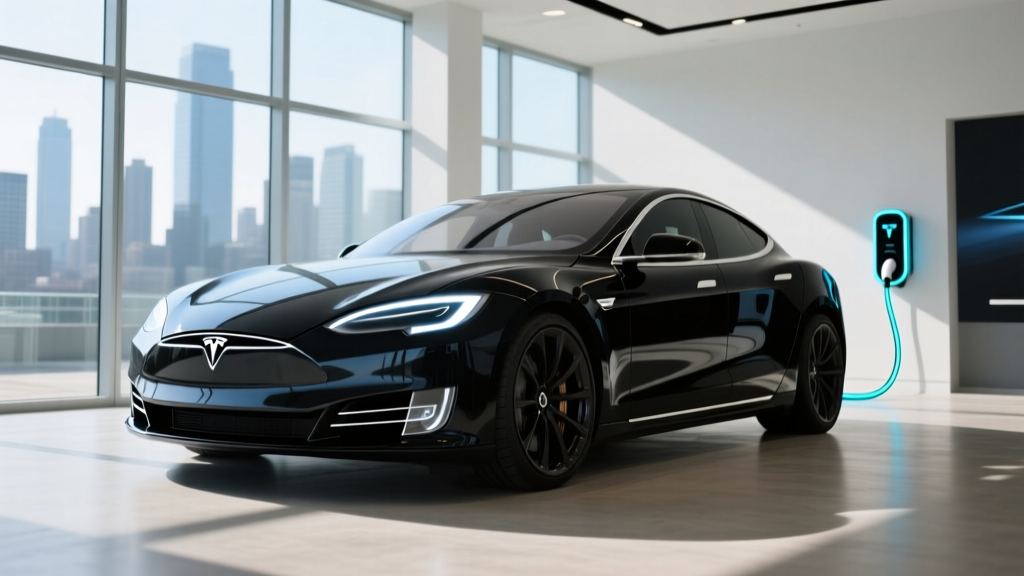
If you search for the fastest Tesla model you can actually buy today, the answer is unambiguous: the Tesla Model S Plaid. With 1,020 horsepower and a factory-claimed 1.99-second 0–60 mph time, it remains the quickest-accelerating production sedan Tesla sells — and one of the quickest cars on the road at any price. But brute acceleration is only part of the ownership equation. This review breaks down the 2026 Model S Plaid's real-world range, charging behavior, daily practicality, and whether its six-figure price still makes sense against rising competitors.
EPA estimated range: 396 miles (19-inch wheels). In mixed highway driving at 70–75 mph, expect approximately 320–345 miles. In sub-freezing winter conditions, range can drop to 260–290 miles depending on cabin heat usage and preconditioning habits. The 21-inch Arachnid wheels reduce EPA range to roughly 359 miles.
Performance: Why It's the Fastest Tesla You Can Buy
The Model S Plaid uses a tri-motor all-wheel-drive powertrain — one motor on the front axle and two on the rear — producing a combined 1,020 horsepower and an estimated 1,050 lb-ft of torque. Tesla's official 0–60 mph claim is 1.99 seconds (with rollout subtracted). Independent testing by outlets like MotorTrend and Car and Driver has verified 0–60 times in the 2.1–2.3 second range under real-world conditions, which still places the Plaid among the fastest production cars ever tested.
Top speed is electronically limited to 200 mph (with the optional carbon-ceramic brake package). The quarter-mile passes in approximately 9.2 seconds at around 152 mph. For context, that puts the four-door Plaid in hypercar territory alongside vehicles costing three to five times as much.
The dual-motor (non-Plaid) Model S Long Range produces 670 hp and hits 60 mph in 3.1 seconds — still exceptionally quick, but the Plaid is the definitive answer for anyone specifically shopping for the fastest Tesla model.
| Spec | Value |
|---|---|
| EPA Range (19" wheels) | 396 miles |
| Battery Capacity (usable) | ~95 kWh (NMC chemistry) |
| Drivetrain | Tri-motor AWD |
| Horsepower | 1,020 hp |
| 0–60 mph | 1.99 sec (factory) / ~2.1 sec (independent) |
| Top Speed | 200 mph |
| Max DC Fast Charge | 250 kW (V3 Supercharger) |
| 10–80% DC Charge Time | ~27 minutes |
| Level 2 Home Charge (48A) | ~34 miles/hr at 11.5 kW |
| EPA Efficiency | 120 MPGe combined / 28 kWh/100mi |
| Cargo Volume | 28 cu ft (rear) + 3.1 cu ft (frunk) |
| Base MSRP | $89,990 |
| Battery Warranty | 8 years / 150,000 miles |
Battery, Chemistry, and Efficiency
The Model S Plaid uses an NMC (nickel-manganese-cobalt) lithium-ion battery pack with approximately 95 kWh of usable capacity. Tesla does not publish official pack chemistry for the Plaid trim, but the high energy density required for a 396-mile range in a performance sedan points to an NMC formulation rather than the LFP (lithium iron phosphate) chemistry used in the base Model 3 and Model Y RWD trims.
NMC packs offer higher energy density and better cold-weather performance than LFP, but they are more sensitive to sustained high state-of-charge (SoC). For daily driving, Tesla recommends setting the charge limit to 80–90% and only charging to 100% before long trips. This practice helps minimize long-term degradation.
Efficiency is rated at 120 MPGe combined (approximately 28 kWh per 100 miles) per fueleconomy.gov. That's competitive for a 1,020-hp AWD sedan, though the lighter Model 3 Performance achieves better efficiency at 119 MPGe with far less mass to move. Real-world highway efficiency at sustained 75 mph typically falls between 30–33 kWh/100mi due to aerodynamic drag.
Charging Speed: DC Fast and Home Level 2
The Model S Plaid supports a peak DC fast-charge rate of 250 kW on Tesla V3 Superchargers. In practice, the charging curve peaks near 250 kW at low SoC (around 10–15%) and tapers progressively — dropping to approximately 150 kW by 50% SoC and below 75 kW past 80%. The net result is a 10–80% charge in roughly 27 minutes at a V3 station.
Tesla's V4 Supercharger cabinets, now rolling out across the network, are capable of higher output, but the Model S Plaid's onboard architecture caps at 250 kW. Competitors like the Hyundai Ioniq 5 N and Porsche Taycan Turbo GT can accept 350 kW on compatible chargers, which matters if you frequently use Electrify America or Ionity networks.
| Charging Level | Power | Time (10–80%) | Miles Added per Hour |
|---|---|---|---|
| Level 1 (120V outlet) | ~1.4 kW | ~68 hours | ~3–4 mi/hr |
| Level 2 (240V / 48A Wall Connector) | 11.5 kW | ~8.5 hours | ~34 mi/hr |
| DC Fast (V3 Supercharger) | 250 kW peak | ~27 minutes | ~800+ mi/hr (peak) |
For home charging, the Tesla Wall Connector at 48 amps on a 240V/60A circuit delivers up to 11.5 kW, adding roughly 34 miles of range per hour. A full overnight charge from 20% to 80% takes about 5 hours — more than adequate for most owners. Installation typically costs $500–$1,500 if your electrical panel has capacity, or $2,000–$4,000+ if a panel upgrade to 200A is needed.
The Model S uses the NACS (North American Charging Standard) connector natively, giving it seamless access to Tesla's Supercharger network — widely regarded as the most reliable DC fast-charging infrastructure in the U.S. With adapters, CCS1 charging is also possible at non-Tesla stations.
Pricing, Trims, and Federal Tax Credit Eligibility
The 2026 Tesla Model S Plaid starts at a base MSRP of $89,990 (before destination and options). Common options include:
- Paint colors: $0 (white) to $2,500 (Ultra Red, Midnight Silver)
- 21-inch Arachnid wheels: $4,500 (reduces range to ~359 mi)
- Full Self-Driving (Supervised): $8,000 one-time or $99/month
- Carbon-ceramic brake package: Included (required for 200 mph top speed)
- Yoke or round steering wheel: No-cost choice
A typical as-tested Plaid with premium paint and FSD lands around $98,000–$105,000 before taxes.
| Item | Details |
|---|---|
| Base MSRP (Plaid) | $89,990 |
| Typical As-Tested Price | $98,000–$105,000 |
| Federal §30D Tax Credit | Not eligible — exceeds $55,000 sedan MSRP cap |
| State Incentives | Varies by jurisdiction (check local programs) |
| Estimated 5-Year Fuel Savings vs. Gas Sedan | ~$6,500–$9,000 |
Interior, Cargo, and Daily Practicality
The Model S cabin is minimalist and screen-centric. A 17-inch center touchscreen (tilting, 2200×1300 resolution) controls virtually every vehicle function, from climate to suspension height. A 12.3-inch driver instrument cluster and an 8-inch rear-seat entertainment screen round out the display layout.
Interior materials have improved over prior model years, with ventilated front seats, heated rear seats, and a HEPA air filtration system standard. However, some reviewers note that panel gaps and material quality at this price point still lag behind the Porsche Taycan and Mercedes EQS.
Practicality is a genuine strength. The rear hatchback design yields 28 cubic feet of cargo space behind the rear seats (expanding to approximately 65 cu ft with seats folded), plus a 3.1 cu ft front trunk (frunk). Rear legroom measures about 35.4 inches — adequate for adults on longer trips. The Model S also offers a 3,500-pound towing capacity when equipped with the optional tow hitch, unusual for a performance sedan.
Driver Assistance, Tech, and Safety
Standard Autopilot includes Traffic-Aware Cruise Control and Autosteer (lane-centering on marked highways). The optional Full Self-Driving (Supervised) package adds automatic lane changes, Navigate on Autopilot (highway on/off-ramp handling), Autopark, Summon, and traffic-light/stop-sign recognition. FSD has improved significantly in city environments but still requires constant supervision and can make unexpected decisions in construction zones or poorly marked intersections.
The Model S earned a 5-star overall safety rating from NHTSA, with top marks in frontal, side, and rollover crash tests. Standard active safety includes automatic emergency braking, blind-spot monitoring, lane-departure warning, and rear cross-traffic alert.
Ownership Costs, Warranty, and Depreciation
Tesla covers the Model S Plaid battery and drive unit with an 8-year / 150,000-mile warranty (whichever comes first), with a minimum 70% capacity retention guarantee over that period. The limited vehicle warranty is 4 years / 50,000 miles.
Real-world battery degradation data from Tesla fleet analytics suggests the NMC pack in the Model S retains approximately 88–92% capacity after 100,000 miles under normal charging habits. Replacement pack costs, if needed out of warranty, currently range from $12,000–$20,000 depending on labor and pack availability.
Insurance premiums for the Plaid are notably higher than the Long Range trim. Expect annual premiums in the $3,500–$5,500 range depending on your state, driving record, and coverage level — roughly 30–50% more than a comparably priced gas sedan, based on industry data.
Depreciation is a factor: the Model S historically loses approximately 40–50% of its value over 5 years, steeper than the more affordable Model 3 and Model Y. Buyers should factor this into total cost of ownership.
Pros, Cons, and Who Should Buy
- 1.99-sec 0–60 mph — fastest Tesla model available
- 396-mile EPA range is class-leading for a performance sedan
- Access to Tesla Supercharger network (NACS native)
- Practical hatchback cargo and 3,500-lb towing
- Over-the-air updates continuously add features
- $89,990+ starting price with no federal tax credit
- 250 kW max DC charge rate lags 350 kW competitors
- Panel gaps and interior finish trail Porsche/Mercedes at this price
- FSD (Supervised) requires $8,000 extra and full driver attention
- High insurance premiums and steep depreciation
- Choose the Plaid if: You want the fastest Tesla model with real daily usability — a four-door sedan with nearly 400 miles of range, Supercharger access, and enough cargo space for a family road trip.
- Choose the Model S Long Range instead if: You want 402 miles of range and 670 hp (still a 3.1-sec 0–60) and want to save ~$15,000.
- Choose the Porsche Taycan Turbo GT if: Interior quality, chassis dynamics, and 350 kW charging matter more than straight-line acceleration and you can accept shorter range.
- Choose the Lucid Air Sapphire if: You want 1,234 hp, 427 miles of EPA range, and don't mind a smaller service-center network.
Frequently Asked Questions
What is the real-world range of the Tesla Model S Plaid?
The EPA rates the Model S Plaid at 396 miles with 19-inch wheels. In real-world highway driving at 70–75 mph, most owners report 320–345 miles. In freezing temperatures, expect 260–290 miles. The 21-inch wheels reduce EPA range to approximately 359 miles.
How fast does the Model S Plaid charge at home and on the road?
On a Tesla V3 Supercharger (250 kW peak), the Plaid charges from 10% to 80% in approximately 27 minutes. At home on a 48-amp Level 2 Wall Connector (11.5 kW), it adds about 34 miles of range per hour, fully replenishing overnight.
Does the Model S Plaid qualify for the federal EV tax credit?
No. Under current IRS §30D rules, the federal tax credit for sedans is capped at vehicles with an MSRP of $55,000 or less. The Model S Plaid starts at $89,990, making it ineligible. State-level incentives may still apply — check your local jurisdiction.
Is the Model S Plaid worth it versus the Lucid Air Sapphire or Porsche Taycan Turbo GT?
The Plaid wins on price (roughly $40,000 less than the Air Sapphire) and Supercharger network access. The Lucid Air Sapphire offers more power (1,234 hp) and more range (427 mi EPA) but has far fewer service centers. The Porsche Taycan Turbo GT offers superior interior quality, chassis refinement, and 350 kW charging, but less range (around 269 mi EPA for the Turbo GT). Your priorities — acceleration, range, luxury, or charging speed — will determine the best choice.
What battery chemistry does the Model S Plaid use?
The Model S Plaid uses an NMC (nickel-manganese-cobalt) lithium-ion pack with approximately 95 kWh of usable capacity. NMC offers higher energy density than LFP, which is necessary to achieve 396 miles of range in a heavy, high-performance sedan. Tesla recommends daily charging to 80–90% to preserve long-term battery health.
How much does it cost to own a Model S Plaid over 5 years?
Between purchase price, insurance ($3,500–$5,500/year), electricity (~$800–$1,200/year depending on rates and mileage), and maintenance (minimal — tire rotations, cabin filter, wiper fluid), expect 5-year running costs of roughly $25,000–$35,000 beyond the purchase price. Depreciation of $40,000–$50,000 over 5 years is the largest ownership cost. Fuel savings versus a comparable gas V8 sedan offset approximately $6,500–$9,000 over the same period.