Quick Verdict: Still the Performance Sedan Benchmark
The 2025 Tesla Model S Plaid remains one of the most capable electric sedans on the market, combining a 1,020-horsepower tri-motor powertrain with a usable 396-mile EPA range and access to Tesla's Supercharger network. At $89,990 before incentives, it targets buyers who want supercar acceleration without sacrificing daily practicality. But with competitors like the Lucid Air Sapphire and Porsche Taycan Turbo GT closing the gap, the Plaid's value proposition depends heavily on how you weigh raw performance against interior refinement and charging infrastructure.
| Spec | Value |
|---|---|
| EPA Range | 396 miles (19" wheels) / 359 miles (21" wheels) |
| Battery (usable) | ~95 kWh, NMC chemistry |
| Drivetrain | Tri-Motor AWD |
| Horsepower | 1,020 hp |
| 0-60 mph | 1.99 seconds (with rollout) |
| Top Speed | 200 mph (with track package) |
| Peak DC Fast Charge | 250 kW |
| 10-80% DC Charge Time | ~30 minutes |
| Level 2 Home Charge Rate | 11.5 kW (~44 mi/hr) |
| MPGe (combined) | 116 MPGe |
| Efficiency | 29 kWh/100 mi |
| Cargo Volume | 28 cu ft (rear) + ~3 cu ft (frunk) |
| Rear Legroom | 35.4 inches |
| Battery Warranty | 8 years / 150,000 miles |
| Base MSRP | $89,990 |
Range and Efficiency: EPA vs. the Real World
The 2025 Model S Plaid carries a 396-mile EPA estimate when equipped with the standard 19-inch Tempest wheels. Opt for the 21-inch Arachnid wheels, and that drops to 359 miles — a 37-mile penalty for the stickier, wider rubber. According to fueleconomy.gov, the Plaid achieves 116 MPGe combined, translating to roughly 29 kWh per 100 miles driven.
Real-World Range Expectations: On a 70-mph highway cruise in mild (65-75°F) conditions, expect 330-350 miles from the 19" wheel configuration. In freezing temperatures (below 32°F), range can drop 20-30%, yielding 250-290 miles depending on cabin heat usage and whether you precondition the battery. City driving with regenerative braking recovers energy more effectively, often matching or exceeding the EPA figure.
The Plaid's ~95 kWh usable battery uses NMC (nickel manganese cobalt) chemistry, which offers higher energy density than LFP but is more sensitive to sustained 100% states of charge. Tesla recommends daily charging to 80-90% for longevity, reserving 100% for road trips. Over a typical ownership cycle, expect 5-10% degradation in the first 50,000 miles, stabilizing afterward — consistent with NMC pack behavior across the industry.
Charging Speed: Supercharger Network Advantage
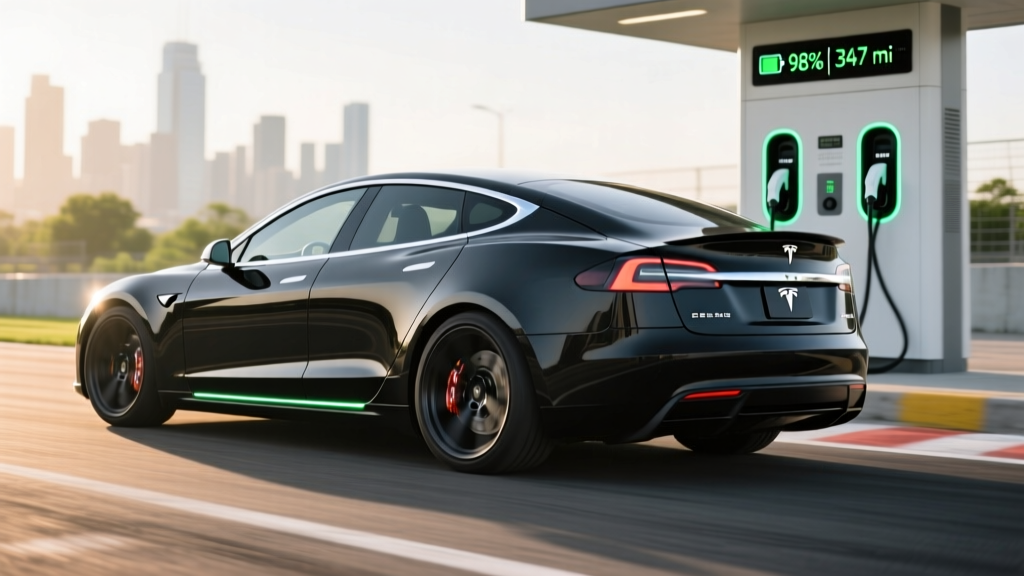
Tesla's proprietary NACS connector and Supercharger network remain the Plaid's strongest infrastructure advantage. The car peaks at 250 kW on V3 Superchargers, though the charge curve tapers significantly above 60% state of charge to protect the battery.
| Charge Level | Power | Speed | Notes |
|---|---|---|---|
| Level 1 (120V) | ~1.4 kW | ~5 mi/hr | Emergency/trickle only |
| Level 2 (240V, 48A) | 11.5 kW | ~44 mi/hr | Home Wall Connector; full charge in ~9 hrs |
| DC Fast (V3 Supercharger) | 250 kW peak | ~200 mi in 15 min | 10-80% in ~30 min; tapers above 60% |
| DC Fast (CCS adapter) | Up to 250 kW | Varies by station | Requires Tesla CCS adapter ($250); works on Electrify America, EVgo, etc. |
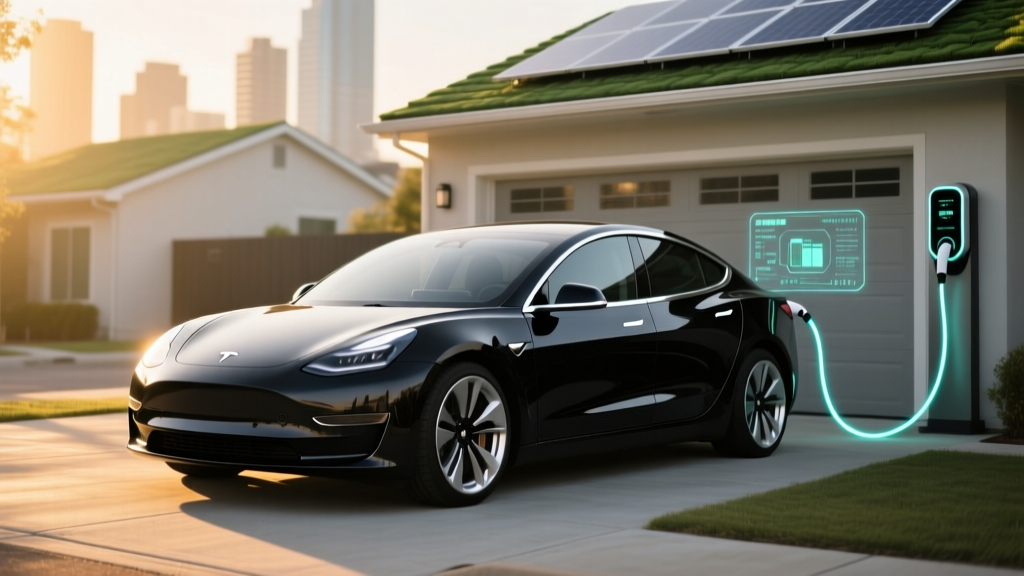
Home charging with Tesla's Wall Connector on a 60-amp circuit delivers the full 11.5 kW, adding roughly 44 miles of range per hour. A full overnight session (8-9 hours) replenishes the battery from near-empty. Installation costs for a 240V/60A circuit typically range from $800 to $2,500 depending on panel proximity and local permitting — always get a quote from a licensed electrician before purchasing equipment.
On the road, preconditioning the battery (navigating to a Supercharger triggers this automatically) is essential for hitting peak charge rates. Without preconditioning, a cold battery may peak at only 50-80 kW, doubling your stop time. The 10-80% charge in roughly 30 minutes is competitive but no longer class-leading — the Hyundai Ioniq 5 and Porsche Taycan with 800V architectures can complete the same session in 18 minutes or less.
Performance: 1,020 Horsepower, Daily Drivable
The tri-motor all-wheel-drive layout puts one motor on the front axle and two on the rear, producing a combined 1,020 horsepower. Tesla's claimed 1.99-second 0-60 mph time (with a 1-foot rollout subtracted) makes it one of the quickest production cars ever built. In independent testing by outlets like Motor Trend, the Plaid has consistently delivered sub-2.1-second runs on prepared surfaces.
Beyond straight-line speed, the Plaid features torque vectoring across the rear motors, an adaptive air suspension with adjustable ride height, and carbon-silicon carbide brakes (standard since the 2023 refresh). The yoke steering wheel remains standard, though a conventional round wheel is now available at no extra charge — a welcome change for buyers who found the yoke impractical for low-speed maneuvers and parking.
Drive modes include Comfort, Sport, and Track. Track mode allows custom torque distribution and stability control settings, but this is a Level 0 performance feature — it does not provide any autonomous driving capability. Tesla's Autopilot and Full Self-Driving (Supervised) are SAE Level 2 driver-assist systems that require continuous driver attention and hands on the wheel.
Interior, Tech, and Cargo Practicality
The 2025 Model S interior centers on a 17-inch touchscreen running Tesla's latest software, a 12.3-inch digital instrument cluster, and a rear-seat 8-inch display for climate and entertainment controls. The infotainment system supports Netflix, YouTube, and gaming while parked, plus over-the-air updates that periodically add new features.
Passenger space accommodates five adults, though the rear middle seat is best suited for children. Rear legroom measures 35.4 inches — adequate for most adults on longer trips but tighter than a Lucid Air (37.6 inches). The 28 cubic feet of rear cargo space (with seats up) expands to roughly 79 cubic feet when the 60/40 rear seats fold flat. The front trunk (frunk) adds approximately 3 cubic feet for charging cables or a small bag.
Build quality has improved since the Fremont factory's 2022-2023 refresh, with tighter panel gaps and higher-grade materials. However, some competitors — notably the Lucid Air and Mercedes EQS — still offer more luxurious interior appointments, including massaging seats, premium audio with more speakers, and more physical switchgear for climate controls.
Pricing, Trims, and Federal Tax Credit Eligibility
The 2025 Model S Plaid starts at $89,990 (including destination). The only other Model S trim is the dual-motor Long Range at $74,990, which offers 402 miles of EPA range but 670 hp. Options on the Plaid are limited: 21-inch Arachnid wheels add $4,500, the yoke-to-round-wheel swap is free, and Full Self-Driving (Supervised) costs $8,000 as a one-time purchase or $99/month.
| Item | Amount |
|---|---|
| Base MSRP (Plaid) | $89,990 |
| Federal §30D Tax Credit | $0 — exceeds $55,000 sedan MSRP cap |
| Typical State Incentives | Varies; check DSIRE for your state |
| As-Tested (21" wheels) | $94,490 |
| Estimated Monthly (72-mo, 6% APR, 10% down) | ~$1,330/mo |
Tax credit reality: The Model S Plaid does not qualify for the $7,500 federal EV tax credit under IRS §30D rules. The law imposes a $55,000 MSRP cap on sedans (and $80,000 on SUVs, vans, and trucks). At $89,990, the Plaid is well above this threshold. Buyer income caps ($150,000 single / $300,000 joint AGI) and battery critical-mineral sourcing rules also apply to eligible vehicles, but the MSRP cap alone disqualifies the Plaid regardless of buyer income.
Ownership Costs and Warranty Coverage
Tesla covers the Model S Plaid's battery and drive unit for 8 years or 150,000 miles, whichever comes first, with a minimum 70% capacity retention guarantee. The basic vehicle limited warranty runs 4 years / 50,000 miles. These terms are standard for the luxury EV segment, though some competitors like Hyundai offer longer basic coverage.
Charging costs vary dramatically by method. Home charging at the national average of $0.16/kWh costs roughly $15.20 to go from 10% to 80%, or about $0.04 per mile. Supercharger rates average $0.30-$0.35/kWh nationally, pushing road-trip fueling to $0.09-$0.10 per mile — still below the $0.14/mile average for a 25-mpg gasoline sedan at $3.50/gallon. Insurance premiums for the Plaid tend to run 25-40% higher than the Long Range variant due to the performance profile and repair costs; expect $3,000-$4,500 annually depending on your location and driving record.
Pros
- Sub-2-second 0-60 mph — hypercar acceleration at sedan pricing
- 396-mile EPA range (19" wheels) is excellent for the performance class
- Tesla Supercharger network — most reliable DC fast-charging infrastructure in the US
- Continuous OTA software updates add features post-purchase
- Practical cargo space (28 cu ft + frunk) for a performance sedan
- Air suspension with adjustable ride height for comfort or track use
Cons
- $89,990 MSRP — no federal tax credit due to sedan MSRP cap
- 250 kW peak DC charge rate trails 800V competitors (Porsche Taycan, Hyundai Ioniq 5)
- Interior materials and rear-seat comfort lag Lucid Air and Mercedes EQS
- Yoke steering (standard) remains polarizing; round wheel now optional
- No Apple CarPlay or Android Auto — Tesla's proprietary system only
- FSD (Supervised) costs $8,000 extra and remains a Level 2 assist system
Who Should Buy the 2025 Model S Plaid?
Choose the Model S Plaid if:
- You want the quickest production sedan available and value straight-line performance above all else
- You road-trip frequently and want access to the Tesla Supercharger network
- You can charge at home and accept ~$90K+ without a federal tax credit
- You prefer Tesla's minimalist tech-forward interior and software ecosystem
Consider the Lucid Air Sapphire if:
- You want comparable performance (1,234 hp, 1.89-sec 0-60) with a more luxurious interior and 427-mile EPA range — at $249,000
Consider the Porsche Taycan Turbo GT if:
- Track handling and 800V charging speed (10-80% in ~18 min at 320 kW) matter more than raw straight-line acceleration
Consider the Model S Long Range if:
- You want 402 miles of range, 670 hp, and a $74,990 starting price — still no tax credit, but $15K less than the Plaid
Frequently Asked Questions
What is the real-world range of the 2025 Tesla Model S Plaid?
In mixed driving at moderate temperatures, owners report 330-360 miles on the 19" wheel configuration. Highway driving at 75+ mph reduces this to roughly 300-330 miles. In sub-freezing weather, expect 250-290 miles due to battery heating demands and increased cabin energy use. The EPA's 396-mile figure assumes a blend of city and highway driving at moderate speeds.
How fast does the Model S Plaid charge at home and on the road?
At home on a Level 2 Wall Connector (11.5 kW), the Plaid adds about 44 miles of range per hour, with a full charge taking roughly 9 hours. On a V3 Supercharger, it peaks at 250 kW and charges from 10-80% in approximately 30 minutes. Using a CCS adapter, it can charge at comparable speeds on Electrify America and other networks, though actual speed depends on station output and battery temperature.
Does the 2025 Model S Plaid qualify for the federal EV tax credit?
No. Under IRS §30D rules, sedans must have an MSRP at or below $55,000 to qualify. The Plaid's $89,990 starting price exceeds this cap. Buyer income limits ($150K single / $300K joint) and battery sourcing requirements also apply, but the MSRP cap alone disqualifies it. Check your state's incentive database at DSIRE for potential local rebates.
Is the Model S Plaid worth it versus the Lucid Air or Porsche Taycan?
The Plaid offers the best value-per-horsepower in its class at roughly $88/hp. The Lucid Air Sapphire is faster and more luxurious but costs $249,000. The Porsche Taycan Turbo GT handles better on track and charges faster (800V architecture), but has less range (~280 miles EPA) and starts around $161,000. For most buyers wanting extreme performance without crossing $100K, the Plaid remains the rational choice.
What is the battery warranty on the Model S Plaid?
Tesla covers the battery and drive unit for 8 years or 150,000 miles, whichever comes first. The warranty guarantees a minimum of 70% capacity retention over that period. If the battery degrades below 70% within the warranty window, Tesla will repair or replace it at no cost. The basic vehicle warranty is 4 years / 50,000 miles.
Is Tesla's FSD (Full Self-Driving) actually self-driving?
No. FSD (Supervised) is an SAE Level 2 driver-assistance system. It can manage steering, acceleration, and braking on highways and some city streets, but the driver must remain fully engaged, monitor the road, and be ready to take over at any time. It is not autonomous driving. Only Level 4 services like Waymo operate without a human driver in defined areas.