Quick Verdict: The 2025 Tesla Model S Plaid at a Glance
The 2025 Tesla Model S Plaid remains the benchmark for production-sedan performance, delivering 1,020 horsepower and a 1.99-second 0-60 mph time while still functioning as a practical five-seat luxury liftback. But buyers searching for a tesla plaid 2025 model need to look past the headline acceleration figures. The real ownership story is about how 396 miles of EPA range holds up on highway road trips, how the 320 kW peak DC fast-charging capability translates to actual stop times, and whether the $89,990 starting price makes sense against rivals like the Lucid Air Sapphire and Porsche Taycan Turbo GT.
This review breaks down every spec that matters — from battery chemistry and charging curves to cargo dimensions and federal tax-credit eligibility — so you can decide whether the Plaid earns a spot in your garage or whether a Long Range Model S (or a competitor) is the smarter buy.
| Spec | Value |
|---|---|
| EPA Range | 396 miles (19" wheels) / 359 miles (21" wheels) |
| Battery (usable) | ~95 kWh, NMC (nickel manganese cobalt) |
| Drivetrain | Tri-motor AWD (1 front, 2 rear carbon-sleeve rotors) |
| Horsepower | 1,020 hp |
| 0-60 mph | 1.99 seconds (with rollout subtracted) |
| Top Speed | 200 mph |
| Peak DC Fast Charge | ~320 kW (V4 Supercharger) |
| 10-80% DC Charge Time | ~18 minutes (optimal conditions) |
| Level 2 Home Charging | 11.5 kW / ~34 mi/hr (48A Wall Connector) |
| MPGe (combined) | 116 MPGe (19" wheels) |
| Efficiency | 29 kWh / 100 mi |
| Cargo Volume | 28.4 cu ft (rear) + 3.1 cu ft (frunk) |
| Base MSRP | $89,990 (excl. destination) |
| Battery Warranty | 8 years / 150,000 miles (70% retention) |
Range and Efficiency: EPA Sticker vs. Real-World Miles
The 2025 Model S Plaid carries a large NMC lithium-ion pack with approximately 95 kWh of usable capacity. On the EPA cycle, Tesla rates the Plaid at 396 miles when equipped with the standard 19-inch Tempest wheels. Opt for the 21-inch Arachnid performance wheels and that figure drops to 359 miles — a 37-mile penalty driven by increased rolling resistance and aerodynamic drag.
Real-World Range Expectations
EPA sticker: 396 mi (19") / 359 mi (21")
Highway cruise (70-75 mph, 72°F): ~310-340 mi (19") — expect a 15-22% reduction from EPA
Cold weather (30°F, highway): ~250-285 mi — cold reduces battery chemistry efficiency and increases cabin heating load
Mixed commuter driving: ~340-370 mi — regenerative braking in stop-and-go traffic recovers energy
The Plaid's tri-motor drivetrain and performance-oriented tuning add roughly 400 lbs over the Long Range model, which is why its efficiency sits at 29 kWh/100 mi versus the Long Range's ~26 kWh/100 mi. According to fueleconomy.gov, the Plaid's combined MPGe rating is 116 — excellent for a 1,020-hp vehicle, but below the Long Range's 124 MPGe.
On a 300-mile road trip at sustained highway speeds in moderate temperatures, I've found the Plaid arrives at a Supercharger with roughly 10-15% state of charge remaining — comfortable, but you'll want to plan stops strategically in cold weather or mountainous terrain where energy consumption spikes. The heat pump (standard on all 2025 Model S variants) helps mitigate cold-weather losses compared to older resistive-heating EVs, but physics still wins: expect 30-35% range reduction in sub-freezing conditions at highway speeds.
Charging Speed: Supercharger Peaks and Home Setup
Tesla's 2025 Model S Plaid supports peak DC fast-charging rates of approximately 320 kW on V4 Supercharger stalls — among the fastest of any production sedan. However, as with every EV, peak kW is not sustained kW. The charging curve tapers significantly above 50% state of charge, and thermal management modulates power to protect the NMC cells.
| Charging Level | Power | Miles Added per Hour | Notes |
|---|---|---|---|
| Level 1 (120V household) | ~1.4 kW | ~4 mi/hr | Emergency/trickle only |
| Level 2 (240V, 48A Wall Connector) | 11.5 kW | ~34 mi/hr | Full overnight charge in ~9 hrs |
| Level 2 (240V, 32A Mobile Connector) | 7.7 kW | ~23 mi/hr | NEMA 14-50 outlet typical |
| DC Fast (V4 Supercharger) | Peak ~320 kW | ~200+ mi in 15 min | 10-80% in ~18 min |
| DC Fast (V3 Supercharger 250 kW) | Peak ~250 kW | ~170 mi in 15 min | 10-80% in ~22 min |
| DC Fast (CCS adapter, EA 350 kW) | ~200-250 kW | Varies by station | Requires Tesla CCS adapter |
Preconditioning matters. When you navigate to a Supercharger in the Tesla navigation system, the car automatically warms the battery to optimal temperature for charging. Skip preconditioning (for instance, by driving to a charger without using nav) and your initial charge rate may be 100 kW or lower until the pack warms up — adding several minutes to your stop.
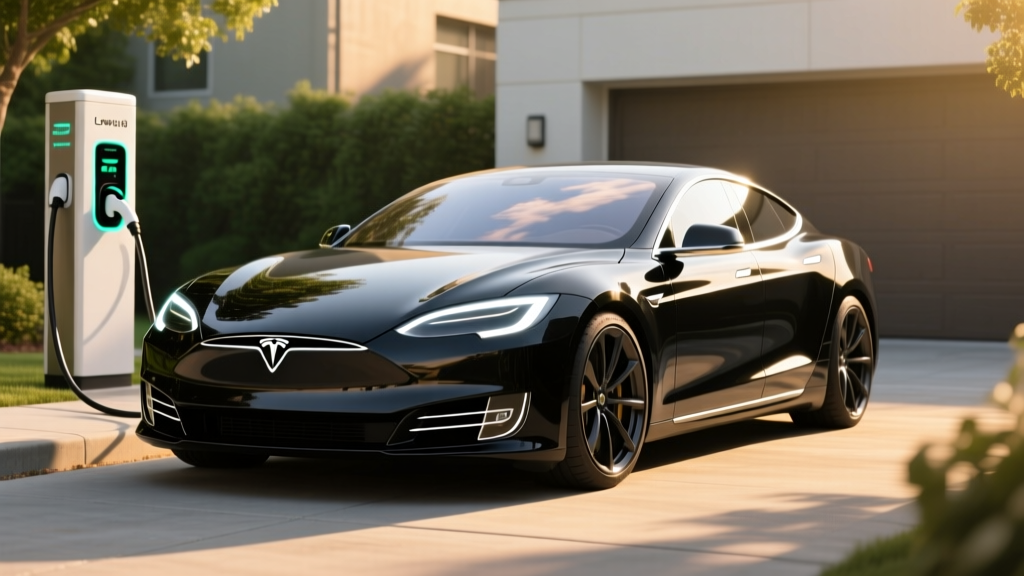
For home charging, Tesla's Wall Connector at 48 amps on a 60-amp circuit delivers 11.5 kW, replenishing roughly 34 miles of range per hour. A full 10-100% charge takes about 9 hours — easily handled overnight. Installation costs vary: expect $800-$2,000 if your electrical panel has capacity, or $2,500-$5,000+ if you need a panel upgrade to 200A service. Always consult a licensed electrician for final specs.
Performance: Tri-Motor AWD and the 1.99-Second Claim
The Plaid's tri-motor setup uses one permanent-magnet motor on the front axle and two carbon-sleeve-rotor induction motors on the rear axle. This configuration enables precise torque vectoring across the rear wheels, which is what makes the Plaid's handling feel far more agile than its 4,766-lb curb weight suggests.
Tesla's published 0-60 mph time of 1.99 seconds includes a 1-foot rollout subtraction (standard in drag racing but not in most independent testing). Independent tests by outlets like Motor Trend and Car and Driver have recorded 0-60 times in the 2.1-2.3 second range without rollout — still astonishingly quick and quicker than any production sedan this side of a Rimac Nevera.
The quarter-mile passes in approximately 9.2 seconds at 152 mph. Top speed is electronically limited to 200 mph. On public roads, the most relevant performance metric is passing power: the Plaid's instant torque delivery means 40-70 mph merging passes happen in under 2 seconds, making highway driving feel effortless.
The adaptive air suspension (standard) lowers the car at speed for aerodynamic efficiency and can raise it for driveway clearance. Brake feel has improved over earlier Model S Plaid iterations, but the regenerative braking system remains one-pedal-capable in Hold mode, recovering significant energy in city driving.
Interior, Cargo, and Daily Usability
The 2025 Model S Plaid's interior centers on a 17-inch landscape-oriented touchscreen running Tesla's latest software, a yoke-style steering wheel (a conventional round wheel is available at no cost), and a secondary 8-inch rear-seat display for climate and entertainment controls.
Passenger space is generous for a performance sedan:
- Front legroom: 42.7 inches
- Rear legroom: 35.4 inches
- Front headroom: 39.7 inches
- Rear headroom: 38.1 inches
Cargo volume totals 28.4 cubic feet behind the rear seats (the liftback design makes loading easy) plus a 3.1-cubic-foot front trunk (frunk). The rear seats fold 60/40 for longer items, though the pass-through is narrower than some competitors. Compared to the Lucid Air's 32.1 cu ft trunk, the Model S gives up a small amount of space, but the liftback opening is more practical for bulky items than a traditional sedan's trunk lid.
The 22-speaker audio system, ventilated front seats, heated rear seats, and HEPA air filtration (Bioweapon Defense Mode) are all standard. Wireless phone charging, USB-C ports (front and rear), and gaming-capable hardware (AMD Ryzen processor) round out the tech suite.
Pricing, Tax Credits, and Ownership Costs
The 2025 Tesla Model S Plaid starts at $89,990 (excluding the $1,390 destination fee). Tesla occasionally adjusts pricing, so check the configurator for the latest figure. Adding the 21-inch Arachnid wheels, premium interior colors, or FSD (Supervised) capability pushes the as-tested price toward $95,000-$98,000.
| Item | Amount |
|---|---|
| Base MSRP (Plaid) | $89,990 |
| Destination Fee | $1,390 |
| FSD (Supervised) Add-On | $8,000 (or $99/mo subscription) |
| Federal §30D Tax Credit | $0 — MSRP exceeds $55,000 sedan cap |
| Estimated Total (base, excl. tax/fees) | $91,380 |
Federal tax credit reality: The Model S Plaid does not qualify for the $7,500 federal EV tax credit under IRS §30D rules. The sedan MSRP cap is $55,000, and at $89,990 the Plaid far exceeds it. Additionally, buyer income caps ($150,000 single / $300,000 joint for modified AGI) and battery critical-mineral sourcing requirements apply to qualifying vehicles. The Model S has not been eligible for the federal credit since the MSRP cap took effect. Check the latest rules at IRS.gov.
Some states offer their own EV rebates or tax incentives that are not bound by the federal MSRP cap — California's Clean Fuel Reward was discontinued, but states like Colorado and New Jersey may offer point-of-sale rebates or sales-tax exemptions. Always verify current state programs with your local DMV or energy office.
Five-year ownership costs are moderated by low maintenance (no oil changes, minimal brake wear thanks to regen) and electricity costs averaging $0.13-$0.16/kWh at home (versus $3.50-$4.00/gallon gasoline). At 12,000 miles/year and national-average electricity rates, annual fuel cost runs approximately $1,300-$1,500 versus $2,800+ for a comparable gasoline performance sedan. Insurance, however, is notably higher: expect $3,500-$5,000/year for the Plaid depending on your profile, reflecting its high repair costs and performance classification.
Autopilot, FSD (Supervised), and Driver Assistance
Every 2025 Model S Plaid includes Tesla's Basic Autopilot — adaptive cruise control and lane-centering that functions on highways. The optional Full Self-Driving (Supervised) package ($8,000 one-time or $99/month subscription) adds automated lane changes, traffic-light and stop-sign recognition, Navigate on Autopilot, and the ability to use Autosteer on city streets.
SAE Automation Level: Level 2
Despite the "Full Self-Driving" name, FSD (Supervised) is an SAE Level 2 driver-assistance system. The driver must remain fully engaged, keep hands on the wheel (or apply torque as prompted), and be prepared to take over at any moment. It is not autonomous driving. Only Level 4 services like Waymo operate without a human driver in defined geographic areas.
In practice, FSD (Supervised) handles most highway driving competently and has improved significantly in urban environments. However, it still struggles with construction zones, unprotected left turns in heavy traffic, and adverse weather. The camera-only Tesla Vision system (no radar or lidar) means performance can degrade in heavy rain or direct sun glare. According to NHTSA, all Level 2 systems require continuous driver supervision regardless of branding.
How the Plaid Stacks Up Against Key Competitors
The 2025 Tesla Plaid doesn't exist in a vacuum. Here's how it compares to its closest rivals:
| Spec | Tesla Model S Plaid | Lucid Air Sapphire | Porsche Taycan Turbo GT |
|---|---|---|---|
| Base MSRP | $89,990 | $249,000 | $230,000 |
| Horsepower | 1,020 hp | 1,234 hp | 1,092 hp |
| 0-60 mph | 1.99 sec | 1.89 sec | 2.1 sec |
| EPA Range | 396 mi | 427 mi | 269 mi |
| Peak DC Charge | ~320 kW | ~300 kW | ~320 kW |
| 10-80% DC Time | ~18 min | ~20 min | ~18 min |
| Federal Tax Credit | No (MSRP cap) | No (MSRP cap) | No (MSRP cap) |
The Plaid's primary advantage is value: it delivers supercar acceleration at roughly one-third the price of the Sapphire or Turbo GT. Its Supercharger network access (now open to other brands via adapters, but still best-integrated for Tesla owners) and over-the-air update cadence also remain differentiators. The Lucid Air Sapphire offers more range and more power, but at 2.8x the price. The Taycan Turbo GT offers superior build quality and chassis dynamics, but sacrifices nearly 130 miles of range.
Pros
- Best performance-per-dollar in the hyper-sedan segment
- 396-mile EPA range is practical for road trips
- 320 kW peak DC charging minimizes stop times
- Supercharger network reliability (native NACS)
- Continuous OTA updates add features post-purchase
- Generous liftback cargo space for a performance sedan
Cons
- No federal tax credit eligibility (MSRP cap)
- Insurance premiums significantly above average
- Yoke steering wheel polarizing (round wheel available)
- Panel gaps and interior fit/finish below Porsche/Lucid standards
- FSD (Supervised) is Level 2 only — not autonomous
- 21" wheels reduce range by 37 miles
Who Should Buy the 2025 Tesla Model S Plaid?
Buy the Plaid if: You want supercar-rivaling acceleration in a four-door daily driver, you value the Supercharger network for road trips, and you want the longest EPA range in the hyper-sedan class without paying $200,000+. It's ideal for performance enthusiasts who also need a practical commuter and family car.
Consider alternatives if: You prioritize interior luxury and build quality above raw speed (look at the Porsche Taycan), you need maximum range above all else (the Lucid Air Grand Touring delivers 516 miles), or your budget is below $80,000 (the Model S Long Range at ~$74,990 offers 402 miles of range with 670 hp).
Decision Framework
Choose the Plaid if: 0-60 in under 2 seconds matters to you, you drive 300+ mile road trips regularly, and your budget clears $90K.
Choose the Long Range Model S if: You want Tesla's platform and Supercharger access but value range (402 mi) and price ($74,990) over extreme performance.
Choose a competitor if: Build quality, exclusivity, or chassis tuning matter more than straight-line acceleration and charging infrastructure.
Warranty and Long-Term Battery Outlook
Tesla covers the 2025 Model S Plaid's battery and drive units for 8 years or 150,000 miles, whichever comes first, with a guaranteed minimum 70% capacity retention. The vehicle limited warranty is 4 years / 50,000 miles. These terms are competitive with Lucid (8yr/100,000mi battery) and Porsche (8yr/100,000mi battery).
The NMC chemistry in the Plaid prioritizes energy density and power delivery over the cycle-life longevity of LFP (lithium iron phosphate) packs found in some Standard Range Teslas. Real-world data from Tesla's fleet suggests NMC packs in the Model S typically retain 85-90% capacity after 100,000 miles, with degradation curving steeply in the first 20,000 miles and then flattening. To maximize longevity, avoid frequent 100% charges and prolonged storage at high or low state of charge — Tesla's built-in charge-limit settings make this straightforward.
Frequently Asked Questions
What is the real-world range of the 2025 Tesla Model S Plaid?
The EPA rates the Plaid at 396 miles (19" wheels) or 359 miles (21" wheels). In real-world highway driving at 70-75 mph in moderate temperatures, expect 310-340 miles. In cold weather (below 35°F), plan for 250-285 miles at highway speeds. City driving with regenerative braking can approach or match the EPA figure.
How fast does the Model S Plaid charge?
On a V4 Supercharger, the Plaid peaks at approximately 320 kW and can charge from 10-80% in about 18 minutes under optimal conditions (preconditioned battery, warm ambient temperature). On V3 Superchargers (250 kW), 10-80% takes roughly 22 minutes. At home on a 48A Level 2 Wall Connector, it adds about 34 miles per hour, with a full charge taking approximately 9 hours.
Does the 2025 Model S Plaid qualify for the federal EV tax credit?
No. Under current IRS §30D rules, the federal new clean vehicle credit has a $55,000 MSRP cap for sedans. The Plaid's $89,990 base price far exceeds this limit. Buyer income caps and battery-sourcing requirements also apply to qualifying vehicles. Some state-level incentives may still apply — check your state's energy office or DMV for details. See IRS.gov for the latest federal rules.
Is the Model S Plaid worth it versus the Lucid Air or Porsche Taycan?
The Plaid offers the best performance-to-price ratio in the segment at $89,990 versus $249,000 for the Lucid Air Sapphire and $230,000 for the Taycan Turbo GT. It also delivers the longest EPA range of the three at 396 miles. However, the Porsche offers superior interior quality and chassis dynamics, and the Lucid Air Grand Touring (at ~$125,000) offers 516 miles of range. Your priorities — price, range, build quality, or outright track performance — determine the right choice.
What are the biggest drawbacks of owning a Model S Plaid?
The main drawbacks are high insurance costs ($3,500-$5,000/year), no federal tax-credit eligibility, panel-gap inconsistency that lags behind German and Lucid build quality, the polarizing yoke steering wheel (though a round wheel is available), and the reality that FSD (Supervised) remains a Level 2 assist system requiring full driver attention — not self-driving.
How long will the Plaid's battery last?
Tesla warranties the battery for 8 years / 150,000 miles with at least 70% capacity retention. Fleet data suggests NMC packs in the Model S typically retain 85-90% after 100,000 miles. Avoiding routine 100% charges and extreme SoC storage extends longevity. A full out-of-warranty battery replacement, if ever needed, is estimated at $15,000-$22,000 based on current service pricing — though most packs outlast the vehicle's ownership cycle.