The 2021 Tesla Model S Plaid arrived as the fastest production sedan ever built, promising sub-two-second 0-60 times and a tri-motor powertrain that redefined what an electric luxury car could do. Five years later, in 2026, it remains a benchmark for performance EVs — but ownership realities like real-world range, charging logistics, and federal tax credit eligibility deserve a hard look before you sign.
This profile breaks down every spec that matters: EPA range versus what you'll actually see on the highway in January, the NMC battery chemistry and its long-term degradation profile, DC fast-charge curves, and whether a used 2021 Plaid qualifies for any federal incentive under current IRS §25E rules.
Range, Efficiency, and Real-World Expectations
The 2021 Model S Plaid carries an EPA-estimated range of 390 miles on a full charge, powered by a roughly 100 kWh usable battery pack (Tesla does not publish official pack capacity; independent teardowns and EPA test data place it at approximately 95–100 kWh usable). The pack uses NMC (nickel manganese cobalt) chemistry — the standard for Tesla's long-range and performance models, chosen for its high energy density compared to LFP.
EPA sticker: 390 miles. Expect 290–320 miles at sustained 75 mph highway speeds, dropping to 250–280 miles in freezing temperatures with cabin heat. The Plaid's tri-motor setup and 21-inch wheels (standard on Plaid) add rolling resistance versus the Long Range trim. City driving with regenerative braking can approach or slightly exceed the EPA figure in mild weather.
Efficiency lands at 120 MPGe combined (city 124 / highway 116) per fueleconomy.gov, translating to roughly 28 kWh per 100 miles. That's competitive with the Lucid Air Grand Touring but trails the more efficiency-focused Model S Long Range.
Charging Speed: DC Fast Charge and Home Level 2
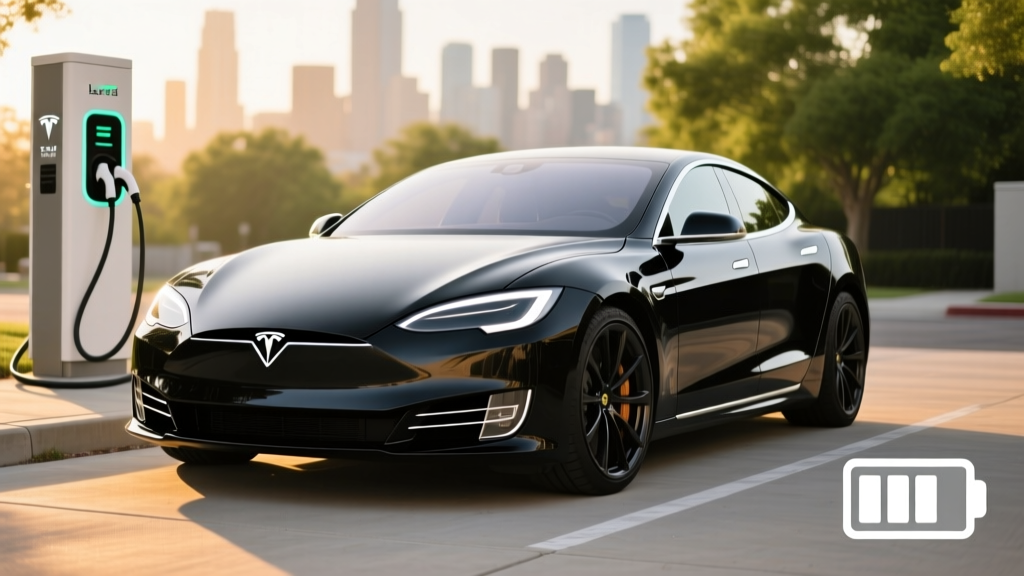
The 2021 Model S Plaid supports a peak DC fast-charge rate of 250 kW on Tesla's V3 Superchargers via its native NACS connector. Tesla claims a 10–80% charge in approximately 30 minutes, though the actual charge curve matters more than the peak number.
At a V3 Supercharger, the Plaid sustains near-peak power (220–250 kW) from roughly 5% to 35% state of charge, then tapers progressively: around 150 kW by 50% SoC, dropping to 70–80 kW by 70%, and below 40 kW past 85%. This taper is normal for NMC packs protecting cell longevity but means the last 20% takes nearly as long as the first 60%.
| Charging Level | Power / Rate | Speed (Miles Added) | Notes |
|---|---|---|---|
| Level 1 (120V household) | ~1.4 kW | ~3–4 miles/hour | Emergency only; a full charge takes days |
| Level 2 (240V / 48A Wall Connector) | 11.5 kW | ~34 miles/hour | Full charge in ~9 hours; ideal overnight |
| DC Fast Charge (V3 Supercharger) | Up to 250 kW peak | ~200 miles in 15 min | 10–80% in ~30 min; tapers above 50% SoC |
| DC Fast Charge (V4 Supercharger) | Up to 250 kW (vehicle-limited) | Same as V3 for this vehicle | V4 supports higher rates, but the 2021 Plaid is capped at 250 kW |
For home charging, Tesla's Wall Connector at 48 amps on a 60-amp circuit delivers 11.5 kW, adding roughly 34 miles per hour. A full 0–100% charge takes about 9 hours. Note: the 2021 Model S Plaid still shipped with a CCS adapter compatibility via Tesla's mobile connector or aftermarket J1772-to-NACS adapters for non-Tesla Level 2 stations, though native NACS access to the Supercharger network is the primary advantage.
Performance: Tri-Motor Powertrain and Driving Dynamics
The numbers are staggering and still hold up in 2026:
| Spec | 2021 Tesla Model S Plaid |
|---|---|
| Powertrain | Tri-motor AWD (1 front, 2 rear) |
| Horsepower | 1,020 hp |
| Torque | 1,050 lb-ft |
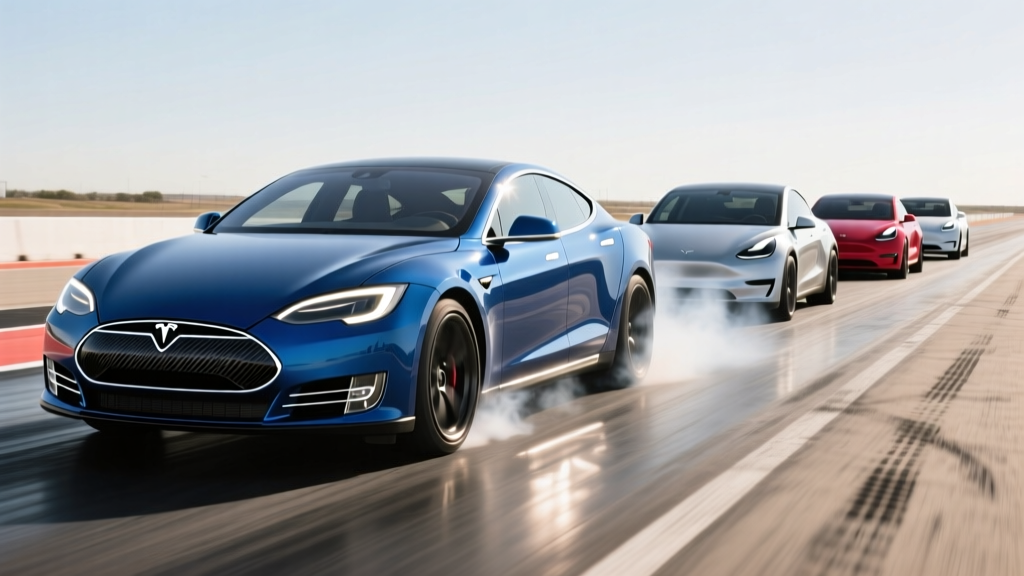
| 0–60 mph | 1.99 seconds (with rollout subtracted) |
| Top Speed | 200 mph |
| Quarter Mile | 9.23 seconds |
| Drivetrain | AWD with torque vectoring |
| Battery Chemistry | NMC (nickel manganese cobalt) |
| Battery Capacity (usable) | ~95–100 kWh |
| EPA Range | 390 miles |
| MPGe (combined) | 120 MPGe |
| Curb Weight | 4,766 lbs |
The tri-motor layout — one permanent-magnet motor up front and two carbon-sleeved rotors in the rear — enables precise torque vectoring that makes the Plaid's 4,766-pound curb weight feel far lighter in corners. The adaptive air suspension adjusts ride height automatically, and the yoke steering (standard on Plaid) remains polarizing: excellent for straight-line track work, awkward for low-speed parking maneuvers.
Interior, Cargo, and Technology
The 2021 refresh brought a redesigned interior with a 17-inch landscape touchscreen, a rear-seat 8-inch display, and a 22-speaker audio system. Build quality improved noticeably over pre-2021 Model S examples, though panel gaps still vary by vehicle.
Cargo and passenger space:
- Rear trunk: 26.3 cu ft (with rear seats up); expands with 60/40 split fold
- Front trunk (frunk): 3.1 cu ft
- Rear legroom: 35.4 inches — adequate for adults but tighter than a Lucid Air or BMW i7
- Front headroom: 40.5 inches
- Seating: 5 passengers
The rear-seat entertainment screen supports gaming (including Cyberpunk 2077 at full resolution via the AMD Ryzen infotainment chip), and Tesla's HEPA air filtration with Bioweapon Defense Mode remains a standout. Wireless phone charging, ventilated front seats, and a panoramic glass roof are all standard.
Driver Assistance: The 2021 Model S Plaid ships with Tesla's HW3 (Hardware 3) computer and Autopilot as standard. Full Self-Driving (FSD) Supervised was available as a $12,000 add-on (or $199/month subscription as of 2026 pricing). It is critical to understand that FSD is a Level 2 driver-assist system per SAE classification — the driver must remain fully engaged, hands on the yoke, and eyes on the road at all times. It is not autonomous driving.
Tesla Autopilot and FSD (Supervised) are SAE Level 2 systems. They do not make the vehicle self-driving. The driver is legally and operationally responsible for all driving decisions. Hands-off operation is not supported and can result in Autopilot disengagement warnings and lockouts.
Pricing, Tax Credits, and Ownership Economics
The 2021 Model S Plaid launched with a base MSRP of approximately $129,990 (before destination). Well-equipped examples with FSD, 21-inch Arachnid wheels, and premium paint pushed as-tested prices to $135,000–$142,000.
As a used vehicle in 2026, the Plaid no longer qualifies for the new-vehicle §30D federal tax credit. However, it may be eligible for the §25E Used Clean Vehicle Credit, which provides up to $4,000 (or 30% of the sale price, whichever is less) subject to these requirements:
- Sale price cap: The used vehicle must sell for $25,000 or less — meaning the Plaid does NOT qualify at current market values ($65,000–$85,000 in 2026)
- Buyer income limits (AGI): $75,000 single / $112,500 head of household / $150,000 joint
- Dealer requirement: Must be purchased from a licensed dealer
- Vehicle age: Must be at least 2 model years old (2021 qualifies in 2026)
Given the Plaid's resale values well above $25,000, federal tax credit eligibility is effectively zero for this model. Some states (California, Colorado, Massachusetts) offer additional used-EV rebates that may apply — check your state's energy office for current programs. Per IRS §25E guidelines, the $25,000 sale-price cap is a hard ceiling.
| Cost Item | Amount |
|---|---|
| Original 2021 MSRP (base) | $129,990 |
| Typical 2026 Used Market Price | $65,000–$85,000 |
| Federal Tax Credit (§25E Used) | $0 (exceeds $25K sale-price cap) |
| Estimated Annual Insurance | $3,200–$4,500 (varies by state/driver) |
| Estimated Annual Electricity (12K mi/yr) | $650–$900 (at $0.14/kWh national avg) |
Warranty, Battery Longevity, and Maintenance
Tesla's warranty for the 2021 Model S Plaid:
- Basic vehicle: 4 years / 50,000 miles
- Battery and drive units: 8 years / 150,000 miles, with minimum 70% capacity retention
NMC battery degradation in Tesla Model S vehicles typically follows a curve of roughly 5–8% loss in the first 30,000 miles, then a slow linear decline of about 1–2% per year. Owner-reported data on TeslaFi and Recurrent Auto suggests 2021 Model S packs retain approximately 88–93% capacity at 60,000 miles. The 150,000-mile warranty threshold at 70% retention is generous by industry standards.
Maintenance is minimal compared to ICE performance sedans: no oil changes, no transmission fluid, brake pad life is extended significantly by regenerative braking (many owners report 80,000+ miles on original pads). Cabin air filter replacement every 2 years and tire rotation every 6,250 miles are the primary service items. A full battery replacement outside warranty, if ever needed, is estimated at $20,000–$28,000 based on current Tesla service pricing.
How the 2021 Plaid Stacks Up Against Key Competitors
In 2026's used-performance-EV market, the Plaid's main rivals include:
- Lucid Air Grand Touring (2022–2023): 516-mi EPA range, 1,050 hp, more rear-seat space, but higher used prices ($80K–$100K) and a smaller service network
- Porsche Taycan Turbo S (2021–2022): Superior handling dynamics, 800V architecture for faster sustained charging (up to 270 kW), but only 227-mi EPA range and significantly less cargo room
- BMW i7 M70 (2024): Newer tech and superior luxury, but heavier and only 295-mi EPA range; used prices still above $100K
- You want the best straight-line acceleration of any production sedan
- Supercharger network access is a priority for road trips
- You value over-the-air software updates that add features years after purchase
- You can charge at home with a Level 2 Wall Connector
- Rear-seat comfort and luxury are your top priority (consider Lucid Air or BMW i7)
- You need maximum real-world highway range (Lucid Air Grand Touring wins at 400+ mi real-world)
- You prefer traditional steering over a yoke
- You want a vehicle eligible for a federal tax credit (none available at Plaid's price point)
Pros and Cons
- 1.99-second 0–60 mph — still unmatched in production sedans
- 390-mi EPA range is strong for a 1,020-hp vehicle
- 250 kW Supercharger access with the most reliable public charging network
- Continual OTA updates keep the vehicle current
- Low running costs vs. ICE performance sedans (no fuel, minimal maintenance)
- 8-year / 150,000-mile battery warranty
- Real-world highway range drops to ~300 mi — plan Supercharger stops on long trips
- Yoke steering is awkward for parking and low-speed maneuvers
- No federal tax credit at current used pricing
- Rear seat is tighter than Lucid Air or traditional luxury sedans
- Insurance costs are significantly above average for the segment
- HW3 Autopilot hardware is aging versus Tesla's current HW4
Frequently Asked Questions
What is the real-world range of the 2021 Tesla Model S Plaid?
The EPA rates it at 390 miles, but real-world highway driving at 70–75 mph yields approximately 290–320 miles in mild weather. In freezing temperatures, expect 250–280 miles. City driving with regenerative braking can approach the EPA figure.
How fast does the Model S Plaid charge at home and on the road?
At home on a Level 2 Tesla Wall Connector (48A / 11.5 kW), it adds about 34 miles per hour, with a full charge in roughly 9 hours. On a V3 Supercharger at peak 250 kW, it can add 200 miles in about 15 minutes, with a 10–80% charge taking approximately 30 minutes. Charging tapers significantly above 80% SoC.
Does the 2021 Model S Plaid qualify for any federal EV tax credit in 2026?
It does not qualify for the new-vehicle §30D credit. For the used-vehicle §25E credit (up to $4,000), the sale price must be $25,000 or less. Since used Plaid values are $65,000–$85,000, it does not qualify. Check state-level incentives, which may offer additional rebates.
Is the 2021 Model S Plaid worth buying over newer EVs?
For straight-line performance and Supercharger network access, it remains exceptional. If rear-seat luxury, maximum range, or the latest driver-assist hardware (HW4) are priorities, newer alternatives like the Lucid Air or refreshed Tesla Model S (2025+) may serve you better. The used price of $65K–$85K represents significant value versus its original $130K MSRP.
What are the biggest ownership costs to budget for?
Insurance is the primary expense, averaging $3,200–$4,500 annually depending on your profile. Electricity costs roughly $650–$900 per year at 12,000 miles. Tires wear faster than average due to the vehicle's weight and torque — budget $1,200–$1,800 for a set of high-performance tires every 25,000–35,000 miles.
How long will the battery last?
Tesla warranties the battery for 8 years / 150,000 miles at 70% minimum capacity retention. Real-world data from NMC packs in Model S vehicles suggests 88–93% capacity retention at 60,000 miles. With proper care (avoiding frequent 100% charges, limiting DC fast charging when possible), the pack should last well beyond 200,000 miles before approaching the warranty threshold.
Sources: EPA fueleconomy.gov, IRS Used Clean Vehicle Credit (§25E), Tesla Model S Owner's Manual.