The Quickest Production Sedan: Model S Plaid at a Glance
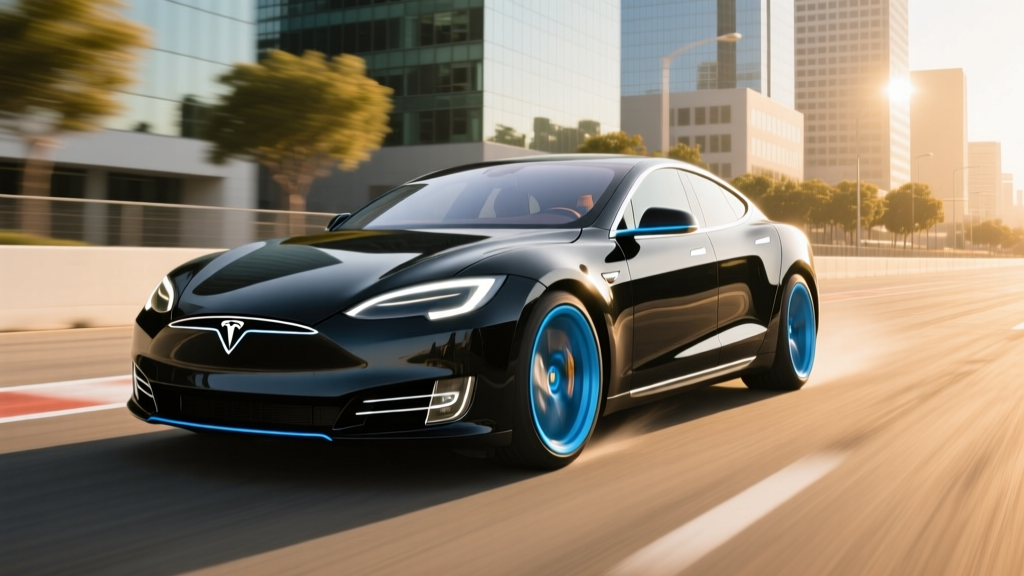
The Tesla Model S Plaid remains one of the fastest-accelerating production vehicles ever built, and its tri-motor powertrain delivers numbers that still read like a typo. But beyond the headline Model S Plaid 0-60 time of 1.99 seconds, this is a 400-mile luxury sedan with genuine daily-driver practicality, access to the most reliable DC fast-charging network in North America, and a tech stack that continues to evolve via over-the-air updates.
For 2025–2026, Tesla has kept the Plaid's hardware largely unchanged since its 2022 refresh — the tri-motor architecture, 100 kWh battery pack, and yoke-or-wheel steering options persist. What has shifted is the competitive landscape: the Lucid Air Sapphire, Porsche Taycan Turbo GT, and upcoming electric performance sedans from BMW and Mercedes have narrowed the gap. This review breaks down whether the Plaid's combination of absurd acceleration, real-world range, and Supercharger access still makes it the default pick in the six-figure EV performance segment.
| Spec | Value |
|---|---|
| Base MSRP | $89,990 (before destination) |
| EPA Range | 396 miles (19" wheels) / 359 miles (21" wheels) |
| Battery Capacity | ~100 kWh usable, NMC chemistry |
| Drivetrain | Tri-Motor AWD (1 front, 2 rear) |
| Horsepower | 1,020 hp |
| 0–60 mph | 1.99 seconds (manufacturer, with rollout) |
| Top Speed | 200 mph (with hardware package) |
| Max DC Fast Charge | 250 kW (peak) |
| 10–80% DC Charge Time | ~27 minutes |
| Level 2 Home Charging | 11.5 kW / ~41 miles per hour |
| MPGe (combined) | 116 MPGe (19" wheels) |
| Efficiency | 29 kWh/100 mi |
| Cargo Volume | 28 cu ft (rear) + 5.3 cu ft (frunk) |
| Battery Warranty | 8 years / 150,000 miles (70% retention) |
Model S Plaid 0-60: Breaking Down the 1.99-Second Claim
Tesla's published 0–60 mph time of 1.99 seconds includes a one-foot rollout (subtracting roughly the first 0.1–0.2 seconds of movement), which is standard practice in drag-strip timing but not universal across all manufacturers. Independent testing by outlets including MotorTrend and Car and Driver has verified times between 1.98 and 2.07 seconds depending on surface prep, tire temperature, and battery state of charge.
The tri-motor setup — one permanent-magnet motor up front and two carbon-sleeved rotors in the rear — provides torque vectoring that manages traction with surgical precision. On a prepped surface with the battery above 95% state of charge and the vehicle in Plaid mode (which requires a 15-minute battery preconditioning cycle), the acceleration is physically disorienting. The 1,020 horsepower figure is not a peak-for-a-moment number; it is sustained through the quarter-mile, which the Plaid completes in approximately 9.2 seconds at roughly 150 mph.
For context, the Lucid Air Sapphire (1,234 hp, $249,000) hits 60 in 1.89 seconds, and the Porsche Taycan Turbo GT (1,092 hp, $230,000) does it in approximately 2.1 seconds. The Model S Plaid occupies a unique position: hypercar acceleration at roughly one-third the price of the Sapphire.
Real-World Range: What 396 EPA Miles Actually Means
EPA sticker: 396 miles (19" Tempest wheels) / 359 miles (21" Arachnid wheels)
Real-world highway (70 mph, 72°F): Expect approximately 310–340 miles on 19" wheels; 280–310 miles on 21" wheels.
Cold-weather highway (30°F, heater on): Expect approximately 250–290 miles. The Plaid's resistive heating and large cabin volume contribute to noticeable winter range loss — roughly 20–30% below EPA.
City/mixed driving with regen: Can approach or match EPA figures due to regenerative braking recapturing energy in stop-and-go traffic.
The Model S Plaid uses an NMC (nickel manganese cobalt) battery pack with approximately 100 kWh of usable capacity. NMC chemistry offers higher energy density than LFP (lithium iron phosphate), which is why the Plaid can store this much energy while maintaining sedan proportions — but it also means Tesla recommends daily charging to 80–90% for longevity, reserving 100% for road trips. According to fueleconomy.gov, the Plaid achieves 116 MPGe combined on 19-inch wheels, translating to roughly 29 kWh per 100 miles — efficient for a 4,766-pound vehicle with over 1,000 horsepower, but roughly 15% less efficient than the dual-motor Model S Long Range.
Charging Speed: Supercharger Access Is the Plaid's Hidden Advantage
The Model S Plaid charges at a peak rate of 250 kW on V3 Tesla Superchargers. In practice, the charge curve is aggressive in the lower states of charge and tapers meaningfully above 60%. A typical 10–80% session takes approximately 27 minutes, adding roughly 200 miles of range in 15 minutes under ideal conditions (battery preconditioned via navigation to a Supercharger).
| Charging Level | Power | Miles Added per Hour | Notes |
|---|---|---|---|
| Level 1 (120V household) | ~1.4 kW | ~4–5 mi/hr | Emergency/trickle only |
| Level 2 (240V home, 48A) | 11.5 kW | ~41 mi/hr | Full charge in ~9 hours |
| DC Fast (V3 Supercharger) | 250 kW peak | ~800 mi/hr (peak rate) | 10–80% in ~27 min |
| DC Fast (CCS adapter, Electrify America) | Up to 250 kW | Varies | Requires NACS-to-CCS adapter |
Tesla's NACS (North American Charging Standard) connector is now the industry standard, with Ford, GM, Rivian, and others adopting it. The Model S Plaid natively uses NACS, meaning it accesses all 6,000+ Supercharger stalls across North America without adapters. This remains a significant practical advantage over CCS-equipped competitors relying on Electrify America or EVgo, where uptime and charge-speed consistency remain inconsistent at many stations.
For home charging, a Tesla Wall Connector on a 60-amp circuit delivers 11.5 kW (48 amps continuous), adding roughly 41 miles of range per hour. An overnight 10-hour charge session restores approximately 400 miles — more than enough for any daily commute and most road-trip departure needs. Installation costs for a 240V/60A circuit typically range from $800 to $2,500 depending on panel proximity and local permitting, on top of the $475 Wall Connector hardware cost.
Interior, Cargo, and Technology
The Model S interior is minimalist by design, dominated by a 17-inch center touchscreen that controls virtually every vehicle function. The Plaid adds a rear-seat 8-inch touchscreen for climate and entertainment, a 22-speaker audio system, and a yoke steering wheel (a conventional round wheel is available at no extra charge — and most buyers should choose it for daily usability).
Passenger space is generous for a performance sedan: front legroom measures 42.4 inches, rear legroom 35.4 inches. The rear seat comfortably fits two adults on longer trips, though the sloping roofline cuts into headroom for passengers over 6 feet. Cargo capacity is a standout: 28 cubic feet behind the rear seats (hatchback-style liftgate) plus a 5.3 cubic foot frunk. That's meaningfully more usable space than the Porsche Taycan (14.3 cu ft trunk + 2.9 cu ft frunk) and competitive with midsize SUVs.
The infotainment system includes Netflix, YouTube, and a full web browser while parked, plus a gaming system capable of running Cyberpunk 2077 — leveraging the Plaid's AMD Ryzen-based MCU. Wireless phone charging, ventilated front seats, and a panoramic glass roof are standard. What's absent: Apple CarPlay and Android Auto, which remain conspicuously missing from all Tesla vehicles. If phone-mirroring is a must-have, this is a dealbreaker worth acknowledging upfront.
Pricing, Trims, and Federal Tax Credit Eligibility
The 2025 Tesla Model S Plaid starts at $89,990 (plus $1,995 destination), with very few options available. The only meaningful add-ons are paint colors ($1,500–$2,500), 21-inch Arachnid wheels ($4,500), and Full Self-Driving (Supervised) capability at $8,000. A fully loaded Plaid typically lands between $95,000 and $105,000.
Short answer: No — for most buyers.
Under IRS §30D rules, the federal clean vehicle credit has two hard caps that eliminate the Plaid:
- MSRP cap: Sedars are capped at $55,000 MSRP. The Plaid at $89,990 exceeds this limit.
- Income cap: Modified AGI must not exceed $150,000 (single) / $300,000 (joint). Many Plaid buyers exceed this threshold.
The base Model S Long Range ($74,990) also exceeds the $55,000 sedan cap. Buyers seeking a Tesla that qualifies for the $7,500 credit should look at the Model 3 or Model Y, which fall within the SUV/truck $80,000 cap (Model Y) and sedan $55,000 cap (certain Model 3 trims), subject to battery-sourcing and critical-mineral requirements that change annually.
Warranty, Ownership Costs, and Who Should Buy
Tesla covers the Model S Plaid's battery and drive unit for 8 years or 150,000 miles, whichever comes first, with a guaranteed minimum 70% capacity retention. The basic vehicle warranty is 4 years / 50,000 miles. Independent data from Recurrent Auto suggests that Tesla's NMC packs lose approximately 10–12% capacity over the first 100,000 miles, with degradation slowing significantly after the initial break-in period — meaning a Plaid at 150,000 miles should still retain roughly 85–90% of original range under normal use.
Insurance costs are the ownership wildcard. The Plaid's combination of high repair costs, performance classification, and Tesla's direct-body-shop model pushes annual premiums to $3,500–$5,500 depending on state, driving record, and coverage level — roughly 40–60% higher than a comparably priced luxury sedan from BMW or Mercedes. Get quotes before ordering.
- 1.99-second 0–60 mph — verified, repeatable, and usable
- 396-mile EPA range (19" wheels) is among the best in the performance-EV segment
- Supercharger network access — the most reliable DC fast-charging infrastructure in North America
- 28 cu ft cargo (hatchback) makes it genuinely practical for families and road trips
- OTA updates continue to add features years after purchase
- Lower price than Lucid Air Sapphire ($249K) and Porsche Taycan Turbo GT ($230K)
- No Apple CarPlay or Android Auto
- Yoke steering is polarizing and not ideal for low-speed/parking maneuvers
- Does not qualify for the $7,500 federal EV tax credit (MSRP exceeds $55K sedan cap)
- Insurance premiums significantly above segment average
- Interior materials and build quality lag behind Porsche, Lucid, and Mercedes at this price point
- 21" wheels reduce EPA range by 37 miles and degrade ride quality on rough pavement
Who is the Model S Plaid for? The buyer who wants the most acceleration per dollar in a vehicle that can still serve as a daily driver and road-trip machine. It's ideal for tech-forward professionals, track-day enthusiasts who also need a commuter, and families who want EV practicality with supercar embarrassment-of-richness performance. It is not the right choice for buyers who prioritize interior luxury materials, want Apple CarPlay, or need to stay under the federal tax credit MSRP cap.
Frequently Asked Questions
What is the real-world range of the Tesla Model S Plaid?
The EPA rates the Plaid at 396 miles on 19-inch wheels and 359 miles on 21-inch wheels. In real-world highway driving at 70 mph in moderate temperatures, expect 310–340 miles (19") or 280–310 miles (21"). In cold weather (below freezing), range drops to approximately 250–290 miles due to cabin heating demands and reduced battery efficiency.
How fast does the Model S Plaid charge at home and on the road?
On a Level 2 home charger (11.5 kW / 48A), the Plaid adds approximately 41 miles of range per hour, fully charging in about 9 hours. On a V3 Tesla Supercharger, it peaks at 250 kW and charges from 10–80% in approximately 27 minutes — adding roughly 200 miles in 15 minutes when the battery is preconditioned.
Does the Model S Plaid qualify for the $7,500 federal EV tax credit?
No. Under current IRS §30D rules, sedans must have an MSRP below $55,000 to qualify. The Model S Plaid starts at $89,990, well above the cap. Additionally, buyer income must be under $150,000 (single) or $300,000 (joint), which eliminates many Plaid buyers. Consult a tax professional for your specific situation.
Is the Model S Plaid worth buying vs. the Lucid Air Sapphire or Porsche Taycan Turbo GT?
If your priority is the lowest cost per horsepower with the longest range and best charging infrastructure, the Plaid wins. The Lucid Air Sapphire is quicker (1.89s 0–60) and more luxurious inside but costs $249,000 — nearly three times the Plaid's price. The Porsche Taycan Turbo GT offers superior handling dynamics and build quality at $230,000 but has less range (~280 miles EPA) and slower DC charging. The Plaid is the value pick in the hyper-sedan segment.
Is Autopilot or Full Self-Driving included?
Basic Autopilot (lane centering and adaptive cruise control) is standard. Full Self-Driving (Supervised) is an $8,000 add-on. Both are SAE Level 2 driver-assistance systems — the driver must remain fully engaged and supervise at all times. FSD is not autonomous driving and does not make the vehicle self-driving.
How does the yoke steering wheel feel in daily use?
The yoke works well on highways and open roads but requires adaptation for tight turns, parking lots, and three-point turns where you'd normally hand-over-hand a round wheel. Tesla does not offer variable-ratio steering to compensate. Most reviewers and long-term owners recommend the conventional round wheel (available at no cost) for daily-driven vehicles.