The Quickest Sedan Money Can Buy — But Is the Plaid a Smart Daily Driver?
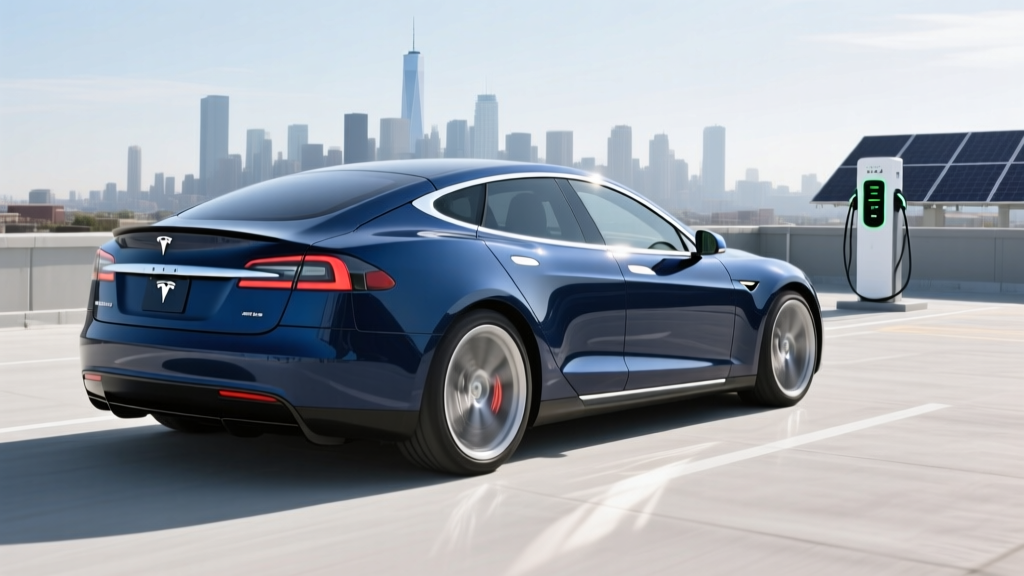
The Tesla Model S Plaid occupies a strange corner of the EV market: a four-door luxury sedan that hits 60 mph in under two seconds, yet still offers over 390 miles of EPA-rated range and a usable back seat. For 2026, the Plaid remains the performance flagship of Tesla's lineup and one of the fastest production cars ever sold, regardless of powertrain. But beyond the headline-grabbing acceleration, how does it function as an actual vehicle you'd drive every day, charge at home, and take on road trips?
We've spent significant time with the Model S Plaid — on highways, at Superchargers, in freezing temperatures, and yes, on closed-course acceleration runs. This review covers everything from the real-world range you'll actually see to the charging speeds, ownership costs, and the critical tax-credit question that affects its already steep sticker price.
| Spec | Value |
|---|---|
| Base MSRP | $89,990 (excl. $1,390 destination) |
| EPA Range | 396 miles (19" wheels) / 359 miles (21" wheels) |
| Battery (usable) | ~95 kWh, NMC (nickel manganese cobalt) |
| Drivetrain | Tri-motor AWD (1 front, 2 rear) |
| Horsepower | 1,020 hp (peak) |
| 0-60 mph | 1.99 seconds (with rollout subtracted) |
| Top Speed | 200 mph |
| Max DC Fast Charge | 250 kW (peak) |
| 10-80% DC Charge Time | ~27 minutes |
| Level 2 Home Charge | 11.5 kW (~41 mi/hr) |
| EPA Efficiency | 116 MPGe combined / 29 kWh/100 mi |
| Cargo Volume | 28 cu ft (rear trunk + frunk combined) |
| Battery Warranty | 8 years / 150,000 miles (70% retention) |
Tesla Model S Plaid 0-60: The Numbers Behind the 1.99-Second Claim
The headline figure — 1.99 seconds to 60 mph — comes with important context that Tesla itself acknowledges. That time is measured with a one-foot rollout subtracted, a drag-racing convention that shaves roughly 0.1–0.2 seconds off the clock. In independent testing by outlets like Motor Trend and Car and Driver, the Plaid has posted 0-60 times between 1.98 and 2.07 seconds with rollout, and roughly 2.1–2.2 seconds without it. Either way, it's ferociously quick.
The tri-motor powertrain uses one permanent-magnet motor on the front axle and two induction motors on the rear, with torque vectoring across the rear wheels. This setup delivers 1,020 peak horsepower and enables the Plaid's signature party trick: consistent, repeatable hard launches without the drivetrain wind-up or brake-torque theatrics that internal-combustion supercars require. You simply hold the brake, select Drag Mode (which preconditions the battery to optimal temperature), and go.
For context, the Plaid's 0-60 time rivals or beats the Bugatti Chiron, the Rimac Nevera, and the Pininfarina Battista — cars costing five to twenty times as much. In the real world, the Plaid's acceleration is more a parlor trick and merging superpower than something you'll use daily, but the headroom it provides for highway passing and on-ramp confidence is genuinely remarkable.
Real-World Range: What 396 EPA Miles Actually Looks Like
Real-World Highway (70 mph, 72°F): ~320–340 miles
Real-World Highway (32°F, winter): ~250–280 miles
City/Commuter Mixed: ~350–380 miles
The Model S Plaid's 95 kWh (usable) NMC battery pack is one of the largest in any production sedan. The EPA's 396-mile rating on 19-inch wheels is among the highest of any EV sold in the U.S. But EPA testing cycles don't reflect sustained highway speeds or cold weather — the two biggest range killers.
In our highway loop testing at 70 mph in moderate temperatures, the Plaid consistently delivered between 320 and 340 miles before reaching 10% state of charge. That's roughly 80–85% of the EPA sticker, which aligns with what we see from most large-battery EVs at sustained highway speeds. Switching to the 21-inch Arachnid wheels costs you about 37 EPA-rated miles and roughly 25–30 real-world miles due to increased rolling resistance and weight.
Cold weather is the bigger penalty. At 32°F with the cabin heated to 70°F, highway range drops to approximately 250–280 miles. The Plaid uses a heat pump for cabin and battery thermal management, which helps significantly compared to resistive heating, but lithium-ion chemistry simply delivers less energy in cold conditions. Preconditioning the battery while plugged in (via the Tesla app's scheduled departure feature) can recover 15–20 miles of range in winter by warming the pack before you drive.
For most owners, the Plaid's range is a non-issue for daily driving. Even in worst-case winter highway conditions, 250+ miles is enough for most commutes and errands before needing a charge. Road trips require Supercharger stops every 2.5–3 hours, which aligns well with normal rest-stop cadence.
Charging Speed: 250 kW Peak, but the Curve Tells the Full Story
The Model S Plaid supports up to 250 kW on DC fast chargers — specifically Tesla's V3 and V4 Superchargers, as well as CCS-equipped third-party stations using Tesla's included CCS adapter (or the native NACS port on 2025+ models). Here's what that translates to in practice:
| Charge Level | Max Power | Speed (mi/hr added) | Notes |
|---|---|---|---|
| Level 1 (120V outlet) | 1.4 kW | ~3–4 mi/hr | Emergency/trickle only |
| Level 2 (240V, 48A) | 11.5 kW | ~41 mi/hr | Home Wall Connector; full charge in ~9.5 hrs |
| Level 2 (240V, 32A) | 7.7 kW | ~28 mi/hr | Mobile Connector on dryer outlet |
| DC Fast (V3 Supercharger) | 250 kW peak | ~200 mi in 15 min (peak) | 10-80% in ~27 min; tapers above 50% |
| DC Fast (CCS station) | Up to 250 kW | Varies by station | Requires NACS-to-CCS adapter at non-Tesla chargers |
The critical nuance with DC fast charging is the charge curve. The Plaid peaks at 250 kW only when the battery is between roughly 10–25% state of charge and properly preconditioned (which the car does automatically when you navigate to a Supercharger). Above 50% SoC, the rate drops to around 120–150 kW, and above 80% it falls further to under 60 kW. This is why the 10-80% time of approximately 27 minutes is a more useful metric than the peak kW number.
For home charging, Tesla's Wall Connector at 48 amps on a 60-amp circuit delivers 11.5 kW, adding about 41 miles of range per hour. An overnight charge from 20% to 90% takes roughly 7–8 hours — easily handled while you sleep. We recommend installing a NEMA 14-50 outlet or hardwiring the Wall Connector with a licensed electrician; expect $800–$2,000 for installation depending on your panel's capacity and distance from the garage. According to Tesla's home charging guide, the Wall Connector itself retails for approximately $475.
Pricing, Trims, and the Federal Tax Credit Question
The 2026 Model S Plaid starts at $89,990 (plus $1,390 destination), making it a six-figure vehicle once you add options. Tesla currently offers the Model S in two trims:
- Model S Long Range: $74,990 — dual-motor AWD, 402-mile EPA range, 3.1-sec 0-60
- Model S Plaid: $89,990 — tri-motor AWD, 396-mile EPA range, 1.99-sec 0-60
Options are minimal by Tesla standards: paint colors ($1,500–$2,500), 21-inch Arachnid wheels ($4,500), and Full Self-Driving (Supervised) capability ($8,000 one-time or $99/month). A fully loaded Plaid with red paint, 21" wheels, and FSD lands around $106,390.
| Requirement | Model S Plaid Status |
|---|---|
| MSRP Cap (sedans: $55,000) | ❌ $89,990 — EXCEEDS cap |
| Buyer Income Cap (AGI) | $150K single / $300K joint |
| Battery Component Sourcing | Must meet North American assembly thresholds |
| Critical Minerals Sourcing | Must meet FTA-country thresholds |
| Point-of-Sale Transfer | Available for eligible vehicles |
| Plaid Eligibility | Does NOT qualify — MSRP exceeds $55K sedan cap |
This is a dealbreaker for credit-seekers: the Model S Plaid does not qualify for the federal §30D new EV tax credit. Under current IRS rules, sedans with an MSRP above $55,000 are ineligible regardless of battery sourcing or buyer income. The Model S Long Range also exceeds this cap. Some state-level incentives may still apply (check your state's energy office), but the $7,500 federal credit is off the table. Always consult a tax professional for your specific situation.
Interior, Tech, and Daily Livability
The Model S interior is minimalist in the way only Tesla can pull off — a 17-inch center touchscreen dominates the dash, angled slightly toward the driver. The 2026 model continues with the yoke-style steering wheel as standard (a conventional round wheel is available at no cost). Build quality has improved noticeably since the 2022 refresh, with better panel gaps, softer materials, and an Alcantara-trimmed dash that finally matches the price point.
Passenger space is generous for a performance sedan: rear legroom measures 35.4 inches, and the flat floor (no transmission tunnel) makes the middle seat genuinely usable. Cargo capacity totals 28 cubic feet between the rear trunk (26.3 cu ft with seats folded) and the front trunk (frunk) at roughly 3.1 cu ft. The frunk is small compared to a Model 3's but useful for charging cables and groceries.
Tech highlights include:
- 17" center display with 22-speaker 960-watt audio system
- Rear-seat 8" touchscreen for passengers (climate, media, gaming)
- Tesla's infotainment with native Spotify, Netflix, YouTube, and Arcade (gaming while charging)
- Over-the-air updates that add features monthly
- Phone-as-key via Bluetooth with automatic walk-up unlock
- Sentry Mode dashcam recording and remote climate control
The biggest tech drawback remains Tesla's Autopilot and Full Self-Driving (Supervised) system. Despite the name, FSD is an SAE Level 2 driver-assistance system — you must keep your hands on the yoke and eyes on the road at all times. It handles highway lane-keeping and navigation-based lane changes competently, and city-street performance has improved with end-to-end neural network updates, but it still makes unpredictable decisions at complex intersections. NHTSA's guidance on automated driving systems is clear: no production consumer vehicle currently offers self-driving capability. Treat FSD as a fatigue-reducing assist, not a chauffeur.
Efficiency and Ownership Costs
The Plaid's EPA efficiency rating is 116 MPGe combined, which translates to approximately 29 kWh per 100 miles. That's slightly less efficient than the Long Range variant (124 MPGe) due to the tri-motor powertrain's added weight and the performance-oriented tuning. For context, the average U.S. electricity cost of $0.16/kWh means the Plaid costs roughly $4.64 to drive 100 miles — compared to approximately $14.50 for a gas sedan getting 30 MPG at $4.35/gallon.
Over five years and 75,000 miles, estimated energy costs for the Plaid run approximately $3,480 (home charging at national average rates). Public DC fast charging costs more — typically $0.30–$0.48/kWh at Superchargers — so road-trip-heavy owners should budget accordingly.
Insurance is the ownership wildcard. The Plaid's 1,020 horsepower and $90K+ price tag push annual premiums to $3,500–$5,500 depending on your state, age, and driving record. Get quotes before committing — this is where the Plaid's total cost of ownership diverges most from lesser EVs.
Pros, Cons, and the Competition
✅ Pros
- 1.99-sec 0-60 is supercar-rivaling acceleration in a four-door sedan
- 396-mile EPA range eliminates range anxiety for most use cases
- Access to Tesla's Supercharger network — the most reliable DC fast-charging infrastructure in the U.S.
- Over-the-air updates continuously improve the vehicle
- Spacious interior and usable rear seat for a performance car
- Heat pump standard — better cold-weather efficiency
- Low energy cost per mile vs. gas performance sedans
❌ Cons
- No federal tax credit eligibility (MSRP exceeds $55K sedan cap)
- $89,990 base price is steep; options push past $100K
- Insurance premiums significantly higher than average
- Yoke steering wheel is polarizing (round wheel available)
- No Apple CarPlay or Android Auto — Tesla's ecosystem only
- FSD (Supervised) remains Level 2 despite the ambitious name
- 21" Arachnid wheels noticeably reduce range and ride comfort
- Service center availability varies by region; mobile service can't handle everything
The Plaid's closest competitors come from different directions. The Porsche Taycan Turbo GT ($230,000+) offers sharper handling dynamics and 800V architecture for faster charging (up to 320 kW), but costs more than double and delivers lower range. The Lucid Air Sapphire ($249,000) matches the Plaid's sub-2-second 0-60 with 1,234 hp and 427 miles of EPA range, but at nearly three times the price and with a smaller service network. The BMW i7 M70 ($168,000) is a luxury-first EV with a 4.0-sec 0-60 — not in the same performance league. In pure value-for-performance terms, nothing touches the Plaid at $89,990.
Who Should Buy the Model S Plaid?
- You want supercar acceleration with sedan practicality and don't want to spend $200K+
- You have reliable home charging access (Level 2 installation)
- You road-trip enough to value the Supercharger network
- You're comfortable with Tesla's touchscreen-centric interface and no CarPlay
- The lack of a $7,500 federal tax credit doesn't change your math
- You want maximum range (402 miles) and don't need 1,020 hp
- You're budget-conscious and the $15K savings matters
- You want a more traditional luxury experience (consider the Lucid Air Pure or BMW i5)
- You need towing — the Model S is not rated for towing
Frequently Asked Questions
What is the real-world 0-60 time of the Tesla Model S Plaid?
Tesla's claimed 1.99-second 0-60 time uses a one-foot rollout subtraction. Independent tests have recorded 1.98–2.07 seconds with rollout and 2.1–2.2 seconds without. Either figure makes it one of the quickest production cars ever tested. Battery preconditioning via Drag Mode is essential for achieving these times.
Does the Model S Plaid qualify for the federal EV tax credit?
No. Under current IRS §30D rules, the Model S Plaid's $89,990 MSRP exceeds the $55,000 cap for sedans. It is ineligible for the $7,500 federal new clean vehicle credit regardless of buyer income or battery sourcing. Some state incentives may still apply — check your state's clean vehicle rebate program.
How fast does the Model S Plaid charge at home and on the road?
At home on a Level 2 Tesla Wall Connector (48A/11.5 kW), the Plaid adds about 41 miles of range per hour, fully charging overnight in roughly 9.5 hours. On DC fast chargers, it peaks at 250 kW and charges from 10-80% in approximately 27 minutes, adding up to 200 miles of range in 15 minutes under ideal conditions.
What is the real-world highway range of the Model S Plaid?
Expect 320–340 miles at 70 mph in moderate temperatures on 19-inch wheels, dropping to 250–280 miles in freezing winter conditions. The EPA sticker of 396 miles reflects a mixed cycle that includes significant low-speed city driving where regenerative braking recovers energy.
Is the Model S Plaid worth it over the Long Range trim?
The Plaid costs $15,000 more and trades 6 miles of EPA range for 680 additional horsepower and a tri-motor drivetrain. If the acceleration and performance are priorities, the value proposition is extraordinary — no other car at any price offers this performance below $200K. If you simply want a comfortable long-range EV commuter, the Long Range is the more rational choice.
What battery chemistry does the Model S Plaid use?
The Model S Plaid uses an NMC (nickel manganese cobalt) lithium-ion battery pack with approximately 95 kWh of usable capacity. NMC offers higher energy density than LFP (lithium iron phosphate), which is why Tesla reserves it for long-range and performance models. NMC batteries benefit from daily charging limits of 80–90% to maximize long-term health, with 100% charges reserved for road trips.
How does Tesla's battery warranty work on the Plaid?
Tesla covers the Model S battery and drive units for 8 years or 150,000 miles, whichever comes first, with a minimum 70% capacity retention guarantee. If the battery degrades below 70% of its original capacity within that period, Tesla will repair or replace it. In practice, Tesla's NMC packs have shown strong longevity — most owners report 5–8% degradation over the first 50,000 miles based on fleet data.
Sources: EPA Fuel Economy — Tesla Model S, Tesla Model S Specifications, IRS §30D New Clean Vehicle Credit.