The Tesla Model S Plaid doesn't just accelerate — it redefines what a four-door sedan can do. With a manufacturer-claimed 0-60 mph time of 1.99 seconds and a tri-motor all-wheel-drive system producing 1,020 horsepower, the Plaid variant of Tesla's flagship sedan occupies a category of one. But beyond the headline-grabting Tesla Plaid 0-100 mph sprints, this is still a daily-drivable luxury EV with over 390 miles of EPA-estimated range, access to the largest fast-charging network in North America, and a tech-forward cabin. For 2026, the Model S Plaid continues largely unchanged from its refresh, still starting at $89,990 before incentives. Here's every number that matters.
Performance: The Tesla Plaid 0-100 mph Story in Numbers
The tri-motor powertrain — one front, two rear — delivers torque-vectoring AWD with a combined output of 1,020 horsepower. Tesla's claimed 0-60 mph time of 1.99 seconds (with rollout subtracted) has been independently verified by multiple outlets within a tenth of a second under optimal conditions. The quarter-mile lands in approximately 9.2 seconds at 152 mph, and the car pulls relentlessly well past 100 mph, reaching 0-100 mph in roughly 3.4 seconds on prepped surfaces. Top speed is electronically limited to 200 mph.
What's remarkable isn't just the peak number — it's the repeatability. Thanks to Tesla's thermal management system and the battery's ability to sustain high discharge rates, the Plaid can deliver multiple back-to-back launches without significant power derating. The carbon-sleeved rotors in the rear motors allow them to spin safely past 20,000 RPM, which is how Tesla extracts this much power from a relatively compact drivetrain.
| Metric | Value |
|---|---|
| Horsepower (combined) | 1,020 hp |
| Drivetrain | Tri-motor AWD |
| 0-60 mph | 1.99 seconds (w/ rollout) |
| 0-100 mph (est.) | ~3.4 seconds |
| Quarter-mile | 9.2 sec @ 152 mph |
| Top Speed | 200 mph (limited) |
| Curb Weight | 4,766 lbs |
For context, the Car and Driver tested Model S Plaid hit 60 mph in 2.1 seconds with rollout included — still among the quickest production cars ever measured. Against competitors like the Lucid Air Sapphire (1,234 hp, 1.89 sec 0-60 claimed) or the Porsche Taycan Turbo GT (1,019 hp, 2.1 sec 0-60), the Plaid holds its ground at a significantly lower price point.
Range, Battery, and Real-World Efficiency
The Model S Plaid uses a ~100 kWh battery pack (approximately 95 kWh usable) based on NMC (nickel-manganese-cobalt) chemistry. This chemistry provides the high energy density and discharge rates necessary for Plaid-level performance, though it trades some cycle-life longevity compared to LFP packs found in Tesla's standard-range vehicles.
EPA Estimated Range: 396 miles (19" wheels) / 359 miles (21" Arachnid wheels)
Real-World Highway (70-80 mph): Expect ~310-340 miles on 19" wheels; ~280-310 miles on 21"
Cold Weather (below 32°F): Reduce EPA estimates by 20-30% — plan for ~275-315 miles on 19" wheels
Track/Performance Driving: Range drops dramatically under sustained high-power use
The EPA efficiency rating sits at 116 MPGe combined (29 kWh/100 miles) for the 19" wheel configuration. In real-world mixed driving, owners typically report 27-32 kWh/100 miles depending on speed, terrain, and climate-control usage. At highway speeds above 75 mph, efficiency drops to roughly 33-36 kWh/100 miles, which is where the gap between EPA and real-world range becomes most noticeable.
Tesla's heat pump (standard on all current Model S variants) significantly improves cold-weather efficiency compared to older resistive-heating systems. In testing, the heat pump reduces cold-weather range penalty by roughly 5-8 percentage points versus vehicles using PTC heaters.
Charging Speed: DC Fast, Level 2, and Supercharger Access
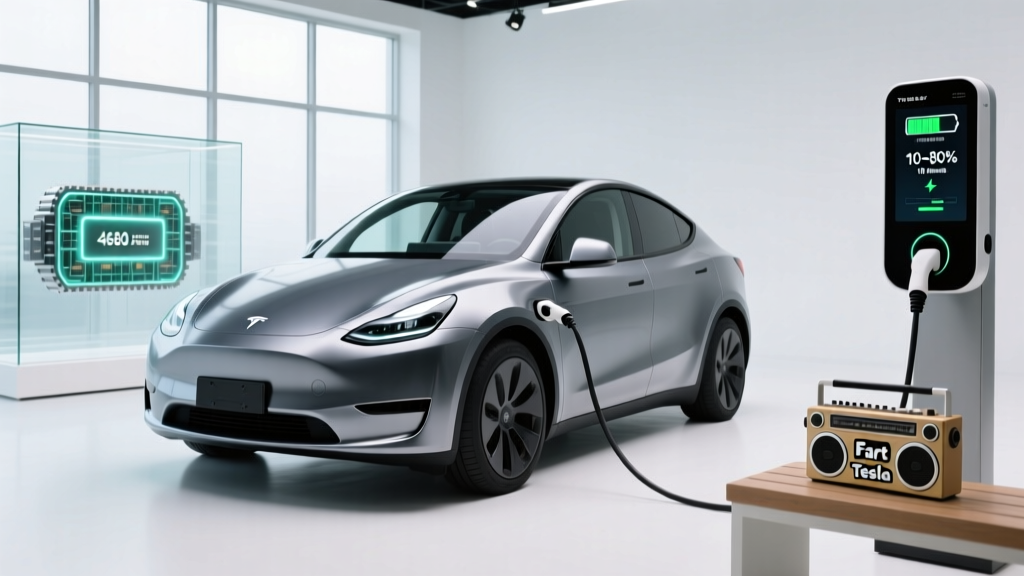
The Model S Plaid charges at up to 250 kW on DC fast chargers via the NACS (North American Charging Standard) connector — Tesla's proprietary plug that is now being adopted industry-wide as the standard.
| Charging Level | Power / Rate | Speed (Miles/Hour) | Notes |
|---|---|---|---|
| Level 1 (120V) | ~1.4 kW | ~3-5 mi/hr | Emergency/trickle only |
| Level 2 (240V, 48A) | 11.5 kW | ~34 mi/hr | Home Wall Connector; full charge in ~10 hrs |
| Level 2 (240V, 32A) | 7.7 kW | ~23 mi/hr | Mobile Connector w/ NEMA 14-50 |
| DC Fast (Supercharger V3/V4) | Up to 250 kW | ~750+ mi/hr (peak) | 10-80% in ~27 min; tapers above 50% |
The charging curve matters here. The Plaid peaks at 250 kW only briefly in the 10-25% state-of-charge window, then tapers progressively. From 10-80%, expect approximately 27 minutes at a V3 or V4 Supercharger. Above 80%, charging slows dramatically to protect the NMC cells — plan on an additional 20+ minutes to reach 100% if needed.
Tesla's Supercharger network remains the most reliable public charging infrastructure in the U.S., with over 6,000 stations and 65,000+ connectors nationwide. The Model S Plaid also supports CCS charging through Tesla's CCS adapter (sold separately), opening access to Electrify America and other networks, though peak speeds may be limited to ~150 kW on some CCS stations.
For home charging, Tesla's Wall Connector at 48 amps on a 60-amp circuit delivers 11.5 kW — adding roughly 34 miles of range per hour. A full overnight charge from 20% to 100% takes about 9-10 hours. Installation costs for a dedicated 60-amp circuit typically run $800-$2,000 depending on panel proximity and local permit requirements, on top of the $475 Wall Connector unit.
Pricing, Trims, and Federal Tax Credit Eligibility
For 2026, the Model S Plaid carries a base MSRP of $89,990 (including destination). The only factory option is paint color — Pearl White Multi-Coat is included, while Solid Black, Deep Blue, Ultra Red, and Quicksilver add $1,500-$2,500. The 21" Arachnid wheels are a $4,500 upgrade that reduces EPA range to 359 miles.
| Item | Amount |
|---|---|
| Base MSRP (19" wheels) | $89,990 |
| As-tested (typical config) | $93,490 - $96,990 |
| Federal §30D Tax Credit | $0 — exceeds MSRP cap |
| Estimated out-of-pocket (base) | $89,990 + tax/title |
Under IRS §30D rules, the new EV tax credit is capped at $7,500 — but only for sedans with an MSRP at or below $55,000 and for buyers meeting income thresholds ($150K single / $300K joint AGI). At $89,990, the Model S Plaid far exceeds the sedan MSRP cap set by the IRS. It does not qualify for the federal new-vehicle EV tax credit. Check with a tax professional for state-level incentives, which vary by jurisdiction.
The standard Model S (non-Plaid, dual-motor, 405-mile EPA range) starts at $74,990 — also above the $55,000 sedan cap. Buyers seeking a Tesla sedan under the credit threshold would need to look at the used-EV credit (§25E), which offers up to $4,000 on pre-owned EVs priced at $25,000 or less — a category the Model S won't enter for several more years.
Interior, Tech, and Daily Livability
The refreshed Model S cabin features a 17" landscape-oriented touchscreen running Tesla's latest software, a 12.3" digital instrument cluster, and an 8" rear-seat entertainment display. The yoke steering wheel remains standard (a conventional round wheel is available at no cost). Build quality on the current-generation Model S is noticeably improved over pre-2021 examples, with tighter panel gaps and higher-quality materials.
Interior dimensions provide 42.7 inches of front legroom and 35.4 inches in the rear — adequate for adults on shorter trips, though the sloping roofline limits rear headroom for taller passengers. Cargo volume totals 28 cubic feet behind the rear seats (including the frunk), expanding to approximately 79 cubic feet with the 60/40 split rear seats folded. The front trunk (frunk) adds about 3.1 cubic feet of secure, weatherproof storage.
Tesla's Autopilot driver-assistance system comes standard, including adaptive cruise control, lane-centering, and automatic emergency braking. Full Self-Driving (Supervised) capability is a $8,000 add-on that enables city-street navigation, automatic lane changes, and traffic-light recognition. It is critical to understand that FSD (Supervised) is an SAE Level 2 system — the driver must remain fully attentive with hands on or near the wheel at all times. It is not autonomous driving.
Tesla Autopilot and FSD (Supervised) are SAE Level 2 driver-assist systems. They require continuous driver supervision and do NOT make the vehicle self-driving. The driver is legally and physically responsible for all vehicle operation at all times. Review NHTSA guidance on automated vehicle safety for more.
The infotainment system supports Netflix, YouTube, and gaming (including Cyberpunk 2077 at full resolution via the AMD Ryzen processor). Over-the-air updates continue to add features years after purchase. Wireless phone charging, ventilated front seats, a 22-speaker audio system, and HEPA air filtration with Bioweapon Defense Mode are all standard.
Warranty and Long-Term Ownership
Tesla provides a 4-year/50,000-mile basic vehicle warranty and an 8-year/150,000-mile battery and drive unit warranty for the Model S Plaid. The battery warranty guarantees retention of at least 70% of original capacity over the warranty period. This is slightly more generous in mileage coverage than the Model 3/Y (8-yr/120,000-mi for Long Range) due to the Model S's premium positioning.
NMC battery degradation data from Tesla's fleet indicates the Model S pack typically loses 5-8% of capacity over the first 50,000 miles, then degrades more slowly, settling into a roughly linear decline. Real-world data from high-mileage owners suggests 85-90% state-of-health at 100,000 miles is typical. For performance driving, frequent use of the battery's full discharge capability and regular Supercharging at high power will accelerate degradation somewhat — Tesla recommends daily charging to 80-90% for NMC packs and reserving 100% charges for road trips.
Insurance costs for the Model S Plaid are significantly above average. Expect annual premiums of $3,500-$5,500+ depending on your driving record, location, and coverage levels. The combination of high repair costs (aluminum body, specialized components), extreme performance, and Tesla's direct-repair model all contribute to elevated rates.
Pros, Cons, and Who Should Buy the Plaid
Pros
- Sub-2-second 0-60 mph — among the quickest production cars ever made
- 396-mile EPA range is best-in-class for a performance sedan
- Supercharger network access — the most reliable public charging in the U.S.
- Continual OTA software updates add features over time
- 28 cu ft cargo (with frunk) outpaces most luxury sedans
- Tri-motor torque vectoring provides exceptional cornering grip
Cons
- $89,990+ MSRP — no federal tax credit eligibility
- Rear-seat headroom is tight for passengers over 6'0"
- Insurance premiums run $3,500-$5,500+ annually
- Yoke steering has a learning curve (round wheel available at no cost)
- No Apple CarPlay or Android Auto
- 21" wheels significantly reduce range and ride comfort
Decision Framework: Is the Model S Plaid For You?
Buy the Model S Plaid if: You want the ultimate performance sedan with daily-driver range, you have reliable home charging access, you value Supercharger network access for road trips, and your budget comfortably accommodates a ~$90K+ vehicle with high insurance costs.
Consider the standard Model S (dual-motor) if: You want Tesla's flagship sedan experience and 405 miles of range but don't need 1,020 hp — saving $15,000 in the process.
Look at the Lucid Air Grand Touring if: Rear-seat space and ride comfort are higher priorities, and you want 516 miles of EPA range at a comparable price ($109,900 MSRP).
Consider the Porsche Taycan Turbo GT if: Track-focused handling dynamics, build quality, and brand prestige outweigh range and charging-network convenience.
Frequently Asked Questions
What is the real-world range of the Tesla Model S Plaid?
While the EPA rates the Plaid at 396 miles on 19" wheels, real-world highway driving at 70-80 mph typically yields 310-340 miles. In cold weather (below freezing), expect 275-315 miles. City driving with regenerative braking can match or slightly exceed the EPA figure.
How fast does the Tesla Plaid go from 0 to 100 mph?
The Model S Plaid reaches 0-100 mph in approximately 3.4 seconds under optimal conditions, with the 0-60 mph sprint completed in 1.99 seconds (rollout subtracted). The tri-motor system delivers relentless acceleration well past 100 mph thanks to 1,020 hp and torque vectoring.
Does the Model S Plaid qualify for the federal EV tax credit?
No. Under current IRS §30D rules, the new-vehicle EV tax credit is limited to sedans with an MSRP of $55,000 or less. At $89,990, the Model S Plaid exceeds this cap. State and local incentives may still apply — check your jurisdiction's energy office for details.
How much does it cost to charge a Model S Plaid at home?
At the U.S. average residential electricity rate of ~$0.17/kWh, a full charge of the ~95 kWh usable battery costs approximately $16.15, providing 310-396 miles of range. That works out to roughly $0.04-$0.05 per mile — dramatically less than a comparable gas performance sedan at $0.15-$0.20 per mile.
Is the Model S Plaid worth it vs. the Lucid Air Sapphire or Porsche Taycan Turbo GT?
The Plaid offers the best value in the hyper-sedan segment at $89,990 vs. the Air Sapphire at $249,000 or the Taycan Turbo GT at $230,000+. You sacrifice some rear-seat space and don't get the last 10% of track capability, but the Plaid's Supercharger access, range, and tech ecosystem make it the most livable daily driver of the three. According to fueleconomy.gov, the Plaid's efficiency and range figures remain competitive with vehicles costing twice as much.
How does the battery hold up with frequent performance driving?
NMC chemistry in the Plaid pack is optimized for high discharge rates, but frequent full-power launches and regular 100% charges will accelerate degradation. Tesla's 8-year/150,000-mile battery warranty (70% capacity retention threshold) provides a safety net. Most owners report 5-8% degradation over the first 50,000 miles with normal use.