Tesla Model S at a Glance: The Flagship Sedan That Started It All
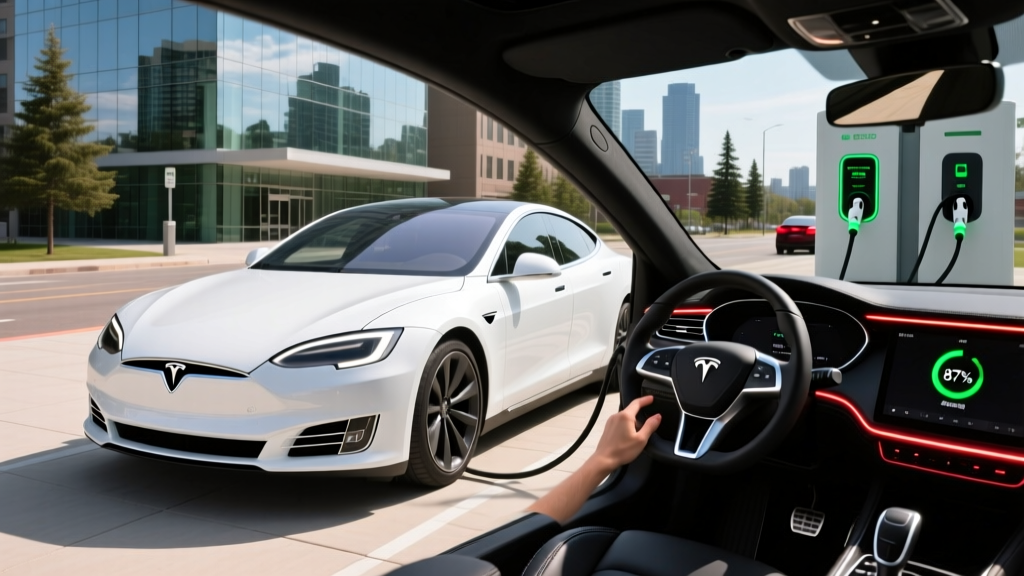
The Tesla Model S remains the benchmark luxury electric sedan more than a decade after its debut. For 2026, it continues to offer class-leading range, blistering performance, and access to Tesla's Supercharger network — but it faces stiff competition from the Lucid Air, Porsche Taycan, and Mercedes EQS. If you've been searching for detailed pics Tesla Model S information alongside hard specs, this review covers every number that matters to a real buyer.
Below, we break down the Model S lineup — the Long Range and the high-performance Plaid — with exact EPA figures, real-world range expectations, charging speeds, pricing, and whether this sedan still earns its flagship status against newer rivals.
Full Specs: Tesla Model S Long Range & Plaid
| Spec | Model S Long Range | Model S Plaid |
|---|---|---|
| EPA Range | 402 miles | 359 miles |
| Battery (usable) | ~95 kWh (NMC) | ~95 kWh (NMC) |
| Drivetrain | Dual-Motor AWD | Tri-Motor AWD |
| Horsepower | 670 hp | 1,020 hp |
| 0–60 mph | 3.1 seconds | 1.99 seconds |
| Top Speed | 155 mph | 200 mph |
| MPGe (combined) | 120 MPGe | 116 MPGe |
| Efficiency | 28 kWh/100 mi | 29 kWh/100 mi |
| Max DC Fast Charge | 250 kW | 250 kW |
| 10–80% DC Time | ~30 minutes | ~30 minutes |
| Level 2 Home Charge | 11.5 kW (~44 mi/hr) | 11.5 kW (~44 mi/hr) |
| Cargo (rear + frunk) | 26.3 + 3.1 = 29.4 cu ft | 26.3 + 3.1 = 29.4 cu ft |
| Rear Legroom | 35.4 inches | 35.4 inches |
| Base MSRP | $74,990 | $89,990 |
| Battery Warranty | 8 yr / 150,000 mi | 8 yr / 150,000 mi |
Sources: EPA / fueleconomy.gov, Tesla Model S Design Studio.
Real-World Range: What the EPA Sticker Doesn't Tell You
EPA Long Range: 402 miles | Real-world highway (70 mph): ~310–340 miles
EPA Plaid: 359 miles | Real-world highway (70 mph): ~275–300 miles
Cold weather (below 32°F): Expect 20–30% reduction on either trim
The Model S Long Range's 402-mile EPA figure is among the highest of any production EV sold in the U.S. But as with every electric vehicle, real-world results depend heavily on driving style, speed, and temperature.
In sustained highway driving at 70–75 mph, the Long Range typically delivers between 310 and 340 miles before needing a charge. The Plaid, with its tri-motor setup and stickier tires creating more rolling resistance, drops to roughly 275–300 miles under the same conditions. Efficiency hovers around 28–29 kWh/100 miles, which is respectable for a 4,700+ lb sedan with this much power.
Cold weather is the great equalizer. Below freezing, lithium-ion chemistry becomes less efficient and cabin heating draws significant energy. Without preconditioning, expect a 20–30% range loss in sub-32°F conditions. The Model S heat pump helps mitigate this compared to older resistive-heating EVs, but physics still wins. If you live in Minnesota or Maine, plan for roughly 260–280 real-world miles from the Long Range in deep winter.
One advantage the Model S retains: its large battery buffer means even at 20% degradation over 150,000 miles, you'd still have over 320 EPA-rated miles in the Long Range — more than most competitors offer brand-new.
Charging Speed: 250 kW Peak, But Read the Curve
| Charging Level | Power (kW) | Rate (miles/hour) | Notes |
|---|---|---|---|
| Level 1 (120V) | ~1.4 kW | ~4 mi/hr | Emergency/trickle only |
| Level 2 (240V, 48A) | 11.5 kW | ~44 mi/hr | Full charge in ~9 hours |
| DC Fast (V3 Supercharger) | 250 kW peak | ~200 mi in 15 min | 10–80% in ~30 min |
| DC Fast (CCS adapter) | Up to 250 kW | Varies by station | Non-Tesla networks |
The Model S charges at a peak rate of 250 kW on Tesla's V3 Superchargers. That translates to adding roughly 200 miles of range in 15 minutes under ideal conditions — battery preconditioned, state of charge below 30%, and ambient temperature above 50°F.
However, the charging curve tells the full story. The 250 kW peak is only sustained between roughly 10–30% state of charge. From 30–60%, the rate tapers to approximately 150–180 kW. Above 80%, it drops sharply to under 50 kW to protect battery longevity. This is why Tesla (and every other manufacturer) quotes 10–80% times rather than 0–100%.
For home charging, the Model S accepts up to 11.5 kW on a Level 2 Wall Connector (48 amps on a 60-amp circuit). This adds about 44 miles of range per hour, meaning a full overnight charge from near-empty takes roughly 9 hours. Most owners who plug in nightly never need the full charge time — topping up from 60% to 90% takes about 3–4 hours.
One important note: the Model S uses Tesla's proprietary NACS connector natively. With Tesla opening the Supercharger network to other brands, NACS has become the de facto North American standard. For non-Tesla DC fast chargers with CCS connectors, Tesla sells a CCS adapter (included with new vehicles as of recent model years).
Performance: From Civilized to Absurd
The Model S Long Range produces 670 horsepower from its dual-motor all-wheel-drive setup and hits 60 mph in 3.1 seconds. That's supercar territory from just a few years ago, delivered silently and with zero drama. For 95% of drivers, the Long Range is the sweet spot — it's absurdly quick while retaining the range advantage.
The Plaid is a different animal entirely. Three motors produce 1,020 horsepower and a claimed 1.99-second 0–60 mph time (with rollout subtracted, per drag-strip convention). In real-world testing by multiple outlets, the Plaid consistently runs low-2-second times, making it one of the quickest production cars ever built, regardless of powertrain. The tri-motor setup also enables torque vectoring across the rear axle, which improves cornering dynamics noticeably over the dual-motor car.
Both trims feature adaptive air suspension with adjustable ride height, automatic lowering at highway speeds for efficiency, and a "Cheetah Stance" launch mode on the Plaid that pre-loads the suspension for maximum traction.
Interior, Tech, and the Yoke Question
The current-generation Model S interior is a significant step up from the pre-2021 refresh. Materials include real aluminum trim, ventilated front seats, a 17-inch center touchscreen (now tilted toward the driver), and a rear-seat entertainment screen. Build quality has improved, though panel-gap variance still occasionally surfaces on delivery.
The 17-inch display runs Tesla's latest software with native Spotify, Netflix, YouTube, and a full gaming suite (Cyberpunk 2077 runs on the car's AMD Ryzen processor). Wireless phone charging, HEPA air filtration with "Bioweapon Defense Mode," and a 22-speaker audio system are standard.
The controversial yoke steering wheel remains standard, though a round wheel is now available as a no-cost option. The yoke provides an unobstructed view of the instrument cluster but requires adaptation for low-speed maneuvers and three-point turns where hand-over-hand steering is natural. On highway drives with Autopilot engaged, the yoke works well. In parking lots, it's divisive.
Driver Assistance: Tesla's Autopilot is standard, offering adaptive cruise control and lane-keeping. Full Self-Driving (Supervised) is an optional add-on (currently $8,000 or $99/month). Despite the name, FSD is an SAE Level 2 system — the driver must remain fully engaged and responsible at all times. It handles highway interchanges, traffic lights, and some city streets impressively, but it is not autonomous driving. Tesla's own documentation and the NHTSA require continuous driver supervision.
Tesla Autopilot and FSD (Supervised) are SAE Level 2 driver-assistance systems. They do NOT make the vehicle self-driving. The driver must keep hands on the wheel (or apply steering torque), monitor the road, and be prepared to take over instantly. Misuse has resulted in NHTSA investigations and crashes.
Cargo, Passenger Space, and Daily Practicality
The Model S is a full-size liftback sedan, and that body style pays practicality dividends. The rear hatch opens to reveal 26.3 cubic feet of cargo space — more than most midsize SUVs. Combined with the 3.1-cubic-foot front trunk (frunk), total storage reaches 29.4 cubic feet. With the 60/40-split rear seats folded, you can fit long items like skis or flat-pack furniture with ease.
Rear legroom measures 35.4 inches, which is adequate for adults but trails the Mercedes EQS (40.4 inches) and Lucid Air (37.3 inches) noticeably. The floor-mounted battery does create a slightly elevated seating position in the back, which some passengers find less natural than a conventional sedan. Headroom under the panoramic glass roof is generous front and rear.
For families: two rear-facing child seats fit with room to spare, but three-across is tight. The Model S is better suited for families with one or two children rather than three.
Pricing, Trims, and Federal Tax Credit Status
| Trim | Base MSRP | As-Tested (typical options) | §30D Federal Credit |
|---|---|---|---|
| Long Range | $74,990 | $78,000–$82,000 | Not eligible (MSRP exceeds $55,000 sedan cap) |
| Plaid | $89,990 | $95,000–$105,000 | Not eligible (MSRP exceeds $55,000 sedan cap) |
Here's the critical pricing detail many buyers miss: under current IRS §30D rules, the federal EV tax credit for sedans is capped at vehicles with an MSRP of $55,000 or less. Both Model S trims exceed this threshold significantly, meaning neither qualifies for the $7,500 federal tax credit.
Additionally, §30D imposes buyer income caps ($150,000 single / $300,000 joint modified AGI) and battery critical-mineral sourcing requirements. Even if the MSRP cap didn't disqualify the Model S, these additional hurdles would need to be satisfied. Always verify current eligibility on the IRS Clean Vehicle Provisions page before assuming credit availability.
Destination and order fees add approximately $1,390 to the base price. Popular options include FSD ($8,000), premium paint colors ($1,500–$2,500), and 21-inch wheels ($4,500, which reduce range to ~372 miles for Long Range). A realistically equipped Long Range typically lands between $78,000 and $82,000 before state incentives.
Some states offer their own EV rebates or tax credits that are not subject to the federal MSRP cap. Check your state's energy or DMV website for local programs — these can sometimes offset $1,000–$5,000 depending on jurisdiction.
Model S vs. The Competition
| Spec | Tesla Model S LR | Lucid Air Pure | Porsche Taycan 4S | Mercedes EQS 450+ |
|---|---|---|---|---|
| EPA Range | 402 mi | 419 mi | 288 mi | 390 mi |
| 0–60 mph | 3.1 sec | 5.2 sec | 3.8 sec | 5.9 sec |
| Max DC Charge | 250 kW | 200 kW | 270 kW | 200 kW |
| Base MSRP | $74,990 | $69,900 | $103,800 | $104,400 |
| Rear Legroom | 35.4 in | 37.3 in | 32.7 in | 40.4 in |
| Charging Network | Supercharger (native) | Supercharger (adapter) | Electrify America | Various / EA |
The Model S occupies a unique position. The Lucid Air Pure offers slightly more range and rear-seat space for less money, but it lacks Tesla's Supercharger network advantage and software polish. The Porsche Taycan delivers superior driving dynamics and build quality but at a significant price premium and with much shorter range. The Mercedes EQS prioritizes luxury and rear-seat comfort but can't match the Model S on performance or efficiency.
The Supercharger network remains Tesla's strongest moody. While other brands are gaining NACS access, Tesla owners enjoy the most mature, reliable, and geographically comprehensive DC fast-charging network in North America — a meaningful advantage for road-trippers.
Pros, Cons, and the Verdict
Pros
- Class-leading 402-mile EPA range (Long Range)
- Access to the Tesla Supercharger network
- Blistering acceleration even in base trim (3.1s 0–60)
- Spacious liftback cargo area (29.4 cu ft total)
- Continuous OTA software updates add features over time
- Strong battery warranty (8 yr / 150,000 mi)
- Excellent efficiency (28 kWh/100 mi)
Cons
- No federal tax credit eligibility (MSRP exceeds sedan cap)
- Rear seat legroom trails Lucid Air and Mercedes EQS
- Yoke steering requires adaptation (round wheel now optional)
- No Apple CarPlay or Android Auto support
- Plaid's range drops to 359 mi EPA
- Service center availability varies by region
- Interior luxury materials still trail Porsche/Mercedes at this price
Who Should Buy the Tesla Model S?
Buy the Model S Long Range if: You want maximum range in a performance sedan, frequently road-trip and value Supercharger access, need practical liftback cargo space, and are comfortable with Tesla's minimalist interior philosophy.
Buy the Model S Plaid if: You want the quickest production sedan available, track-day capability matters, and you accept the range trade-off (~43 fewer EPA miles) for tri-motor performance.
Look elsewhere if: You need maximum rear-seat space for tall adults (consider the EQS or Lucid Air), you want traditional luxury materials and dealer service (Porsche Taycan), or you require federal tax credit eligibility (look at vehicles under the $55,000 sedan MSRP cap).
Frequently Asked Questions
What is the real-world range of the Tesla Model S?
The Long Range delivers approximately 310–340 miles in real-world highway driving at 70 mph, versus its 402-mile EPA rating. The Plaid achieves roughly 275–300 miles highway versus its 359-mile EPA rating. In cold weather below freezing, expect a 20–30% reduction from these real-world figures.
How fast does the Model S charge at home and on the road?
On a Level 2 home charger (11.5 kW / 48A), the Model S adds about 44 miles of range per hour, fully charging overnight in ~9 hours. On a V3 Supercharger (250 kW DC), it adds up to 200 miles in 15 minutes and charges from 10–80% in approximately 30 minutes. Charging speed tapers significantly above 80% to protect battery health.
Does the Tesla Model S qualify for the $7,500 federal EV tax credit?
No. Under current IRS §30D rules, new sedans must have an MSRP of $55,000 or less to qualify. The Model S Long Range starts at $74,990 and the Plaid at $89,990 — both well above the cap. Additional income limits and battery-sourcing requirements also apply to eligible vehicles. Check your state for local incentives that may partially offset cost.
Is the Model S worth buying over the Lucid Air or Porsche Taycan?
It depends on priorities. The Model S wins on Supercharger network access, performance-per-dollar, and software. The Lucid Air Pure offers more range and rear-seat space at a lower starting price. The Porsche Taycan delivers superior driving dynamics, interior quality, and dealer service at a much higher price with shorter range. For road-trippers who value charging infrastructure, the Model S remains compelling. For luxury-first buyers, the Taycan or EQS may better fit.
What is the battery warranty on the Model S?
Tesla covers the Model S battery and drive unit for 8 years or 150,000 miles, whichever comes first, with a minimum 70% capacity retention guarantee. If the battery degrades below 70% state of health within the warranty period, Tesla will repair or replace it. This is one of the more generous battery warranties in the luxury EV segment.
How much cargo space does the Model S have?
The Model S offers 26.3 cubic feet behind the rear seats and an additional 3.1 cubic feet in the front trunk (frunk), for a total of 29.4 cubic feet. The liftback hatch design makes loading large items easier than a traditional sedan trunk. With the 60/40 rear seats folded, the space accommodates long cargo like skis or furniture.
For official EPA data, visit fueleconomy.gov. For current tax credit rules, consult the IRS Clean Vehicle Credits page. Safety ratings available at NHTSA.gov.