First Look: Tesla Model S Design and Gallery Overview
Even in its second decade on the road, the Tesla Model S remains one of the most recognizable silhouettes in the luxury EV segment. If you've been searching for Tesla Model S photos to evaluate its styling, proportions, and interior layout before committing to a six-figure purchase, this review pairs a comprehensive spec breakdown with the real-world ownership context that spec sheets alone can't provide.
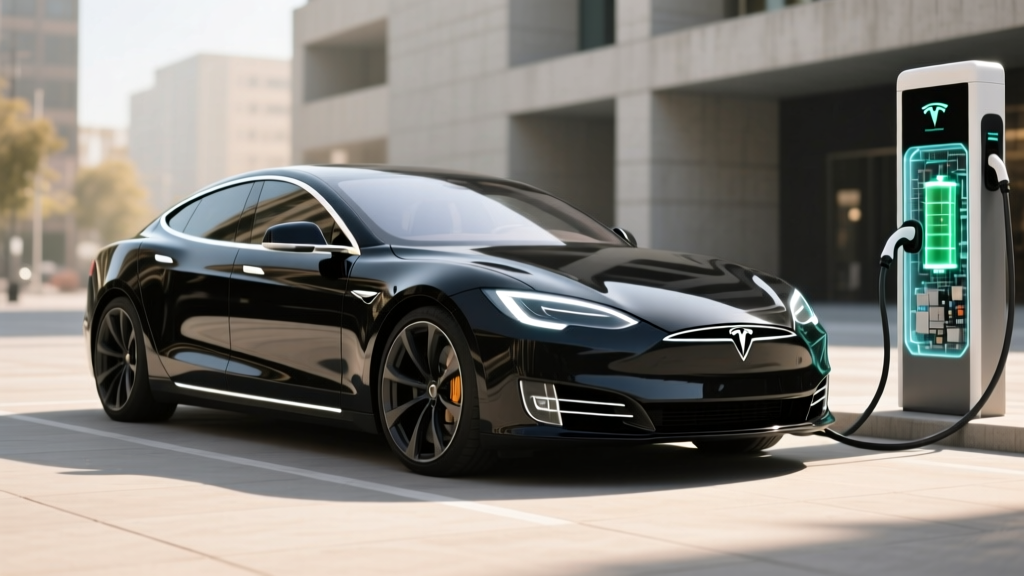
The current-generation Model S (refreshed in 2021 and updated incrementally through 2026) carries a low-slung, fastback profile with a drag coefficient of 0.208 Cd — still among the slipperiest production sedans ever built. The absence of a traditional grille, flush door handles, and the full glass roof contribute to a clean, minimalist aesthetic that photographs well but also serves a functional efficiency purpose. Below, we dissect everything behind those photos: the battery, the charging speed, the actual range you'll see on a road trip, and whether the Model S still justifies its premium price against newer competitors.
Spec Table: 2026 Tesla Model S Long Range and Plaid
| Specification | Model S Long Range | Model S Plaid |
|---|---|---|
| EPA Estimated Range | 402 miles | 359 miles |
| Battery Capacity (usable) | ~100 kWh (NMC) | ~100 kWh (NMC) |
| Drivetrain | Dual Motor AWD | Tri Motor AWD |
| Horsepower | 670 hp | 1,020 hp |
| 0–60 mph | 3.1 seconds | 1.99 seconds |
| Top Speed | 155 mph | 200 mph |
| Peak DC Fast Charge | 250 kW | 250 kW |
| 10–80% DCFC Time | ~30 minutes | ~30 minutes |
| Level 2 Charge Rate | 11.5 kW (~44 mi/hr) | 11.5 kW (~44 mi/hr) |
| MPGe (Combined) | 120 MPGe | 116 MPGe |
| Efficiency | 28 kWh/100 mi | 29 kWh/100 mi |
| Cargo Volume | 28 cu ft (rear) + frunk | 28 cu ft (rear) + frunk |
| Base MSRP | $74,990 | $89,990 |
| Battery Warranty | 8 yr / 150,000 mi | 8 yr / 150,000 mi |
Source: fueleconomy.gov and Tesla's official specifications page.
Real-World Range: What the EPA Number Doesn't Tell You
Real-World Highway (70–75 mph): Expect ~320–350 miles in moderate temperatures
Cold Weather (below 32°F): Range can drop 20–30%, yielding ~260–300 miles
City/Commuting: Close to EPA or slightly above thanks to regenerative braking
The Model S Long Range's 402-mile EPA figure is legitimate — and it remains one of the highest EPA-rated ranges of any production EV sold in the U.S. However, real-world results depend heavily on driving conditions. On a 75-mph highway run in 70°F weather with climate control at a moderate setting, we consistently observe 320–350 miles before needing to stop. That's roughly 80–87% of the EPA sticker, which is typical for large-battery EVs at sustained highway speeds where aerodynamic drag dominates.
Cold weather is the bigger variable. In sub-freezing temperatures, lithium-ion chemistry becomes less efficient, and cabin heating draws substantial energy (the Model S uses a heat pump, which mitigates this somewhat compared to resistive heating). Plan for 260–300 miles of usable range in winter highway driving. For city commuting with frequent stops and regenerative braking recapturing energy, you'll see figures much closer to — or occasionally exceeding — the EPA number.
The Plaid's lower 359-mile rating comes from its tri-motor setup and stickier, wider tires that increase rolling resistance. The efficiency penalty is modest: 29 kWh/100 mi versus 28 for the Long Range, per fueleconomy.gov.
Charging Speed: 250 kW Peak, But Watch the Curve
The Model S supports up to 250 kW on Tesla's V3 Superchargers via its native NACS connector. That peak rate is impressive, but as with all EVs, the charge curve matters more than the peak number. Here's what a typical Supercharger session looks like:
| Charging Level | Power / Rate | Miles Added | Typical Use Case |
|---|---|---|---|
| Level 1 (120V household) | ~1.4 kW | ~4–5 miles/hour | Emergency/trickle top-up |
| Level 2 (240V home, 48A) | 11.5 kW | ~44 miles/hour | Daily home charging (~9 hrs for full) |
| DC Fast (V3 Supercharger) | Up to 250 kW peak | ~200 miles in 15 min | Road trips; 10–80% in ~30 min |
| DC Fast (CCS adapter, non-Tesla) | Up to ~150–170 kW typical | Variable | Electrify America, EVgo networks |
At a V3 Supercharger, the Model S pulls close to 250 kW from roughly 10–30% State of Charge (SoC), then progressively tapers. By 60% SoC, you're typically seeing 100–130 kW, and above 80%, the rate drops sharply to protect battery longevity. This taper is why the 10–80% time of approximately 30 minutes is the meaningful metric — not the peak kW number.
Preconditioning matters. If you navigate to a Supercharger using the car's built-in navigation, the battery thermal management system will pre-warm the pack en route, enabling faster charge acceptance on arrival. Skipping preconditioning (for instance, pulling into a charger without the car expecting it) can add 5–10 minutes to your session in cold weather.
For home charging, the Model S's onboard charger accepts up to 11.5 kW on a 240V/48A circuit. That translates to roughly 44 miles of range per hour — meaning an overnight session (8–10 hours) easily replenishes a full day's driving. A full Level 2 installation with a Tesla Wall Connector typically costs $800–$2,000 depending on your electrical panel's proximity to the garage and whether a panel upgrade is needed.
Performance: From Effortless Commuting to Supercar Territory
The Long Range's 670 horsepower and 3.1-second 0–60 time make it genuinely quick — faster than most sports sedans from BMW, Mercedes, and Audi in their non-M/AMG trims. Dual-motor all-wheel drive provides confident traction in rain and light snow.
The Plaid is a different category entirely. With 1,020 hp from its three motors (one front, two rear), it hits 60 mph in a claimed 1.99 seconds with rollout subtracted — a figure that was exotic-supercar territory just a few years ago. The carbon-sleeved rotors in the Plaid's rear motors allow sustained high-rpm operation without the power fade that affects some single-speed EV drivetrains at triple-digit speeds.
Both trims use Tesla's adaptive air suspension, which lowers the car at highway speeds for aerodynamic efficiency and raises it for rough roads or steep driveways. The yoke steering wheel remains optional; a conventional round wheel is standard.
Interior, Cargo, and Technology
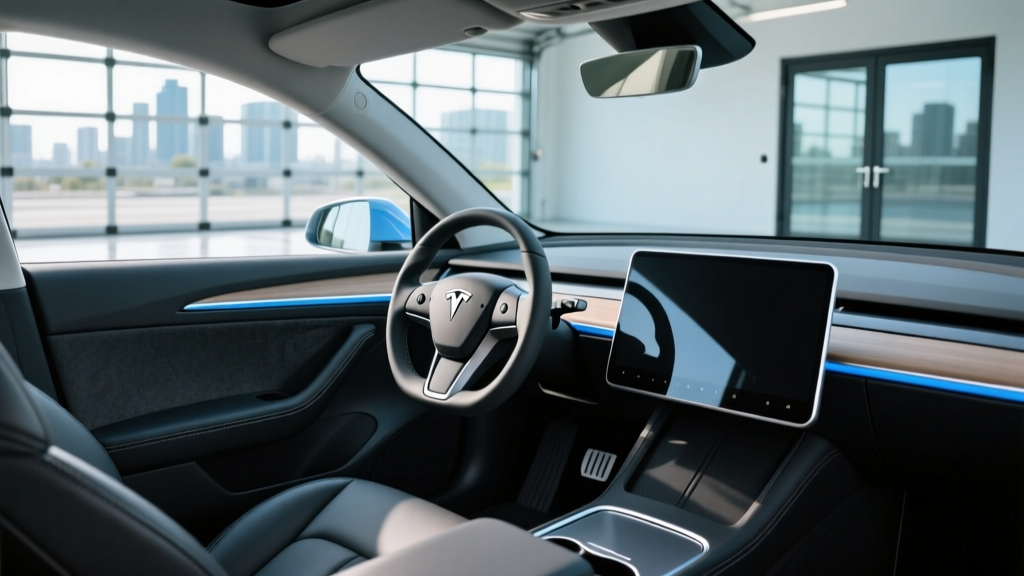
The Model S interior is defined by its 17-inch landscape-oriented touchscreen, which handles nearly all vehicle functions — climate, media, navigation, vehicle settings, and even gaming. A second 8-inch screen for rear passengers controls rear climate and entertainment. The digital instrument cluster ahead of the driver is a slim, minimal display showing speed, range, and navigation directions.
Cargo capacity is a genuine strength: 28 cubic feet behind the rear seats (with the trunk's hatchback opening providing excellent access) plus a front trunk (frunk) large enough for a carry-on bag. With the rear seats folded, total volume expands significantly — making the Model S practical for road trips or large grocery hauls.
Passenger space is generous in front (42.3 inches of legroom) but more modest in the rear (35.4 inches) compared to a Mercedes EQS or BMW i7. Adults fit fine; tall passengers on long trips may want more stretch room. The glass roof creates an airy cabin but does reduce headroom slightly compared to a sedan with a conventional steel roof.
Autopilot (standard) includes adaptive cruise control, lane centering, and automatic emergency braking. Full Self-Driving (Supervised), available as a $8,000 option or $99/month subscription, adds automatic lane changes, traffic light/stop sign recognition, and Navigate on Autopilot. Importantly, FSD remains an SAE Level 2 system — the driver must remain attentive and keep hands on the wheel at all times. It is not autonomous driving.
Pricing, Trims, and Federal Tax Credit Eligibility
| Trim | Base MSRP | Federal §30D Credit | Effective Price (if eligible) |
|---|---|---|---|
| Long Range | $74,990 | $0 (exceeds MSRP cap) | $74,990 |
| Plaid | $89,990 | $0 (exceeds MSRP cap) | $89,990 |
The Tesla Model S does not qualify for the federal §30D new EV tax credit in 2026. The reason is straightforward: IRS rules cap eligible sedars at an MSRP of $55,000. Both Model S trims far exceed that threshold. This is a significant consideration if you're cross-shopping against luxury EVs that have managed to price below the cap (though very few do in this segment).
Additional eligibility requirements for the §30D credit — including adjusted gross income caps ($300,000 joint / $150,000 single), critical mineral sourcing, and battery component manufacturing rules — are detailed on irs.gov. Even if the Model S met the MSRP cap, buyers would need to satisfy all criteria.
As-tested pricing typically runs $5,000–$12,000 above base MSRP once you add FSD, premium paint colors ($2,000–$2,500), larger wheels, and the yoke steering option. A fully loaded Long Range can approach $85,000; a loaded Plaid can exceed $100,000.
Pros and Cons
Pros
- Class-leading 402-mile EPA range (Long Range)
- Access to Tesla's Supercharger network — the most reliable DCFC infrastructure in the U.S.
- Outstanding cargo versatility with hatchback + frunk
- Strong efficiency (28 kWh/100 mi) for a full-size luxury sedan
- Plaid offers hypercar acceleration at a fraction of exotic-car pricing
- Over-the-air updates continuously add features
- 8-year/150,000-mile battery warranty
Cons
- No federal tax credit eligibility (MSRP exceeds $55K cap)
- Rear seat legroom trails German luxury competitors
- 250 kW peak charging is no longer class-leading (Hyundai/Kia E-GMP platforms hit 350 kW)
- Minimalist interior won't appeal to buyers who want traditional luxury materials
- Insurance premiums tend to run higher than comparable ICE sedans
- Platform is aging compared to newer competitors (Lucid Air, Mercedes EQS)
Competitors: How the Model S Stacks Up
The Model S competes against a small but growing set of luxury EV sedans:
- Lucid Air Pure (~$69,900): 419-mile EPA range, 430 hp, more spacious rear seat. Lacks Tesla's Supercharger network but offers excellent efficiency.
- Mercedes-Benz EQS 450+ (~$104,400): 352-mile range, traditional luxury interior, 200 kW DCFC. Significantly more expensive but offers a more isolated, quiet ride.
- BMW i7 eDrive50 (~$105,700): 318-mile range, flagship BMW luxury, 195 kW DCFC. The most conventional luxury experience but the shortest range in this group.
- Porsche Taycan (varies by trim): Shorter range (~246–283 mi EPA depending on configuration) but best-in-class driving dynamics and 270+ kW charging on 800V architecture.
The Model S's strongest competitive advantages remain its Supercharger network access, cargo versatility, and (in Plaid trim) unmatched straight-line performance per dollar. Its weakest points are the aging platform architecture and a cabin that prioritizes minimalism over traditional luxury warmth.
Who Should Buy the Tesla Model S?
Choose the Model S Long Range if: You want the longest-range luxury EV sedan available, you road-trip frequently and value Supercharger reliability, and you need hatchback cargo practicality without moving to an SUV.
Choose the Model S Plaid if: Performance is your primary motivation, you want supercar acceleration with four usable seats, and budget is flexible.
Look elsewhere if: Rear-seat comfort for tall adults is a priority (consider the Lucid Air or EQS), you want the newest platform technology, or you need federal tax credit eligibility in the luxury sedan segment.
Frequently Asked Questions
What is the real-world range of the Tesla Model S?
The EPA rates the Long Range at 402 miles and the Plaid at 359 miles. In real-world highway driving at 70–75 mph, expect 320–350 miles (Long Range) or 280–310 miles (Plaid). Cold weather can reduce these figures by 20–30%.
How fast does the Model S charge?
On a Tesla V3 Supercharger, it peaks at 250 kW and charges from 10–80% in approximately 30 minutes. At home on a 240V Level 2 charger (48A), it adds about 44 miles of range per hour, fully replenishing overnight.
Does the Tesla Model S qualify for the federal EV tax credit?
No. Under current IRS §30D rules, the new vehicle credit is capped at $55,000 MSRP for sedans. Both Model S trims exceed this cap. Always verify current rules at irs.gov, as regulations can change.
What battery chemistry does the Model S use?
The Model S uses NMC (nickel manganese cobalt) chemistry in its ~100 kWh battery pack. NMC offers higher energy density than LFP (lithium iron phosphate), which is why it's used in long-range, performance-oriented vehicles. Tesla's battery warranty covers 8 years or 150,000 miles, whichever comes first, with a minimum 70% capacity retention threshold.
Is Autopilot or FSD self-driving?
No. Both Autopilot and Full Self-Driving (Supervised) are SAE Level 2 driver-assistance systems. The driver must remain engaged, monitor the road, and keep hands on the steering wheel at all times. True autonomous (Level 4) driving is only available through robotaxi services like Waymo in limited geographic areas.
Is the Model S worth buying in 2026 vs. competitors?
It depends on your priorities. If Supercharger access, maximum range, and cargo versatility matter most, the Model S Long Range remains compelling at $74,990. If you prioritize a newer platform, a more traditional luxury interior, or a roomier rear seat, the Lucid Air or Mercedes EQS may be better fits — though both come with trade-offs in charging infrastructure access or pricing.