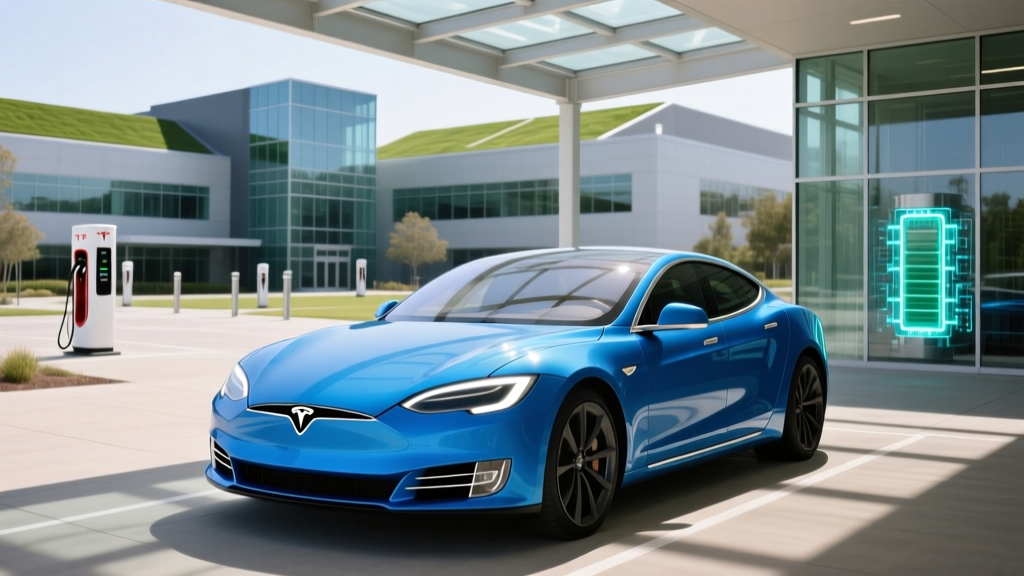
Tesla’s engineering DNA traces back to a modest office park near Stanford — the original Tesla headquarters Palo Alto campus at 3500 Deer Creek Road, where the Model S was conceived over a decade ago. That sedan redefined what an electric car could be, and the 2026 Model S continues to carry that legacy, albeit in a market it no longer dominates by default. With the Lucid Air, Mercedes EQS, and BMW i7 all fighting for luxury-EV sedan buyers, the Model S must now earn its $80,000-plus sticker with hard numbers, not just brand cachet.
This review dissects the 2026 Tesla Model S — the Long Range and Plaid trims — with the exact specs, charging curves, real-world range observations, and ownership economics you need before signing a delivery agreement.
2026 Tesla Model S Spec Sheet: Long Range vs. Plaid
| Specification | Model S Long Range | Model S Plaid |
|---|---|---|
| EPA Range | 402 mi | 359 mi |
| Battery (usable) | ~100 kWh (NMC) | ~100 kWh (NMC) |
| Drivetrain | Dual-Motor AWD | Tri-Motor AWD |
| Horsepower | 670 hp | 1,020 hp |
| 0–60 mph | 3.1 sec | 1.99 sec |
| Top Speed | 155 mph | 200 mph |
| DC Fast-Charge Peak | 250 kW | 250 kW |
| 10–80% DC Time | ~27 min | ~27 min |
| Level 2 (11.5 kW) | ~41 mi/hr | ~41 mi/hr |
| MPGe (combined) | 120 MPGe | 116 MPGe |
| Efficiency | 28 kWh/100 mi | 29 kWh/100 mi |
| Cargo (trunk + frunk) | 28.0 cu ft (25.0 + 3.0) | 28.0 cu ft (25.0 + 3.0) |
| Rear Legroom | 35.4 in | 35.4 in |
| Base MSRP | $79,990 | $94,990 |
| Battery Warranty | 8 yr / 150,000 mi | 8 yr / 150,000 mi |
Sources: fueleconomy.gov, Tesla Model S Design Studio.
Real-World Range: Beyond the EPA Sticker
Real-World Highway (70–75 mph, mild weather): ~320–340 mi (Long Range) / ~280–300 mi (Plaid)
Cold Weather (below 32°F, mixed driving): ~260–290 mi (Long Range) — expect a 25–35% reduction
City / Stop-and-Go: Near or slightly above EPA thanks to regen braking
The 402-mile EPA figure on the Long Range is legitimate under the test cycle, but real-world highway driving at sustained 70+ mph will pull that down by roughly 15–20%. Tesla’s heat pump helps mitigate cold-weather losses compared to older resistive-heating EVs, but any battery chemistry loses efficiency below freezing. If your commute is a mix of city and suburban driving at moderate speeds, you’ll likely see 350–380 miles between charges. Road-trippers planning 300-mile legs between Supercharger stops will be comfortable in the Long Range; Plaid owners should budget for 250-mile legs to keep a safety margin.
The NMC (nickel-manganese-cobalt) chemistry in the Model S provides high energy density — that’s how Tesla fits 402 miles into a sedan — but it requires more careful charging habits than LFP (lithium iron phosphate). Daily charging to 80–90% is recommended, with 100% reserved for trips. This is standard practice for NMC packs and is clearly stated in the Tesla app.
Charging Speed: 250 kW Peak, but Watch the Curve
| Charging Method | Power | Rate / Time | Notes |
|---|---|---|---|
| Level 1 (120V outlet) | ~1.4 kW | ~5 mi/hr | Emergency/trickle only |
| Level 2 (240V, 48A Wall Connector) | 11.5 kW | ~41 mi/hr | Full overnight charge in ~10 hr |
| DC Fast (Supercharger V3) | Peak 250 kW | 10–80% in ~27 min | Tapers significantly above 60% |
| DC Fast (Supercharger V4 / CCS adapter) | Peak 250 kW | 10–80% in ~27 min | Same peak via NACS native |
Tesla’s 250 kW peak is genuine but short-lived. In real-world DC fast-charging sessions, the Model S pulls 250 kW only in the 10–25% state-of-charge window. By 50% SoC, you’re typically seeing 150–170 kW; by 80%, it drops to roughly 50–60 kW. This charge-curve taper is physics — the battery management system protects the NMC cells from heat damage at higher states of charge. The 27-minute 10–80% claim assumes a V3 Supercharger with battery preconditioning active (navigation set to a Supercharger triggers this automatically).
At home, the Tesla Wall Connector at 48 amps (11.5 kW on a 60-amp circuit) is the sweet spot. A full 0–100% charge takes roughly 10 hours — plug in at 9 PM, wake up to a full battery. The onboard charger caps at 11.5 kW, so paying for a higher-amperage home circuit won’t speed things up beyond this. For installation, budget $800–$2,000 for the electrician depending on panel proximity and local permit costs; a panel upgrade from 100A to 200A service can add $1,500–$3,500 if needed.
Performance & Driving Dynamics
The Long Range’s 3.1-second 0–60 time from 670 hp is supercar-quick by any standard outside of a drag strip. The dual-motor AWD system delivers instant torque with no lag, and the adaptive air suspension adjusts ride height based on speed and road conditions. Steering is precise if slightly numb — a Tesla hallmark — and the cabin remains well-isolated from wind noise at highway speed.
The Plaid’s 1.99-second 0–60 (with rollout subtracted, as Tesla measures it) is a parlor trick most owners will use twice, but the tri-motor torque vectoring provides genuine cornering grip advantages. The carbon-sleeved rotors in the Plaid resist fade during repeated hard launches. That said, the Plaid’s heavier tri-motor assembly and stickier tires reduce range by 43 miles versus the Long Range — a meaningful trade-off unless you’re tracking the car.
Both trims use Tesla’s yoke-style steering wheel as standard (a conventional round wheel is available at no extra charge). The yoke is polarizing: great for visibility of the instrument screen, awkward for low-speed parking maneuvers and three-point turns. Plan your preference before delivery day.
Tech, Interior & Driver Assistance
The 17-inch center touchscreen running Tesla’s proprietary OS remains the interface for nearly every vehicle function — climate, mirrors, glovebox, drive modes. There are no physical buttons for HVAC or volume (a steering-wheel scroll wheel handles the latter). The 12.3-inch instrument cluster ahead of the driver shows speed, range, and navigation but is not configurable with third-party apps.
Autopilot and FSD (Supervised): Both come standard with basic Autopilot (Traffic-Aware Cruise Control + Autosteer). Full Self-Driving (Supervised) is an $8,000 add-on (or $99/month subscription). Critically, FSD remains an SAE Level 2 system — the driver must remain fully engaged, hands on the yoke/wheel, eyes on the road. It handles intersections, stop signs, and highway lane changes competently in many scenarios but makes unpredictable errors that require instant driver takeover. It is not autonomous driving. Only Level 4 services like Waymo operate without a driver in the loop.
The 22-speaker audio system, ventilated front seats, heated rear seats, and HEPA air filtration (with Bioweapon Defense Mode) are all standard. Rear-seat entertainment uses a dedicated 8-inch screen. Cargo space is generous for a sedan: 25.0 cu ft in the rear hatch (which opens wide thanks to the liftback design) plus a 3.0 cu ft frunk — enough for a charging cable kit and a small bag.
Pricing, Trims & Federal Tax Credit Eligibility
| Trim | Base MSRP | As-Tested (typical options) | Federal §30D Credit | Effective Price |
|---|---|---|---|---|
| Long Range | $79,990 | $82,000–$86,000 | Up to $7,500* | ~$72,490–$78,500 |
| Plaid | $94,990 | $98,000–$105,000 | Up to $7,500* | ~$87,490–$97,500 |
*Federal tax credit subject to IRS §30D rules. See eligibility checklist below.
- MSRP Cap: Sedans must be ≤ $55,000 MSRP to qualify. Both Model S trims exceed this cap and DO NOT qualify for the new-vehicle §30D credit.
- Buyer Income Cap: AGI ≤ $150,000 (single) / $300,000 (joint) — applies if the vehicle otherwise qualifies.
- Battery Sourcing: Critical minerals and battery component requirements must be met — moot if MSRP cap is exceeded.
- Point-of-Sale Transfer: Eligible credits can be transferred to the dealer at purchase for an immediate price reduction.
This is a critical detail many buyers miss: the Model S is priced above the $55,000 sedan MSRP cap set by the Inflation Reduction Act. As of 2026, no new Tesla Model S qualifies for the $7,500 federal EV tax credit. Buyers should consult IRS.gov §30D guidelines and a tax professional for their specific situation. State incentives (California’s CVRP, for instance) may still apply — check your state’s energy office for current programs.
Ownership Costs & Warranty
Tesla’s battery and drive-unit warranty on the Model S is 8 years or 150,000 miles (whichever comes first), with a guaranteed minimum 70% capacity retention over that period. The limited vehicle warranty is 4 years / 50,000 miles. This is competitive with BMW and Mercedes but falls short of Hyundai/Kia’s 10-year battery coverage.
Estimated 5-year ownership costs (Long Range, 15,000 mi/yr):
| Category | 5-Year Estimate |
|---|---|
| Electricity (home + Supercharger mix) | $3,800–$4,600 |
| Insurance (national average, Model S) | $14,000–$18,000 |
| Maintenance (tires, cabin filter, fluid top-offs) | $2,000–$3,000 |
| Depreciation (estimated) | $28,000–$35,000 |
| Total Estimated 5-Year Cost | $47,800–$60,600 |
Insurance is the standout cost for Model S owners — premiums run 30–50% higher than comparable ICE luxury sedans due to repair costs, parts pricing, and Tesla’s direct-repair network limitations. Get quotes before ordering.
Model S vs. Key Competitors: Is It Worth It?
- You want 400+ mile EPA range in a sedan
- Supercharger network access is a priority
- You value over-the-air updates and software features
- Tri-motor performance isn’t worth a 43-mile range penalty
- Lucid Air Grand Touring: 516 mi EPA, more rear space, luxury fit/finish
- BMW i7 xDrive60: traditional luxury, superior ride quality, qualifies for some fleet incentives
- Mercedes EQS 450+: 350 mi EPA but best-in-class interior comfort
- You need a $7,500 federal credit (none of these sedans qualify either)
The Model S Long Range remains the only sedan in its class offering 400+ miles of EPA range paired with a proven DC fast-charging network. The Lucid Air Grand Touring beats it on range (516 mi EPA) and rear-seat space but has a less mature service network. The BMW i7 and Mercedes EQS deliver superior ride isolation and interior material quality but sacrifice 50–100 miles of range. If you road-trip frequently and value Supercharger reliability, the Model S still has an edge. If you prioritize luxury ambiance and backseat comfort, the Germans and Lucid are compelling alternatives.
Pros & Cons at a Glance
- 402 mi EPA range (Long Range) — class-leading
- 250 kW Supercharger network with 40,000+ stalls globally
- 3.1-sec 0–60 in Long Range; 1.99-sec in Plaid
- Liftback hatch + frunk = 28 cu ft total cargo
- Continuous OTA updates add features post-purchase
- Heat pump standard for efficient cold-weather cabin heating
- $80K+ MSRP — no federal §30D tax credit (sedan cap: $55K)
- Insurance premiums significantly above class average
- FSD ($8K add-on) remains Level 2, not autonomous
- Yoke steering awkward for parking (round wheel available)
- Build quality inconsistency — panel gaps, interior trim vary unit to unit
- Service center wait times can stretch weeks in some markets
Frequently Asked Questions
What is the real-world range of the 2026 Tesla Model S?
The Long Range achieves 402 miles EPA but expect 320–340 miles in real-world highway driving at 70–75 mph in mild weather. Cold weather (below freezing) reduces this to roughly 260–290 miles. City driving with regenerative braking can approach or slightly exceed the EPA figure.
How fast does the Model S charge at home and on the road?
On a Level 2 Tesla Wall Connector (11.5 kW / 48A), you gain ~41 miles of range per hour, fully charging in about 10 hours. On a V3 Supercharger (250 kW peak), a 10–80% charge takes roughly 27 minutes with battery preconditioning active. Peak rate is only sustained briefly; the charge curve tapers significantly above 60% SoC.
Does the Tesla Model S qualify for the federal EV tax credit?
No. The IRS §30D credit caps sedan eligibility at $55,000 MSRP. The Model S Long Range starts at $79,990 and the Plaid at $94,990 — both well above the threshold. State incentives may still apply. Always verify current rules at IRS.gov and consult a tax professional.
Is the Model S worth buying over the Lucid Air or BMW i7?
If Supercharger network access and 400+ mile range are your top priorities, the Model S Long Range is still the strongest choice. If you value rear-seat luxury, ride quality, and interior materials, the Lucid Air Grand Touring (516 mi EPA) or BMW i7 offer a more premium experience. Test-drive all three before deciding.
What battery chemistry does the Model S use, and how should I charge it?
The 2026 Model S uses NMC (nickel-manganese-cobalt) chemistry in a ~100 kWh usable pack. Unlike LFP batteries, NMC benefits from daily charging limits of 80–90%. Charge to 100% only when departing on a trip. This practice slows long-term degradation and helps maintain capacity within the 8-year/150,000-mile warranty window.
How much cargo and passenger space does the Model S offer?
The Model S provides 25.0 cu ft behind the rear seats (via the liftback hatch) plus a 3.0 cu ft front trunk, totaling 28.0 cu ft. Rear legroom is 35.4 inches — adequate for adults but tighter than the Lucid Air (37.3 in) or BMW i7. The flat floor and wide trunk opening make it practical for luggage and gear.
Note: Tesla’s Palo Alto engineering campus at 3500 Deer Creek Road served as the company’s headquarters during the Model S development era. Tesla has since relocated its corporate headquarters to Gigafactory Texas in Austin, though significant engineering operations remain in the Bay Area. The Model S reviewed here reflects the 2026 model year as sold in the United States.