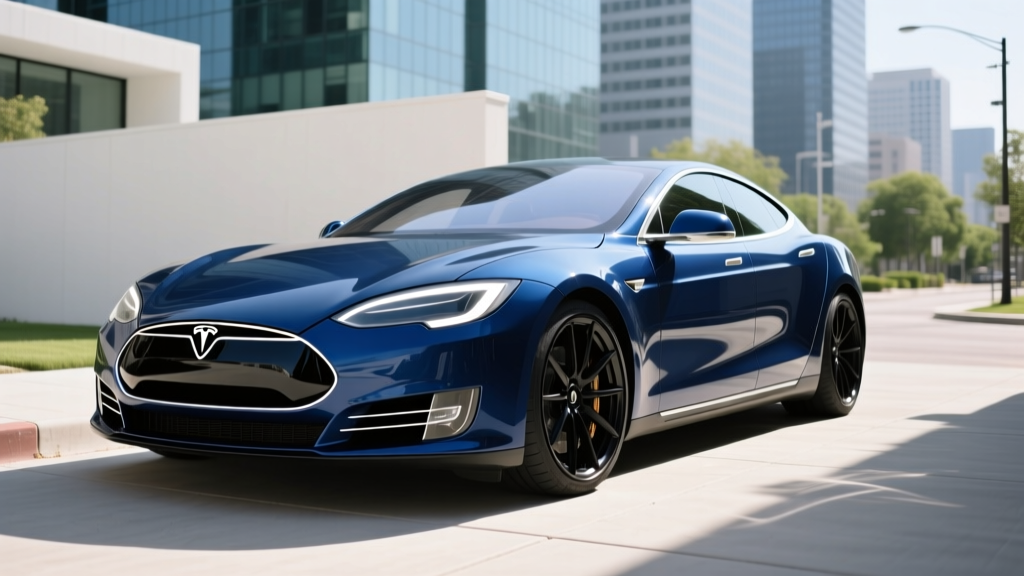
The Tesla Model S P85D changed the electric-vehicle conversation the moment it launched in late 2014. It was the first production sedan to pair dual-motor all-wheel drive with a software-defined performance mode that embarrassed supercars at stoplights. For 2026 shoppers browsing the used EV market, the P85D remains a compelling — and now affordable — entry into high-performance electric ownership. But a decade-old battery, outdated charging hardware, and shifting federal incentive rules demand a clear-eyed look before you sign the paperwork.
This review breaks down every number that matters: EPA range versus what you'll actually see on the highway in January, the 85 kWh NMC battery's longevity profile, DC fast-charge speeds on modern networks, and whether the used-EV tax credit can knock $4,000 off the price. If you're cross-shopping a used P85D against a newer Model 3 Performance or a Porsche Taycan, the data below will make the decision easier.
Tesla Model S P85D: Core Specifications at a Glance
| Spec | Value |
|---|---|
| EPA Range (original sticker) | 253 miles |
| Battery Capacity (gross / usable) | 85 kWh / ~81 kWh |
| Battery Chemistry | NMC (Nickel Manganese Cobalt), Panasonic cells |
| Drivetrain | Dual-motor AWD (front induction + rear induction) |
| Peak Horsepower | 691 hp (combined, SAE net) |
| 0-60 mph (Insane Mode) | 3.2 seconds |
| 0-60 mph (Ludicrous Mode, post-update) | 3.0 seconds |
| Top Speed | 155 mph |
| Max DC Fast-Charge Rate | ~120 kW (Supercharger V1/V2) |
| Level 2 Charge Rate | 10 kW (single onboard charger) or 20 kW (twin charger option) |
| EPA Efficiency | 93 MPGe combined (36 kWh/100 mi) |
| Cargo Volume (rear + frunk) | 26.3 cu ft rear + 5.3 cu ft frunk (31.6 total) |
| Seating | 5 passengers (optional rear-facing 3rd row for 7) |
| Original MSRP (2015) | ~$120,000 (as typically equipped) |
| Typical Used Price (2026 market) | $22,000 – $38,000 |
| Battery & Drive Unit Warranty | 8 years / unlimited miles (transferable, expired on most 2015 units) |
Real-World Range: What the 253-Mile EPA Sticker Doesn't Tell You
Real-World Highway (65-75 mph, mild weather): ~210–230 miles
Real-World Highway (cold weather, below 32°F): ~160–190 miles
Real-World City (mixed regen, moderate climate): ~235–250 miles
The P85D's 253-mile EPA estimate was class-leading in 2015, but real-world results diverge significantly depending on how and where you drive. The Model S is a large, heavy sedan (~4,800 lbs) with a performance-oriented powertrain. At sustained highway speeds above 70 mph, aerodynamic drag consumes energy rapidly, and you should plan for roughly 210–230 miles of usable range in mild conditions.
Cold weather compounds the issue. The P85D lacks the heat pump found in newer Tesla vehicles; it relies on resistive cabin heating and battery warming, which can reduce range by 25–35% in sub-freezing temperatures. On a 20°F winter highway run at 70 mph, expect closer to 160–190 miles before you need to stop. For context, that's roughly the distance from Manhattan to Washington, D.C. — doable on one charge in summer, but requiring a Supercharger stop in winter.
Battery degradation is the third variable. A 10-year-old NMC pack with 80,000+ miles typically retains 80–88% of its original capacity, depending on charging habits and climate exposure. A P85D with 85% State of Health (SoH) effectively delivers ~215 EPA-equivalent miles when new-range math is applied, meaning real-world highway range drops proportionally. Always request a battery health screenshot from the seller before purchase.
Charging Speeds: Supercharger V2, CCS Adapter Reality, and Home Level 2
| Charging Level | Power (kW) | Rate (miles/hr) | 10-80% Time | Connector |
|---|---|---|---|---|
| Level 1 (120V household) | ~1.4 kW | ~3 mi/hr | N/A (days) | J1772 adapter |
| Level 2 (240V, single charger) | 10 kW | ~29 mi/hr | ~8.5 hours | Tesla / J1772 adapter |
| Level 2 (240V, twin charger option) | 20 kW | ~58 mi/hr | ~4.5 hours | Tesla / J1772 adapter |
| DC Fast Charge (Tesla Supercharger V2) | Up to ~120 kW | ~300 mi/hr (peak) | ~45 min | Proprietary Tesla (NACS) |
| DC Fast Charge (CCS via adapter) | Up to ~100 kW* | ~250 mi/hr (peak) | ~50 min | CCS1 (with Tesla adapter) |
*CCS adapter charging speed limited by vehicle-side BMS communication and adapter throughput; expect slightly slower handshake and taper than native Supercharging.
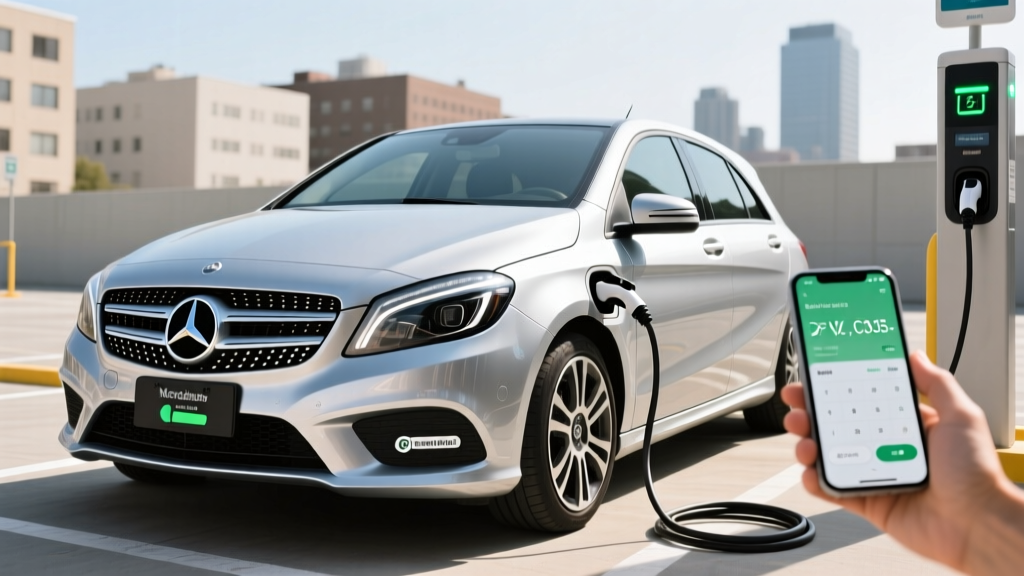
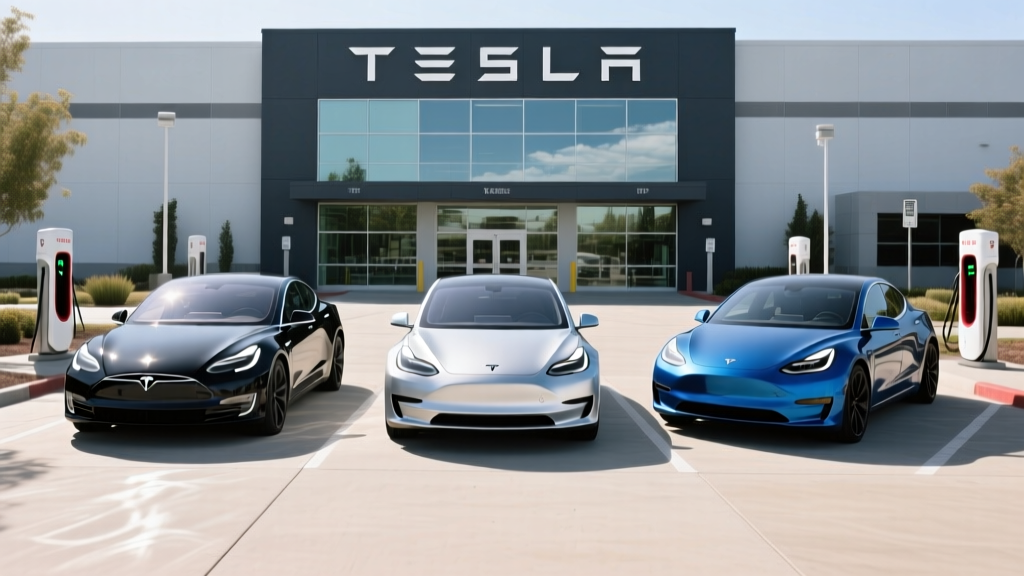
The P85D charges natively on Tesla's NACS (North American Charging Standard) connector, which in 2026 gives it the broadest fast-charging network access of any used EV. Tesla Supercharger V2 stalls deliver up to 150 kW, but the P85D's battery management system caps intake at approximately 120 kW. In practice, the charge curve peaks near 120 kW below 40% State of Charge (SoC), tapers to ~80 kW by 60%, and drops further to ~40 kW above 80%. A realistic 10-80% session takes 40–50 minutes at a V2 Supercharger.
For home charging, the single onboard charger (10 kW / 40A) adds roughly 29 miles of range per hour — enough to replenish a full day's driving overnight on a 240V/50A circuit. The optional twin charger (20 kW / 80A) doubles that rate, but requires an 100A circuit and a Tesla High Power Wall Connector (now discontinued; third-party options like the Grizzl-E Smart or JuiceBox Pro can deliver up to 48A, limited by the vehicle's single-charger hardware unless twin-equipped).
One important note: Tesla's CCS adapter (sold separately, ~$175) allows the P85D to use Electrify America, EVgo, and other CCS-equipped networks. However, early Model S vehicles may require a firmware update to enable CCS handshaking. Confirm with the seller that CCS compatibility is active before relying on non-Tesla networks for road trips.
Performance: The Numbers That Made Headlines
The P85D's dual-motor setup pairs a 224-hp front motor with a 470-hp rear motor for a combined 691 hp (SAE net). In Insane Mode, the sedan hits 60 mph in 3.2 seconds — a figure that, in 2015, placed it alongside the Lamborghini Aventador. The later Ludicrous Mode software update (a $10,000 option when new, sometimes included via promotional bundles) shaved that to 3.0 seconds with a pre-conditioned battery.
In 2026, these numbers remain genuinely quick. For comparison, the current-generation BMW i5 M60 (a $85,000 EV) runs 0-60 in 3.7 seconds. The P85D still out-accelerates most new performance sedans below $100,000.
However, the performance story has caveats. The induction motors generate heat rapidly under repeated hard launches, and Tesla's software will throttle power after two to three consecutive 0-60 runs to protect the drivetrain. The air suspension (standard on P-trim models) provides adjustable ride height but is a known maintenance item — strut and compressor failures are common past 80,000 miles, with replacement costs of $1,500–$3,000 per corner at independent shops.
Pricing, Used Market Values, and the $4,000 Used EV Tax Credit
| Item | Amount |
|---|---|
| Original MSRP (2015, typical build) | $115,000 – $130,000 |
| Used Price Range (2026, 60k–120k miles) | $22,000 – $38,000 |
| Federal Used EV Tax Credit (§25E) | Up to $4,000 (30% of sale price, max $4,000) |
| Price After Maximum Credit | $18,000 – $34,000 |
The P85D does not qualify for the new-vehicle §30D credit (obviously, as production ended in 2016). However, it can qualify for the IRS §25E Used Clean Vehicle Credit, which provides 30% of the sale price up to a maximum of $4,000. Key eligibility requirements:
- Sale price cap: The vehicle must sell for $25,000 or less from a licensed dealer to claim the full $4,000. (A P85D priced at $24,500 qualifies for $4,000; one priced at $26,000 does not qualify at all under the price cap.)
- Buyer income limits: AGI must not exceed $75,000 (single), $112,500 (head of household), or $150,000 (married filing jointly).
- Dealer sale required: Private-party sales do not qualify. The credit can be transferred to the dealer at point of sale as an instant discount.
- Model year requirement: The vehicle must be at least two model years old (easily satisfied).
- First-time transfer: The credit applies only to the first qualified resale since August 16, 2022. If the P85D was previously sold under §25E, it cannot be claimed again.
Finding a P85D under the $25,000 dealer-sale threshold is challenging but possible in 2026, particularly for higher-mileage examples (100,000+ miles) or those with cosmetic wear. This is where negotiation and patience pay off — a $24,900 dealer price unlocks $4,000 in credit, effectively bringing the net cost to $20,900.
Interior, Cargo, and Technology: Still Functional, Showing Its Age
The Model S cabin was minimalist and forward-looking in 2015, but a decade of interior evolution from competitors has narrowed its advantage. The 17-inch portrait touchscreen remains the control hub for nearly all vehicle functions, though the original MCU1 (NVIDIA Tegra 3) hardware is sluggish by modern standards. Tesla offered an MCU2 upgrade (Intel Atom E3950) for $1,500–$2,500, and many surviving P85Ds have received it — confirm with the seller, as it dramatically improves navigation, media, and browser responsiveness.
Cargo capacity remains a genuine strength: 26.3 cubic feet behind the rear seats (expandable to 58.1 cu ft with seats folded) plus a 5.3-cu-ft front trunk. That 31.6 cu ft total easily surpasses the BMW i5 (17.7 cu ft) and Porsche Taycan (14.3 cu ft rear + 2.8 cu ft frunk). The optional rear-facing third-row seat (for small children) makes the P85D a rare 7-passenger EV, though that configuration is uncommon and compromises cargo space.
Driver-assistance technology is a mixed story. Early P85Ds shipped with Hardware 1 (single camera, basic radar), which supports only basic Autopilot features — lane-keeping and adaptive cruise control. These vehicles do not support Full Self-Driving (Supervised) capability. Later 2015 builds with Hardware 2 (introduced October 2016) added enhanced Autopilot and FSD eligibility, but the transition period is murky. Always verify the Autopilot hardware generation by checking the vehicle's software menu before purchase.
Battery Longevity, Warranty Status, and Replacement Costs
The P85D's 85 kWh battery pack uses Panasonic NMC (nickel manganese cobalt) cells — the same chemistry Tesla used across Model S and X through 2020. NMC offers high energy density but is more susceptible to calendar and cycle degradation than the LFP (lithium iron phosphate) chemistry found in newer standard-range Teslas.
Based on aggregated fleet data from sources like Teslanomics and owner forums, an 85 kWh pack at 10 years and 80,000–100,000 miles typically shows 12–20% degradation, meaning 80–88% State of Health. Vehicles that were regularly charged to 100% and stored in hot climates (Arizona, Texas, Southern California) tend toward the higher-degradation end. Those charged to 80% daily with occasional 100% for trips fare better.
The original battery warranty — 8 years with unlimited miles — has expired on all 2015 P85Ds as of 2023. This means any battery failure is an out-of-pocket expense. A remanufactured 85 kWh pack from Tesla costs approximately $12,000–$16,000 installed at a Service Center, while third-party specialists like Electrified Garage or Gruber Motors offer rebuilt packs for $8,000–$12,000. This is the single largest financial risk of P85D ownership and must factor into your purchase budget.
The drive units (front and rear motors) carry the same expired 8-year warranty. Rear drive unit failures were relatively common on early P85Ds (whining bearings, coolant ingress), and many surviving vehicles have already had at least one replacement under warranty. Confirm service history before purchase.
Who Should Buy a Used Tesla Model S P85D?
Choose the P85D if:
- You want supercar-rivaling acceleration for under $25,000 (after tax credit)
- You need a spacious liftback sedan with 31+ cu ft of cargo room and optional 7-seat config
- You have reliable home Level 2 charging and a daily commute under 120 miles round-trip
- You value Tesla Supercharger network access for road trips
- You're mechanically inclined or budget $3,000–$5,000 annually for aging-EV maintenance
Skip the P85D if:
- You need 300+ miles of real-world range for frequent long-distance travel
- You want modern driver-assistance hardware (FSD-capable) or the latest infotainment
- You live in a cold climate and can't tolerate 30%+ winter range loss
- You cannot absorb a potential $10,000–$16,000 battery replacement cost
- You want a new-vehicle warranty or the §30D $7,500 federal tax credit
How the P85D Stacks Up Against Key Competitors
| Spec | Tesla Model S P85D (2015) | Tesla Model 3 Perf. (2020) | Porsche Taycan 4S (2020) |
|---|---|---|---|
| Used Price Range | $22k–$38k | $28k–$40k | $48k–$65k |
| EPA Range | 253 mi | 322 mi | 203 mi |
| 0-60 mph | 3.0–3.2 sec | 3.1 sec | 3.8 sec |
| Battery (kWh) | 85 (NMC) | 75 (NMC/NCA) | 79.2 (NMC) |
| Max DC Charge (kW) | ~120 | ~170 | ~225 |
| Cargo (cu ft) | 31.6 | 15.0 (trunk) + 3.1 frunk | 14.3 + 2.8 frunk |
| Supercharger Access | Yes (native NACS) | Yes (native NACS) | CCS (adapter for Tesla) |
| FSD Hardware | HW1 or HW2* | HW3 | N/A |
*Only P85Ds built after October 2016 with HW2 support FSD; most 2015 models have HW1.
The Model 3 Performance offers better range, faster charging, modern hardware, and lower running costs — but sacrifices cargo space, ride comfort, and the sheer presence of a full-size luxury sedan. The Taycan 4S charges faster (800V architecture) and drives with Porsche precision, but costs significantly more used, offers less range, and lacks Supercharger access without an adapter. The P85D occupies a unique niche: maximum size, maximum acceleration, and maximum Tesla ecosystem access, at the cost of efficiency and modernity.
Frequently Asked Questions
What is the real-world range of the Tesla Model S P85D?
Expect 210–230 miles on the highway in mild weather, 235–250 miles in city driving with regenerative braking, and 160–190 miles in cold-weather highway driving below freezing. Battery degradation (typically 12–20% at 10 years) reduces these figures proportionally.
How fast does the P85D charge at home and on road trips?
At home on a 240V Level 2 circuit, the single charger adds ~29 miles per hour (10 kW); the optional twin charger doubles this to ~58 mi/hr. On Tesla Supercharger V2 stalls, it peaks near 120 kW and charges 10-80% in approximately 45 minutes. CCS adapter charging is slightly slower at ~100 kW peak.
Does the Tesla Model S P85D qualify for any federal tax credit?
Not the new-vehicle §30D credit, but it can qualify for the IRS §25E Used Clean Vehicle Credit — up to $4,000 if purchased from a licensed dealer for $25,000 or less, subject to buyer income limits ($75k single / $150k joint). The credit can be applied as a point-of-sale discount.
How much does a battery replacement cost on the P85D?
A Tesla-remanufactured 85 kWh pack runs $12,000–$16,000 installed. Third-party rebuilt packs range from $8,000–$12,000. The original 8-year/unlimited-mile warranty has expired on all 2015 units.
Is the P85D's Autopilot self-driving?
No. Autopilot on the P85D is an SAE Level 2 driver-assistance system requiring continuous driver supervision — hands on wheel, eyes on road. Early HW1 vehicles have only basic lane-keeping and adaptive cruise; they cannot receive FSD (Supervised) updates.
Should I buy a P85D or a newer Model 3 Performance?
Choose the P85D if cargo space, ride comfort, and raw acceleration matter most and you accept higher maintenance risk. Choose the Model 3 Performance for better range (322 mi EPA), faster charging, modern HW3 Autopilot, and lower total cost of ownership. For most buyers in 2026, the Model 3 is the more rational choice — but it doesn't offer the P85D's combination of size, speed, and price.