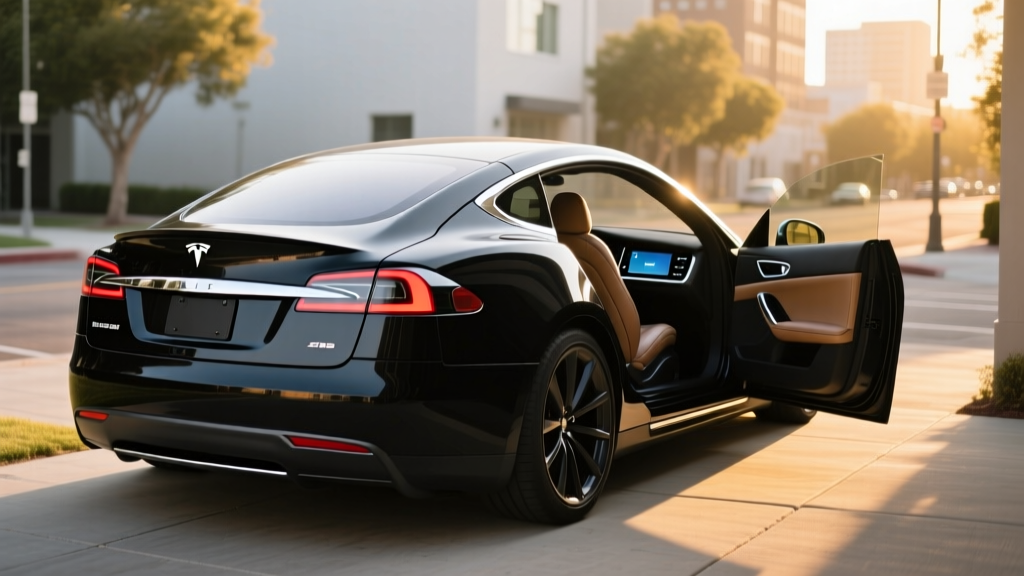
The Tesla Model S P100D occupies a unique space in the used EV market: it's the last of the pre-refresh, 100 kWh flagship sedans, offering Ludicrous-mode acceleration and Supercharger access at a fraction of its original $140,000+ MSRP. For 2026 buyers hunting a high-performance luxury EV on the secondary market, the P100D (produced roughly 2016–2019) remains compelling — but it comes with specific battery, charging, and ownership caveats that every shopper should understand before signing paperwork.
This review covers the real-world range you can expect from a 6-to-9-year-old 100 kWh pack, DC fast-charging speeds on modern Superchargers, the P100D's performance figures, and whether it still makes sense against newer, cheaper EVs. We'll also address the federal used-EV tax credit and what to inspect before buying.
Quick Verdict: Who Should Buy a Used Model S P100D?
The P100D is best suited for enthusiasts and daily drivers who want supercar-level acceleration (2.5-second 0–60 mph) in a practical, five-passenger sedan with real long-range capability. It's a strong pick for road-trippers who rely on the Tesla Supercharger network and for commuters who value regenerative one-pedal driving and over-the-air updates.
It is not the right choice if you want the latest interior quality, a heat pump for cold-climate efficiency, or a vehicle eligible for the new-vehicle §30D federal tax credit. Buyers should also budget for potential out-of-warranty battery and drive-unit replacement, which can exceed $20,000 on high-mileage examples.
Pros
- 2.5-second 0–60 mph — still among the fastest production sedans ever built
- EPA-estimated 315 miles of range when new; ~260–290 mi real-world today
- Full access to Tesla Supercharger network (NACS native, no adapter needed)
- Large 26.3 cu ft cargo area with hatchback + front trunk (frunk)
- Over-the-air software updates continue through 2026
- Potential eligibility for the $4,000 used-EV federal tax credit (§25E)
Cons
- Pre-refresh interior shows its age — no yoke, no rear screen, older 17" display
- No heat pump — cold-weather range loss is significant (~25–35%)
- DC fast charging peaks around 120 kW (slow by 2026 standards)
- Out-of-warranty battery replacement can cost $15,000–$22,000+
- Insurance premiums run 20–40% higher than average luxury sedans
- Not eligible for the $7,500 new-vehicle §30D credit
Tesla Model S P100D Specs at a Glance
| Specification | Value |
|---|---|
| Production Years | 2016–2019 (pre-refresh) |
| EPA Range (Original) | 315 miles |
| Real-World Range (2026, Avg. SoH) | ~260–290 miles |
| Battery Capacity | 100 kWh (gross), ~98 kWh usable |
| Battery Chemistry | NMC (Nickel Manganese Cobalt) |
| Drivetrain | Dual-Motor AWD |
| Horsepower | ~762 hp (Ludicrous mode) |
| 0–60 mph | 2.5 seconds |
| Top Speed | 155 mph |
| DC Fast Charge (Peak) | ~120 kW |
| Level 2 Charge Rate | 11.5 kW (48A onboard charger) |
| Efficiency (Original EPA) | 98 MPGe combined / 34 kWh/100mi |
| Cargo Volume | 26.3 cu ft (rear hatch) + 5.3 cu ft (frunk) |
| Seating | 5 passengers (optional 3rd-row delete by 2018) |
| Original MSRP | $134,500–$145,000+ (with options) |
| Used Price Range (2026) | $28,000–$48,000 depending on miles/condition |
| Battery & Drive Unit Warranty | 8 years / unlimited miles (new; now expired on most) |
Real-World Range: What the 100 kWh Battery Delivers Today
EPA Sticker (New): 315 miles
Real-World Expectation (2026, ~85–92% State of Health): 260–290 miles mixed driving
Highway (70+ mph): ~230–260 miles
Cold Weather (below 32°F): ~190–230 miles (resistive heating, no heat pump)
When new, the Model S P100D's 100 kWh NMC battery pack delivered an EPA-estimated 315 miles. That was class-leading in 2017. But any P100D you buy today has a battery that's 6–9 years old, and NMC chemistry degrades with time, charge cycles, and heat exposure.
Based on owner-reported data from Tesla communities and third-party fleet analyses, a typical P100D at 60,000–90,000 miles retains roughly 85–92% of its original capacity (State of Health, or SoH). That translates to approximately 260–290 miles of usable range in mild conditions.
The pre-refresh Model S lacks a heat pump (introduced with the 2021 refresh). Instead, it uses resistive cabin heating, which draws heavily from the traction battery in cold weather. Expect 25–35% range reduction in sustained sub-freezing temperatures — a significant hit compared to heat-pump-equipped EVs like the refreshed Model S or Hyundai Ioniq 5.
Buyer tip: Before purchasing, ask the seller to display the battery's State of Health in the Tesla service menu or use a third-party OBD-II tool like Teslalogger or Scan My Tesla to pull SoH data. Avoid packs below 80% SoH unless priced accordingly and you've budgeted for eventual replacement.
Charging Speeds: Supercharger Access With a Speed Ceiling
| Charging Level | Power / Rate | Time or Miles Added |
|---|---|---|
| Level 1 (120V household) | ~1.4 kW | ~3–4 miles per hour |
| Level 2 (240V, NEMA 14-50) | 11.5 kW (48A) | ~34 miles per hour |
| Level 2 (Wall Connector, 60A) | 11.5 kW (car-limited) | ~34 miles per hour |
| DC Fast Charge (Supercharger V2) | Peak ~120 kW | 10–80% in ~45–55 minutes |
| DC Fast Charge (Supercharger V3/V4) | Peak ~120 kW (car-limited) | 10–80% in ~45–55 minutes |
The P100D's DC fast-charging architecture tops out around 120 kW — a hard ceiling set by its older battery management system and pack design. Even when plugged into a 250 kW V3 or 350 kW V4 Supercharger, the car will not accept more than ~120 kW at peak, and the charge curve tapers significantly above 50% State of Charge (SoC).
A typical 10–80% session takes 45–55 minutes at a V2 or V3 Supercharger. That's roughly twice as long as a 2024+ Model S Plaid or an Ioniq 5 on a 350 kW charger (which can do 10–80% in ~18 minutes). For road trips, this means longer stops — plan for 45-minute breaks every 200–230 miles on the highway.
At home, the P100D's 48-amp onboard charger accepts up to 11.5 kW on a Level 2 circuit. A full charge from 10% to 100% takes roughly 8–9 hours on a NEMA 14-50 outlet or Tesla Wall Connector. This is perfectly adequate for overnight charging and means most owners start every day with a full battery.
Connector note: The P100D uses Tesla's proprietary NACS connector natively. With Tesla opening the Supercharger network to non-Tesla EVs, NACS has become the de facto North American standard. P100D owners have native access to every Supercharger stall — no adapter required — which remains a major ownership advantage.
Performance: Ludicrous Mode Still Holds Up
The P100D's dual-motor all-wheel-drive powertrain produces approximately 762 horsepower in Ludicrous mode, rocketing the sedan from 0–60 mph in 2.5 seconds. That figure placed it among the fastest accelerating production cars in the world when new, and it remains brutally quick by any 2026 standard.
The instant torque delivery from dual electric motors means there's no turbo lag, no transmission shift, and no drama — just relentless, silent acceleration. The P100D also features Tesla's adaptive air suspension (standard on all Model S variants of this era), which provides adjustable ride height and a comfortable highway cruise despite the car's 4,941-pound curb weight.
Braking feel is a common critique. The P100D's regenerative braking is aggressive in "Standard" mode, enabling near-one-pedal driving in most city scenarios. However, the friction brake pedal feel is somewhat vague compared to Porsche or BMW competitors — a trade-off of early Tesla brake-by-wire tuning.
Interior, Tech, and Daily Livability
The pre-refresh Model S interior is where the car's age shows most clearly. The 17-inch vertically oriented touchscreen was revolutionary in 2012 and remains functional, but it's an LCD panel (not OLED), and the surrounding dashboard materials — while improved over the 2012–2015 cars — don't match the fit and finish of a Mercedes EQS or BMW i7.
Infotainment: The P100D runs Tesla's continuously updated software. As of 2026, it supports Netflix, YouTube, and Arcade gaming while parked; Bluetooth and USB-C audio; and navigation with real-time Supercharger routing. However, it lacks the rear-seat touchscreen found in refreshed models and does not support the latest Tesla UI overhaul.
Driver Assistance: The P100D shipped with Autopilot hardware suite HW2.5 (or HW3 on later 2019 examples). This supports Traffic-Aware Cruise Control and Autosteer (SAE Level 2 — the driver must remain fully engaged and hands must be detected on the wheel). Full Self-Driving (Supervised) capability may be transferable on some used examples if the original owner purchased the FSD package, but verify this in the Tesla app before buying. FSD Supervised is not autonomous driving — it requires continuous driver supervision and does not make the car self-driving.
Cargo and Passenger Space: The Model S hatchback design provides 26.3 cubic feet of cargo volume behind the rear seats — far more than a traditional sedan trunk. The front trunk (frunk) adds 5.3 cubic feet. Rear legroom measures 35.4 inches, which is adequate for adults but tighter than the Mercedes EQS (40.4 inches). Early P100Ds (2016–2017) offered an optional rear-facing third-row seat for two children, but Tesla discontinued this option by 2018.
Pricing, Tax Credits, and Ownership Costs
| Cost Factor | Amount |
|---|---|
| Used Price Range (2026) | $28,000–$48,000 |
| Federal Used EV Tax Credit (§25E) | Up to $4,000 (30% of sale price, max $4,000) |
| Effective Price After Credit | $24,000–$44,000 |
| New-Vehicle §30D Credit | Not eligible (used vehicle) |
| Estimated Annual Insurance | $2,800–$4,200 (varies by state/driver) |
| Estimated Annual Electricity (12,000 mi) | $480–$720 (at $0.12–$0.18/kWh) |
| Battery Replacement (if needed) | $15,000–$22,000+ (remanufactured/new) |
The original MSRP of a P100D ranged from roughly $134,500 to over $145,000 with options like Enhanced Autopilot, Premium Interior, and the Sub-Zero Weather Package. Depreciation has been steep: as of early 2026, used P100D listings typically range from $28,000 (high-mileage, cosmetic issues) to $48,000 (low-mileage, excellent condition, FSD included).
Federal tax credit: Because the P100D is no longer sold new, it does not qualify for the $7,500 new-vehicle §30D credit. However, it may qualify for the IRS §25E Used Clean Vehicle Credit, which provides up to $4,000 (30% of the sale price, capped at $4,000). Eligibility requirements for §25E include:
- Sale price must be $25,000 or less (this eliminates many P100D listings)
- Buyer income caps: $75,000 single / $112,500 head of household / $150,000 joint (modified AGI)
- Vehicle must be at least two model years old (all P100Ds qualify)
- Vehicle must have a battery capacity of at least 7 kWh (the 100 kWh pack qualifies)
- Must be purchased from a licensed dealer (private-party sales do not qualify)
- The credit can only be claimed once per VIN every three years
Critical note: The $25,000 sale-price cap is the biggest hurdle. Many well-maintained P100Ds sell above that threshold. Buyers targeting the credit should focus on higher-mileage examples or negotiate with dealers to stay at or below $25,000. Always verify eligibility with a tax professional before relying on the credit. Rules are current for the 2026 tax year and subject to legislative change.
How the P100D Compares to Key Alternatives
At $28,000–$48,000, the used P100D competes with several newer, lower-priced EVs. Here's how it stacks up:
| Vehicle | Used/New Price | EPA Range | 0–60 mph | DC Charge Peak |
|---|---|---|---|---|
| Tesla Model S P100D (2017–2019) | $28K–$48K | 315 mi (new) | 2.5 sec | ~120 kW |
| Tesla Model 3 Long Range AWD (2022–2023) | $27K–$36K | 341 mi | 4.2 sec | ~250 kW |
| Hyundai Ioniq 5 Long Range AWD (2023–2024) | $30K–$38K | 266 mi | 5.1 sec | ~235 kW |
| BMW i4 M50 (2022–2023) | $38K–$48K | 270 mi | 3.7 sec | ~200 kW |
The P100D wins on outright acceleration, cargo space, and Supercharger network access. It loses on charging speed, interior modernity, and cold-weather efficiency. A used Model 3 Long Range is objectively more efficient, charges faster, and costs less to insure — but it can't match the P100D's combination of 300+ mile range and 2.5-second sprints.
Decision Framework
Choose the P100D if: You want the ultimate performance-per-dollar EV, you road-trip frequently on Supercharger corridors, and you accept older interior quality and higher insurance costs.
Choose a used Model 3 LR or Ioniq 5 if: You prioritize lower insurance, faster DC charging, a more modern interior, and better cold-weather range retention.
Pre-Purchase Inspection Checklist for Used P100D Buyers
Before committing, verify the following on any P100D you're considering:
- Battery State of Health (SoH): Request a Tesla service-center battery health report or use an OBD-II diagnostic tool. Target 85%+ SoH.
- Drive unit history: Listen for whining or grinding from the front or rear motor. Early P100Ds had some drive-unit replacements under warranty; check service records.
- MCU (Media Control Unit): Confirm the car has MCU2 (Intel Atom processor, introduced late 2018). MCU1 (Nvidia Tegra) is noticeably slower and no longer receives all software features.
- Autopilot hardware: HW3 (introduced April 2019) supports the latest FSD Supervised features. HW2.5 is functional but limited. Check in the Software menu under "Additional Vehicle Information."
- Supercharger access: Verify the car has free unlimited Supercharging (transferred with some early cars) or confirm standard pay-per-use Supercharger billing is active.
- 12V battery: Like all EVs, the P100D has a 12V auxiliary battery that powers electronics. These typically last 3–5 years and cost ~$300–$500 to replace. A failing 12V can prevent the car from starting even with a full traction battery.
- Service history: Request records via the Tesla app (if the current owner grants access) or ask for printed receipts. Pay attention to coolant flushes (the battery thermal management system requires periodic service).
Warranty and Long-Term Ownership
When new, the Model S P100D carried an 8-year, unlimited-mile battery and drive unit warranty with a capacity retention threshold of 70%. For a 2017 P100D, that warranty expired in 2025. For a 2019 model, it expires in 2027.
Out-of-warranty battery replacement at a Tesla service center currently runs $15,000–$22,000+ for a remanufactured or new 100 kWh pack. Third-party EV repair shops are increasingly offering pack-level cell replacement for $8,000–$14,000, though this voids any remaining Tesla warranty and requires careful vetting of the shop's expertise.
The basic vehicle limited warranty (4 years / 50,000 miles) has long expired on all P100Ds. Budget for standard wear items: tires (the P100D's weight and torque eat through rubber quickly — expect $1,200–$2,000 for a set of Michelin Pilot Sport EV tires every 25,000–35,000 miles), brake fluid flushes, cabin air filters, and wiper blades.
Frequently Asked Questions
What is the real-world range of a used Tesla Model S P100D in 2026?
Expect approximately 260–290 miles in mild weather with a battery at 85–92% State of Health. Highway driving at 70+ mph reduces this to roughly 230–260 miles. In cold weather (below freezing), range drops to 190–230 miles due to the lack of a heat pump and resistive cabin heating.
How fast does the P100D charge at home and on road trips?
At home on a Level 2 (240V) charger, the P100D accepts up to 11.5 kW, adding about 34 miles of range per hour. A full overnight charge takes 8–9 hours. On DC fast chargers (Tesla Superchargers), it peaks at approximately 120 kW, with a 10–80% session taking 45–55 minutes. This is significantly slower than modern 800V-architecture EVs.
Does the Model S P100D qualify for any federal tax credit?
It does not qualify for the $7,500 new-vehicle §30D credit. It may qualify for the §25E Used Clean Vehicle Credit of up to $4,000, but only if the dealer sale price is $25,000 or less and the buyer meets income caps ($75K single / $150K joint). Many P100D listings exceed the $25,000 price cap. Consult a tax professional to verify eligibility.
Is the P100D worth buying over a newer, cheaper EV?
It depends on your priorities. If you want the fastest acceleration available under $50,000, genuine 300-mile range, and seamless Supercharger access, the P100D is hard to beat. If you prioritize low insurance, fast DC charging, a modern interior, and cold-weather efficiency, a used Model 3 Long Range or Hyundai Ioniq 5 is a more practical choice.
What's the biggest risk of buying a used P100D?
Out-of-warranty battery and drive-unit failures. A replacement battery pack costs $15,000–$22,000+, which can exceed the car's value on high-mileage examples. Always verify battery State of Health before purchase, budget for a potential replacement, and consider purchasing from a dealer offering a third-party extended warranty that covers the high-voltage battery.
Can the P100D use non-Tesla chargers like Electrify America?
Yes, but only with a NACS-to-CCS adapter. The P100D has a native NACS (Tesla) port. Tesla sells an official adapter, and third-party options exist, but charging speeds on non-Tesla networks will still be limited to the car's ~120 kW peak. Most P100D owners rely primarily on the Supercharger network for DC fast charging.