The P100D Legacy: Ludicrous Performance Meets Real-World Ownership
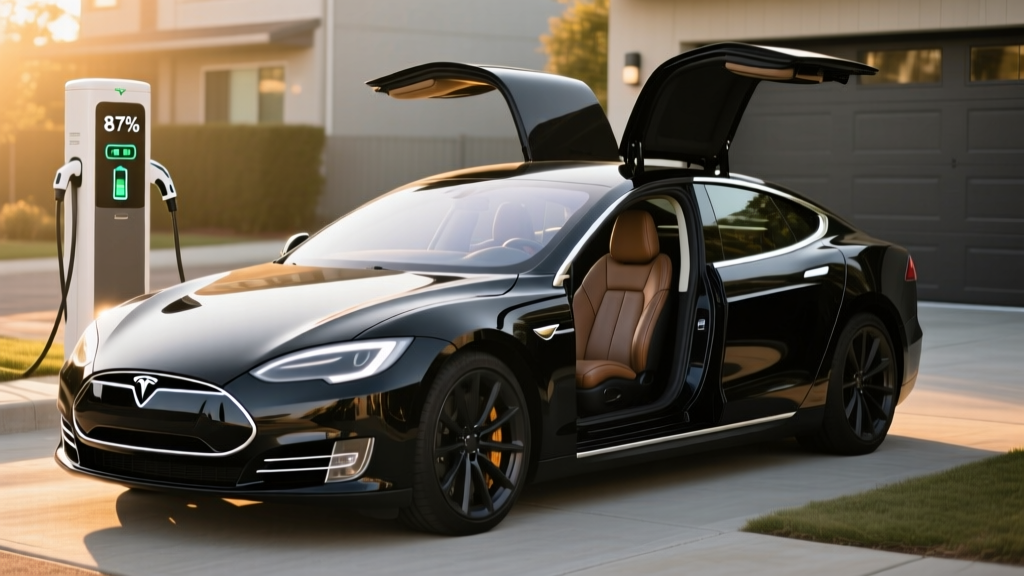
The Tesla Model S P100D was the flagship sedan that redefined what an electric vehicle could do. With its 100 kWh battery pack and dual-motor all-wheel-drive system, it delivered a 2.4-second 0-60 mph time that humbled supercars costing four times as much. Originally sold between 2016 and 2019, the P100D has since been replaced by the refreshed Model S Plaid, but it remains a compelling option on the used EV market in 2026 — if you know exactly what you're getting into.
This review breaks down what it's like to own and buy a Model S P100D today: real-world range after years of battery degradation, Supercharger network access, maintenance considerations, and how it stacks up against newer EVs at similar price points. If you're cross-shopping a used P100D against a new Hyundai Ioniq 6 or a certified pre-owned BMW iX, the data below will clarify whether Tesla's former flagship still earns its asking price.
| Spec | Value |
|---|---|
| EPA Range (Original) | 315 miles |
| Battery Capacity | 100 kWh (NMC chemistry) |
| Drivetrain | Dual-Motor AWD |
| 0-60 mph | 2.4 seconds (Ludicrous mode) |
| Horsepower | ~670 hp (combined peak) |
| Top Speed | 155 mph |
| MPGe (Combined, Original) | 98 MPGe |
| Efficiency | 34 kWh/100 mi |
| Cargo Volume | 26.3 cu ft (rear) + 5.3 cu ft (frunk) |
| Rear Legroom | 35.4 inches |
| Battery Warranty (Original) | 8 years / 150,000 miles |
| Original MSRP (2017) | ~$134,500 |
| Used Market Price (2026) | $32,000 – $52,000 |
Real-World Range: What to Expect From an Aging 100 kWh Pack
When new, the Model S P100D carried an EPA-estimated 315 miles of range — a benchmark figure at the time. In 2026, any P100D you encounter will be between 7 and 10 years old, and battery degradation is the single most important factor in your purchase decision.
Original EPA: 315 miles. Expect 250–285 miles of usable range in 2026 depending on battery health (typically 80–92% State of Health at this age). Highway driving at 75 mph reduces this to roughly 220–250 miles. In sub-freezing temperatures, plan for an additional 15–25% reduction, bringing cold-weather highway range down to 175–210 miles on a full charge.
The P100D uses an NMC (nickel manganese cobalt) lithium-ion battery pack. NMC chemistry offers high energy density but is more susceptible to calendar and cycle degradation than the LFP (lithium iron phosphate) packs Tesla now uses in Standard Range models. A well-maintained P100D that was charged primarily to 80% and rarely DC fast-charged will retain more capacity than one routinely charged to 100% and used for frequent road trips.
Before purchasing, request a battery health reading. Tesla Service Centers can provide a State of Health (SoH) report, and third-party tools like the TeslaFi app or Scan My Tesla OBD-II dongle can estimate remaining capacity. Aim for a pack with at least 85% SoH — anything below 80% means you're looking at under 240 miles of real-world range in mixed driving.
Charging Speed: Supercharger Access and Home Charging
The P100D predates Tesla's switch to the CCS-compatible NACS connector and uses the legacy Tesla proprietary connector. This matters in 2026 because while Tesla Superchargers still support this connector natively, accessing non-Tesla DC fast-charging networks (Electrify America, EVgo) requires a Tesla CCS adapter, which Tesla sells for approximately $250.
| Charging Level | Power / Rate | Time / Range Added |
|---|---|---|
| Level 1 (120V household) | ~1.4 kW | ~3–4 miles per hour |
| Level 2 (240V / 48A Wall Connector) | 11.5 kW | ~34 miles per hour; full charge in ~9 hrs |
| DC Fast Charge (V2 Supercharger) | Peak ~120 kW | 10–80% in ~45 minutes |
| DC Fast Charge (V3 Supercharger) | Peak ~120 kW (hardware-limited) | 10–80% in ~45 minutes |
The P100D's DC fast-charging hardware tops out around 120 kW, regardless of whether you plug into a 150 kW V2 or 250 kW V3 Supercharger. The charge curve is relatively flat between 10% and 50% SoC, then tapers significantly above 70%. Expect a 10–80% session to take roughly 45 minutes at a V2 or V3 Supercharger. This is noticeably slower than newer EVs like the Hyundai Ioniq 5 (240 kW peak, 10–80% in 18 minutes) or even the refreshed 2024+ Model S (250 kW peak).
For home charging, the onboard charger supports up to 48 amps on a 240V circuit using a Tesla Wall Connector or a J1772-to-Tesla adapter. At 11.5 kW, a full charge from empty takes approximately 9 hours — adequate for overnight replenishment. If your home electrical panel supports a 60A dedicated circuit (requiring a licensed electrician), installation costs typically range from $800 to $2,000 depending on panel proximity and local permit fees.
Performance and Driving Dynamics in 2026
The P100D's dual-motor powertrain — a front induction motor and a rear permanent-magnet motor — produces approximately 670 combined horsepower and launches the sedan from 0-60 mph in a blistering 2.4 seconds with Ludicrous mode engaged. Even in 2026, that figure places it among the fastest production sedans ever built.
However, the performance advantage over modern competitors has narrowed. The current Tesla Model S Plaid hits 60 mph in 1.99 seconds, and the Lucid Air Grand Touring manages 3.0 seconds with far greater range. The P100D's air suspension provides a compliant ride, though early units (2016–2017) are known for premature air strut failure — a $1,500–$2,500 per-corner repair that buyers should budget for or verify has been completed.
The P100D came equipped with Tesla's Enhanced Autopilot hardware (HW2 or HW2.5 depending on production date). This supports Autosteer, adaptive cruise control, and lane-keeping — all SAE Level 2 driver-assist features that require constant driver supervision. Vehicles built before April 2019 with HW2 can be upgraded to HW3 (now called HW4 in Tesla's nomenclature) at no cost if Full Self-Driving was purchased, or for a fee otherwise. This upgrade is critical because HW2 hardware cannot run Tesla's latest FSD (Supervised) software.
Tesla's Autopilot and FSD (Supervised) are SAE Level 2 driver-assist systems. They do not make the vehicle self-driving. The driver must remain attentive, keep hands on the wheel, and be prepared to take over at any moment. Only Level 4 systems like Waymo's robotaxi service operate without a human driver.
Interior, Cargo, and Daily Usability
The P100D's interior was premium for its era but shows its age against 2026 competitors. The 17-inch center touchscreen remains responsive, and Tesla's over-the-air updates have kept the infotainment software current — including streaming apps, navigation, and phone-as-key functionality. However, pre-2021 Model S interiors use a mix of materials that don't match the build quality of a contemporary BMW i7 or Mercedes EQS.
Practicality is a genuine strength:
- Cargo: 26.3 cu ft behind the rear seats, plus a 5.3 cu ft front trunk (frunk) — enough for a week's groceries or two carry-on bags up front.
- Rear legroom: 35.4 inches, adequate for adults on longer trips, though the sloping roofline limits headroom for passengers over 6 feet.
- Towing: Not rated for towing. If you need tow capacity, look at the Model X or a Rivian R1S.
- Seating: Five passengers standard; some 2017–2018 models were optioned with a rear-facing third-row jump seat (two small children), but this is rare and not recommended for safety reasons in 2026.
Pricing, Tax Credits, and the Used-EV Market
The Model S P100D originally stickered between $134,500 and $145,000 depending on options (Signature Red multi-coat paint, Premium Interior, FSD package). In the 2026 used market, prices have settled into a more accessible range:
| Item | Amount |
|---|---|
| Used Market Price Range | $32,000 – $52,000 |
| Federal Used EV Credit (§25E) | Up to $4,000 (30% of sale price, max $4,000) |
| Credit Income Cap (2026) | $75,000 single / $112,500 HOH / $150,000 joint |
| Vehicle Price Cap for §25E | $25,000 sale price maximum |
| Federal New EV Credit (§30D) | Not applicable — used/previously owned vehicle |
Critical tax credit detail: The IRS §25E Previously Owned Clean Vehicle Credit offers up to $4,000 (30% of the sale price), but it applies only to vehicles sold for $25,000 or less. Most P100Ds on the used market in 2026 are priced above this threshold, meaning the majority of buyers will not qualify for this credit. If you find a P100D listed at or below $25,000 — likely a high-mileage unit or one with battery concerns — the credit could reduce your effective cost to $21,000. Verify eligibility with a tax professional and confirm the vehicle has not previously been claimed under §25E since 2023, as the credit is available only once per VIN every three years.
The §30D New Clean Vehicle Credit does not apply to the P100D, as it is a discontinued model and no longer available new. The §30D credit's MSRP caps ($55,000 for sedans), income limits, and battery-sourcing requirements are relevant only to new EV purchases.
Pros and Cons: The Honest Assessment
- Supercar-rivaling 2.4-second 0-60 mph acceleration still thrills in 2026
- Full Tesla Supercharger network access with legacy proprietary connector
- Over-the-air updates keep infotainment and driving features current
- Spacious cargo area (26.3 cu ft + 5.3 cu ft frunk) for a sedan
- Premium audio, air suspension, and panoramic glass roof included
- Strong safety structure; original NHTSA 5-star rating
- 120 kW DC fast-charging peak is slow vs. modern 250+ kW EVs
- Battery degradation reduces real-world range to 220–285 miles
- Air suspension and drive unit repairs are costly out of warranty
- Pre-2019 HW2 Autopilot hardware cannot run latest FSD software without upgrade
- Interior materials and build quality don't match 2026 luxury EV standards
- Likely ineligible for §25E used EV credit due to $25,000 price cap
- No CCS charging without a $250 adapter purchase
Is the Model S P100D Worth Buying in 2026?
The P100D occupies a specific niche: buyers who want exotic-car acceleration, Tesla's Supercharger ecosystem, and a full-size luxury sedan for under $50,000. If that describes you, it can be a rewarding purchase — but only with careful pre-purchase diligence.
Choose the P100D if:
- You prioritize straight-line performance above all else in this price range.
- You have reliable home Level 2 charging and primarily commute under 80 miles round-trip.
- You can verify battery SoH above 85% and confirm air suspension/drive unit service history.
- You value ongoing Tesla OTA software updates and Supercharger access.
Look elsewhere if:
- You need 300+ miles of reliable range for frequent road trips — consider a used 2023 Lucid Air Pure or a new Hyundai Ioniq 6 (361 miles EPA).
- You want the latest driver-assist tech — newer vehicles with HW4 or GM's Super Cruise offer more capable hardware.
- You want warranty peace of mind — most P100Ds have exceeded their 8-year/150,000-mile battery warranty, leaving you exposed to a $15,000–$22,000 battery replacement cost if the pack fails.
Frequently Asked Questions
What is the real-world range of a used Model S P100D in 2026?
Expect 250–285 miles in mixed driving with a healthy battery (85%+ SoH). Highway driving at 75 mph drops this to 220–250 miles. In cold weather (below 32°F), plan for 175–210 miles on the highway. The original 315-mile EPA estimate assumed a brand-new pack under ideal conditions.
How fast does the P100D charge at home and on the road?
At home on a 240V/48A Level 2 charger, the P100D charges at up to 11.5 kW, adding roughly 34 miles of range per hour and fully charging in about 9 hours. On DC fast chargers, the P100D peaks at approximately 120 kW, reaching 10–80% in roughly 45 minutes at a Tesla Supercharger. It cannot take advantage of V3 Supercharger 250 kW speeds due to its older battery management hardware.
Does the Model S P100D qualify for any federal EV tax credit?
The §30D new vehicle credit does not apply — the P100D is no longer sold new. The §25E used EV credit offers up to $4,000, but only for vehicles with a sale price at or below $25,000 and buyers meeting income caps ($75K single / $150K joint). Most P100Ds sell above this price cap, making them ineligible. Consult a tax professional and review current IRS §25E guidelines before relying on this credit.
What should I check before buying a used P100D?
Prioritize four items: (1) Battery State of Health — request a Tesla Service SoH report or use a third-party OBD-II tool; aim for 85% or higher. (2) Air suspension condition — test all ride heights and listen for compressor noise; replacement struts cost $1,500–$2,500 each. (3) Autopilot hardware version — verify whether the car has HW2, HW2.5, or HW3; only HW3 supports current FSD (Supervised). (4) Drive unit history — ask for service records; rear drive unit replacement runs $5,000–$8,000 out of warranty.
How does the P100D compare to a new EV at a similar price?
At $35,000–$50,000, new competitors like the Hyundai Ioniq 6 SE ($38,000, 361 mi EPA, 240 kW charging) or Tesla Model 3 Long Range ($43,000, 341 mi EPA, 250 kW charging) offer more range, faster charging, full warranties, and eligibility for the $7,500 §30D credit (if income/MSRP rules are met). The P100D's advantages are its superior acceleration, larger cargo area, air suspension, and the prestige of the S-class platform. It's a performance bargain with higher ownership risk.
What is the battery replacement cost if the pack fails?
Out-of-warranty 100 kWh battery replacements for the Model S range from $15,000 to $22,000 including labor, depending on whether Tesla offers a remanufactured pack. Given that most P100Ds have now exceeded the original 8-year/150,000-mile battery warranty, this is a real financial risk. Some owners opt for third-party battery repair services that replace individual modules for $3,000–$6,000, though this is not officially supported by Tesla.