Quick Verdict: The P100D Legacy in 2026
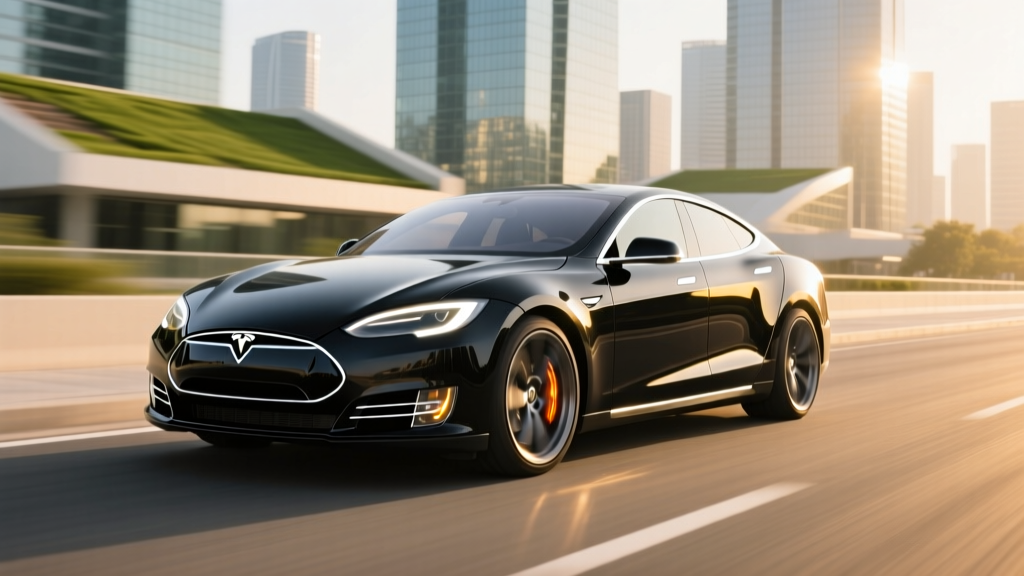
The Tesla Model S P100D isn't just a car—it's the vehicle that proved electric powertrains could embarrass supercars while delivering practical daily range. Introduced in 2016 and produced through the 2019 model year refresh, the P100D (Performance variant with 100 kWh battery) remains one of the most searched used EVs on the market. With a 2.5-second 0-60 mph time and 315 miles of EPA-estimated range, it set benchmarks that competitors spent years chasing.
For 2026 buyers, the P100D exists exclusively on the used market. Tesla replaced the "P100D" badge with "Model S Performance" and later "Plaid" designations, but the underlying 100 kWh pack and dual-motor architecture live on in spirit. If you're hunting for a P100D today, you're weighing a 5-to-9-year-old flagship against modern rivals like the Lucid Air, Porsche Taycan, and the refreshed 2025+ Model S. This review breaks down what the P100D delivers, where it shows its age, and whether it still earns its legendary status.
Range, Battery, and Efficiency: 315 Miles on Paper, Less in Reality
The P100D's headline number is its 100 kWh battery pack (approximately 98 kWh usable). Tesla rated it at 315 miles EPA when new, making it the longest-range production EV at launch. But that sticker figure requires context for any used buyer.
EPA Estimate: 315 miles
Highway (70 mph, 75°F): ~260–280 miles
Cold Weather (30°F, mixed driving): ~210–240 miles
Expect after 5+ years of degradation (80–90% SoH): ~250–285 miles EPA-equivalent
The P100D uses an NMC (nickel-manganese-cobalt) chemistry pack. NMC delivers high energy density but degrades slightly faster than LFP under repeated DC fast-charging and high SoC storage. Most well-maintained P100D packs retain 85–92% capacity after 100,000 miles.
Efficiency lands at 98 MPGe combined (34 kWh/100 mi) per fueleconomy.gov. That's respectable for a 5,000-pound performance sedan but trails the refreshed Model S Long Range (120+ MPGe) and Lucid Air (130+ MPGe) thanks to aerodynamic and powertrain refinements in newer platforms.
Charging Speeds: Adequate for 2016, Showing Age in 2026
The P100D was engineered before Tesla's V3 Supercharger and 4680-cell architecture. Its charging specs reflect that generation gap—functional but not class-leading by modern standards.
| Charging Level | Power / Rate | Time / Range Added |
|---|---|---|
| Level 1 (120V household) | ~1.3 kW | ~3–4 miles per hour |
| Level 2 (240V home, 48A) | 11.5 kW | ~34 miles per hour; full charge ~9 hrs |
| DC Fast Charge (V2 Supercharger) | Peak ~120 kW | 10–80% in ~40–45 minutes |
| DC Fast Charge (V3 Supercharger) | Peak ~120–145 kW (cable-limited) | 10–80% in ~35–40 minutes |
Charging curve reality: The P100D peaks near 120 kW only below ~30% SoC. Above 50%, the curve tapers aggressively—expect 60–70 kW sustained from 50–80%. This means the back half of a DC fast-charge session takes nearly as long as the front half. The newer Model S Plaid with 4680 cells sustains higher rates deeper into the charge, completing 10–80% in roughly 20–25 minutes on V3/V4 stalls.
Home charging on a Level 2 wall connector is the sweet spot. At 11.5 kW (48 amps on a 60A circuit), you recover the full 315-mile range overnight. Most P100D owners report 90%+ of charging happens at home, making the DC fast-charge taper a road-trip inconvenience rather than a daily concern.
Performance: The Number That Still Shocks
This is why people search for "P100D" years after production ended. Launch Control enabled, the Model S P100D hits 0–60 mph in 2.5 seconds—a figure that, in 2016, belonged to million-dollar hypercars. Even in 2026, only the Model S Plaid (1.99s), Lucid Air Sapphire (1.89s), and Rimac Nevera beat it. A base Porsche Taycan Turbo S (2.4s) trades punches but costs significantly more on the used market.
| Specification | Tesla Model S P100D |
|---|---|
| 0–60 mph | 2.5 seconds (Launch Control) |
| Horsepower | ~762 hp (combined dual-motor output) |
| Torque | ~791 lb-ft |
| Drivetrain | Dual-motor AWD |
| Top Speed | 155 mph (electronically limited) |
| Battery Capacity | 100 kWh (98 kWh usable), NMC |
| EPA Range | 315 miles |
| Efficiency | 98 MPGe / 34 kWh/100 mi |
| DC Fast Charge Peak | ~120 kW |
| Level 2 Charge Rate | 11.5 kW (48A) |
The dual-motor setup uses a permanent-magnet synchronous motor on the rear axle and an induction motor up front. This combination delivers instantaneous torque vectoring and confident all-weather traction. The air suspension (standard on P100D) adjusts ride height for efficiency on the highway or clearance on rough roads, though some owners report costly air-strut replacements after 80,000–100,000 miles.
Interior, Cargo, and Technology
The P100D interior reflects pre-2021 Tesla design—functional but not luxurious by modern standards. The 17-inch portrait touchscreen (vertically oriented, unlike the post-refresh horizontal layout) controls virtually every vehicle function. There are no physical buttons for climate or media, which some buyers love and others find distracting.
Passenger space: Front legroom measures 42.7 inches; rear legroom is 35.4 inches. The rear seat fits three adults but the middle position is compromised by a narrow cushion and floor hump. Headroom is generous thanks to the flat battery floor.
Cargo volume: 26.3 cubic feet behind the rear seats, expanding to 58.1 cu ft with seats folded. The front trunk (frunk) adds 5.3 cu ft—enough for a charging cable bag and a small duffel. Total cargo capacity easily outpaces the Porsche Taycan (14.3 cu ft rear) and competes with midsize luxury SUVs.
Standout tech:
- Autopilot (basic) standard; Enhanced Autopilot or Full Self-Driving (Supervised) available as paid add-ons—both are SAE Level 2 driver-assist systems requiring constant driver engagement
- Over-the-air software updates (still receiving updates in 2026, though major feature additions have slowed for pre-refresh hardware)
- HEPA air filtration with Bioweapon Defense Mode
- Premium audio: 12-speaker, 560-watt system (pre-2021 refresh; not the 22-speaker system in the current Model S)
- Power-folding mirrors, heated seats front and rear, heated steering wheel, panoramic glass roof
Notable drawbacks: The pre-refresh interior uses more hard plastics than competitors. Panel gaps on 2016–2018 models are notoriously inconsistent. The vertically oriented screen is great for navigation but awkward for video playback (Tesla added a horizontal-oriented screen in the 2021 refresh). Road noise at highway speeds is more pronounced than in the refreshed Model S or Lucid Air.
Pricing, Tax Credits, and Ownership Costs
The P100D was discontinued after the 2019 model year, so all examples are purchased used. Pricing varies heavily by mileage, condition, battery health, and model year.
| Cost Factor | Estimated Amount |
|---|---|
| Original MSRP (2017–2019, when new) | $135,000 – $155,000+ |
| Used Market Price (2026, 50K–90K miles) | $38,000 – $58,000 |
| Used EV Federal Tax Credit (§25E) | Up to $4,000 (if price ≤ $25,000) |
| New EV Federal Tax Credit (§30D) | Not applicable (discontinued model) |
Tax credit nuance: The P100D does not qualify for the new-vehicle §30D credit ($7,500) since it's no longer sold new. However, under IRS §25E, a used EV purchased from a dealer for $25,000 or less may qualify for a credit equal to 30% of the sale price, up to $4,000. The buyer must have an adjusted gross income of $75,000 or less (single) / $150,000 or less (joint). This is a narrow window—most P100Ds sell above the $25,000 cap, but high-mileage or salvage-title examples occasionally fall within range.
Warranty status: Tesla's original battery and drive unit warranty covers 8 years or 150,000 miles (whichever comes first), with a minimum 70% capacity retention threshold. For a 2017 P100D, that warranty expired in 2025. A 2019 model's warranty runs through 2027. Out-of-warranty battery replacement runs $15,000–$22,000 at a Tesla Service Center, though third-party refurbishment shops offer replacements for $10,000–$14,000.
Insurance: Expect $2,400–$3,600 annually for a P100D, depending on your driving record and location. Performance EVs carry higher premiums due to repair costs and theft rates.
P100D vs. 2026 Alternatives: Is It Still Worth It?
The P100D competes in a very different landscape than the one it launched into. Here's how it stacks up against what you'd cross-shop today:
- 2.5-second 0–60 still elite-tier in 2026
- 315-mile EPA range (when new) remains practical for road trips
- Supercharger network access (NACS connector native)
- Massive cargo space vs. Taycan, e-tron GT
- OTA updates still supported
- Strong enthusiast community and third-party support
- DC fast-charge speed trails modern EVs (120 kW peak vs. 250–320 kW)
- Pre-refresh interior quality and noise levels
- Air suspension and MCU (media control unit) are known failure points
- Battery warranty expiring or expired on most examples
- No longer receiving major software feature additions
- Higher insurance and maintenance costs vs. newer, warrantied EVs
Choose the P100D if: You want supercar acceleration at a fraction of the original price, you're comfortable with used-EV risk, and you prioritize straight-line performance and Supercharger access over cutting-edge charging speed or interior luxury.
Choose a 2024+ Model S Long Range or Plaid instead if: You want warranty coverage, 250 kW+ DC fast-charging, the refreshed interior with horizontal screen, and modern heat-pump efficiency. The Long Range starts around $75,000 new and still qualifies for partial §30D credit depending on battery sourcing.
Choose a Lucid Air Pure or Touring if: Range is your top priority (419 miles EPA on the Air Grand Touring) and you value a more luxurious cabin. Trade-off: Lucid's charging network relies on CCS adapters and third-party DC stations, not native NACS.
Who Should Buy the Tesla Model S P100D?
The P100D is best suited for:
- Performance enthusiasts who want exotic-car acceleration without exotic-car maintenance schedules (no oil changes, no clutch replacements)
- Daily commuters with home Level 2 charging and a round trip under 200 miles, where the P100D's real-world range is more than sufficient
- Tech-savvy buyers who enjoy Tesla's software ecosystem, OTA updates, and Supercharger trip planning
- Used-EV bargain hunters willing to accept depreciation and warranty risk for a vehicle that originally cost $140,000+
It's a tougher fit for buyers who need the latest charging hardware, worry about out-of-warranty repair costs, or want the quietest, most refined luxury sedan experience (the Lucid Air and refreshed Model S both outclass the P100D in NVH—noise, vibration, harshness).
Frequently Asked Questions
What is the real-world range of the Tesla P100D?
The EPA sticker reads 315 miles, but expect roughly 260–280 miles at highway speeds in mild weather, and 210–240 miles in freezing conditions. Factor in battery degradation: a P100D with 85% state of health will deliver approximately 250–270 miles on a full charge in mixed driving.
How fast does the P100D charge at home and on the road?
On a Level 2 home charger (240V, 48A), the P100D charges at 11.5 kW, adding about 34 miles of range per hour—a full overnight charge. On a DC fast charger, it peaks around 120 kW, reaching 10–80% in roughly 40 minutes. That's significantly slower than modern EVs that hit 10–80% in 18–25 minutes.
Does the P100D qualify for any federal EV tax credit?
Not the new-vehicle §30D credit, since the P100D is discontinued. Under the IRS §25E used-EV credit, you may qualify for up to $4,000 if the purchase price is $25,000 or less and your income falls under the cap ($75K single / $150K joint). Most P100Ds sell above that price threshold.
How long does the P100D battery last before replacement?
Tesla's NMC packs typically retain 85–92% capacity after 100,000 miles when properly maintained (avoiding frequent 100% charges and excessive DC fast-charging). Many P100Ds are still on their original battery at 120,000+ miles. If replacement is needed, expect $15,000–$22,000 at a Tesla Service Center or $10,000–$14,000 from a qualified third-party shop.
Is the P100D self-driving?
No. Even with Full Self-Driving (Supervised) enabled, the P100D operates at SAE Level 2—meaning the driver must remain fully engaged, hands on or near the wheel, eyes on the road, at all times. Tesla's Autopilot and FSD are driver-assist systems, not autonomous driving. Only Level 4 services like Waymo operate without a human driver, and those are limited to specific geo-fenced areas.
Is the P100D worth buying in 2026 vs. a newer EV?
If you want maximum acceleration per dollar and accept the risks of a used, potentially out-of-warranty performance EV, the P100D is still thrilling. If you prioritize charging speed, warranty peace of mind, and the latest interior refinement, a certified pre-owned 2023+ Model S or a new Lucid Air Pure makes a stronger case. Budget, risk tolerance, and how much you value 2.5-second sprints will determine the right answer.