The Tesla Model S P100D: A Horsepower Benchmark Revisited
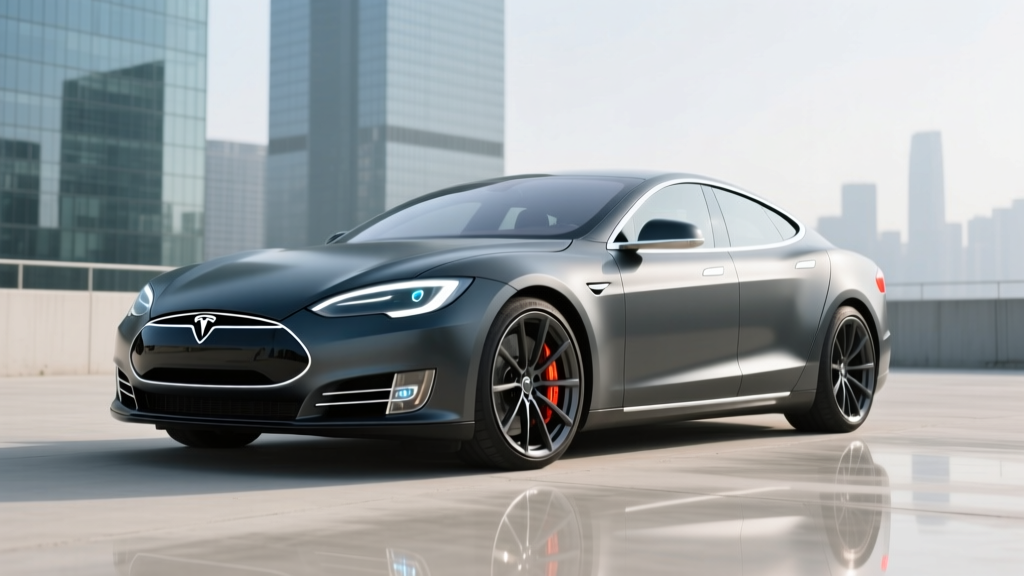
The Tesla Model S P100D remains one of the most talked-about electric sedans ever built. With its Ludicrous Mode and a 100 kWh battery pack, it redefined what an EV could do in straight-line acceleration. But beyond the headline-grabbing Tesla Model S P100D horsepower figure, buyers and enthusiasts need a complete picture: real-world range, charging behavior, ownership economics, and how it stacks up against the current 2026 Model S lineup and competitors. This profile covers the P100D's specs in depth and explains what they mean for actual driving.
Note: The Model S P100D was produced from late 2016 through 2019 and is available only on the used market. We also reference the current 2026 Model S trims for comparison and tax-credit context.
Performance: Tesla Model S P100D Horsepower and Acceleration
The P100D pairs dual permanent-magnet and induction motors for all-wheel drive, producing a combined system output of 762 horsepower and approximately 791 lb-ft of torque. In Ludicrous Mode, Tesla claimed a 0–60 mph time of 2.5 seconds — a figure that stunned the automotive world when it debuted and still holds up against most 2026 performance EVs.
| Spec | Value |
|---|---|
| Horsepower | 762 hp (combined) |
| Torque | 791 lb-ft |
| 0–60 mph | 2.5 seconds (Ludicrous) |
| Top Speed | 155 mph |
| Drivetrain | Dual-motor AWD |
| Battery (usable) | ~98 kWh (NMC) |
The P100D's instant torque delivery is its defining trait. Unlike internal-combustion supercars that build power through the rev range, the P100D hits peak torque at 0 RPM. The result is relentless, neck-snapping acceleration that remains accessible in everyday driving — not just on a track. The dual-motor setup also provides torque vectoring between front and rear axles, improving traction in wet and low-grip conditions.
Battery, Range, and Efficiency
The P100D carries a 100 kWh battery pack (approximately 98 kWh usable) using NMC (nickel-manganese-cobalt) chemistry. This was Tesla's largest pack at the time, providing an EPA-estimated range of 315 miles — impressive for its era and still competitive today.
EPA sticker: 315 miles. In practice, expect 250–280 miles at sustained highway speeds (70–80 mph), and 220–250 miles in freezing temperatures. The NMC chemistry and older thermal management system make the P100D more susceptible to cold-weather range loss than Tesla's newer models with heat pumps. City driving with regenerative braking recovers more energy, often yielding 290+ miles in mild conditions.
Efficiency was rated at 98 MPGe combined (34 kWh/100 mi) by the EPA. For a 4,600+ lb sedan with 762 hp on tap, that efficiency figure was remarkable — though the current 2026 Model S Long Range achieves 124 MPGe thanks to improved motor and inverter technology.
Charging Speed: DC Fast Charge and Home Level 2
The P100D predates Tesla's V3 Supercharger architecture, so its DC fast-charging capability is more modest than current models. Here's what to expect across charging levels:
| Charging Level | Max Power | Speed / Notes |
|---|---|---|
| Level 1 (120V) | ~1.4 kW | ~3–4 miles per hour |
| Level 2 (240V, 48A) | ~11.5 kW | ~29 miles per hour; full charge in ~9 hours |
| DC Fast Charge (V2 Supercharger) | ~120 kW peak | 10–80% in ~40 minutes; tapers significantly above 80% |
| DC Fast Charge (V3 Supercharger) | ~120 kW (adapter limited) | No benefit over V2; P100D cannot reach 250 kW |
The P100D's charge curve peaks around 120 kW between 10–40% state of charge, then tapers to ~70 kW by 60% and drops further above 80%. On a road trip, plan for 35–45 minute stops at Superchargers to go from 10% to 80%. For home charging, a Level 2 wall connector at 48 amps adds roughly 29 miles of range per hour — sufficient to fully replenish overnight.
Key caveat: The P100D uses the legacy Tesla connector. While it can access NACS Superchargers natively, adapters for CCS networks (Electrify America, EVgo) may be needed depending on your region. Tesla provides a CHAdeMO adapter for purchase, but CCS compatibility requires a third-party solution or a newer vehicle.
Interior, Cargo, and Technology
The P100D's interior reflects its 2016–2019 production era. The 17-inch portrait touchscreen runs Tesla's infotainment system with navigation, streaming, and over-the-air updates — though it lacks the AMD Ryzen processor and refreshed UI found in the 2021+ Model S Plaid and Long Range.
| Measurement | Value |
|---|---|
| Front Legroom | 42.7 in |
| Rear Legroom | 35.4 in |
| Cargo Volume (rear seats up) | 26.3 cu ft |
| Cargo Volume (rear seats folded) | 58.1 cu ft |
| Frunk (front trunk) | 5.3 cu ft |
| Seating | 5-passenger standard |
The Model S hatchback design gives it a practical edge over traditional luxury sedans. The large liftgate and flat load floor make it viable for road trips and bulkier cargo. The frunk adds useful space for charging cables or a small bag. However, rear-seat headroom is tighter than rivals like the Lucid Air, and the P100D-era seats lack the bolstering and ventilation of the refreshed interior.
Driver Assistance: The P100D supports Tesla Autopilot and optionally Full Self-Driving (Supervised), which is an SAE Level 2 system — meaning the driver must remain attentive and keep hands on or near the wheel at all times. FSD is not autonomous driving.
Pricing, Tax Credits, and Ownership Costs
As a discontinued model, the P100D is available only through the used market. Prices vary significantly based on mileage, condition, and battery health. Here's the landscape:
| Item | Amount |
|---|---|
| Original MSRP (2017–2019) | $135,000–$145,000 |
| Used Market Price (2026) | $40,000–$65,000 depending on miles/condition |
| Used EV Tax Credit (§25E) | Up to $4,000 (30% of sale price, max $4,000) |
| Federal New EV Credit (§30D) | Not eligible (discontinued) |
The IRS §25E used clean vehicle credit offers up to $4,000 (30% of the sale price) for qualifying used EVs priced at $25,000 or more, subject to buyer income caps ($75,000 single / $150,000 joint) and dealer-reporting requirements. A P100D selling for $50,000 could yield the full $4,000 credit at point of sale, bringing effective cost to ~$46,000.
For comparison, the current 2026 Tesla Model S Long Range starts at $79,990 and the Plaid at $94,990 (before incentives). Neither qualifies for the §30D federal credit because the Model S exceeds the $55,000 sedan MSRP cap. State incentives may still apply — check your local energy office or AFDC incentive database.
Pros, Cons, and Who Should Buy
Pros
- 762 hp and 2.5-second 0–60 remain supercar-level quick
- 315-mile EPA range still competitive for road trips
- Hatchback cargo versatility with 58+ cu ft total space
- Access to Tesla Supercharger network (reliability leader)
- Over-the-air updates keep software current
Cons
- DC fast-charge speed limited to ~120 kW (slow vs. modern EVs)
- No heat pump — significant cold-weather range loss
- Aging interior materials and pre-refresh touchscreen
- Battery replacement cost: $15,000–$22,000 if out of warranty
- No federal §30D new-vehicle credit; §25E used credit only
Who This EV Suits Best
The P100D is ideal for enthusiasts who want exotic-car acceleration at a fraction of the original price, daily commuters with home Level 2 charging, and road-trippers willing to accept 35–45 minute Supercharger stops. It's less suited for buyers who prioritize the latest interior tech, fastest possible DC charging, or those in extreme-cold climates where range loss is a concern.
Battery Warranty and Longevity
Tesla warranted the P100D's battery and drive unit for 8 years or 150,000 miles (whichever comes first), with a capacity retention threshold of 70%. Given that most P100Ds are now 7–9 years old, many are approaching or past the warranty window. Battery degradation data from owner communities suggests most P100D packs retain 85–92% capacity at 80,000–100,000 miles, though individual results depend on charging habits, Supercharger frequency, and climate exposure.
If a replacement is needed, Tesla's out-of-warranty battery cost for a 100 kWh pack ranges from $15,000 to $22,000 including labor. Third-party refurbishers offer lower-cost alternatives ($10,000–$14,000) using reconditioned modules. Always request a battery health report (accessible through the car's service menu or a Tesla service center) before purchasing a used P100D.
Competitor Comparison: P100D vs. Modern Alternatives
| Spec | Model S P100D (Used) | 2026 Model S Plaid | Lucid Air Grand Touring | Porsche Taycan Turbo S |
|---|---|---|---|---|
| Horsepower | 762 hp | 1,020 hp | 1,050 hp | 750 hp |
| 0–60 mph | 2.5 sec | 1.99 sec | 3.0 sec | 2.4 sec |
| EPA Range | 315 mi | 396 mi | 516 mi | 283 mi |
| Peak DC Charge | ~120 kW | ~250 kW | ~300 kW | ~270 kW |
| Price (2026) | $40K–$65K used | $94,990 | $138,000 | $197,500 |
| Tax Credit | $4,000 (§25E) | None (MSRP cap) | None (MSRP cap) | None (MSRP cap) |
The P100D's value proposition is clear: supercar acceleration at 40–50% the cost of a new Plaid or Lucid Air. The trade-offs are older tech, slower charging, and no new-vehicle warranty. If charging speed and range are top priorities, the Plaid or Lucid Air are meaningfully better. If budget and raw performance per dollar dominate your decision, the P100D is hard to beat.
Frequently Asked Questions
What is the real-world range of the Tesla Model S P100D?
The EPA rates it at 315 miles, but real-world highway driving at 70–80 mph yields approximately 250–280 miles. In freezing weather, expect 220–250 miles due to the lack of a heat pump and older thermal management.
How fast does the P100D charge?
On DC fast chargers, it peaks at approximately 120 kW and takes about 40 minutes to go from 10% to 80%. At home on a Level 2 (48A/240V) charger, it adds about 29 miles of range per hour, fully charging in roughly 9 hours.
How much does a used P100D cost after tax credits?
Used P100Ds typically sell for $40,000–$65,000 in 2026. With the §25E used EV credit (up to $4,000), effective cost ranges from $36,000 to $61,000 depending on condition and mileage.
Is the P100D worth buying vs. a new Model S Plaid?
It depends on priorities. The P100D delivers 90% of the thrill at 40–50% of the price. But the Plaid offers nearly double the horsepower, 80 more miles of range, and 2x faster DC charging. If budget is flexible and you road-trip often, the Plaid is the better long-term investment.
What are the biggest pros and cons?
Pros: supercar acceleration, competitive range, Supercharger network access, hatchback practicality. Cons: slow DC charging by modern standards, cold-weather range loss, aging interior, potential battery replacement cost.
Does the P100D qualify for the federal EV tax credit?
Not the §30D new-vehicle credit (it's discontinued). However, it may qualify for the §25E used clean vehicle credit of up to $4,000 if purchased from a licensed dealer, the sale price is $25,000+, and buyer income is within IRS caps ($75K single / $150K joint).