The P100D Legacy: Tesla's Original Hypercar Killer
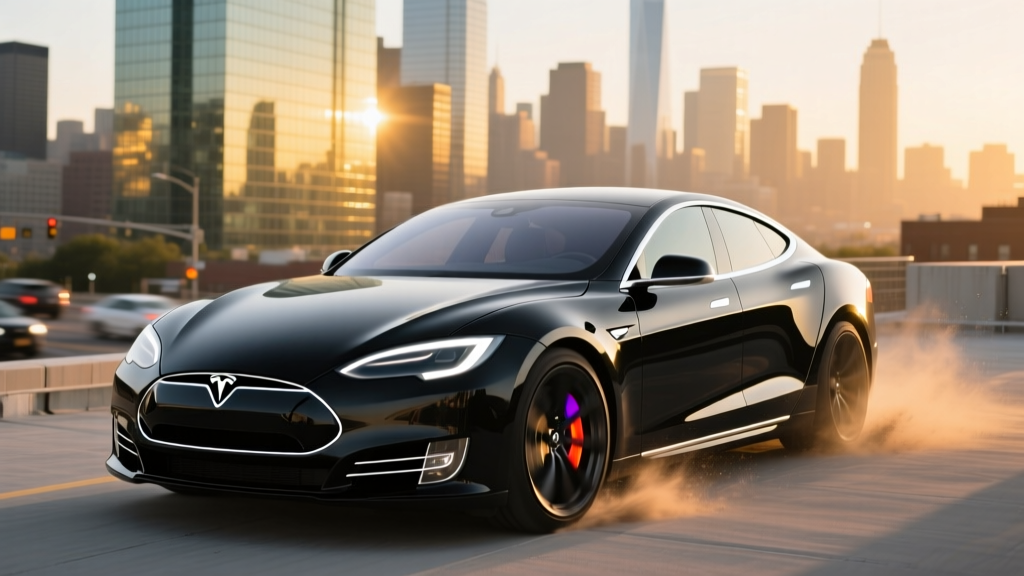
When Tesla launched the Model S P100D in 2016, it reset the automotive world's expectations. A full-size luxury sedan with 315 miles of EPA range and a 0-60 mph time of 2.5 seconds — figures that embarrassed supercars costing three times as much. The P100D badge became shorthand for electric insanity, and even in 2026, the question "Model S P100D 0-60" remains one of the most searched performance-EV queries online.
But here's the critical context: Tesla discontinued the P100D variant after the 2019 model year, replacing it with the current Model S Plaid. That means every P100D on the road in 2026 is a used vehicle — typically a 2017-2019 model with 50,000-120,000 miles on the odometer. This review evaluates the P100D as a used-EV purchase, covering what its battery, charging hardware, and performance look like after years of real-world use.
EPA Estimated Range: 315 miles (2017-2019 Model S P100D)
Real-World Expectation: 240-270 miles at highway speeds (70-80 mph); 200-230 miles in freezing temperatures. A 7-year-old battery with 80,000+ miles may show 5-12% degradation, reducing usable range further.
Spec Table: 2019 Tesla Model S P100D at a Glance
| Specification | Value |
|---|---|
| EPA Range | 315 miles |
| Battery Capacity | 100 kWh (gross), ~98 kWh usable |
| Battery Chemistry | NMC (Nickel Manganese Cobalt) — Panasonic 18650 cells |
| 0-60 mph | 2.5 seconds (with Ludicrous+ and rollout subtracted) |
| Horsepower | ~762 hp (combined dual-motor output) |
| Drivetrain | Dual-motor AWD |
| Top Speed | 155 mph (electronically limited) |
| Efficiency | 98 MPGe combined / 34 kWh per 100 miles |
| Max DC Fast Charge | ~120 kW peak (V2 Supercharger era) |
| 10-80% DC Charge Time | ~45-50 minutes |
| Level 2 Home Charge Rate | 11.5 kW (48A) — ~34 miles of range per hour |
| Cargo Volume | 26.3 cu ft (rear) + 5.3 cu ft (frunk) = 31.6 cu ft total |
| Rear Legroom | 35.4 inches |
| Battery Warranty (Original) | 8 years / 150,000 miles (70% minimum capacity retention) |
| Original MSRP (2019) | $135,700 (before options/delivery) |
| Typical Used Price (2026) | $38,000 - $58,000 depending on mileage and condition |
Sources: EPA fueleconomy.gov, Tesla owner's manual archives.
Model S P100D 0-60: How the 2.5-Second Claim Actually Works
The headline number — 2.5 seconds from 0-60 mph — requires specific conditions that Tesla's marketing didn't always make clear. Here's the breakdown:
- Ludicrous Mode must be engaged, which preconditions the battery to optimal temperature (takes 5-10 minutes if the pack is cold).
- "Rollout subtracted" means Tesla measures from 1 foot of forward motion (drag-racing convention), shaving roughly 0.2-0.3 seconds versus a true standing start.
- SOC matters: Peak power requires at least 90% State of Charge. Below 50% SOC, expect 0-60 times closer to 3.2-3.8 seconds.
- Battery temperature is critical: In cold weather (below 40°F), the pack cannot deliver peak current, and 0-60 times stretch to 3.5+ seconds even at high SOC.
In independent testing by outlets like Motor Trend and Car and Driver, the P100D consistently delivered 2.4-2.7 second runs under optimal conditions. The dual-motor AWD system — with a larger rear induction motor and a smaller front motor — provides relentless torque vectoring that hooks up even on damp pavement. Even in 2026, this performance remains startling; the P100D still out-accelerates most production cars you can buy new.
Longevity note: Repeated Ludicrous launches generate extreme heat in the battery pack and drive inverters. P100Ds with a history of frequent drag-strip use may show accelerated battery degradation. When evaluating a used example, pull battery health data from Tesla's service mode (accessible via the touchscreen) and look for capacity retention above 85%.
Charging Speed: The P100D's Biggest 2026 Limitation
This is where the P100D's age shows most clearly. Tesla's Supercharger network has moved to V3 and V4 architecture (250-350 kW), but the P100D's battery management system and thermal hardware were designed for the V2 era:
| Charging Method | Power (kW) | Speed (miles of range per hour) | Notes |
|---|---|---|---|
| Level 1 (120V household) | ~1.4 kW | ~4 mi/hr | Emergency trickle only |
| Level 2 (240V, 48A Wall Connector) | 11.5 kW | ~34 mi/hr | Full overnight charge in ~9 hours |
| DC Fast Charge (V2 Supercharger) | ~120 kW peak | ~300 mi/hr at peak | Tapers sharply above 60% SOC |
| DC Fast Charge (V3/V4 Supercharger) | ~120 kW peak (car-limited) | ~300 mi/hr at peak | Backward compatible; car cannot use full 250 kW |
| 10-80% DC Fast Charge | — | ~45-50 minutes | Charge curve tapers from 120 kW → 40 kW above 60% |
Charge curve reality: The P100D peaks around 120 kW only between roughly 10-35% SOC, then steps down to ~80 kW through 60%, and drops to 40 kW and below for the final stretch to 80%. On a road trip, plan for 40-50 minute charging stops every 180-200 miles of highway driving. That's roughly twice the stop time of a modern Model S Plaid or Hyundai Ioniq 5 on a V3 charger.
CCS adapter note: Tesla's North American Charging Standard (NACS) has become the dominant connector, and the P100D uses the proprietary Tesla port natively. For non-Tesla DC chargers (Electrify America, EVgo), you'll need a Tesla-to-CCS adapter — Tesla sells one for ~$250, and third-party options exist. Confirm adapter compatibility with the 2017-2019 Model S before purchasing.
Battery Health and Degradation: What 100 kWh Looks Like After 7 Years
The P100D uses a 100 kWh NMC battery built from thousands of Panasonic 18650 cylindrical cells — the same form factor used in laptops. NMC chemistry offers excellent energy density (hence the 315-mile range in a relatively compact pack) but is more sensitive to high-heat, high-SOC cycling than the LFP chemistry Tesla now uses in standard-range models.
Typical degradation data for P100D packs:
- 50,000 miles / 5 years: 5-8% capacity loss (295-300 miles remaining)
- 100,000 miles / 7 years: 8-14% capacity loss (270-290 miles remaining)
- 150,000+ miles: 12-20% capacity loss; some packs replaced under warranty
The original battery warranty covers 8 years or 150,000 miles (whichever comes first) with a minimum 70% capacity retention threshold. For a 2017 model, that warranty expires in 2025; for a 2019 model, it runs through 2027. If you're buying a 2018-2019 P100D in 2026, verify remaining warranty coverage with Tesla directly using the VIN.
Battery replacement cost: Out of warranty, a P100D battery replacement runs $18,000-$25,000 at Tesla service centers. Third-party EV repair shops may offer refurbished packs for $12,000-$16,000. This is a significant financial risk on a vehicle now worth $40,000-$58,000.
Interior, Cargo, and Tech: Luxury That Shows Its Age
The P100D-era Model S interior was controversial even when new. The minimalist design centers on a 17-inch portrait touchscreen that controls virtually everything — climate, media, navigation, and vehicle settings. Physical buttons are limited to steering wheel stalks, hazard lights, and glovebox release.
What holds up well in 2026:
- The 17-inch screen remains larger than most new vehicles' infotainment displays
- Over-the-air updates have added features Tesla didn't originally ship (Sentry Mode, improved navigation, theater mode)
- The glass roof creates an airy cabin feel
- Frunk + rear trunk gives 31.6 cu ft total — competitive with midsize SUVs
- Optional rear-facing third-row seats (for small children) made the P100D a 7-seater
What feels dated:
- The instrument cluster is a small 12.3-inch screen — tiny by 2026 standards
- No wireless Apple CarPlay or Android Auto (Tesla uses its own interface exclusively)
- Earlier build quality: panel gaps, rattles, and door-handle failures are common complaints on 2017-2019 examples
- Autopilot hardware varies: 2017 models have HW2.0, while late 2019 models may have HW2.5 or early HW3.0 — this affects FSD capability
- Supercar-level 0-60 acceleration (2.5s) at a fraction of supercar cost
- 315-mile EPA range remains competitive in 2026
- Access to Tesla Supercharger network (most reliable public charging)
- Spacious cargo area with frunk (31.6 cu ft total)
- OTA updates continue to add features
- Dual-motor AWD provides confident all-weather traction
- Slow DC fast charging vs. modern EVs (~45-50 min 10-80%)
- Battery replacement risk ($18K-$25K out of warranty)
- Build quality inconsistent on 2017-2019 examples
- Older Autopilot hardware limits FSD functionality
- No Apple CarPlay/Android Auto support
- Insurance costs elevated due to repair complexity and performance
Pricing, Tax Credits, and Total Cost: The Used-EV Equation
The P100D originally stickered at $135,700 (2019 base MSRP) before options like Enhanced Autopilot ($6,000), Full Self-Driving ($7,000-$10,000 depending on purchase date), premium interior packages, and 21-inch wheels. Fully loaded examples exceeded $155,000.
| Cost Factor | Amount |
|---|---|
| Original MSRP (2019 base) | $135,700 |
| Typical Used Price (2026, 70K miles) | $42,000 - $52,000 |
| Federal Used EV Tax Credit (§25E) | Up to $4,000 (30% of sale price, capped) |
| Federal New EV Credit (§30D) | NOT eligible — vehicle is used and sold new before 2023 |
| Estimated Annual Insurance | $2,800 - $4,200 (varies by state and driving record) |
| Estimated Annual Maintenance | $400 - $800 (tires, cabin filter, wipers, brake fluid) |
Federal tax credit clarification: The P100D does not qualify for the new-vehicle §30D credit (up to $7,500) because it's a used vehicle and was originally sold well before current battery-sourcing requirements took effect. However, buyers may qualify for the §25E used clean vehicle credit — up to $4,000 (30% of the sale price, capped at $4,000). Key §25E requirements include:
- Sale price must be $25,000 or below (most P100Ds exceed this threshold — a significant limitation)
- Buyer income caps: $75,000 single / $112,500 head of household / $150,000 joint
- Vehicle must be at least 2 model years old
- Must purchase from a licensed dealer (private-party sales excluded)
Given that most P100Ds sell for $40,000+, the §25E credit is effectively unavailable for this model unless you find an exceptionally high-mileage or damaged example below $25,000. Consult IRS.gov §25E guidelines and a tax professional to confirm eligibility for your specific situation.
P100D vs. Model S Plaid vs. Key Competitors: What Should You Buy?
The natural comparison is the current Model S Plaid (2026 MSRP from $89,990), which delivers a 1.99-second 0-60 time, 396-mile EPA range, and 250 kW V3 Supercharging capability. The Plaid is objectively superior in every measurable spec — but it costs nearly double a used P100D.
Choose the used P100D if:
- Your budget is $40,000-$55,000 and you want 700+ hp AWD performance
- You charge primarily at home and road-trip only 2-3 times per year
- You can tolerate 45-minute charging stops on road trips
- You value the P100D's historical significance and relative rarity
Choose the Model S Plaid (or a newer EV) if:
- You road-trip frequently and need faster DC charging
- You want current warranty coverage and modern build quality
- You need the latest Autopilot/FSD hardware (HW4.0)
- You qualify for the §30D new-vehicle credit (reducing effective Plaid price)
Competitor alternatives in the $40K-$60K used market:
- 2020-2022 Porsche Taycan 4S: Better build quality and 270 kW charging, but shorter range (~200-227 miles EPA)
- 2021-2023 Tesla Model 3 Performance: Faster charging, lower cost, but smaller and less luxurious
- 2022-2023 Lucid Air Pure/Touring: Superior range and efficiency, but used examples still above $55,000
Frequently Asked Questions
What is the real-world range of a used Model S P100D in 2026?
Expect 240-270 miles at highway speeds in moderate temperatures. In cold weather (below 30°F), range drops to 200-230 miles. A well-maintained pack with 80,000 miles may retain 88-92% of original capacity, yielding roughly 280-290 miles at city speeds and 250-260 on the highway.
How fast does the P100D charge at home and on the road?
At home on a Level 2 Wall Connector (11.5 kW / 48A), the P100D adds about 34 miles of range per hour — a full charge from 10% takes roughly 9 hours. On DC fast chargers, it peaks at ~120 kW, but the 10-80% session takes 45-50 minutes due to an aggressive charge-curve taper above 60% SOC.
Does the Model S P100D qualify for any federal EV tax credit?
Not the $7,500 §30D new-vehicle credit — the P100D is a used vehicle. The §25E used-EV credit offers up to $4,000, but requires a sale price of $25,000 or less. Since most P100Ds sell for $40,000+, the credit is rarely applicable. Always verify current rules at IRS.gov.
Is the P100D's battery at risk of expensive failure?
The 100 kWh NMC pack is generally robust, with most units retaining 85-92% capacity at 100,000 miles. However, out-of-warranty replacement costs $18,000-$25,000. For 2018-2019 models, some warranty coverage may remain (8yr/150K mi). Always check battery health via Tesla's service menu before purchasing.
Can the P100D use Tesla's Full Self-Driving capability?
It depends on the Autopilot hardware version. Early 2017 P100Ds have HW2.0, which Tesla has stated cannot support full FSD neural-net processing. Late 2018-2019 models with HW2.5 or HW3.0 have better capability, but Tesla's FSD (Supervised) remains a SAE Level 2 driver-assistance system — the driver must remain fully engaged at all times. It is not autonomous driving.
What's the biggest thing to inspect before buying a used P100D?
Prioritize: (1) battery health percentage via service mode, (2) drive unit noise (whining or grinding suggests bearing wear), (3) door handle operation (a known failure point — $400-$600 per handle to replace), (4) suspension (air suspension failures are common above 80,000 miles — $1,500-$2,500 per corner), and (5) MCU (Media Control Unit) — early units had eMMC flash memory failures; confirm the vehicle has the upgraded MCU2.
Final Verdict: A Used Performance Bargain — With Caveats
The Tesla Model S P100D remains one of the most compelling used EVs on the market in 2026. At $40,000-$55,000, it delivers acceleration that rivals a Lamborghini Huracán, 315 miles of EPA range (250+ in reality), access to the Supercharger network, and practical sedan cargo space. The 2.5-second 0-60 time is no marketing gimmick — it's a repeatable, physically brutal experience that still shocks passengers.
But the P100D is not a no-compromise choice. Its 120 kW peak charging speed means longer road-trip stops, its NMC battery carries a $20K+ replacement risk out of warranty, and its 2017-2019 build quality demands careful pre-purchase inspection. Federal tax credits are largely unavailable at typical sale prices.
For the right buyer — someone who charges at home, road-trips sparingly, and wants supercar acceleration on a mid-five-figure budget — the P100D is a remarkably compelling package. Just go in with eyes open about what a 7-year-old performance EV actually costs to own.