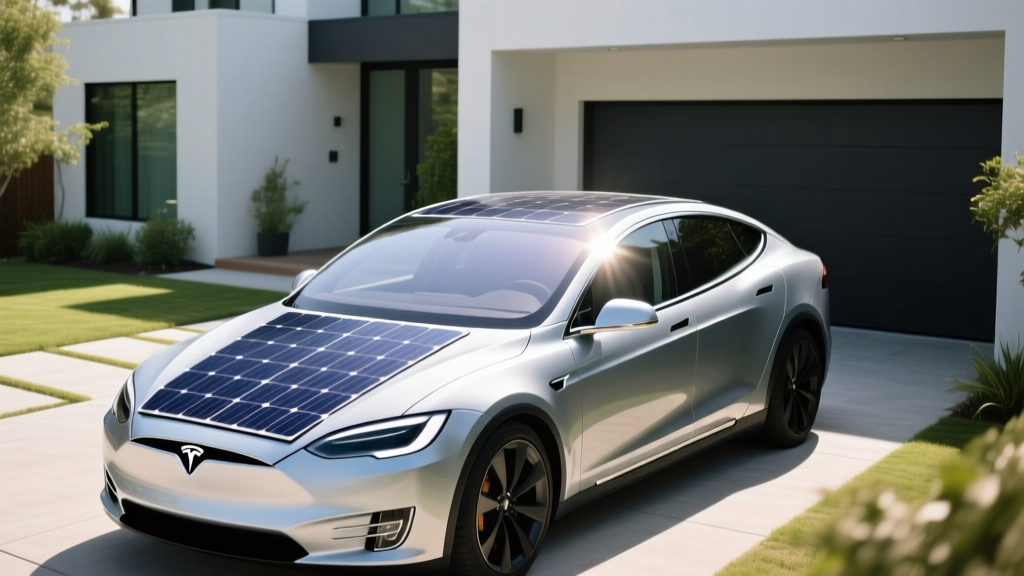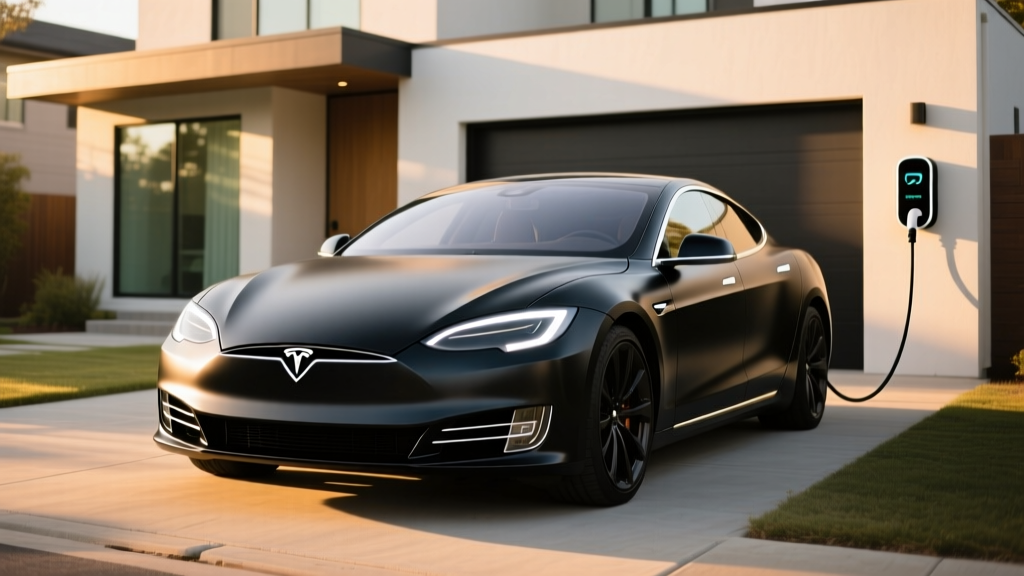
The Tesla Model S remains one of the most recognizable luxury electric sedans on the road, but its six-figure starting price demands scrutiny. If you're researching the 2026 Tesla Model S MSRP, you need more than a sticker number — you need to understand what each trim delivers in range, charging speed, performance, and whether any federal incentives apply. This profile breaks down every cost factor with real-world data so you can decide if the Model S still earns its premium.
2026 Tesla Model S MSRP by Trim Level
Tesla adjusts pricing periodically throughout the year, but as of early 2026, the Model S lineup holds two main configurations. The Long Range AWD serves as the entry point, while the Plaid tri-motor variant targets buyers who want supercar-rivaling acceleration. Destination fees add approximately $1,390 to every order.
| Trim | Base MSRP | Drivetrain | EPA Range | 0-60 mph | Horsepower |
|---|---|---|---|---|---|
| Model S Long Range AWD | $79,990 | Dual-Motor AWD | 402 mi | 3.1 sec | 670 hp |
| Model S Plaid | $94,990 | Tri-Motor AWD | 359 mi | 1.99 sec | 1,020 hp |
Optional paint colors add $1,500–$2,500 depending on the selection, while 21-inch Arachnid wheels cost an additional $4,500 and reduce EPA range by roughly 30 miles compared to the standard 19-inch Tempest wheels. A yoke-style steering wheel is included at no extra cost, though a conventional round wheel remains available.
EPA Range vs. Real-World Expectations
Tesla's efficiency advantage comes partly from its heat pump, which scavenges waste heat from the powertrain to warm the cabin — a meaningful improvement over resistive heating in cold climates. Even so, no EV delivers its full EPA rating at sustained highway speeds or in deep winter. The Model S is no exception. Plan charging stops assuming 75–80% of the sticker range for comfortable road-trip margins.
The Long Range model achieves an EPA-rated 124 MPGe combined (approximately 28 kWh per 100 miles), while the Plaid returns 116 MPGe combined (about 30 kWh/100 mi). These figures remain competitive among large luxury sedans, though smaller EVs like the Hyundai Ioniq 6 achieve significantly better efficiency through lower weight and drag.
Battery Capacity, Chemistry, and Longevity
Tesla does not publish official usable battery capacities for every model year, but independent teardowns and telemetry data indicate the current Model S Long Range and Plaid use an NMC (nickel manganese cobalt) battery pack with approximately 100 kWh of usable capacity. NMC chemistry offers higher energy density than LFP (lithium iron phosphate), which is why Tesla reserves LFP for the more affordable Model 3 and Model Y Standard Range trims.
The trade-off: NMC batteries benefit from charging to 80% for daily use and reserving 100% for road trips, while LFP packs can be charged to 100% regularly without accelerated degradation. If you plan to charge to full nightly, this matters over a multi-year ownership horizon.
| Specification | Details |
|---|---|
| Battery Chemistry | NMC (Nickel Manganese Cobalt) |
| Usable Capacity | ~100 kWh |
| Battery Warranty | 8 years / 150,000 miles (whichever comes first, minimum 70% capacity retention) |
| Powertrain Warranty | 8 years / 150,000 miles |
| Basic Vehicle Warranty | 4 years / 50,000 miles |
Tesla's 150,000-mile battery warranty exceeds the federal minimum requirement of 8 years/100,000 miles and matches the coverage offered by most premium EV competitors. Real-world degradation data from fleet telemetry suggests Model S packs lose approximately 10–12% of original capacity after 150,000 miles — meaning most owners will stay above the 70% warranty threshold.
Charging Speed: DC Fast Charge and Home Level 2
Charging speed remains a critical ownership factor, and the Model S benefits from access to Tesla's Supercharger network — widely regarded as the most reliable DC fast-charging infrastructure in North America.
| Charging Level | Max Power | Speed / Time | Connector |
|---|---|---|---|
| Level 1 (120V household) | ~1.4 kW | ~3–4 mi/hr | NACS (native) |
| Level 2 (240V home/public) | 11.5 kW (48A) | ~34 mi/hr | NACS (native) |
| DC Fast Charge (V3 Supercharger) | 250 kW peak | 10–80% in ~27 min; ~200 mi in 15 min | NACS (native) |
| DC Fast Charge (V4 Supercharger) | 250 kW (current vehicles) | Similar to V3; future hardware may support higher rates | NACS (native) |
A critical nuance: the 250 kW peak rate is not sustained across the entire charging session. The Model S charges at peak speed between approximately 10–30% state of charge, then tapers progressively. From 80–100%, charging slows dramatically to protect the battery — adding the final 20% can take as long as the first 70%. For road trips, plan to charge from 10% to 80% and skip the top-off unless your destination is within a few miles.
At home, a Tesla Wall Connector on a 60-amp circuit delivers the full 11.5 kW (48 amps), replenishing roughly 34 miles of range per hour. A full charge from 10% to 80% takes approximately 7 hours — easily handled overnight. Installation costs for a dedicated 60-amp circuit typically range from $800 to $2,000 depending on panel proximity and local permitting, on top of the $475 Wall Connector unit.
Federal Tax Credit Eligibility: Does the Model S Qualify?
This is the single biggest financial consideration for Model S shoppers. Unlike the Model 3 and Model Y (which may qualify depending on trim, battery sourcing, and buyer income), the Model S is a full-price purchase. However, some states offer their own incentives that are not subject to the federal MSRP cap — check your state's energy office or DMV for local rebate programs.
| Rule | Requirement | Model S Status |
|---|---|---|
| MSRP Cap (sedans) | ≤ $55,000 | ❌ $79,990 base |
| Buyer Income Cap | ≤ $150K single / $300K joint | ❌ Most buyers exceed |
| Battery Component Sourcing | North American assembly thresholds | Varies by production batch |
| Critical Minerals | Sourcing from US/FTA partners | Varies by production batch |
Performance, Handling, and Daily Driving
The Model S Long Range delivers 670 horsepower through its dual-motor all-wheel-drive system, reaching 60 mph in 3.1 seconds — quicker than most sports cars from a decade ago. The Plaid's tri-motor setup produces 1,020 horsepower and hits 60 mph in 1.99 seconds (with rollout subtracted), making it one of the fastest production cars ever built regardless of powertrain.
But straight-line speed tells only part of the story. The Model S uses an adaptive air suspension that adjusts ride height based on speed and road conditions, lowering at highway speeds for improved aerodynamics and raising for steep driveways or rough roads. The steering is precise but light — tuned more for grand-touring comfort than track feedback, despite the Plaid's capability.
Regenerative braking offers two modes: standard (strong regen enabling one-pedal driving in most situations) and low (more coasting, closer to a conventional car's feel). Tesla removed the user-adjustable regen strength setting in recent model years, then reintroduced it via software update — check the current software version before purchasing if this matters to you.
Interior, Cargo, and Technology
The Model S cabin centers on a 17-inch landscape touchscreen that controls virtually every vehicle function, from climate and suspension settings to glove-box release. A second 8-inch screen serves rear passengers for climate and entertainment. The instrument cluster is a compact 12.3-inch display behind the yoke or round steering wheel.
Build quality has improved substantially since the 2021 refresh, with ventilated front seats, heated rear seats, a HEPA air filtration system (Bioweapon Defense Mode), and a 22-speaker audio system included standard. Wireless phone charging, USB-C ports in both rows, and a panoramic glass roof round out the package.
| Measurement | Specification |
|---|---|
| Rear Cargo Volume | 28 cu ft (behind rear seats, hatchback style) |
| Front Trunk (Frunk) | ~3.1 cu ft |
| Front Legroom | 42.7 in |
| Rear Legroom | 35.4 in |
| Seating Capacity | 5 passengers |
The hatchback-style liftgate gives the Model S a practicality edge over traditional luxury sedans like the BMW i7 or Mercedes EQS, which use conventional trunk lids. Twenty-eight cubic feet of rear cargo space accommodates several large suitcases, and the rear seats fold nearly flat for longer items.
On the driver-assistance front, every Model S ships with Tesla's Basic Autopilot (adaptive cruise control and lane centering). Full Self-Driving (FSD) Supervised is available as an $8,000 option or $99/month subscription. It is critical to understand that FSD is an SAE Level 2 system — the driver must remain fully engaged, monitor the road, and be prepared to take over instantly. It is not autonomous driving. Only Level 4 services like Waymo operate without a human driver in geofenced areas.
Pros, Cons, and the Verdict
Pros
- Class-leading 402-mile EPA range (Long Range)
- Access to Tesla Supercharger network (17,000+ stalls in North America)
- Hatchback cargo versatility uncommon in luxury sedans
- Continuous OTA software updates add features post-purchase
- Plaid acceleration is genuinely supercar-level
- Strong 8-year/150,000-mile battery warranty
Cons
- No federal tax credit eligibility (MSRP and income caps)
- High starting price vs. newer luxury EV competitors
- Yoke steering wheel polarizing; not ideal for low-speed maneuvers
- Rear-seat space tighter than BMW i7 or Mercedes EQS
- 250 kW peak DC charge rate trails 800V competitors (Hyundai, Porsche, Lucid)
- Minimal physical controls — everything funnels through touchscreen
Model S vs. Key Competitors: Is It Worth the Price?
At $79,990 to $94,990, the Model S competes with a growing field of luxury electric sedans. Here's how it stacks up against the most relevant alternatives:
| Attribute | Tesla Model S LR | Lucid Air Pure | BMW i7 eDrive50 | Mercedes EQS 450+ |
|---|---|---|---|---|
| Base MSRP | $79,990 | $69,900 | $99,295 | $104,400 |
| EPA Range | 402 mi | 419 mi | 318 mi | 390 mi |
| Max DC Charge Rate | 250 kW | 200 kW | 195 kW | 200 kW |
| 0-60 mph | 3.1 sec | 5.2 sec | 5.5 sec | 5.9 sec |
| Rear Cargo | 28 cu ft | 32 cu ft | 17.7 cu ft | 22 cu ft |
| Federal Tax Credit | ❌ No | ❌ No (MSRP cap) | ❌ No (MSRP cap) | ❌ No (MSRP cap) |
The Lucid Air Pure undercuts the Model S on price while delivering more range and cargo space, though it lacks Tesla's Supercharger network and charges more slowly. The BMW i7 and Mercedes EQS offer significantly more rear-seat luxury and traditional build quality, but at higher prices and with less range. The Model S occupies a middle ground: the best combination of range, performance, and charging infrastructure in its class, even if it's no longer the undisputed leader in any single category.
Decision Framework
Choose the Model S Long Range if: You want the longest range in a luxury sedan with reliable DC fast-charging access via Superchargers, value hatchback practicality, and prioritize software/tech features over traditional luxury materials.
Choose the Model S Plaid if: You want 1,000+ hp and sub-2-second acceleration and are willing to sacrifice 43 miles of range for it.
Look at the Lucid Air if: Maximum range and interior space matter more than charging-network convenience, and you're comfortable with a smaller service-center footprint.
Look at the BMW i7 or Mercedes EQS if: Rear-seat comfort, ride refinement, and dealer service infrastructure are top priorities, and you accept higher pricing with less range.
Frequently Asked Questions
What is the real-world range of the 2026 Tesla Model S?
The EPA rates the Long Range at 402 miles and the Plaid at 359 miles. In real-world highway driving at 70–75 mph, expect roughly 310–340 miles from the Long Range and 270–300 miles from the Plaid. Cold weather (below 32°F) can reduce these figures by 20–30%. City driving with frequent regenerative braking tends to produce results closer to the EPA estimate.
How fast does the Model S charge at home and on the road?
On a Tesla Wall Connector (Level 2, 11.5 kW), the Model S gains approximately 34 miles of range per hour, fully charging overnight in about 7 hours from 10% to 80%. On a V3 Supercharger (DC fast charge), it peaks at 250 kW and charges from 10–80% in approximately 27 minutes, though the charge rate tapers significantly above 50% state of charge.
Does the 2026 Model S qualify for the $7,500 federal EV tax credit?
No. The Model S is ineligible under IRS §30D for two reasons: its MSRP ($79,990 base) exceeds the $55,000 sedan cap, and most buyers exceed the income limits ($150,000 single / $300,000 joint filer). No Tesla Model S trim has qualified for the federal credit since the current rules took effect. Some state-level incentives may still apply — check your local program.
How much does a fully loaded Model S cost?
A Model S Long Range with metallic paint ($2,000) and 21-inch wheels ($4,500) comes to approximately $87,880 including destination. Adding FSD Supervised ($8,000) pushes it to roughly $95,880. The Plaid with similar options can approach $108,000. Since no federal credit applies, these are your out-of-pocket figures before state incentives.
Is the Model S still worth buying over newer competitors?
It depends on your priorities. The Model S offers the best combination of range (402 mi), Supercharger access, hatchback cargo practicality, and performance in its price range. However, the Lucid Air Pure delivers more range at a lower price, and the BMW i7 offers superior rear-seat luxury. If Supercharger reliability and Tesla's software ecosystem matter to you, the Model S remains compelling. If traditional luxury or maximum value is your priority, test-drive the alternatives.
What is the Model S battery warranty?
Tesla covers the Model S battery and drive unit for 8 years or 150,000 miles, whichever comes first, with a minimum 70% capacity retention guarantee. If the battery degrades below 70% of its original capacity within that period, Tesla will repair or replace it at no cost. The basic vehicle warranty is 4 years / 50,000 miles.