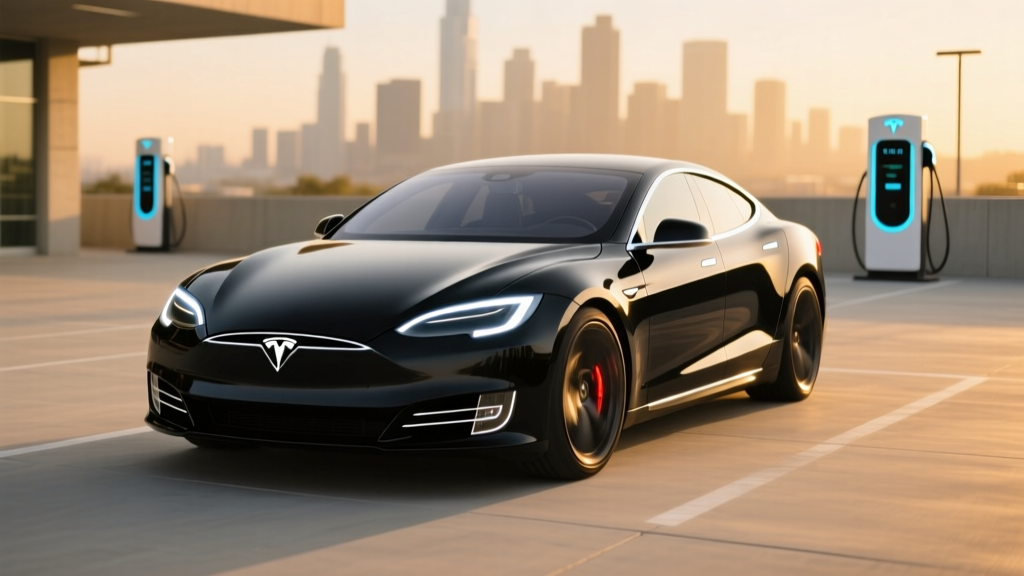
The Tesla Model S has been the flagship electric sedan for over a decade, and the 2026 model year carries forward the dual-motor and tri-motor architectures that redefined what a luxury EV could deliver. If you're researching the Model S Tesla motor lineup — whether the Long Range dual-motor or the tri-motor Plaid — you need more than marketing horsepower numbers. You need real-world range reconciliation, charging-curve honesty, and a clear picture of whether the $7,500 federal tax credit actually applies at this price point.
This review breaks down the 2026 Tesla Model S powertrain options, efficiency data, charging performance, and ownership economics with the exact numbers buyers need.
2026 Tesla Model S Motor Configurations and Performance
Tesla offers the Model S in two distinct powertrain configurations for 2026, each with a fundamentally different motor setup:
| Specification | Long Range (Dual-Motor) | Plaid (Tri-Motor) |
|---|---|---|
| Drivetrain | AWD (permanent magnet rear + induction front) | AWD (1 induction front + 2 permanent magnet rear) |
| Total Horsepower | 670 hp | 1,020 hp |
| 0–60 mph | 3.1 seconds | 1.99 seconds |
| Top Speed | 155 mph | 200 mph (with hardware) |
| Quarter Mile | 11.2 seconds | 9.23 seconds |
| Battery Usable Capacity | ~100 kWh (NMC) | ~100 kWh (NMC) |
| EPA Range | 402 miles | 396 miles |
| EPA Efficiency | 120 MPGe (28 kWh/100 mi) | 116 MPGe (29 kWh/100 mi) |
| Base MSRP | $79,990 | $94,990 |
The motor technology here matters. Tesla's permanent magnet synchronous reluctance motors on the rear axle deliver high torque density and efficiency at cruise, while the front induction motor can freewheel (disconnect) to reduce drag when AWD traction isn't needed. The Plaid adds a second rear permanent magnet motor with a carbon-sleeved rotor — this sleeve prevents rotor expansion at extreme RPM, enabling the 1,020 hp output without the motor literally tearing itself apart above 20,000 RPM.
For context, the dual-motor Long Range is already faster than nearly every combustion sedan ever built. The Plaid exists for buyers who want to set Nürburgring lap times or simply own the quickest production sedan in the world.
EPA Range vs. Real-World Expectations
EPA Estimated: 402 miles (Long Range) / 396 miles (Plaid)
Real-World Highway (70–80 mph, moderate climate): ~310–340 miles
Cold Weather (below 32°F, highway): ~250–290 miles
City/Mixed Commuting with Regen: ~360–390 miles
The EPA cycle includes substantial low-speed and stop-and-go driving, where regenerative braking recovers energy. On sustained highway runs at 75+ mph, aerodynamic drag dominates, and any EV — including the Model S — will fall 15–22% short of its sticker range. Tesla's thermal management system is among the best in the industry, which helps mitigate cold-weather losses, but lithium-ion chemistry inherently loses capacity and increases internal resistance below freezing. Expect a 25–35% range reduction in sub-freezing highway driving.
The Plaid's slightly lower EPA range (396 vs. 402) comes from its additional motor mass, wider rear tires for traction, and marginally higher rolling resistance — a small trade for 1,020 hp.
Charging Speed: DC Fast Charge and Home Level 2
Charging performance is where the Model S platform shows its maturity — and its limitations relative to 800V competitors like the Hyundai Ioniq 5 or Porsche Taycan.
| Charging Level | Power / Rate | Speed | Notes |
|---|---|---|---|
| Level 1 (120V household) | ~1.4 kW | ~3–4 miles/hour | Emergency/trickle only |
| Level 2 (240V home, 48A) | 11.5 kW | ~34 miles/hour | Full charge in ~9.5 hours |
| Level 2 (Tesla Wall Connector, 60A) | ~11.5 kW (vehicle-limited) | ~34 miles/hour | Onboard charger caps at 11.5 kW |
| DC Fast Charge (Supercharger V3/V4) | Peak 250 kW | 10–80% in ~28 min | Peak only below 30% SoC; tapers sharply above 60% |
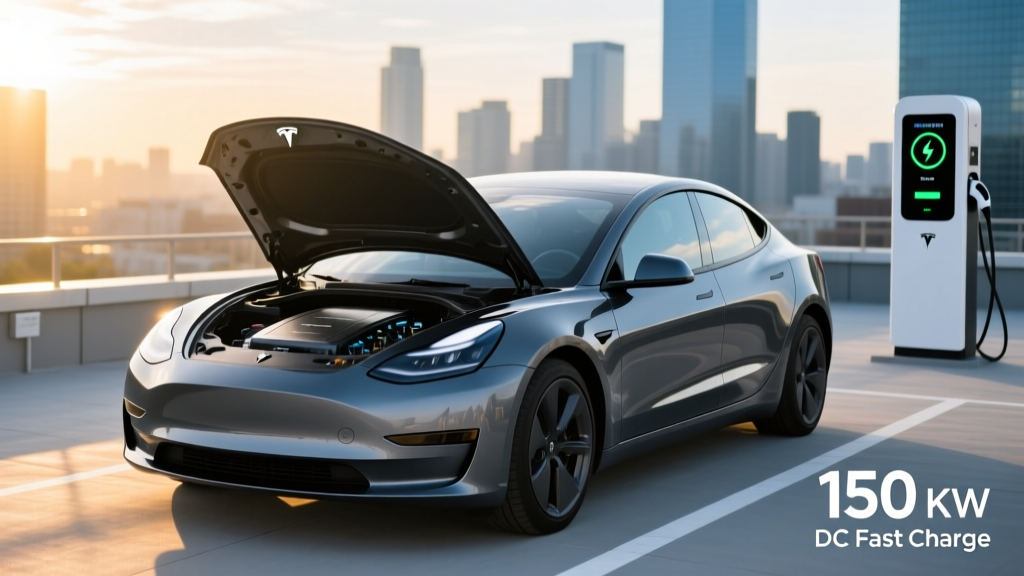
The Model S uses a ~100 kWh NMC (nickel manganese cobalt) battery pack operating on a 400V architecture. This limits peak DC charging to 250 kW — respectable, but behind the 350 kW peaks achievable by 800V platforms. In practice, the Model S sustains roughly 200–250 kW from approximately 5% to 30% State of Charge, then tapers progressively: ~170 kW through 50%, ~100 kW at 70%, and ~50 kW approaching 90%. A 10–80% session at a V3 Supercharger takes roughly 28 minutes; plan for 35–40 minutes if the pack isn't preconditioned.
Preconditioning matters. When you navigate to a Supercharger in the Tesla navigation system, the car automatically heats or cools the battery to optimal charging temperature. Arriving without preconditioning (for example, at a non-Tesla DC charger using an adapter) can add 5–10 minutes to your session, especially in cold weather.
The NACS (North American Charging Standard) connector is native to Tesla, giving the Model S seamless access to the 6,000+ Supercharger stations across North America — widely regarded as the most reliable public charging network. Source: Tesla Supercharger Network.
Interior Space, Cargo, and Daily Practicality
Despite its performance credentials, the Model S remains a full-size luxury sedan with genuine practicality:
- Passenger volume: ~100 cu ft (EPA class: Large)
- Rear legroom: 35.4 inches — adequate for adults, though less generous than a Mercedes EQS or BMW i7
- Cargo (rear trunk): 28.0 cu ft
- Frunk (front trunk): 3.1 cu ft — small, suitable for a charging cable bag or small backpack
- Rear seat fold: 60/40 split, expanding cargo to ~58 cu ft total
The hatchback-style liftback trunk opening is a significant practicality advantage over traditional sedan trunks — you can load bulky items that wouldn't fit in a BMW i7 or Mercedes EQS sedan. That said, the Model S interior materials and build quality, while improved since the 2021 refresh, still draw criticism relative to German luxury competitors at this price point.
Pricing, Trims, and Federal Tax Credit Eligibility
| Trim | Base MSRP | Destination | Typical As-Tested |
|---|---|---|---|
| Long Range (Dual-Motor) | $79,990 | $1,390 | $81,380–$86,000 |
| Plaid (Tri-Motor) | $94,990 | $1,390 | $96,380–$105,000 |
Federal tax credit (§30D): The 2026 Tesla Model S does not qualify for the $7,500 federal EV tax credit under current IRS rules. The reason is straightforward: the §30D credit imposes an MSRP cap of $55,000 for sedans (and $80,000 for SUVs/trucks/vans). The Model S, classified as a sedan, exceeds this cap on both trims. Source: IRS §30D Clean Vehicle Credits.
Additionally, even if the MSRP cap were met, buyers must satisfy income limits ($150,000 single / $300,000 joint modified AGI) and the vehicle must meet critical mineral and battery component sourcing requirements that shift annually through 2030. Always verify current-year eligibility on the IRS website or with a tax professional before making a purchase decision.
Some states offer separate EV incentives that are not subject to the federal MSRP cap — check your state's energy office or DMV for details, as these vary significantly by jurisdiction.
Driver Assistance, Tech, and the FSD Conversation
Tesla Autopilot and Full Self-Driving (Supervised) are Level 2 driver-assistance systems under the SAE J3016 standard. The driver must remain fully attentive, keep hands on the wheel (or demonstrate attention via camera monitoring), and be prepared to take over at any moment. This is not autonomous or self-driving. Only Level 4 services like Waymo operate without a human driver in defined areas.
The 2026 Model S ships with Tesla's latest hardware suite (HW4/AI4), featuring higher-resolution cameras and improved processing. Standard Autopilot includes adaptive cruise control and lane centering. The optional FSD (Supervised) package ($8,000 one-time or $99/month subscription as of 2026) adds automated lane changes, traffic light/stop sign recognition, and city street navigation — but it remains a supervised system requiring constant driver engagement.
Other notable technology:
- Infotainment: 17-inch center touchscreen with 22-speaker audio system
- Gaming: AMD Ryzen-based processor capable of AAA-level gaming while parked
- Over-the-air updates: Regular feature additions and improvements
- HEPA air filtration: Bioweapon Defense Mode with hospital-grade filtration
- Drawback: No Apple CarPlay or Android Auto — Tesla's proprietary system is the only option
- Drawback: Minimalist interior controls (no physical stalks for turn signals in recent refreshes — capacitive buttons on the yoke/steering wheel)
Warranty Coverage and Battery Longevity
Tesla provides the following warranty coverage for the 2026 Model S:
- Basic Vehicle: 4 years / 50,000 miles
- Battery & Drive Unit: 8 years / 150,000 miles (whichever comes first)
- Battery capacity retention threshold: Tesla warrants a minimum of 70% capacity retention over the warranty period
The NMC battery in the Model S is among the most proven in the EV industry. Real-world fleet data from high-mileage Model S owners shows typical degradation of 8–12% over the first 100,000 miles, with the curve flattening significantly afterward. Tesla's active liquid thermal management system — heating and cooling the pack to maintain optimal temperature — is a key factor in this longevity. Out-of-warranty battery replacement costs for the Model S currently range from $12,000 to $22,000 depending on the specific pack configuration and labor, though prices have trended downward.
Pros, Cons, and Who Should Buy the Model S
✅ Pros
- 402-mile EPA range (Long Range) — among the highest of any EV sold
- Supercharger network access — best public charging reliability
- Sub-3.1s 0–60 (Long Range); 1.99s (Plaid) is supercar territory
- Hatchback practicality with 28 cu ft cargo
- Proven battery longevity with 8yr/150k warranty
- OTA updates continuously add features
❌ Cons
- No federal tax credit — exceeds $55K sedan MSRP cap
- 250 kW peak DC charge rate lags 800V competitors (350 kW)
- Interior quality doesn't match German luxury at $80K+
- No Apple CarPlay / Android Auto
- Rear seat comfort and legroom trail rivals (EQS, i7)
- Capacitive turn signal buttons polarize owners
Best for: The Model S Long Range suits tech-forward professionals and road-trippers who prioritize maximum range, Supercharger access, and blistering acceleration in a practical hatchback sedan. The Plaid variant is for enthusiasts who want a daily-drivable supercar sedan and don't need the last 6 miles of range. It is not the best choice for buyers who prioritize traditional luxury materials, rear-seat comfort, or who need a vehicle that qualifies for the federal tax credit.
Frequently Asked Questions
What is the real-world range of the 2026 Tesla Model S?
The EPA rates the Long Range at 402 miles and the Plaid at 396 miles. In real-world highway driving at 70–80 mph, expect 310–340 miles. In cold weather (below freezing), highway range drops to approximately 250–290 miles. City driving with regenerative braking can approach or even match the EPA figure.
How fast does the Model S charge at home and on the road?
At home on a 240V Level 2 charger (48A), the Model S adds approximately 34 miles of range per hour at 11.5 kW — a full charge from empty takes about 9.5 hours. On a Tesla V3 Supercharger, it peaks at 250 kW and charges from 10–80% in roughly 28 minutes with battery preconditioning. The 400V architecture caps DC charging below what 800V competitors can achieve.
Does the 2026 Tesla Model S qualify for the federal EV tax credit?
No. The §30D federal tax credit caps eligible sedans at $55,000 MSRP. The Model S starts at $79,990, well above this threshold. It also must meet buyer income limits and battery sourcing requirements, but the MSRP cap alone disqualifies it. Check IRS §30D guidelines for current rules.
Is the Model S worth buying over the Lucid Air or Mercedes EQS?
The Lucid Air Grand Touring offers 516 miles of EPA range and superior rear-seat space but has a less proven service network and no Supercharger access. The Mercedes EQS 450+ provides a more luxurious interior and 390 miles of range but charges slower and costs more. The Model S wins on Supercharger infrastructure, acceleration, and proven long-term battery reliability. If interior luxury is paramount, test-drive the EQS. If range is the top priority, consider the Lucid. If charging-network reliability and performance matter most, the Model S remains compelling.
What battery chemistry does the Model S use?
The 2026 Model S uses an NMC (nickel manganese cobalt) lithium-ion battery pack with approximately 100 kWh of usable capacity. NMC offers higher energy density than LFP (lithium iron phosphate), which is why Tesla reserves LFP for the lower-cost Model 3 and Model Y Standard Range variants. NMC provides the range and performance the Model S demands, though it is more resource-intensive to produce.
How long will the Model S battery last?
Tesla warranties the battery for 8 years or 150,000 miles with a minimum 70% capacity retention. Real-world data from high-mileage Model S fleets suggests 8–12% degradation at 100,000 miles, with the degradation curve flattening substantially after the initial break-in period. Many Model S vehicles have exceeded 200,000 miles on their original battery pack. Proper care — avoiding sustained 100% charges, using scheduled departure preconditioning, and minimizing repeated DC fast charging to 100% — helps maximize longevity.
Sources: EPA fuel economy data via fueleconomy.gov, Tesla official specifications, IRS §30D Clean Vehicle Credit guidelines.