Tesla's Flagship Refresh: What Changed and Why It Matters
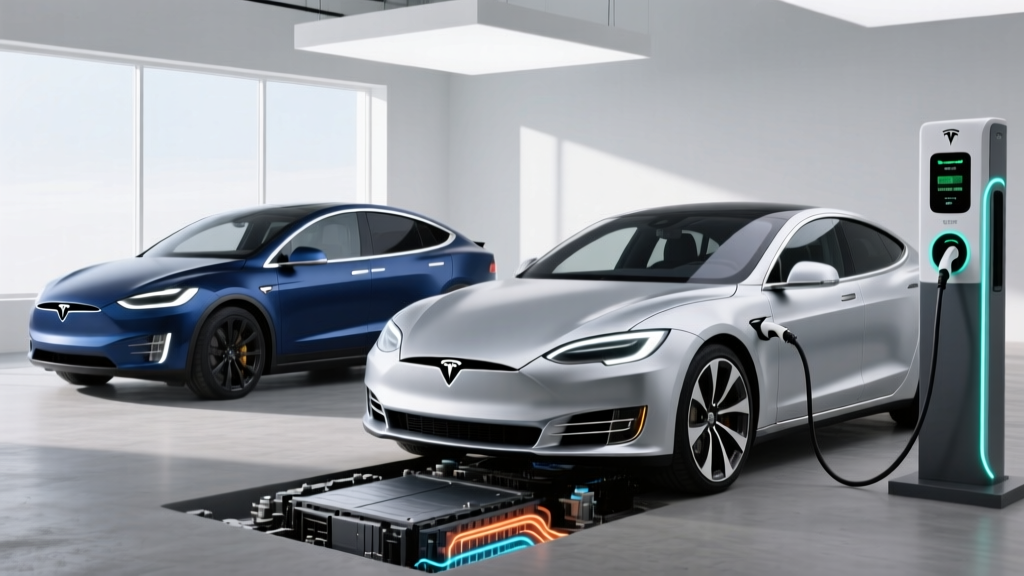
The 2026 Tesla Model S and Model X refresh arrives as Tesla's answer to a luxury EV market that has grown crowded with rivals from Lucid, BMW, Mercedes-Benz, and Rivian. Rather than a ground-up redesign, the 2026 update refines the formula Tesla established with the 2021 interior overhaul — tightening panel gaps, upgrading the rear-seat experience, and bumping battery chemistry and thermal management to stay competitive on range and charging speed.
Both vehicles now ride on an updated version of Tesla's tri-motor Plaid and dual-motor powertrains, paired with a revised ~100 kWh usable battery pack (NMC chemistry). The exterior changes are subtle — restyled bumpers, new matrix LED headlights, and updated wheel aero covers — but the mechanical and software improvements address some of the most common owner complaints from the previous generation.
Spec Snapshot: 2026 Model S vs. Model X
| Spec | Model S Long Range | Model S Plaid | Model X Long Range | Model X Plaid |
|---|---|---|---|---|
| EPA Range | 410 mi | 396 mi | 352 mi | 335 mi |
| Battery (usable) | ~100 kWh (NMC) | ~100 kWh (NMC) | ~100 kWh (NMC) | ~100 kWh (NMC) |
| Drivetrain | Dual-Motor AWD | Tri-Motor AWD | Dual-Motor AWD | Tri-Motor AWD |
| Horsepower | 670 hp | 1,020 hp | 670 hp | 1,020 hp |
| 0–60 mph | 3.1 sec | 1.99 sec | 3.8 sec | 2.5 sec |
| MPGe (combined) | 120 MPGe | 116 MPGe | 109 MPGe | 105 MPGe |
| Efficiency | 28 kWh/100mi | 29 kWh/100mi | 31 kWh/100mi | 32 kWh/100mi |
| Max DC Fast Charge | 250 kW | 250 kW | 250 kW | 250 kW |
| 10–80% DCFC Time | ~27 min | ~27 min | ~28 min | ~28 min |
| Level 2 Home Charge | 11.5 kW (~44 mi/hr) | 11.5 kW (~44 mi/hr) | 11.5 kW (~36 mi/hr) | 11.5 kW (~36 mi/hr) |
| Base MSRP | $79,990 | $94,990 | $84,990 | $99,990 |
| Battery Warranty | 8 yr / 150,000 mi | 8 yr / 150,000 mi | 8 yr / 150,000 mi | 8 yr / 150,000 mi |
Real-World Range: What the EPA Number Doesn't Tell You
EPA sticker: 410 miles
Real-world highway (70–80 mph, 72°F): ~330–350 miles
Cold weather (below 32°F, highway): ~270–310 miles
City / mixed driving with regen: ~370–400 miles
The EPA combined figure of 410 miles on the Model S Long Range is legitimate under mixed driving conditions, but sustained highway travel at speeds above 70 mph will cost you roughly 15–20% of that range. Tesla's heat pump, now in its third generation for 2026, significantly reduces cold-weather cabin-heating energy draw compared to the resistive heaters in older models. Still, expect a 25–30% range reduction in sub-freezing temperatures on longer highway trips, per fueleconomy.gov EV efficiency data and independent cold-weather testing.
The Model X, being heavier and less aerodynamic (Cd ~0.26 vs. the Model S's ~0.208), loses range more quickly at highway speeds. The Model X Long Range's 352-mile EPA rating translates to roughly 280–300 real-world highway miles in mild weather, and as low as 230–250 miles in freezing conditions.
For road trippers: Tesla's navigation includes battery preconditioning when you route to a Supercharger, which warms the pack to optimize charge speed upon arrival. This feature alone can shave 5–10 minutes off your charging stop in cold weather.
Charging Speed and Infrastructure
Both the refreshed Model S and Model X retain a peak DC fast-charge rate of 250 kW on V3 and V4 Superchargers. While competitors like the Lucid Air (300+ kW capability) and Hyundai Ioniq 5 (up to 350 kW on 800V architecture) push higher peak rates, Tesla's advantage lies in sustained throughput and network reliability.
| Charging Level | Power (kW) | Speed (approx.) | Use Case |
|---|---|---|---|
| Level 1 (120V outlet) | ~1.4 kW | ~5 mi/hr | Emergency / overnight trickle |
| Level 2 (240V, 48A Wall Connector) | 11.5 kW | ~44 mi/hr (S) / ~36 mi/hr (X) | Daily home charging |
| DC Fast Charge (V3 Supercharger) | Peak 250 kW | 10–80% in ~27 min | Road trips |
| DC Fast Charge (CCS adapter on non-Tesla networks) | Up to 250 kW (station-dependent) | Varies by station | Electrify America, EVgo, etc. |
The charging curve on the 100 kWh NMC pack is typical: you'll see peak 250 kW only between roughly 10–25% state of charge, tapering to ~150 kW by 50%, and dropping below 75 kW past 80%. That 10–80% time of approximately 27 minutes is competitive, though not class-leading. The real differentiator remains the Supercharger network — with over 6,000 V3/V4 stalls in North America, Tesla owners consistently report higher plug-and-charge success rates than on third-party networks.
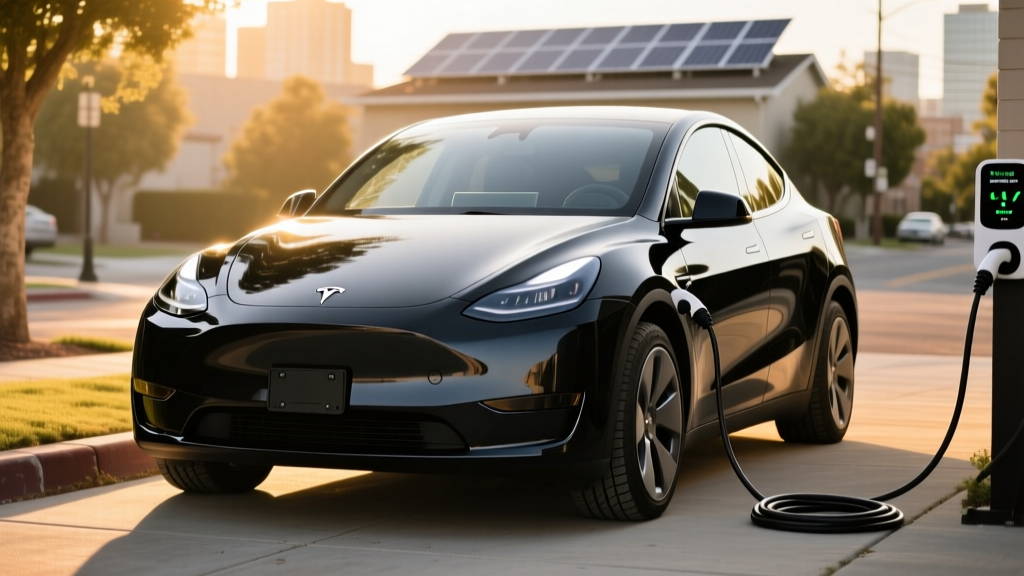
For home charging, Tesla's Gen 3 Wall Connector on a 60-amp circuit delivers 11.5 kW, replenishing a depleted Model S Long Range in roughly 9 hours. Most owners who charge nightly will never need public charging.
Performance, Ride, and the Plaid Question
The dual-motor Long Range models produce 670 horsepower and deliver 0–60 mph times of 3.1 seconds (Model S) and 3.8 seconds (Model X). These are supercar-rivaling figures in vehicles with genuine daily-driver comfort. The adaptive air suspension, revised for 2026 with updated damper tuning, manages ride quality well on rough pavement while keeping body roll in check during spirited driving.
The tri-motor Plaid variants (1,020 hp) are engineering showcases — the Model S Plaid's 1.99-second 0–60 time remains one of the quickest production-car benchmarks ever recorded. But at nearly $95,000, the Plaid is a performance statement rather than a value proposition. The Long Range trims offer 90% of the real-world driving experience at a meaningfully lower price.
One area where the refresh pays dividends: Tesla has improved cabin noise isolation, adding acoustic laminated glass to the rear windows and additional sound-deadening material in the floor. Road noise at highway speeds is noticeably reduced compared to the 2022–2024 models.
Interior, Tech, and Cargo Space
The 2026 refresh carries forward the minimalist interior introduced in 2021 — a 17-inch landscape touchscreen dominates the dash, with a secondary 8-inch screen for rear passengers. New for 2026 is a ventilated front-seat option, improved leather alternative upholstery, and a redesigned center console with wireless charging for two phones.
Model S cargo: 28 cu ft (rear seats up), 79 cu ft (folded), plus a 5.3 cu ft frunk.
Model X cargo: Up to 88.1 cu ft with seats folded (5-seat config), 5.3 cu ft frunk. The Model X offers optional third-row seating (total 6 or 7 passengers), though third-row legroom is tight at 32.7 inches — best suited for children.
Model S rear legroom: 40.9 inches — competitive with the BMW i7 and superior to the Lucid Air.
Model X second-row legroom: 41.1 inches (in 5-seat config with captain's chairs).
On the tech front, Tesla's infotainment remains the benchmark for responsiveness and over-the-air update frequency. The 2026 software adds a revamped trip planner with more granular charging-stop optimization and real-time stall-availability predictions. Autopilot (standard) and Full Self-Driving (Supervised) — a $8,000 add-on or $99/month subscription — remain SAE Level 2 driver-assist systems. The driver must maintain attention and hands-on-wheel readiness at all times.
Pricing, Tax Credits, and Ownership Cost
| Trim | Base MSRP | Federal §30D Credit Eligible? | Estimated After-Credit Price |
|---|---|---|---|
| Model S Long Range | $79,990 | No — exceeds $55,000 sedan MSRP cap | $79,990 |
| Model S Plaid | $94,990 | No — exceeds $55,000 sedan MSRP cap | $94,990 |
| Model X Long Range | $84,990 | No — exceeds $80,000 SUV MSRP cap | $84,990 |
| Model X Plaid | $99,990 | No — exceeds $80,000 SUV MSRP cap | $99,990 |
Under current IRS §30D rules, the federal clean vehicle credit of up to $7,500 is subject to MSRP caps: $55,000 for sedans and $80,000 for SUVs/vans/pickups. Every 2026 Model S and Model X trim exceeds these thresholds and therefore does not qualify for the new-vehicle federal tax credit. Buyers with adjusted gross income above the §30D limits ($150,000 single / $300,000 joint) would be ineligible regardless.
Some states offer their own rebates or incentives that may partially offset the purchase price — check your state's energy or DMV website for current programs. Additionally, the used EV credit (up to $4,000 under §25E) may apply if you purchase a pre-owned Model S or Model X from a dealer, subject to a $25,000 sale-price cap and income limits.
Total cost of ownership remains a Tesla strength. Electricity costs for the Model S Long Range average roughly $0.04–$0.06 per mile (depending on local utility rates), compared to $0.12–$0.16 per mile for a comparable gas-powered luxury sedan. Over five years and 75,000 miles, fuel savings alone can exceed $6,000–$8,000. Tesla's 8-year/150,000-mile battery and drive unit warranty provides long-term peace of mind, and IIHS crash-test ratings for the Model S/X platform remain strong.
Who Should Buy the Refreshed Model S or Model X?
- You want the longest-range luxury sedan on the market with access to the Supercharger network.
- You commute 50+ miles daily and want to charge at home once every 5–7 days.
- You value acceleration and tech-forward infotainment over traditional luxury materials.
- You need 6–7 passenger seating in an EV and want falcon-wing rear doors for tight parking-space access.
- You tow occasionally (Model X rated up to 5,000 lbs).
- You prioritize cargo volume and versatility over maximum range.
- Federal tax-credit eligibility is a dealbreaker — consider the BMW i5, Lucid Air Pure, or Tesla Model 3/Y.
- You prefer a traditional luxury interior with physical controls (see BMW i7, Mercedes EQS).
- You need 350+ kW DC fast charging for frequent long-distance driving.
Pros and Cons
- Class-leading EPA range on the Model S Long Range (410 mi)
- Supercharger network reliability remains best-in-class
- Tri-motor Plaid acceleration is otherworldly
- Over-the-air updates continuously add features
- Spacious Model S rear seat and generous frunk + trunk
- Strong 8-yr / 150,000-mi battery warranty
- No federal tax credit eligibility (MSRP caps)
- 250 kW peak charge rate trails 800V competitors
- Model X third row is cramped for adults
- Minimalist interior isn't for everyone — no physical climate controls
- FSD (Supervised) is costly and remains Level 2 only
- Insurance premiums run 15–25% above segment average
Frequently Asked Questions
What is the real-world range of the 2026 Tesla Model S?
The Model S Long Range carries a 410-mile EPA rating. In real-world highway driving at 70–80 mph in mild temperatures, expect roughly 330–350 miles. In freezing weather, that drops to approximately 270–310 miles. City driving with regenerative braking recovers more energy, often yielding 370–400 miles.
How fast does the Model S and Model X charge?
Both vehicles peak at 250 kW on DC fast chargers, achieving a 10–80% charge in roughly 27–28 minutes. At home on a Level 2 Tesla Wall Connector (11.5 kW / 48A), the Model S gains about 44 miles of range per hour, while the heavier Model X gains about 36 miles per hour. A full home charge from near-empty takes roughly 9 hours.
Does the 2026 Model S or Model X qualify for the federal EV tax credit?
No. Under current IRS §30D rules, new sedans must have an MSRP at or below $55,000, and SUVs at or below $80,000. All Model S trims (starting at $79,990) and all Model X trims (starting at $84,990) exceed these caps. State-level incentives may still apply — consult your state's energy office or a tax professional.
Is the Model S refresh worth buying over the Lucid Air or BMW i5?
The Model S wins on Supercharger access, range (410 vs. the Air Pure's ~419 EPA but with fewer fast-charging options), and software ecosystem. The Lucid Air offers superior interior materials and available 300+ kW charging. The BMW i5 is less expensive and tax-credit-eligible in lower trims but offers significantly less range (~295 mi). Your choice depends on whether network access and range (Tesla), luxury finish (Lucid), or price/credit eligibility (BMW) matter most.
What battery chemistry does the 2026 Model S/X use?
Both use NMC (nickel manganese cobalt) lithium-ion packs with approximately 100 kWh of usable capacity. Tesla does not currently offer LFP chemistry in the Model S or Model X — LFP is reserved for the Model 3 and Model Y Standard Range trims. NMC provides higher energy density, which is necessary to achieve 400+ mile range in the Model S's form factor.
How long will the battery last?
Tesla warranties the battery pack for 8 years or 150,000 miles (whichever comes first), guaranteeing a minimum of 70% capacity retention. Real-world degradation data from Tesla's fleet suggests most Model S/X packs retain 85–90% capacity at 100,000 miles. Replacement costs, if needed out of warranty, range from $12,000–$20,000 depending on the pack and service location.