Tesla's flagship sedan and SUV have been in production for over a decade, but the 2026 Tesla Model S and Model X continue to receive incremental hardware, software, and pricing adjustments that matter if you are shopping in the premium EV space. This review covers every meaningful 2026 Tesla Model S Model X update — from battery and charging specs to interior refinements, Autopilot changes, and the current federal tax credit picture — so you can decide whether these legacy EVs still earn their premium price tags against newer rivals like the Lucid Air, BMW iX, and Mercedes EQS SUV.
What's New for 2026: Tesla Model S and Model X Updates at a Glance
Unlike a traditional automaker's annual model-year refresh, Tesla implements changes on a rolling basis. For the 2026 model year, the most notable Tesla Model S Model X updates include revised pricing structures, continued refinement of the adaptive air suspension tuning, incremental improvements to the 4680-adjacent battery pack supply chain, and expanded standard features in the base Long Range trims. Tesla has also streamlined the option list — fewer paint colors, simplified wheel choices, and the continued bundling of what was previously the Premium Interior package into the base price.
The powertrain architecture remains the dual-motor all-wheel-drive layout for Long Range variants and the tri-motor setup for Plaid models. The yoke steering wheel remains available alongside a conventional round wheel, and the 17-inch landscape touchscreen continues to anchor the minimalist interior. Hardware 4 (HW4) Autopilot sensors remain standard across both model lines.
Range, Battery, and Efficiency: The Real Numbers
Both the Model S and Model X use a roughly 100 kWh (usable) battery pack. Tesla does not publish official cell chemistry for these flagship models, but industry teardowns and supply-chain reporting indicate an NMC (nickel manganese cobalt) formulation — chosen for its higher energy density compared to LFP, which Tesla reserves for Standard Range vehicles like the base Model 3 and Model Y.
Model S Long Range: EPA-estimated 402 miles. Expect approximately 320–350 miles at sustained highway speeds (70–80 mph), and 260–300 miles in sub-freezing winter conditions where cabin heating and battery thermal management draw significant energy.
Model X Long Range: EPA-estimated 348 miles. The larger frontal area and heavier curb weight reduce efficiency. Expect roughly 280–310 miles highway, and 230–260 miles in cold weather.
Model S Plaid: EPA-estimated 359 miles (19-inch wheels). The tri-motor setup and performance tuning reduce range versus Long Range.
Model X Plaid: EPA-estimated 326 miles.
| Model / Trim | EPA Range | Battery (usable) | Chemistry | MPGe (combined) | kWh/100 mi |
|---|---|---|---|---|---|
| Model S Long Range | 402 mi | ~100 kWh | NMC | 120 MPGe | 28 |
| Model S Plaid | 359 mi | ~100 kWh | NMC | 116 MPGe | 29 |
| Model X Long Range | 348 mi | ~100 kWh | NMC | 102 MPGe | 33 |
| Model X Plaid | 326 mi | ~100 kWh | NMC | 98 MPGe | 34 |
Efficiency figures sourced from fueleconomy.gov. Note that the Model S Long Range remains one of the most efficient large luxury sedans on the market at 28 kWh per 100 miles, a testament to Tesla's heat pump integration and aerodynamic optimization (0.208 Cd).
Charging Speed: DC Fast Charging and Home Level 2
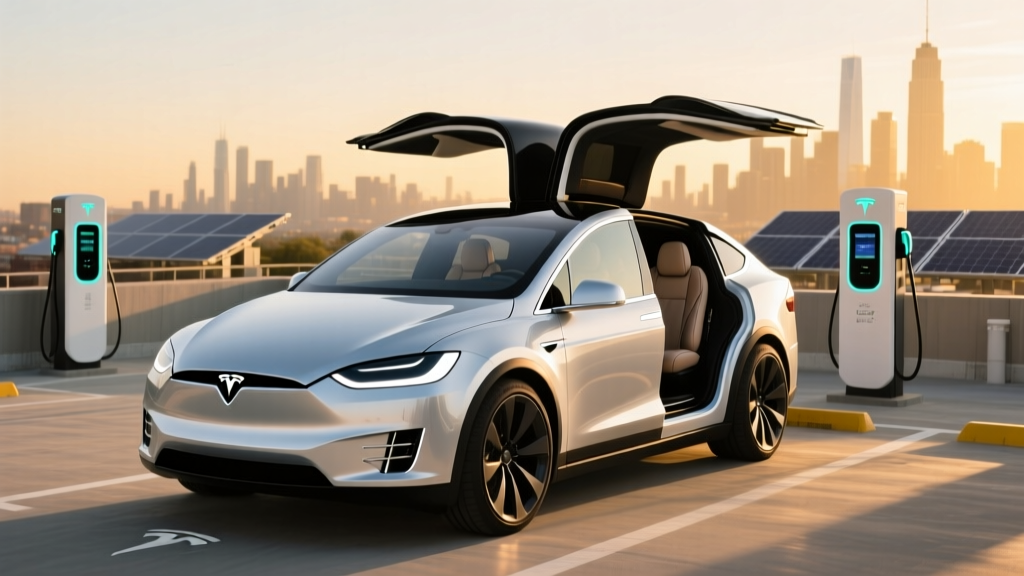
Tesla's Supercharger network remains a core ownership advantage, and the 2026 Model S and Model X support peak DC fast-charging rates up to 250 kW on V3 Superchargers. Both models also now ship with NACS (North American Charging Standard) ports natively — no adapter required at Tesla Superchargers. For non-Tesla DC networks using CCS1 connectors, an adapter is needed, though the expanding NACS adoption across the industry is reducing this friction.
| Charging Level | Power / Rate | Speed (approx.) | Notes |
|---|---|---|---|
| Level 1 (120V) | ~1.4 kW | ~3–4 mi/hr | Emergency/trickle only |
| Level 2 (240V, 48A) | 11.5 kW | ~34 mi/hr | Onboard charger max; full charge ~10 hrs |
| DC Fast (V3 Supercharger) | Peak 250 kW | 10–80% in ~30 min | Curve tapers significantly above 60% |
| DC Fast (V4 Supercharger) | Peak 250 kW* | 10–80% in ~28 min | *Model S/X architecture caps at 250 kW |
Charging curve reality: The 250 kW peak rate is achieved only between roughly 10% and 35% state of charge. Above 60% SoC, the rate drops steeply — often below 100 kW — which is why the 10–80% time is approximately 30 minutes rather than the ~18 minutes you might calculate from peak rate alone. Preconditioning the battery (automatic when a Supercharger is set as your navigation destination) is essential to achieving peak rates; without it, expect significantly slower initial charge speeds, especially in cold weather.
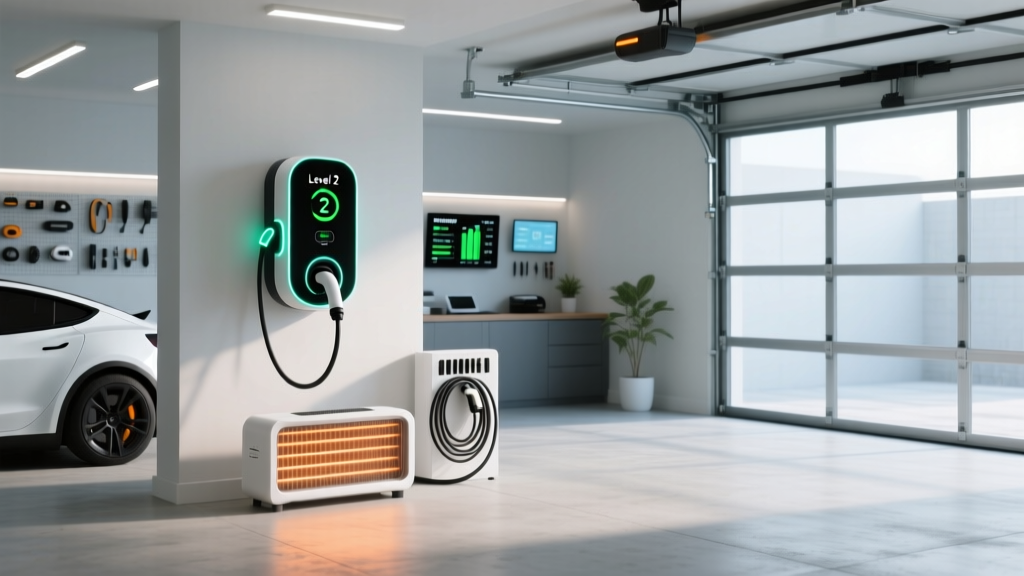
At home, the 11.5 kW onboard charger means a Tesla Wall Connector on a 60-amp circuit adds about 34 miles of range per hour — enough to fully replenish either model overnight. Installation of a 240V/60A circuit typically runs $800–$2,000 depending on panel proximity and local permitting. Always consult a licensed electrician for final specifications.
Performance: 0–60 Times and Powertrain Specs
The performance gap between Long Range and Plaid variants is dramatic, and it defines the two distinct buyer profiles for these vehicles.
| Model / Trim | Drivetrain | Horsepower | 0–60 mph | Top Speed |
|---|---|---|---|---|
| Model S Long Range | Dual-Motor AWD | 670 hp | 3.1 sec | 155 mph |
| Model S Plaid | Tri-Motor AWD | 1,020 hp | 1.99 sec | 200 mph |
| Model X Long Range | Dual-Motor AWD | 670 hp | 3.8 sec | 155 mph |
| Model X Plaid | Tri-Motor AWD | 1,020 hp | 2.5 sec | 163 mph |
The Model S Plaid's 1.99-second 0–60 time (with rollout subtracted, on a prepared surface) remains one of the quickest production-car launches ever recorded. In real-world driving, the more relevant metric is the Long Range's 3.1-second sprint, which is already faster than most sports cars and more than sufficient for any merge or passing scenario. The tri-motor Plaid powertrain uses torque vectoring across the rear axle for exceptional corner-exit grip, but the added weight and energy consumption are the trade-off.
Pricing, Trims, and Federal Tax Credit Eligibility
Tesla adjusts pricing frequently — sometimes monthly — so treat these figures as current at time of writing but always verify at Tesla's configurator before purchasing.
| Trim | Base MSRP | As-Tested (typical) | §30D Credit Eligible? |
|---|---|---|---|
| Model S Long Range | $79,990 | $85,000–$92,000 | No (MSRP exceeds $55,000 sedan cap) |
| Model S Plaid | $94,990 | $100,000–$110,000 | No (MSRP exceeds $55,000 sedan cap) |
| Model X Long Range | $84,990 | $92,000–$100,000 | No (MSRP exceeds $80,000 SUV cap) |
| Model X Plaid | $99,990 | $105,000–$115,000 | No (MSRP exceeds $80,000 SUV cap) |
- MSRP caps: Sedans (Model S) must be ≤$55,000; SUVs (Model X) must be ≤$80,000. Both exceed these thresholds in every current trim.
- Buyer income limits: AGI ≤$150,000 (single) / ≤$300,000 (joint) — even if MSRP qualified, many buyers would be capped.
- Battery sourcing: Critical minerals and battery component requirements phased in annually through 2029 per IRS guidance.
- Point-of-sale transfer: If eligible, the credit can be applied at purchase rather than waiting for tax filing — but neither Model S nor Model X currently qualifies.
Bottom line: Neither the 2026 Model S nor Model X qualifies for the $7,500 federal EV tax credit due to MSRP price caps. Consult a tax professional for your specific situation and check IRS qualified vehicle lists for updates.
Interior, Cargo, and Technology
The Model S and Model X interiors remain polarizing: minimalist to a fault, with virtually all controls funneled through the 17-inch center touchscreen (now with 2200 x 1300 resolution). The 2026 models retain the refreshed cabin introduced in the 2021 overhaul — ventilated front seats, a rear-seat entertainment screen, wireless phone charging, and a HEPA air filtration system with Bioweapon Defense Mode.
Passenger and cargo dimensions:
- Model S: 113.2 cu ft passenger volume; 28 cu ft rear cargo + 5.3 cu ft frunk. Rear legroom is 35.4 inches — adequate but not class-leading versus the Lucid Air (37.2 in).
- Model X: Available in 5-, 6-, or 7-seat configurations. Up to 92.3 cu ft cargo volume with rear seats folded (5-seat config). The falcon-wing rear doors require 12 inches of vertical clearance to open — a consideration in low-ceiling garages. Rear legroom (second row): 40.9 inches.
Standout tech features:
- 17-inch cinematic touchscreen with Netflix, YouTube, and gaming (including Cyberpunk 2077 at full resolution)
- 22-speaker, 960-watt audio system
- Hardware 4 (HW4) Autopilot suite — cameras and neural-net processing for Autosteer, Navigate on Autopilot, and FSD (Supervised)
- Over-the-air updates that continuously add features
- Sentry Mode dashcam surveillance when parked
Notable drawbacks:
- No physical instrument cluster — speed and navigation info appear on the left third of the center screen
- Touch-only climate and mirror controls can be distracting while driving
- Falcon-wing doors (Model X) add mechanical complexity and potential long-term maintenance cost
- Build quality, while improved, still trails BMW/Mercedes panel-gap consistency
Driver Assistance: Autopilot and FSD (Supervised)
Tesla Autopilot and Full Self-Driving (Supervised) are SAE Level 2 driver-assistance systems. The driver must remain fully engaged — eyes on the road, hands available to steer — at all times. These systems do not make the vehicle autonomous. Tesla's FSD (Supervised) can handle more complex scenarios (city streets, stoplights, roundabouts), but it requires continuous driver supervision and is not a Level 3 or Level 4 system.
- It does not drive the car without a human supervisor — you are legally and practically the driver.
- It does not guarantee safe passage through construction zones, unmapped roads, or severe weather.
- It does not eliminate liability — you are responsible for all vehicle actions while FSD is engaged.
- Performance degrades in heavy rain, snow, and direct low-sun glare that can impair camera vision.
Autopilot is included standard. FSD (Supervised) remains an $8,000 one-time purchase or $99/month subscription as of early 2026. For most buyers, the included Autopilot (adaptive cruise + lane centering on highways) is sufficient; FSD's city-street capabilities are impressive in demos but can require frequent interventions in real-world driving.
Warranty and Long-Term Ownership
| Component | Coverage |
|---|---|
| Basic Vehicle | 4 years / 50,000 miles |
| Battery & Drive Unit | 8 years / 150,000 miles (Long Range & Plaid) |
| Battery Capacity Retention | Minimum 70% over warranty period |
The 8-year/150,000-mile battery and drive unit warranty is competitive and covers degradation below 70% of original capacity. Based on long-term fleet data from Tesla's own impact reports and third-party tracking, Model S/X battery packs typically retain 88–92% capacity at 100,000 miles — well above the warranty threshold. The NMC chemistry in these packs shows a characteristic degradation curve: steeper loss in the first 20,000 miles (roughly 3–5%), then a gradual linear decline.
Out-of-warranty battery replacement for the Model S/X is estimated at $12,000–$20,000 depending on pack configuration and labor, though most owners will never face this expense within typical ownership periods.
Competitive Landscape: Is It Worth Buying in 2026?
| Spec | Tesla Model S LR | Lucid Air Pure | BMW iX xDrive50 | Mercedes EQS 450 SUV |
|---|---|---|---|---|
| EPA Range | 402 mi | 419 mi | 324 mi | 305 mi |
| Base MSRP | $79,990 | $69,900 | $87,250 | $104,400 |
| 0–60 mph | 3.1 sec | 5.2 sec | 4.4 sec | 5.3 sec |
| Peak DC Charge | 250 kW | 200 kW | 195 kW | 200 kW |
| 10–80% DC Time | ~30 min | ~34 min | ~34 min | ~31 min |
| §30D Credit | No | No | Eligible (≤$80k SUV cap — verify trim) | No |
| Charging Network | Supercharger (native) | CCS + EA | CCS + EA / NACS adapter | CCS + EA / NACS adapter |
The Model S still holds the range and performance crown in its class, but the Lucid Air Pure undercuts it on price while matching or exceeding range. The Model X occupies a rarer niche — there are very few three-row electric SUVs that can touch its combination of range, acceleration, and falcon-wing practicality, though the Rivian R1S and Kia EV9 compete at lower price points with different trade-offs.
- You want maximum range in a sedan with proven Supercharger reliability for cross-country road trips
- You value over-the-air updates and Tesla's software ecosystem
- Performance (especially in Plaid trim) is a priority
- You need three-row seating with electric-only range above 300 miles
- Falcon-wing doors genuinely help in tight parking situations (verify your garage clearance)
- Towing capacity (up to 5,000 lbs) matters for your use case
- Federal tax credit eligibility is a dealbreaker — the MSRP caps disqualify both models
- You prefer a traditional luxury interior with physical controls (BMW iX, Mercedes EQS)
- Best value per mile of range is your priority (Lucid Air Pure offers 419 mi for $10,000 less)
Pros and Cons
- Class-leading 402-mile EPA range (Long Range)
- 250 kW peak charging; native Supercharger access
- Plaid tri-motor performance is unmatched in production sedans
- Continual OTA updates add features post-purchase
- Strong resale value relative to luxury EV peers
- No federal tax credit (MSRP above $55k sedan cap)
- Touch-only controls require adaptation and can distract
- Rear seat comfort and legroom trail Lucid Air and BMW i7
- Panel gaps and build consistency still not German-luxury level
- 250 kW DC charge cap falls behind 800V architectures (Hyundai Ioniq 5, Porsche Taycan at 350 kW)
- Only 3-row electric SUV with 348+ miles of range
- Falcon-wing doors ease child-seat loading in tight spaces
- 5,000-lb towing capacity
- Tri-motor Plaid version is absurdly quick for an SUV
- Starting above $84,990 with no tax credit relief
- Falcon-wing mechanisms add long-term maintenance risk
- Third row is best for children — adults will find it cramped
- Heavier weight means steeper cold-weather range loss (~25–30%)
Frequently Asked Questions
What is the real-world range of the 2026 Tesla Model S?
The EPA rates the Model S Long Range at 402 miles. In real-world highway driving at 70–80 mph, expect approximately 320–350 miles. In sub-freezing temperatures with cabin heating active, range can drop to 260–300 miles. The Plaid trim sacrifices range for performance, delivering about 290–320 real-world highway miles.
How fast does the Model S and Model X charge?
On a V3 or V4 Tesla Supercharger, both models peak at 250 kW, achieving a 10–80% charge in approximately 28–30 minutes. At home on a Level 2 Wall Connector (11.5 kW / 48A), expect about 34 miles of range per hour and a full overnight charge in roughly 10 hours. The 400V architecture caps charge speed below the 800V systems in the Porsche Taycan or Hyundai Ioniq 5.
Does the 2026 Model S or Model X qualify for the federal EV tax credit?
No. Under current IRS §30D rules, sedans must have an MSRP at or below $55,000 and SUVs at or below $80,000 to qualify. Every 2026 Model S and Model X trim exceeds these thresholds. Additionally, buyer income caps ($150k single / $300k joint) and battery-sourcing requirements apply. Verify current rules at IRS.gov.
Is the Tesla Model S worth buying over the Lucid Air?
The Model S wins on Supercharger network access, software ecosystem, and Plaid-level performance. The Lucid Air Pure wins on value — offering 419 miles of EPA range at $69,900 versus the Model S Long Range at $79,990. If long-distance road-trip charging convenience is your top priority, Tesla's network edge is real. If you primarily charge at home and want the best range-per-dollar, the Lucid Air is compelling.
What are the biggest changes in the 2026 Tesla Model S Model X updates?
The 2026 updates are evolutionary rather than revolutionary: pricing adjustments, continued HW4 sensor integration, minor suspension tuning refinements, and streamlined option packages. There is no new battery chemistry, no 800V architecture migration, and no major interior redesign. Tesla's rolling-update approach means some changes may have already been incorporated into late-2025 production vehicles.
How long will the Model S/X battery last?
Tesla warranties the battery for 8 years or 150,000 miles with a minimum 70% capacity retention. Fleet data suggests most packs retain 88–92% at 100,000 miles. With proper care (avoiding frequent 100% charges, using preconditioning, minimizing DC fast-charging to only when needed), the battery should outlast 200,000 miles before approaching the 70% threshold. Out-of-warranty replacement is estimated at $12,000–$20,000.
Who is the Model X best suited for?
The Model X fits families who need three-row seating and electric-only range above 300 miles, especially those who road-trip frequently and benefit from Supercharger access. It also suits buyers who want SUV practicality with sports-car acceleration (3.8 seconds 0–60 in Long Range, 2.5 seconds in Plaid). If you only need two rows and prioritize value, the Model Y or Rivian R1S may be more practical choices.