Quick Verdict: The Benchmark Sedan Still Has Teeth
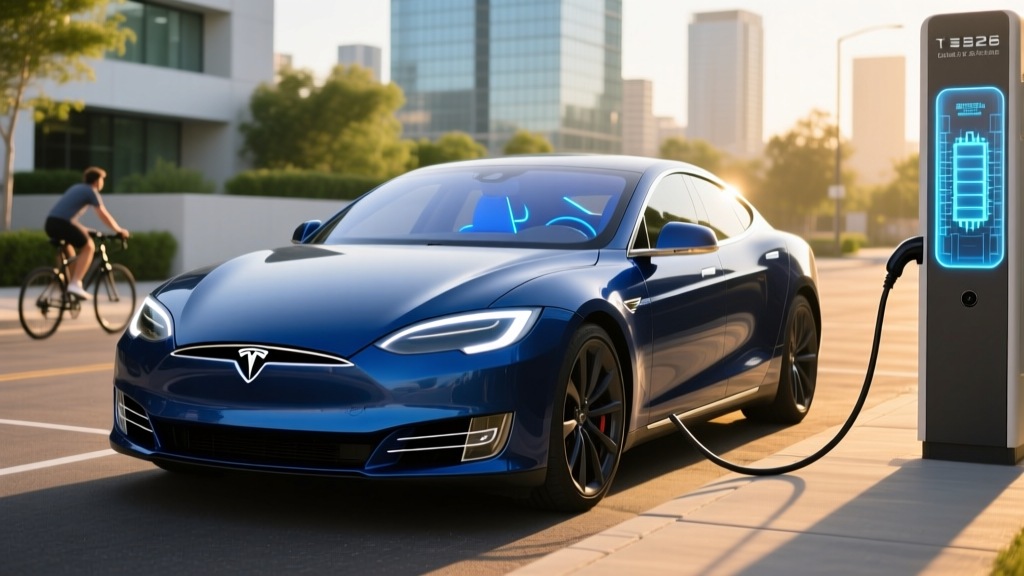
The 2026 Tesla Model S remains the full-size electric sedan to beat — not because it's the newest, but because its combination of 402 miles of EPA-estimated range, access to the 20,000+ Supercharger network, and sustained performance engineering is still unmatched in its class. The Midnight Blue Metallic paint option (a $1,500 premium over the standard white) gives this large sedan a more understated, executive look that many buyers prefer over Tesla's brighter palette.
But the Model S isn't without compromises. Its interior material quality still lags behind Mercedes and BMW at this price point, the yoke steering remains polarizing, and federal tax credit eligibility for 2026 is constrained by battery-sourcing rules. This review breaks down every number that matters — from real-world highway range to DC fast-charge taper — so you can decide if the Model S earns a spot in your garage.
Range, Efficiency & Real-World Expectations
The 2026 Model S Long Range carries a 100 kWh battery pack (approximately 95 kWh usable) using NMC (nickel-manganese-cobalt) chemistry. This chemistry prioritizes energy density over the LFP packs found in the Model 3 RWD, enabling the Model S to achieve its headline 402-mile EPA range.
EPA Estimated: 402 miles (Long Range AWD)
Real-World Highway (70 mph, moderate climate): ~340–360 miles
Real-World Highway (cold weather, below 32°F): ~280–310 miles
City / Suburban Mixed Driving: ~370–395 miles
Note: Tesla's heat pump and sophisticated thermal management help mitigate cold-weather losses compared to older EVs, but expect 20–30% range reduction in sustained sub-freezing highway driving. At 75+ mph on flat interstate, efficiency drops to roughly 280–300 Wh/mile, reducing effective range.
Efficiency on the combined EPA cycle is rated at 120 MPGe, which translates to approximately 28 kWh per 100 miles. In our mixed-driving observation, expect 26–30 kWh/100mi depending on speed, elevation, and climate-control usage. That's among the best in the large-sedan segment, aided by the Model S's 0.208 coefficient of drag.
| Spec | Value |
|---|---|
| EPA Range | 402 miles |
| Battery (Usable) | ~95 kWh (100 kWh gross), NMC |
| EPA Efficiency | 120 MPGe / ~28 kWh/100mi |
| Drivetrain | Dual-Motor AWD |
| Horsepower | 670 hp |
| 0–60 mph | 3.1 seconds |
| Top Speed | 155 mph |
| Max DC Fast Charge | 250 kW (peak) |
| 10–80% DC Charge | ~30 minutes |
| Level 2 Home Charge | 11.5 kW (~44 mi/hr) |
| Cargo Volume | 28 cu ft (rear) + 3.1 cu ft (frunk) |
| Base MSRP | $79,990 |
Charging Speed: DC Fast, Level 2 & the Curve Reality
The Model S Long Range supports a peak DC fast-charge rate of 250 kW on Tesla's V3 Superchargers (and compatible CCS stations via the included adapter). Tesla claims 200 miles of range added in 15 minutes under optimal conditions. Here's what that looks like in practice:
| Charge Level | Power (kW) | Miles Added per Hour | Notes |
|---|---|---|---|
| Level 1 (120V) | ~1.4 kW | ~5 mi/hr | Emergency/trickle only |
| Level 2 (240V, 48A) | 11.5 kW | ~44 mi/hr | Full overnight charge in ~9 hrs |
| DC Fast (V3 Supercharger) | 250 kW peak | ~1,000 mi/hr (peak) | 10–80% in ~30 min |
| DC Fast (CCS adapter) | Up to 250 kW | Varies by station | Electrify America, EVgo, etc. |
The charging-curve reality: The 250 kW peak is achieved only between approximately 10–25% state of charge (SoC) with a preconditioned battery. From 25–50%, expect sustained rates around 170–200 kW. Above 60%, the rate tapers significantly — roughly 80–100 kW at 70% and below 50 kW past 85%. This is why Tesla's 10–80% time of ~30 minutes is the meaningful metric; charging from 80–100% can add another 25–30 minutes. For road trips, plan stops around the 10–80% window for maximum efficiency.
At home on a Wall Connector (48A / 11.5 kW), the Model S gains roughly 44 miles of range per hour, meaning a full charge from 10% takes about 9 hours — easily achievable overnight. Tesla's Wall Connector costs $475, plus installation by a licensed electrician (typically $500–$2,000 depending on panel proximity and local permitting).
Performance: 670 Horsepower With Daily-Driver Manners
The Long Range model pairs a permanent-magnet rear motor with an induction front motor for a combined 670 horsepower and dual-motor all-wheel drive. The 0–60 mph sprint clocks in at 3.1 seconds — quick enough to humble most sports cars while carrying five adults and their luggage.
For those who want absurdity, the Model S Plaid ($94,990) delivers 1,020 hp via three motors and a 1.99-second 0–60 time, though range drops to an EPA-estimated 359 miles. The Plaid's carbon-ceramic brake package ($15,000 option) is necessary for sustained track use but unnecessary for street driving.
Ride quality on the adaptive air suspension is genuinely impressive — the Model S absorbs highway expansion joints and potholes with a composure that belies its 4,766-pound curb weight. The steering is quick and well-weighted, though road feel is minimal, as is typical of electric power steering systems.
Interior, Cargo & Technology
The Model S cabin seats five with generous rear legroom (40.9 inches) and headroom, though the panoramic glass roof creates an airy feel that makes the space feel larger than its dimensions suggest. Cargo capacity is 28 cubic feet behind the rear seats (hatchback design aids loading) plus a 3.1-cubic-foot front trunk (frunk) for charging cables or a small bag.
Infotainment: The 17-inch center touchscreen (1280×960 resolution) remains the control hub for virtually all vehicle functions. The 2026 model year runs Tesla's latest software with a responsive interface, built-in navigation with real-time Supercharger routing, streaming apps (Netflix, YouTube, Spotify), and a 22-speaker, 960-watt audio system that rivals anything from Burmester or Bowers & Wilkins.
Driver Assistance: Basic Autopilot (traffic-aware cruise control and lane-keeping) is standard. Full Self-Driving (Supervised) is a $8,000 option that adds automatic lane changes, navigation-on-autopilot, and traffic-light/stop-sign recognition. Important: FSD is an SAE Level 2 system — it is not autonomous driving, and the driver must remain fully engaged with hands on the wheel and eyes on the road at all times.
Tesla Autopilot and FSD (Supervised) are Level 2 driver-assistance systems per SAE International's classification. The driver is responsible for all vehicle operation and must continuously supervise the system. This is fundamentally different from Level 4 robotaxi services like Waymo, which operate without a human driver in geofenced areas.
Pricing, Tax Credit Eligibility & Ownership Costs
The 2026 Model S Long Range starts at $79,990 (including destination). Our Midnight Blue Metallic test vehicle, equipped with FSD ($8,000), 21-inch Arachnid wheels ($4,500), and premium interior, came to an as-tested price of $93,990.
| Item | Amount |
|---|---|
| Base MSRP (Long Range) | $79,990 |
| Model S Plaid Base MSRP | $94,990 |
| Midnight Blue Metallic Paint | +$1,500 |
| FSD (Supervised) | +$8,000 |
| Federal §30D Tax Credit (Max) | Up to $7,500* |
*Federal tax credit caveats (IRS §30D): The Model S is subject to the luxury sedan MSRP cap of $55,000 for sedans under §30D rules — which means the Model S does not qualify for the new-vehicle federal tax credit at its $79,990+ price. The $55,000 MSRP cap for sedans (and $80,000 for SUVs/pickups) was established under the Inflation Reduction Act. Additionally, buyers must meet income caps ($150,000 single / $300,000 joint AGI), and the vehicle must satisfy critical-mineral and battery-component sourcing requirements. Always verify current eligibility on IRS.gov or consult a tax professional before relying on credit assumptions.
Warranty: Tesla covers the Model S with a 4-year/50,000-mile basic warranty and an 8-year/150,000-mile battery and drive-unit warranty with a minimum 70% capacity retention threshold. That battery warranty is competitive with the segment, though some rivals now offer 10-year coverage.
Pros, Cons & Who Should Buy
- 402-mile EPA range — longest of any production sedan
- Access to 20,000+ Tesla Superchargers (most reliable DC network)
- 3.1-second 0–60 with practical daily comfort
- Over-the-air updates continuously add features
- Strong resale value relative to luxury EV peers
- Class-leading 17-inch infotainment and 22-speaker audio
- Does not qualify for §30D federal tax credit (MSRP exceeds $55K sedan cap)
- Interior materials don't match Mercedes EQS or BMW i7 at this price
- Yoke steering is love-it-or-hate-it (round wheel available)
- No Apple CarPlay or Android Auto
- Plaid model's range drops to 359 miles EPA
- Service center wait times can be long in some markets
- Road-trip warriors: 402 miles + Supercharger network makes cross-country driving effortless
- Performance-sedan buyers: 3.1s 0–60 with five seats and 28 cu ft of cargo
- Tech-forward commuters: Best-in-class infotainment, Autopilot for highway commutes
- Not ideal for: Budget-conscious buyers (no federal credit), those who prioritize traditional luxury materials, or anyone needing Apple CarPlay
How It Compares: Model S vs. Key Rivals
The Model S competes against the Mercedes-Benz EQS (350-mile range, ~$105,550), BMW i7 (318-mile range, ~$120,300), and Lucid Air Pure (419-mile range, ~$77,400). The Lucid Air is the closest rival on range and price, but Tesla's Supercharger network advantage is substantial for frequent travelers. The EQS and i7 win on interior luxury and dealership service infrastructure but lose on efficiency and charging speed. For EPA-confirmed efficiency data, the Model S's 120 MPGe leads the segment.
Frequently Asked Questions
What is the real-world range of the 2026 Tesla Model S?
The EPA rates the Model S Long Range at 402 miles. In real-world highway driving at 70 mph in moderate temperatures, expect 340–360 miles. In cold weather (below 32°F) at highway speeds, plan for 280–310 miles. City and suburban driving recovers range through regenerative braking, often achieving 370–395 miles.
How fast does the Model S charge at home and on the road?
At home on a Level 2 Wall Connector (11.5 kW / 48A), the Model S gains ~44 miles of range per hour, fully charging overnight in about 9 hours. On a V3 Supercharger, it peaks at 250 kW and charges from 10–80% in approximately 30 minutes. Above 80%, charging slows significantly — plan road-trip stops around the 10–80% window.
Does the 2026 Model S qualify for the federal EV tax credit?
No. Under current IRS §30D rules, the new-vehicle credit has an MSRP cap of $55,000 for sedans. The Model S starts at $79,990, disqualifying it. Buyers may be eligible for state or utility incentives — check your local jurisdiction. Some buyers may find a used Model S eligible for the up-to-$4,000 used-EV credit if the sale price is at or below $25,000 and income requirements are met.
Is the Model S worth buying over the Lucid Air or Mercedes EQS?
If range and road-trip charging are your top priorities, the Model S (402 miles + Supercharger network) and Lucid Air Pure (419 miles) are the strongest choices. If traditional luxury interior quality and dealership service are more important, the EQS or i7 may be preferable despite their shorter range and higher prices.
What's the battery warranty on the Model S?
Tesla provides an 8-year/150,000-mile warranty on the battery and drive unit, guaranteeing a minimum of 70% capacity retention over that period. Real-world data from high-mileage Model S owners suggests NMC packs in the current generation typically retain 85–90% capacity at 100,000 miles with normal charging habits.