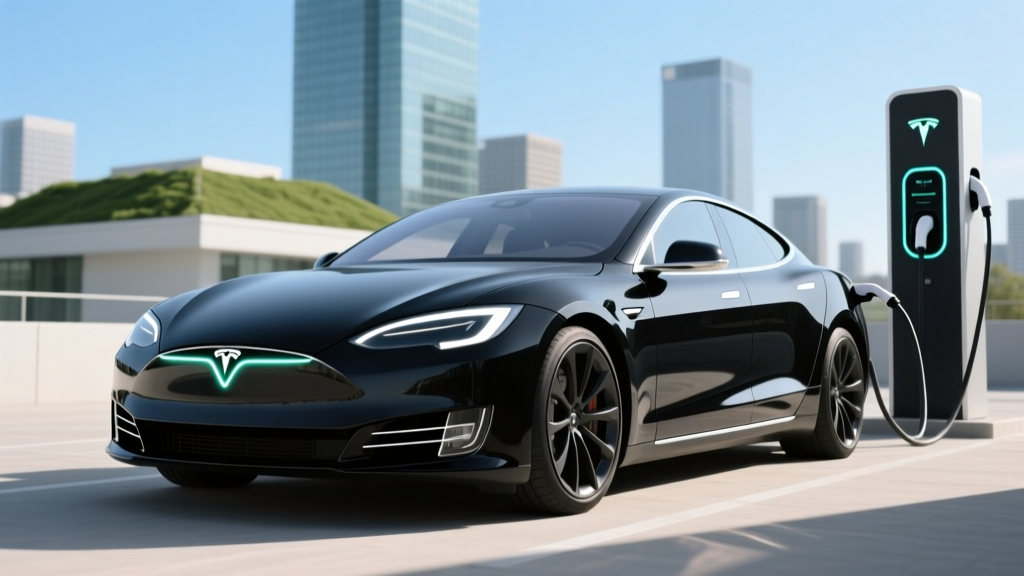
The Tesla Model S has been the benchmark luxury electric sedan for over a decade, and for 2025 Tesla introduced the Luxe Package as a premium appearance and comfort upgrade across the Long Range and Plaid trims. For 2026, the Luxe Package remains a $6,500 add-on that bundles upgraded interior materials, exclusive exterior trim, and enhanced acoustic glass. But does the package justify its cost on top of an already expensive sedan? This review breaks down every spec that matters — from real-world range to charging curves to federal tax credit eligibility — so you can decide whether the Model S Luxe Package earns a spot in your garage.
2026 Tesla Model S Luxe Package: Quick Verdict
The Luxe Package doesn't change the powertrain, battery, or range — it's purely a comfort and aesthetics upgrade. You get the same 100 kWh (usable ~95 kWh) NMC battery pack, the same dual-motor all-wheel-drive system, and the same 250 kW peak DC fast-charging capability. What you gain is premium semi-aniline leather, real open-pore wood trim, acoustic laminated glass on all windows, a suede headliner, and exclusive 20-inch "Zero-G" aero wheels with chrome accents.
If you're already committing to a Model S Long Range at $79,990 or a Plaid at $94,990, the Luxe Package brings the interior quality closer to what Mercedes-Benz and BMW offer in the EQS and i7. But if you care purely about performance and range, the package adds weight and cost without moving the needle on efficiency.
| Spec | Value |
|---|---|
| EPA Range | 402 miles (Long Range) / 396 miles (Plaid) |
| Battery (usable) | ~95 kWh, NMC (nickel manganese cobalt) |
| Drivetrain | Dual-motor AWD |
| Horsepower | 670 hp (Long Range) / 1,020 hp (Plaid) |
| 0–60 mph | 3.1 sec (Long Range) / 1.99 sec (Plaid) |
| Peak DC Fast Charge | 250 kW (CCS via adapter or NACS native) |
| 10–80% DC Charge Time | ~28 minutes |
| Level 2 Home Charge Rate | 11.5 kW (~44 mi/hr) |
| EPA Efficiency | 122 MPGe combined (28 kWh/100 mi) |
| Cargo Volume | 28 cu ft (rear) + 3.1 cu ft (frunk) |
| Rear Legroom | 35.4 inches |
| Battery Warranty | 8 years / 150,000 miles |
| Base MSRP (Long Range + Luxe) | $86,490 |
| Base MSRP (Plaid + Luxe) | $101,490 |
Real-World Range: What the EPA Sticker Doesn't Tell You
Real-World Expectation: ~320–350 miles highway at 70 mph; ~280–310 miles in freezing temperatures; ~370+ miles mixed city driving
The EPA's 402-mile estimate is achieved under specific test cycles that include substantial city and low-speed driving, where regenerative braking recovers energy. On a sustained 70-mph highway run in moderate temperatures (65–75°F), expect to use roughly 30–32 kWh/100 mi, translating to about 320–350 miles before you'd want to stop.
Cold weather hits the Model S's NMC battery harder than LFP packs. In sub-30°F conditions, range loss of 20–30% is typical unless you precondition the battery — which the Model S does automatically when you navigate to a Supercharger. Using the seat heaters and heat pump (standard on all 2026 Model S variants) instead of cabin resistance heating helps recover some of that loss.
The Luxe Package's acoustic laminated glass marginally reduces aerodynamic drag compared to standard glass, but the 20-inch Zero-G wheels offset that with slightly higher rolling resistance versus the standard 19-inch Tempest wheels. If maximum range is your priority, stick with the 19-inch wheels (the EPA rating climbs to 405 miles), but you sacrifice some of the Luxe Package's visual intent.
Charging Speed: DC Fast Charging and Home Setup
Tesla's 250 kW peak charge rate on V3 Superchargers remains competitive but no longer class-leading — the Hyundai Ioniq 5 and Porsche Taycan can peak at 350 kW on compatible chargers. Here's what the Model S Luxe Package actually delivers:
| Charging Level | Power / Rate | Speed | Notes |
|---|---|---|---|
| Level 1 (120V) | ~1.4 kW | ~4–5 mi/hr | Emergency/trickle only |
| Level 2 (240V, 48A) | 11.5 kW | ~44 mi/hr | Full charge in ~8.5 hours |
| DC Fast (V3 Supercharger) | 250 kW peak | 10–80% in ~28 min | Sustains ~150 kW avg to 80% |
| DC Fast (CCS adapter) | Up to 250 kW | Varies by station | Works on Electrify America, EVgo |
The charging curve matters more than peak kW. The Model S ramps quickly to 250 kW at low state-of-charge (10–20%), but tapers progressively: roughly 200 kW at 40% SoC, 150 kW at 60%, and dropping below 100 kW past 80%. That's why Tesla quotes 10–80% time rather than a full charge — charging from 80–100% can add another 25+ minutes at drastically reduced power.
For home charging, you'll want a Tesla Wall Connector on a 60-amp circuit (delivering 48 amps continuous). At 11.5 kW, a nearly empty battery reaches full in about 8.5 hours — easily overnight. Installation costs typically run $500–$2,000 depending on your panel capacity and conduit run; a 200-amp panel upgrade can add $1,500–$3,000 if your home has older electrical service.
Performance and Driving Dynamics
The Long Range Model S with the Luxe Package delivers 670 horsepower from its dual-motor setup — a permanent-magnet motor up front and a performance induction motor in the rear. The 3.1-second 0–60 mph time is genuinely supercar territory, and the instantaneous torque delivery makes it feel even quicker in real-world passing situations.
The Plaid variant's tri-motor configuration (one front, two rear) produces 1,020 hp and a 1.99-second 0–60 time, making it the quickest production sedan ever sold. The Luxe Package on the Plaid adds the same interior upgrades without affecting the carbon-sleeved rotor motors or the track-capable thermal management system.
Ride quality is where the Model S has historically trailed German competitors, and the 2026 model continues with a fixed adaptive air suspension that's firm by luxury-sedan standards. The Luxe Package's acoustic glass noticeably reduces wind and road noise at highway speeds — a meaningful improvement that makes the cabin feel more isolated. However, the Model S still rides on a platform architecture dating to 2012 (heavily revised, but fundamentally the same chassis), and you'll feel sharper impacts more than in an BMW i7 or Mercedes EQS.
Interior, Tech, and Luxe Package Details
What the $6,500 Luxe Package actually includes for 2026:
- Premium semi-aniline leather upholstery (available in Cream, Black, or new Chestnut)
- Open-pore wood trim (Ash or Walnut) replacing the standard piano black
- Suede (Alcantara-style) headliner
- Acoustic laminated glass on all side windows and rear glass
- Exclusive 20-inch Zero-G aero wheels with chrome accents
- Illuminated "Luxe" door sills
- Premium floor mats with leather edging
The 17-inch center touchscreen remains the command center, running Tesla's proprietary infotainment OS. It's responsive and feature-rich, but the lack of Apple CarPlay and Android Auto continues to frustrate buyers accustomed to phone projection. The secondary 8-inch rear touchscreen for passengers is a nice touch for climate and media control.
On the driver-assistance front, the Model S includes Tesla's basic Autopilot (SAE Level 2) standard — traffic-aware cruise control and lane-keeping. Full Self-Driving (Supervised), also SAE Level 2 despite its name, remains a $8,000 add-on (or $99/month subscription) and requires constant driver attention. Tesla has not achieved Level 3 or higher automation in any consumer vehicle.
Pricing, Tax Credits, and Ownership Cost
Here's how the Model S Luxe Package prices out for 2026:
| Trim | Base MSRP | Luxe Package | Destination | Total Before Credits |
|---|---|---|---|---|
| Long Range + Luxe | $79,990 | $6,500 | $1,390 | $87,880 |
| Plaid + Luxe | $94,990 | $6,500 | $1,390 | $102,880 |
Federal Tax Credit Eligibility (§30D)
This is where luxury EV buyers face a reality check. Under current IRS §30D rules, the Model S does not qualify for the $7,500 federal tax credit. Two separate rules disqualify it:
- MSRP Cap: Sedars must have an MSRP at or below $55,000 to qualify. The Model S starts at $79,990 — well over the limit.
- Income Cap: Even if it qualified on price, buyer modified adjusted gross income must not exceed $150,000 (single) / $300,000 (joint). Most Model S buyers exceed these thresholds.
- Battery Sourcing: The critical minerals and battery component sourcing requirements (phased in through 2025–2026) further restrict eligible vehicles, though this is moot given the MSRP disqualification.
Some states offer their own EV rebates or tax credits that may apply regardless of MSRP — check your state's energy or DMV website for current programs. California's Clean Fuel Rebate, for example, has different eligibility criteria.
Who Should Buy the Model S Luxe Package?
- You want a 400-mile electric sedan with Supercharger network access for road trips
- You prioritize straight-line performance and tech-forward infotainment
- You value over-the-air updates that add features post-purchase
- You already own Tesla vehicles and are integrated into the ecosystem
- Ride comfort and traditional luxury craftsmanship are your top priorities (consider BMW i7, Mercedes EQS)
- You want Apple CarPlay/Android Auto
- You need a federal tax credit to justify the purchase
- You want the latest EV platform architecture (Model S is fundamentally a 2012 design, updated)
Pros and Cons
- 402-mile EPA range among the longest of any EV sedan
- Supercharger network reliability for road trips
- Acoustic glass genuinely reduces cabin noise
- 670 hp Long Range is effortlessly quick
- Strong over-the-air update track record
- Spacious rear hatchback cargo area (28 cu ft)
- No federal tax credit eligibility (MSRP cap)
- Firm ride quality vs. German luxury competitors
- No Apple CarPlay or Android Auto
- 250 kW peak charging trails 350 kW competitors
- Aging platform architecture shows in interior packaging
- Luxe Package is expensive for cosmetic upgrades
- FSD (Supervised) remains Level 2 despite the name
Frequently Asked Questions
What is the real-world range of the 2026 Tesla Model S with the Luxe Package?
The EPA rates the Long Range at 402 miles and the Plaid at 396 miles. In real-world highway driving at 70 mph in moderate temperatures, expect 320–350 miles. In freezing weather, that drops to roughly 280–310 miles without preconditioning. City driving with regenerative braking can exceed 370 miles.
How fast does the Model S Luxe Package charge?
On a Tesla V3 Supercharger, the Model S peaks at 250 kW and charges from 10–80% in approximately 28 minutes. The average sustained rate to 80% is around 150 kW. At home on a Level 2 Wall Connector (11.5 kW), a full charge takes about 8.5 hours. Charging above 80% slows dramatically — plan your road-trip stops around 80% for optimal time efficiency.
Does the Tesla Model S qualify for the federal EV tax credit?
No. Under current IRS §30D rules, the Model S is disqualified by the $55,000 MSRP cap for sedans (the Model S starts at $79,990). Additionally, buyer income caps ($150K single / $300K joint) would exclude many buyers. Check your state for separate incentive programs that may apply.
Is the Luxe Package worth $6,500?
If you value a quieter cabin (the acoustic glass is genuinely effective) and premium materials that close the gap with German luxury sedans, the package makes the Model S feel more appropriate at its price point. If you prioritize performance and range above all else, the package adds weight and cost without functional benefit. It's a personal-preference upgrade, not a performance one.
How does the Model S compare to the BMW i7 and Mercedes EQS?
The Model S wins on range (402 mi vs. i7's ~318 mi and EQS's ~350 mi), performance (3.1 sec 0–60 vs. 4.5+ seconds for base German competitors), and charging infrastructure (Supercharger network). The BMW i7 and Mercedes EQS win on ride comfort, interior craftsmanship, Apple CarPlay availability, and traditional dealership service networks. The i7 xDrive50 starts around $105,000 and the EQS 450+ around $104,000 — both significantly more expensive than the Model S Long Range.
What's the battery warranty on the 2026 Model S?
Tesla covers the Model S battery and drive unit for 8 years or 150,000 miles, whichever comes first, with a minimum 70% capacity retention guarantee. If the battery degrades below 70% State of Health within that period, Tesla will repair or replace it. Real-world data from long-term owners suggests NMC packs in the Model S typically retain 85–90% capacity at 100,000 miles when not routinely charged to 100%.
Final Assessment
The 2026 Tesla Model S Luxe Package is a compelling luxury EV for buyers who want maximum range, access to the most reliable DC fast-charging network, and genuine supercar acceleration in a five-door sedan. The Luxe Package addresses the most common criticism of the Model S — that its interior doesn't match its price — with meaningful improvements in noise isolation and material quality.
However, the lack of federal tax credit eligibility, the aging platform, and the firm ride relative to newer competitors are legitimate trade-offs. If you're cross-shopping the BMW i7, Mercedes EQS, or Lucid Air, test-drive all of them back-to-back. The Model S still excels where Tesla has always excelled — powertrain efficiency, charging infrastructure, and software. Whether that's enough to justify $87,880+ depends on what you value most in a luxury electric sedan.