The Tesla Model S remains the benchmark luxury electric sedan more than a decade after its debut. While rivals like the Lucid Air, Porsche Taycan, and BMW i7 have narrowed the gap, the Model S still posts headline numbers — especially when you look at the Tesla Model S 0-60 times. The Long Range variant hits 60 mph in 3.1 seconds, while the tri-motor Plaid delivers a staggering 1.99-second sprint. But acceleration is only part of the story. This review breaks down real-world range, charging speeds, ownership costs, and whether the Model S still earns its premium price in 2026.
Quick Verdict: Still the Performance-Range King
No other production sedan pairs 400+ miles of EPA range with sub-2-second acceleration. The 2026 Model S Long Range is the sweet spot for most buyers — 402 miles EPA, 670 hp, and a starting price of $72,990 (before incentives). The Plaid exists for those who treat the quarter-mile as a religion. Both trims benefit from Tesla's Supercharger network, now open to NACS-equipped rivals, which ironically makes the Model S's native advantage less exclusive than it was three years ago.
Long Range: EPA 402 miles. Expect ~340–360 miles on a highway road trip at 70 mph, dropping to ~280–310 miles in freezing temperatures with cabin heating. City/regenerative driving can push past 400 miles.
Plaid: EPA 396 miles (19" wheels). With 21" Arachnid wheels, EPA drops to 359 miles. Real-world highway: ~300–330 miles; cold weather: ~250–280 miles.
Source: EPA / fueleconomy.gov
Spec Table: 2026 Tesla Model S at a Glance
| Spec | Long Range | Plaid |
|---|---|---|
| EPA Range | 402 mi | 396 mi (19") / 359 mi (21") |
| Battery (usable) | ~100 kWh (NMC) | ~100 kWh (NMC) |
| Drivetrain | Dual-Motor AWD | Tri-Motor AWD |
| Horsepower | 670 hp | 1,020 hp |
| 0-60 mph | 3.1 sec | 1.99 sec |
| Top Speed | 155 mph | 200 mph |
| MPGe (combined) | 120 MPGe | 116 MPGe |
| Efficiency | 28 kWh/100mi | 29 kWh/100mi |
| Max DC Charge Rate | 250 kW | 250 kW |
| 10-80% DC Time | ~30 min | ~30 min |
| Level 2 Rate | 11.5 kW (~44 mi/hr) | 11.5 kW (~44 mi/hr) |
| Base MSRP | $72,990 | $89,990 |
| Cargo (rear + frunk) | 28.0 cu ft + 3.1 cu ft | 28.0 cu ft + 3.1 cu ft |
| Battery Warranty | 8 yr / 150,000 mi | 8 yr / 150,000 mi |
Charging: Supercharger Speeds and Home Setup
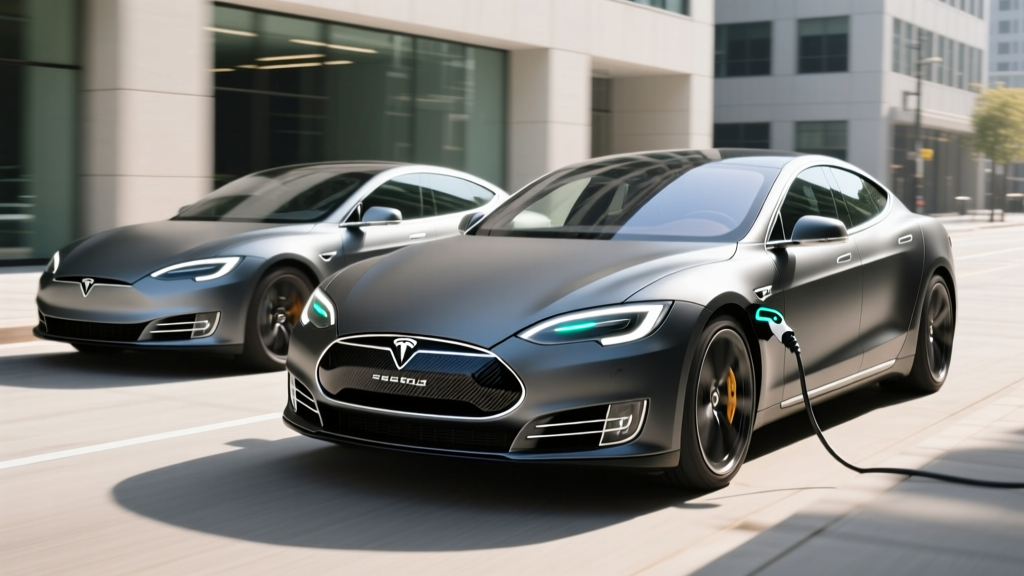
The Model S charges at a peak of 250 kW on Tesla V3 and V4 Superchargers using the native NACS connector. In practice, you'll see 250 kW only between roughly 10–30% state of charge (SoC). The charge curve tapers significantly: by 50% SoC, speed drops to ~150 kW, and above 80% it falls below 50 kW. A typical 10–80% session takes about 30 minutes if you precondition the battery via navigation routing to the charger.
| Charging Level | Power | Miles Added per Hour | Typical Use Case |
|---|---|---|---|
| Level 1 (120V) | ~1.4 kW | ~3–5 mi/hr | Emergency / trickle |
| Level 2 (240V, 48A) | 11.5 kW | ~44 mi/hr | Home overnight (full charge in ~9 hrs) |
| DC Fast (V3 Supercharger) | Peak 250 kW | ~1,000 mi/hr (peak) | Road trips, 10-80% in ~30 min |
| DC Fast (CCS adapter) | Up to 250 kW | Varies by station | Electrify America, EVgo, etc. |
Home charging reality: Most owners install a Tesla Wall Connector on a 60A circuit, delivering the full 48A / 11.5 kW. A 200-mile daily commute requires roughly 4.5 hours of Level 2 charging — easily handled overnight. Expect $800–$1,500 for a standard Wall Connector installation if your panel has capacity; add $1,500–$3,500 if you need a 200A panel upgrade.
Performance: The Tesla Model S 0-60 Story
The Long Range's 3.1-second 0-60 mph time already outpaces most sports cars. Dual permanent-magnet and induction motors deliver 670 hp with instant torque and no shift lag. Launch control is straightforward: brake-torque, release, and the seatback delivers a firm shove that never fades across repeated runs thanks to excellent thermal management.
The Plaid is a different animal. Three motors (one front, two rear) produce 1,020 hp. Tesla claims 1.99 seconds to 60 mph with rollout subtracted (a drag-racing convention that shaves ~0.1–0.2 seconds). Independent testing by outlets like Motor Trend and Car and Driver has verified sub-2.1-second times without rollout subtraction — still the quickest production sedan ever measured. The Plaid also holds 1,020 hp all the way to its 200 mph top speed, unlike some competitors that lose power at high velocity.
Both trims use adaptive air suspension with adjustable ride height and damping. The Plaid adds track-mode torque vectoring across the rear axle for sharper cornering, though at 4,766 lbs (Plaid curb weight), physics still governs — this is a grand tourer that can demolish a drag strip, not a track-day special.
Pricing, Trims, and Federal Tax Credit Eligibility
The 2026 Model S lineup is simple: two trims, minimal options.
| Trim | Base MSRP | Destination | As-Tested (typical) | §30D Credit Eligible? |
|---|---|---|---|---|
| Long Range | $72,990 | $1,995 | ~$74,985 | No (MSRP cap: $55,000 for sedans) |
| Plaid | $89,990 | $1,995 | ~$91,985 | No (MSRP cap: $55,000 for sedans) |
- MSRP cap: Sedans must be priced at or below $55,000. The Model S starts at $72,990 — it does not qualify for the new-vehicle §30D credit.
- Income cap: Even eligible vehicles require buyer AGI ≤ $150K (single) / $300K (joint).
- Battery sourcing: Critical-mineral and battery-component requirements must be met (relevant for qualifying models).
- Point-of-sale transfer: Qualifying buyers can apply the credit at purchase, reducing upfront cost — but only on eligible vehicles.
Source: IRS.gov — Clean Vehicle Credits
Bottom line: No trim of the new Model S qualifies for the federal new-EV credit. Check your state for additional incentives (e.g., California's CVRP, Colorado's state credit) — these vary by jurisdiction and may apply regardless of MSRP caps.
Interior, Tech, and Daily Usability
The Model S interior is minimalist by design — some say sparse, others call it clean. The 17-inch center touchscreen (2200 x 1300 resolution) handles nearly all vehicle functions, climate controls, media, and navigation. A 12.3-inch driver display shows speed, range, and Autopilot visualization. Rear passengers get their own 8-inch screen for climate and entertainment.
Cargo and space: The liftback design yields 28.0 cubic feet behind the rear seats — more than a BMW 5 Series trunk. Fold the 60/40 rear seats and you get 50+ cubic feet. The front trunk (frunk) adds 3.1 cubic feet for charging cables or a small bag. Rear legroom measures 35.4 inches — adequate for adults on long trips, though the low roofline limits headroom for taller passengers.
Autopilot and FSD (Supervised): Every Model S includes basic Autopilot (traffic-aware cruise + lane centering). Full Self-Driving (Supervised) is an $8,000 option or $99/month subscription. FSD handles city streets, stoplights, and highway lane changes, but it remains an SAE Level 2 driver-assist system — you must keep your eyes on the road and hands available to take over at all times. It is not autonomous driving.
Tesla Autopilot and FSD (Supervised) are SAE Level 2 systems. The driver must remain fully engaged, monitor the road, and be prepared to intervene instantly. Only Level 4 services like Waymo operate without a human driver — and only in geofenced areas. Never treat FSD as "self-driving."
Efficiency, Ownership Costs, and Warranty
At 120 MPGe combined (Long Range) and 28 kWh/100 miles, the Model S is remarkably efficient for a 4,600-lb luxury sedan. For context, the Lucid Air Grand Touring achieves 131 MPGe combined, while the Porsche Taycan Turbo S lands at 76 MPGe. Efficiency directly impacts charging cost: at $0.15/kWh (national average home electricity), a full 100 kWh charge costs roughly $15 — or about $4.20 per 100 miles driven. The equivalent gas car at 25 MPG and $3.50/gallon costs $14.00 per 100 miles.
Warranty coverage:
- Battery & Drive Unit: 8 years / 150,000 miles (whichever comes first), with a minimum 70% capacity retention guarantee
- Basic Vehicle: 4 years / 50,000 miles
The 150,000-mile battery warranty is above the industry standard of 100,000 miles. Real-world degradation data from Tesla's fleet shows most Model S batteries retain 88–92% capacity at 100,000 miles, with the NMC chemistry showing a gentle linear decline after the initial ~2% first-year loss.
Pros and Cons
✅ Pros
- Class-leading EPA range (402 mi Long Range)
- Plaid's 1.99s 0-60 is unmatched in production sedans
- Supercharger network reliability (25,000+ stalls in North America)
- Spacious liftback cargo area (28 cu ft)
- Over-the-air updates continuously add features
- 8yr/150,000-mi battery warranty
- Strong resale value relative to EV segment average
❌ Cons
- Does not qualify for $7,500 federal tax credit (MSRP cap)
- Interior materials lag behind Lucid, Mercedes EQS, BMW i7
- No Apple CarPlay or Android Auto
- FSD (Supervised) costs $8,000 extra and is not autonomous
- Plaid's 21" wheels sacrifice 43 miles of range
- Rear headroom tight for passengers over 6'2"
- Insurance premiums run 15–25% above segment average
Model S vs. Key Competitors
| Attribute | Tesla Model S LR | Lucid Air Grand Touring | Porsche Taycan Turbo S |
|---|---|---|---|
| EPA Range | 402 mi | 516 mi | 283 mi |
| 0-60 mph | 3.1 sec | 3.0 sec | 2.4 sec |
| Max DC Charge | 250 kW | 300 kW | 270 kW |
| Base MSRP | $72,990 | $125,600 | $190,500 |
| MPGe (combined) | 120 | 131 | 76 |
| §30D Credit | No | No | No |
Choose the Model S Long Range if you want the best balance of range, performance, and price in a luxury EV sedan, and you value Supercharger network access for road trips. Choose the Lucid Air if maximum range and interior luxury are priorities and budget is flexible. Choose the Taycan if driving dynamics and build quality matter more than range or price.
Who Should Buy the 2026 Tesla Model S?
The Model S Long Range is ideal for: tech-forward professionals who commute 30–80 miles daily and road-trip 4–6 times per year; families wanting a spacious, safe sedan with hatchback practicality; and performance enthusiasts who want supercar acceleration without a supercar price. The Plaid suits a narrower buyer — someone who values record-breaking performance above all else and accepts the range and price trade-offs.
It is not the best choice if: you need the $7,500 federal credit to make the math work (look at the Model 3, Hyundai Ioniq 6, or BMW i4 instead); you prioritize traditional luxury materials and dealer service (BMW i7, Mercedes EQS); or you want a true three-row family hauler (consider the Model X or Rivian R1S).
Frequently Asked Questions
What is the real-world range of the Tesla Model S?
The Long Range achieves 402 miles EPA, but real-world highway driving at 70 mph typically yields 340–360 miles. Cold weather (below 32°F) can reduce range by 20–30%, bringing it to 280–310 miles. The Plaid with 21" wheels drops to 359 miles EPA and roughly 300–330 miles highway in mild conditions.
How fast does the Tesla Model S charge at home and on the road?
On a Level 2 home charger (48A / 11.5 kW), the Model S adds about 44 miles per hour, fully charging overnight in ~9 hours. On a V3 Supercharger, it peaks at 250 kW and charges from 10–80% in approximately 30 minutes with battery preconditioning.
Does the Tesla Model S qualify for the federal EV tax credit?
No. Under IRS §30D rules, new sedans must have an MSRP at or below $55,000 to qualify. The Model S starts at $72,990, exceeding this cap. State-level incentives may still apply — check your local DMV or energy office for details.
Is the Tesla Model S worth buying vs. the Lucid Air or Porsche Taycan?
The Model S Long Range offers the best value proposition: 402 miles of range, 3.1-second 0-60, and a $72,990 price. The Lucid Air Grand Touring delivers more range (516 mi) and luxury but costs $125,600. The Taycan Turbo S offers superior driving dynamics and build quality but only 283 miles of range at $190,500. For most buyers, the Model S hits the performance-range-price sweet spot.
What are the biggest pros and cons of the Model S?
Top pros: class-leading range, unmatched Plaid acceleration, Supercharger access, spacious liftback, OTA updates. Top cons: no federal tax credit, interior quality trails luxury rivals, no CarPlay/Android Auto, FSD costs extra and is not autonomous, high insurance premiums.
How long will the Model S battery last?
Tesla warranties the battery for 8 years or 150,000 miles with a 70% minimum capacity retention guarantee. Fleet data shows most Model S batteries retain 88–92% capacity at 100,000 miles. With NMC chemistry, expect a gentle linear degradation curve — many units exceed 200,000 miles before approaching the 70% threshold.