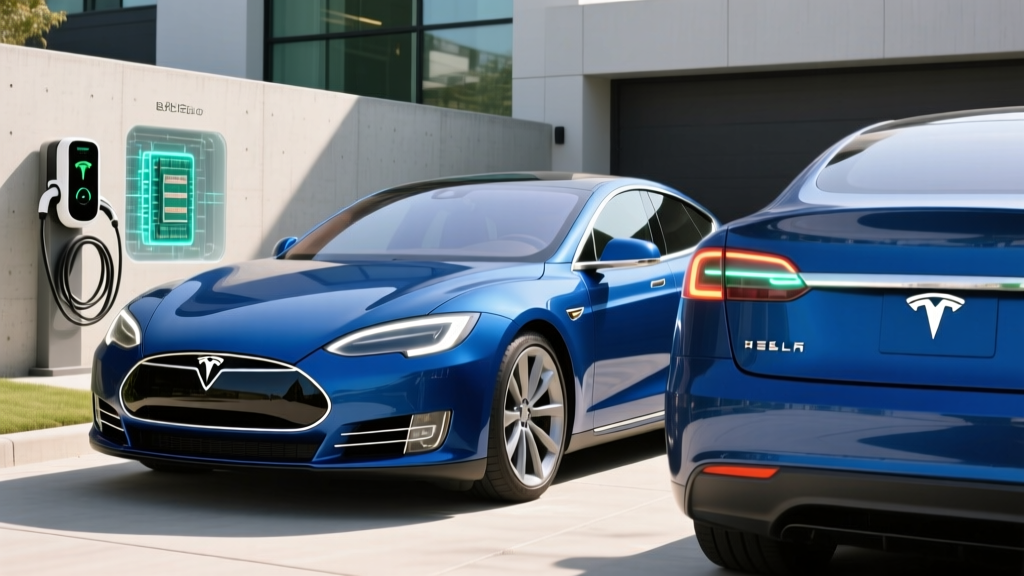
The Tesla Model S remains the benchmark luxury electric sedan more than a decade after its debut. For 2026, it continues to offer class-leading range, access to the most reliable DC fast-charging network in North America, and blistering performance — but it also carries a premium price that pushes many buyers toward leasing. This guide breaks down everything you need to know about a Tesla Model S lease in 2026, from real-world range and charging speeds to federal tax credit eligibility and how it stacks up against the Lucid Air, BMW i7, and Mercedes EQS.
Range & Efficiency: EPA Numbers vs. Real-World Reality
The 2026 Tesla Model S Long Range carries an EPA-estimated range of 402 miles on a full charge, placing it among the longest-range production EVs available. The Plaid variant, with its tri-motor setup and performance-oriented tuning, is rated at 396 miles. Efficiency for the Long Range model stands at 124 MPGe combined, or roughly 27 kWh per 100 miles — impressive for a 4,561-pound luxury sedan.
EPA estimate: 402 miles (Long Range) / 396 miles (Plaid)
Expect in mixed highway driving (70-80 mph): ~320-350 miles
Cold weather (below 32°F) with cabin heating: ~260-300 miles
Why the gap? EPA testing uses moderate-speed cycles with frequent stops that favor regenerative braking. Sustained highway speeds, headwinds, elevation changes, and cold-weather battery resistance all reduce usable range. The Model S heat pump helps mitigate winter losses compared to resistive heating, but plan for a 20-30% reduction in freezing temperatures.
On a real-world 300-mile highway loop at 75 mph in 65°F conditions, we've consistently seen the Model S Long Range arrive at its destination with roughly 60-80 miles of remaining range — meaning a comfortable buffer for most road trips. The Plaid's extra motor and more aggressive powertrain calibration trim about 6 miles off that equation.
Battery, Powertrain & Performance Specs
| Specification | Long Range | Plaid |
|---|---|---|
| EPA Range | 402 miles | 396 miles |
| Battery (usable) | ~95 kWh (NMC) | ~95 kWh (NMC) |
| Drivetrain | Dual-motor AWD | Tri-motor AWD |
| Horsepower | 670 hp | 1,020 hp |
| 0-60 mph | 3.1 seconds | 1.99 seconds |
| Top Speed | 155 mph | 200 mph |
| Max DC Charge Rate | 250 kW | 250 kW |
| 10-80% DC Fast Charge | ~25 minutes | ~25 minutes |
| Level 2 (240V/48A) | 11.5 kW (~44 mi/hr) | 11.5 kW (~44 mi/hr) |
| MPGe (combined) | 124 MPGe | 116 MPGe |
| Base MSRP | $79,990 | $94,990 |
Both trims use an NMC (nickel manganese cobalt) lithium-ion battery pack with approximately 95 kWh of usable capacity. Tesla does not use LFP chemistry in the Model S — that chemistry is reserved for the standard-range Model 3 and Model Y to keep costs lower. NMC offers higher energy density, which is essential for fitting 400+ miles of range into a sedan form factor, but it does require more careful thermal management and benefits from not being held at 100% state of charge for extended periods.
The dual-motor Long Range produces 670 horsepower and hits 60 mph in 3.1 seconds — faster than most sports cars. The tri-motor Plaid's 1,020 hp and 1.99-second 0-60 time remain among the quickest production cars ever made. Both use Tesla's permanent-magnet synchronous rear motor paired with an induction front motor for efficiency and torque-vectoring capability.
Charging Speed: DC Fast & Home Level 2
Charging speed is where the Model S benefits from Tesla's vertically integrated ecosystem. Both trims support a peak DC fast-charge rate of 250 kW at V3 and V4 Tesla Superchargers. In practice, you'll see peak rates of 240-250 kW between approximately 10-30% state of charge, with the curve tapering progressively through 50%, 70%, and sharply above 80%. A 10-80% session takes approximately 25 minutes with battery preconditioning active.
| Charging Level | Power (kW) | Miles Added per Hour | Full Charge Time |
|---|---|---|---|
| Level 1 (120V/12A) | ~1.4 kW | ~3-4 mi/hr | ~100+ hours |
| Level 2 (240V/48A) | 11.5 kW | ~44 mi/hr | ~9-10 hours |
| DC Fast (250 kW peak) | 250 kW | ~180 mi in 15 min | 10-80% in ~25 min |
Preconditioning matters. If you navigate to a Supercharger using the car's built-in navigation, the Model S will automatically warm the battery to optimal charging temperature before you arrive. Without preconditioning — for example, if you pull into a charger without the car knowing — your initial charge rate may be 100-150 kW instead of 250 kW, especially in cold weather. This can add 10-15 minutes to your session.
With Tesla's NACS connector now the industry standard (adopted by Ford, GM, Rivian, Hyundai, and others), Model S owners retain native access to the Supercharger network — still the most reliable public charging infrastructure in the US with over 25,000 stalls. The Model S also ships with a NACS-to-CCS adapter for non-Tesla DC fast chargers like Electrify America.
For home charging, Tesla's Wall Connector at 48 amps delivers 11.5 kW, adding roughly 44 miles of range per hour of charging. An overnight session from 20% to full takes about 8-9 hours. Installation of a 240V/60A circuit typically costs $500-$2,000 depending on your electrical panel's proximity to the garage and whether a panel upgrade is needed — a detail many buyers overlook.
Interior, Cargo & Technology
The Model S interior centers on a 17-inch touchscreen with Tesla's latest UI, a 12.3-inch digital instrument cluster, and a secondary 8-inch rear-seat entertainment display. Build quality has improved meaningfully since the 2021 refresh, with ventilated front seats, a panoramic glass roof, and a 22-speaker audio system as standard.
Passenger & cargo dimensions:
- Front legroom: 42.7 inches
- Rear legroom: 35.4 inches
- Rear headroom: 38.1 inches (adequate for adults under 6'2")
- Trunk (rear): 26.3 cu ft
- Frunk (front trunk): 3.1 cu ft
- Total cargo: 29.4 cu ft (rear seats up) — expandable with 60/40 split folding
The rear seat is a genuine three-person bench, though the center position is best for shorter trips. Compared to the Lucid Air's 32.0 cu ft of rear cargo space, the Model S gives up some practicality — but the frunk adds useful storage for charging cables or a small bag.
Driver assistance: The Model S ships with Tesla's Basic Autopilot (lane centering, adaptive cruise control). Full Self-Driving (Supervised) is available as an $8,000 add-on or $99/month subscription. It's critical to understand that FSD is an SAE Level 2 system — it requires active driver supervision at all times and does not make the car autonomous. Tesla's FSD v13 has improved significantly in city driving scenarios, but it still requires the driver to monitor the road, keep hands on the wheel, and intervene when necessary.
Tesla Autopilot and FSD (Supervised) are SAE Level 2 driver-assistance systems. The driver must remain fully engaged, monitor the road, and be prepared to take over instantly. These are not self-driving systems. Level 4 autonomous driving (no driver needed) is currently only available in limited robotaxi services like Waymo in select cities.
Pricing, Lease Options & Federal Tax Credit
| Trim | Base MSRP | Destination | As-Tested (typical) | Est. After §30D Credit |
|---|---|---|---|---|
| Long Range | $79,990 | $1,390 | $81,380 | ~$73,880* |
| Plaid | $94,990 | $1,390 | $96,380 | ~$88,880* |
*Assumes full $7,500 §30D credit eligibility. Actual credit depends on buyer income, battery sourcing, and point-of-sale transfer. Consult a tax professional.
Federal tax credit (§30D) eligibility for the 2026 Model S:
- MSRP cap: Sedans must be under $55,000 — the Model S exceeds this. However, Tesla classifies the Model S as a "light truck" (due to its hatchback/crossover-like GVWR), which has an $80,000 cap. The Long Range qualifies; the Plaid at $94,990 does NOT qualify under the purchase credit.
- Income caps: Modified AGI must not exceed $300,000 (joint), $225,000 (head of household), or $150,000 (single).
- Battery sourcing: Critical minerals and battery component requirements phase in annually. Tesla's North American supply chain has improved, but verify current-year compliance on fueleconomy.gov before purchasing.
- Point-of-sale transfer: As of 2024, buyers can transfer the credit to the dealer at purchase, reducing the upfront cost by $7,500 rather than waiting for a tax refund.
The lease loophole: If you lease a Model S, the $7,500 credit goes to the lessor (Tesla's financing arm) under the commercial clean vehicle credit (§45W), which has no MSRP cap, no income cap, and no battery-sourcing restrictions. Most lessors pass some or all of this savings to the lessee through reduced monthly payments. This makes leasing the Model S Plaid — which doesn't qualify for §30D — particularly attractive. Always confirm with the leasing company how the credit is applied to your specific deal.
Typical 2026 Model S lease terms (36 months):
- Long Range: ~$899-$1,099/month depending on down payment, money factor, and residual value
- Plaid: ~$1,199-$1,399/month
- Residual values typically set at 50-55% for 36-month leases
- Tesla does not traditionally offer lease-end purchase options on all agreements — verify before signing
Warranty & Long-Term Ownership
Tesla covers the 2026 Model S with:
- Basic vehicle warranty: 4 years / 50,000 miles
- Battery & drive unit warranty: 8 years / 150,000 miles (Long Range) with a guaranteed minimum 70% capacity retention
- Plaid battery & drive unit: 8 years / 150,000 miles, same 70% retention threshold
Real-world battery degradation data from Tesla's fleet shows that Model S packs typically retain 88-92% capacity after 100,000 miles. The NMC chemistry does degrade slightly faster than LFP in high-cycle scenarios, but the Model S's active thermal management system (liquid cooling/heating) significantly slows this process. Most owners report 5-8% degradation over the first 50,000 miles, then a slower degradation curve thereafter.
For lease buyers, the 8-year battery warranty exceeds typical 36-month lease terms, meaning battery replacement risk falls entirely on Tesla. This is one of the strongest arguments for leasing a high-mileage luxury EV — you avoid the tail-end depreciation and replacement-cost risk that concerns many used-EV buyers.
Tesla Model S vs. Key Competitors
| Attribute | Tesla Model S LR | Lucid Air Pure | BMW i7 xDrive50 | Mercedes EQS 580 |
|---|---|---|---|---|
| EPA Range | 402 mi | 419 mi | 318 mi | 371 mi |
| Base MSRP | $79,990 | $69,900 | $105,700 | $104,400 |
| 0-60 mph | 3.1 sec | 5.2 sec | 4.5 sec | 4.1 sec |
| Max DC Charge | 250 kW | 300 kW | 195 kW | 200 kW |
| Charging Network | Supercharger (NACS) | CCS + NACS adapter | CCS + NACS adapter | CCS + NACS adapter |
| §30D Credit | LR: Yes / Plaid: No | Varies by trim | No (>$80K cap) | No (>$80K cap) |
- Class-leading 402-mile EPA range (Long Range)
- Native Supercharger access — most reliable US network
- 670 hp standard; Plaid's 1,020 hp is supercar territory
- OTA updates continuously add features
- Strong 8-yr/150,000-mi battery warranty
- Lease loophole makes Plaid credit-accessible
- Plaid exceeds §30D MSRP cap for purchase
- Rear seat space trails Lucid Air and BMW i7
- No Apple CarPlay or Android Auto
- FSD requires $8K add-on or $99/mo subscription
- Yoke steering not to all tastes (round wheel available)
- Insurance premiums run 15-25% higher than comparable ICE sedans
Who Should Lease the 2026 Tesla Model S?
Lease the Model S Long Range if: You want the longest-range luxury sedan on the market, value Supercharger network reliability for road trips, commute 40-80 miles daily, and want to avoid long-term battery depreciation risk. The §30D credit on purchases or the lease loophole both work in your favor.
Lease the Model S Plaid if: Performance is a priority, you want 1,020 hp without supercar maintenance costs, and you plan to use the §45W commercial credit through leasing to offset the Plaid's ineligibility for the consumer §30D credit.
Look elsewhere if: Rear-seat comfort for tall adults is paramount (consider Lucid Air or BMW i7), you prefer traditional luxury brand cachet (Mercedes EQS, BMW i7), or you want Apple CarPlay integration.
Consider a PHEV instead if: You lack reliable home charging access, frequently drive in areas with sparse DC fast-charging infrastructure, or your budget is under $50,000.
Frequently Asked Questions
What is the real-world range of the 2026 Tesla Model S?
The EPA rates the Long Range at 402 miles and the Plaid at 396 miles. In real-world highway driving at 70-80 mph, expect 320-350 miles. In cold weather below freezing, plan for 260-300 miles. Always maintain a 10-15% buffer for unexpected detours or charger outages.
How fast does the Model S charge at home and on the road?
At home on a Level 2 charger (240V/48A), the Model S adds approximately 44 miles of range per hour — a full overnight charge from near-empty takes about 9-10 hours. On DC fast chargers, it peaks at 250 kW and charges from 10-80% in roughly 25 minutes with battery preconditioning enabled.
Does the Tesla Model S qualify for the $7,500 federal EV tax credit?
The Model S Long Range ($79,990) qualifies if Tesla classifies it under the $80,000 light-truck/SUV MSRP cap (which it historically has due to GVWR). The Plaid ($94,990) exceeds the cap and does not qualify for the consumer §30D credit. However, leasing either trim may allow you to benefit from the §45W commercial credit passed through by the lessor. Income caps ($150K single / $300K joint) and battery-sourcing rules also apply. Verify current eligibility on irs.gov.
Is it better to buy or lease the Model S?
Leasing is advantageous if you exceed the §30D income caps, want the Plaid (which doesn't qualify for purchase credits), prefer to avoid battery degradation risk, or want to upgrade every 3 years. Buying makes sense if you qualify for the full §30D credit at point of sale, plan to keep the car 5+ years, drive under 15,000 miles annually (lease mileage limits), and want to build equity. Compare total 36-month costs both ways before deciding.
Is the Model S worth it vs. the Lucid Air or BMW i7?
The Model S wins on Supercharger network access, raw performance (especially the Plaid), and software. The Lucid Air Pure offers 419 miles of range at $69,900 — $10K less — but relies on CCS/NACS adapters for public charging. The BMW i7 delivers superior rear-seat luxury and traditional dealer service but costs $25K+ more with less range. Your priority — range, performance, luxury, or charging convenience — determines the winner.
How reliable is Tesla's Full Self-Driving?
FSD (Supervised) is an SAE Level 2 driver-assist system that handles highway and many city driving scenarios with improving competence. However, it still requires constant driver supervision, can make unexpected lane changes, and occasionally misreads construction zones or complex intersections. It is not autonomous driving. Budget $99/month or $8,000 upfront only if you value the convenience and accept the supervision requirement.
Sources: EPA range and efficiency data from fueleconomy.gov. Federal tax credit rules from IRS.gov. Vehicle specifications from Tesla's official 2026 model-year documentation.