Quick Verdict: Is Leasing the Model S the Smart Play in 2026?
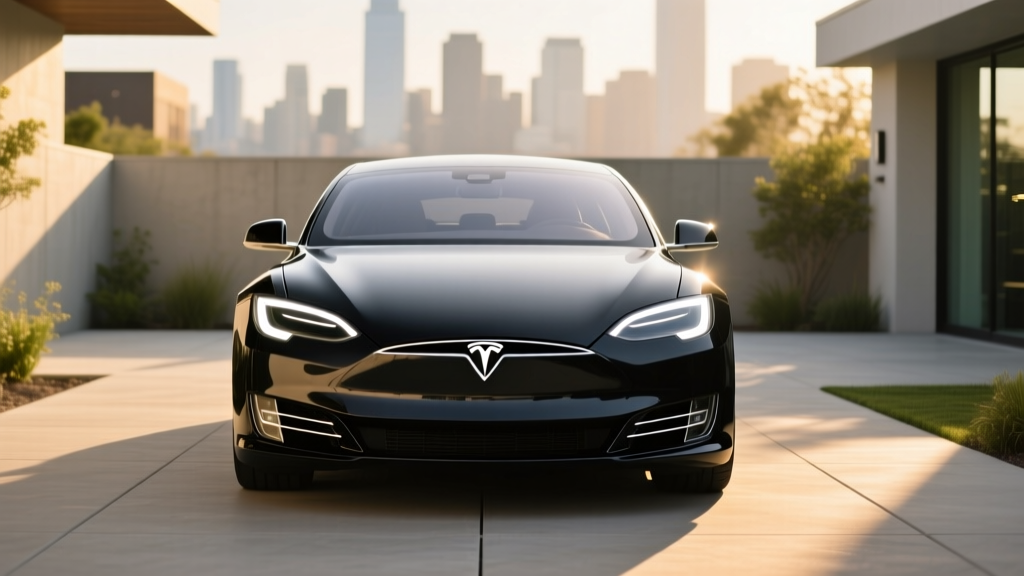
The Tesla Model S remains the benchmark luxury electric sedan, but at a starting MSRP above $75,000, many buyers are turning to lease deals to access its 400+ mile range and Supercharger network without committing to long-term depreciation risk. For 2026, Tesla offers the Model S in two trims — Long Range (dual-motor AWD) and Plaid (tri-motor AWD) — both built on the refreshed architecture introduced in 2021 with the yoke-style steering option, 17-inch cinematic touchscreen, and 250 kW DC fast-charging capability.
Leasing the Model S can make financial sense if you want to ride out the rapid EV technology cycle, avoid battery degradation concerns past the warranty window, and potentially capture lease-end equity if residual values hold. But before you sign, you need to understand the real-world range, charging realities, federal tax credit pass-through mechanics, and how the Model S stacks up against rivals like the Lucid Air and BMW i7. This profile breaks down every number that matters.
2026 Tesla Model S Specs at a Glance
| Specification | Model S Long Range | Model S Plaid |
|---|---|---|
| Base MSRP | $75,990 | $89,990 |
| EPA Range | 402 miles | 396 miles |
| Battery (usable) | ~100 kWh (NMC) | ~100 kWh (NMC) |
| Drivetrain | Dual-Motor AWD | Tri-Motor AWD |
| Horsepower | 670 hp | 1,020 hp |
| 0–60 mph | 3.1 sec | 1.99 sec |
| Top Speed | 155 mph | 200 mph |
| Max DC Fast Charge | 250 kW | 250 kW |
| 10–80% DC Charge | ~30 min | ~30 min |
| Level 2 Home Charge | 11.5 kW (~34 mi/hr) | 11.5 kW (~34 mi/hr) |
| MPGe (combined) | 120 MPGe | 116 MPGe |
| kWh/100 mi | 28 kWh | 29 kWh |
| Cargo (rear + frunk) | 28.0 cu ft (rear) + 5.3 cu ft (frunk) | 28.0 cu ft (rear) + 5.3 cu ft (frunk) |
| Rear Legroom | 35.4 in | 35.4 in |
| Battery Warranty | 8 yr / 150,000 mi | 8 yr / 150,000 mi |
Sources: Tesla Model S Design Studio, EPA fueleconomy.gov
Real-World Range: What the EPA Sticker Doesn't Tell You
Real-World Expectation: 320–360 miles highway; 280–320 miles in cold weather (below 32°F)
The Model S Long Range's 402-mile EPA rating places it among the longest-range production EVs available. However, EPA testing uses a mixed city/highway cycle with moderate climate control use. In sustained highway driving at 70–75 mph, expect roughly 80–85% of the EPA figure — around 320 to 340 miles before you need to find a charger.
Cold weather is the bigger variable. Lithium-ion NMC batteries lose efficiency in freezing temperatures, and cabin heating draws significant energy. In sub-32°F conditions, real-world range can drop to 280–320 miles even in mixed driving. The Model S uses a heat pump (standard since the 2021 refresh) which recovers waste heat from the drivetrain, mitigating some cold-weather loss compared to resistive heating systems. Preconditioning the battery while plugged in before departure helps preserve range and enables faster DC charging upon arrival at a Supercharger.
The Plaid's slightly lower EPA rating (396 miles) reflects its tri-motor powertrain's higher energy consumption under hard acceleration, though in normal driving modes the gap is negligible. Efficiency-conscious drivers using Chill mode and moderate regen will see results closer to the Long Range figures.
Charging Speed: Supercharger Network and Home Setup
| Charging Method | Power | Speed |
|---|---|---|
| Tesla V3/V4 Supercharger (DC) | Up to 250 kW peak | ~200 miles in 15 min; 10–80% in ~30 min |
| CCS Adapter + 350 kW Station | Up to 250 kW (vehicle-limited) | Same as above; adapter sold separately (~$250) |
| Level 2 Home (Tesla Wall Connector) | 11.5 kW (48A on 60A circuit) | ~34 miles per hour of charging |
| Level 2 Public (J1772 w/ adapter) | Up to 11.5 kW | ~34 mi/hr (varies by station) |
| Level 1 (120V standard outlet) | ~1.4 kW | ~4 miles per hour |
The Model S peaks at 250 kW on DC fast charging, which is competitive but no longer class-leading. The Lucid Air, for comparison, can accept over 300 kW. The critical detail is the charge curve: the Model S sustains close to peak rate from roughly 10% to 40% State of Charge (SoC), then tapers progressively. From 80% to 100%, charging slows dramatically — a characteristic of NMC chemistry designed to protect long-term battery health. For road trips, plan to charge from 10–80% and skip the slow top-off unless you'll be parked overnight.
At home, the Tesla Wall Connector on a dedicated 60-amp circuit delivers 11.5 kW, adding roughly 34 miles of range per hour. A full overnight charge (8 hours) replenishes about 270 miles — more than enough for daily driving. Installation costs for a Level 2 home setup typically range from $800 to $2,500 depending on panel capacity and conduit runs. If your electrical panel is at capacity, a 200-amp service upgrade can add $1,500–$3,000. Always have a licensed electrician assess your panel before purchasing equipment.
Tesla's CCS adapter (sold separately for approximately $250) opens access to Electrify America, EVgo, and other non-Tesla DC networks, though Tesla's native NACS connector and Supercharger network remain the most reliable and widely available fast-charging infrastructure in the US.
Performance and Driving Dynamics
The Model S Long Range delivers 670 horsepower through its dual-motor all-wheel-drive system, achieving a 3.1-second 0–60 mph time that would have been supercar territory a decade ago. The Plaid escalates to 1,020 horsepower via three motors (one front, two rear) and posts a 1.99-second 0–60 time — making it one of the quickest production cars ever built, regardless of powertrain.
Beyond straight-line speed, the Model S features adaptive air suspension that adjusts ride height based on speed and GPS-remembered locations (it automatically raises for your driveway). The 17-inch center touchscreen runs Tesla's latest infotainment software with gaming capability, Netflix/YouTube streaming while parked, and over-the-air updates that periodically add features. The optional yoke steering wheel remains polarizing — it offers an unobstructed view of the instrument cluster but requires adaptation for low-speed maneuvers and hand-over-hand turns.
Tesla's Autopilot comes standard and includes Traffic-Aware Cruise Control and Autosteer (lane centering). Full Self-Driving (FSD) Capability is a $8,000 add-on (or $99/month subscription as of 2026) that adds Navigate on Autopilot, Auto Lane Change, Autopark, and traffic light/stop sign recognition. Important: FSD is an SAE Level 2 driver-assist system. The driver must remain fully engaged, keep hands on the wheel, and monitor the road at all times. It is not autonomous driving.
Lease Pricing, Tax Credits, and Total Cost
Tesla does not traditionally publish lease terms directly on its website the way legacy automakers do, but Model S leases are available through Tesla's financing partners and third-party lessors. A typical 2026 Model S Long Range lease might look like this:
| Cost Factor | Model S Long Range (Est.) | Model S Plaid (Est.) |
|---|---|---|
| Base MSRP | $75,990 | $89,990 |
| Typical Lease (36 mo / 10K mi/yr) | $1,050–$1,250/mo | $1,350–$1,600/mo |
| Money Down (due at signing) | $5,000–$7,500 | $5,000–$10,000 |
| Federal §30D Tax Credit | Up to $7,500 (see eligibility) | Up to $7,500 (see eligibility) |
| Credit Applied to Lease? | Varies by lessor — may reduce cap cost | Varies by lessor |
| Estimated Monthly After Credit | $850–$1,100/mo | $1,150–$1,450/mo |
- Amount: Up to $7,500 ($3,750 for critical minerals + $3,750 for battery component sourcing)
- MSRP Cap: Sedans must be under $55,000 — the Model S does NOT qualify as a sedan above this cap
- SUV/Truck/Van Exception: $80,000 MSRP cap — but the Model S is classified as a sedan by the IRS
- Income Cap: AGI ≤ $300K (joint), $225K (head of household), $150K (individual)
- Battery Sourcing: Must meet critical mineral and battery component requirements that phase in through 2026
- Point-of-Sale: Credit can be transferred to the dealer/lessor for an upfront price reduction
Bottom line: The Model S, as a sedan priced above $55,000, is not eligible for the new-vehicle §30D federal tax credit. Some lessees may find that the leasing company (as the legal owner) can claim the commercial clean vehicle credit under §45W and pass savings through as a reduced capitalized cost — but this is lessor-dependent and not guaranteed. Consult a tax professional before factoring credits into your lease decision.
Five-Year Cost Snapshot: Lease vs. Buy
| Category | 36-Month Lease | Purchase (60-mo loan) |
|---|---|---|
| Monthly Payment (est.) | $1,100 | $1,250 |
| Total Payments | $39,600 (36 mo) | $75,000 (60 mo) |
| Insurance (avg) | $2,800/yr × 3 = $8,400 | $2,800/yr × 5 = $14,000 |
| Home Charging Install | $1,500 (one-time) | $1,500 (one-time) |
| Electricity (est. 12K mi/yr) | $550/yr × 3 = $1,650 | $550/yr × 5 = $2,750 |
| Maintenance | ~$600 (3 yr) | ~$1,200 (5 yr) |
| Vehicle at End | Return or buy residual | Own outright |
Interior, Tech, and Practicality
The Model S interior is minimalist in Tesla's signature style — a 17-inch landscape touchscreen dominates the dash, with a 12.3-inch instrument cluster behind the yoke or round steering wheel. A rear 8-inch touchscreen serves back-seat passengers for climate and entertainment controls. The cabin materials have improved since the 2021 refresh with ventilated front seats, premium audio (22 speakers), and available white or cream vegan leather.
Cargo capacity is a genuine strength for a sedan: 28.0 cubic feet behind the rear seats (with a 60/40 split-folding seat) plus a 5.3-cubic-foot front trunk (frunk). Total cargo space exceeds most midsize SUVs when the rear seats are folded. Rear legroom at 35.4 inches is adequate for adults but tighter than the Lucid Air or BMW i7, which prioritize rear-seat luxury.
Notable drawbacks include the lack of Apple CarPlay and Android Auto (Tesla uses its proprietary system), limited physical buttons (even the glovebox opens via the touchscreen), and panel-gap inconsistencies that persist across Tesla's Fremont production line. The yoke steering, while optional, is not universally loved — test-drive before committing.
Competitor Comparison: Model S vs. Lucid Air vs. BMW i7
| Attribute | 2026 Tesla Model S LR | 2026 Lucid Air Pure | 2026 BMW i7 xDrive50 |
|---|---|---|---|
| Base MSRP | $75,990 | $69,900 | $105,700 |
| EPA Range | 402 mi | 419 mi | 318 mi |
| 0–60 mph | 3.1 sec | 5.2 sec | 4.5 sec |
| Max DC Charge | 250 kW | 300+ kW | 195 kW |
| Rear Legroom | 35.4 in | 37.1 in | 40.2 in |
| Charging Network | Tesla Supercharger (NACS) | NACS (Supercharger access) | CCS (EA, EVgo) |
| Tax Credit Eligible? | No (sedan > $55K) | No (sedan > $55K) | No (sedan > $55K) |
The Model S wins on performance-per-dollar and charging network reliability. The Lucid Air offers superior range and rear-seat space at a lower entry price. The BMW i7 dominates on rear-seat luxury and build quality but at a steep premium with shorter range and slower charging. None of these sedans qualify for the §30D credit due to the $55,000 MSRP cap on sedans.
Pros and Cons
- 402-mile EPA range — among the longest available
- Supercharger network access (most reliable DC charging in US)
- 670 hp standard; 1,020 hp Plaid is absurdly quick
- Over-the-air updates continuously add features
- Massive cargo capacity for a sedan (28 + 5.3 cu ft)
- Strong residual values support lease economics
- No federal §30D tax credit (sedan MSRP cap)
- 250 kW peak charge rate trails Lucid Air and Hyundai Ioniq 5
- No Apple CarPlay / Android Auto
- Yoke steering requires adaptation; not for everyone
- Panel gap and build-quality inconsistencies
- Rear legroom tighter than German luxury rivals
- Insurance premiums run 20–40% above segment average
Who Should Lease the Model S?
- You want maximum range and Supercharger access for frequent road trips
- You prefer a 2–3 year commitment to stay current with EV tech advances
- You value performance (3.1-sec or 1.99-sec 0–60) in a practical daily driver
- You have home Level 2 charging and drive under 350 miles/day
- Rear-seat passenger comfort is a priority (consider Lucid Air or BMW i7)
- You need the $7,500 federal tax credit (consider Model Y or Model X — classified as SUVs)
- You want the fastest possible DC charging (Lucid Air, Hyundai Ioniq 5, or Kia EV6)
- You prefer traditional luxury build quality and physical controls
Frequently Asked Questions
What is the real-world range of the Tesla Model S?
The Long Range is EPA-rated at 402 miles, but expect 320–360 miles in real-world highway driving and 280–320 miles in freezing temperatures. The Plaid is rated at 396 miles EPA with similar real-world reductions. Preconditioning the battery and using Chill mode can help preserve range.
How fast does the Model S charge at home and on the road?
On a Tesla V3 Supercharger, the Model S peaks at 250 kW and charges from 10–80% in approximately 30 minutes, adding about 200 miles in 15 minutes. At home on a Level 2 Tesla Wall Connector (11.5 kW / 48A), it adds roughly 34 miles of range per hour — a full overnight charge covers most daily needs.
Does the Tesla Model S qualify for the federal EV tax credit?
No. Under current IRS §30D rules, the Model S is classified as a sedan and exceeds the $55,000 MSRP cap for sedan eligibility. Some leasing companies may pass through savings via the commercial clean vehicle credit (§45W), but this is lessor-dependent. Always confirm with your lessor and a tax professional before signing.
Is leasing the Model S better than buying?
Leasing makes sense if you want lower monthly payments, plan to upgrade in 2–3 years, and want to avoid long-term battery degradation risk. Buying makes sense if you drive high annual miles (leases typically cap at 10K–15K mi/yr with per-mile penalties), want to build equity, or plan to keep the car 5+ years within the 8-year/150,000-mile battery warranty.
How does the Model S compare to the Lucid Air for leasing?
The Lucid Air Pure starts lower ($69,900) and offers more EPA range (419 miles) and rear legroom, but Tesla's Supercharger network remains more reliable for road trips. Both are ineligible for the §30D sedan credit. Lease terms vary by lessor, so compare money factor, residual, and cap cost reduction offers side-by-side.
What is the battery warranty on the Model S?
Tesla covers the Model S battery and drive unit for 8 years or 150,000 miles (whichever comes first), with a minimum 70% battery capacity retention guarantee. If degradation exceeds 30% within the warranty period, Tesla will repair or replace the battery to bring it above the 70% threshold.