Quick Verdict: The 2026 Tesla Model S Lease Case
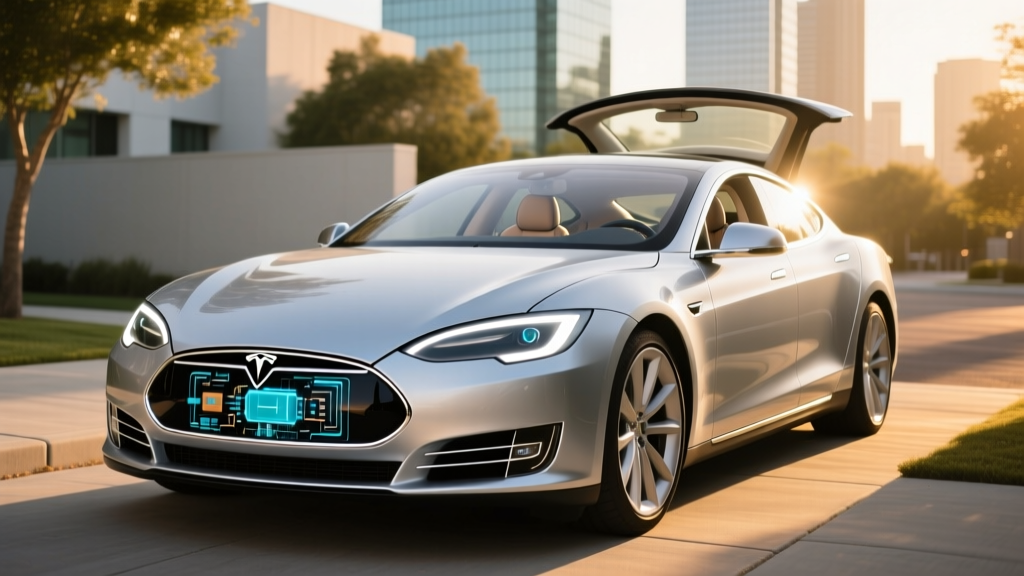
The Tesla Model S remains the benchmark luxury electric sedan in 2026, but the calculus for leasing one has shifted. With BMW's i7, the Mercedes EQS, and the Lucid Air all pressing hard on range, interior quality, and ride comfort, the Model S must lean on what it does best: Supercharger network access, over-the-air updates, and blistering straight-line performance. For buyers eyeing a Tesla Model S July lease, understanding the exact numbers — range, charging speed, and total monthly cost — is essential before signing.
This review breaks down the 2026 Model S lineup with the precision a lease decision demands: EPA range versus real-world expectations, the charging curve you'll actually experience, federal tax credit pass-through on leases, and the ownership profile that makes this car worth the premium.
2026 Tesla Model S Specs at a Glance
| Spec | Model S Long Range | Model S Plaid |
|---|---|---|
| EPA Range | 402 miles | 396 miles |
| Battery (usable) | ~100 kWh (NMC) | ~100 kWh (NMC) |
| Drivetrain | Dual-Motor AWD | Tri-Motor AWD |
| Horsepower | 670 hp | 1,020 hp |
| 0-60 mph | 3.1 seconds | 1.99 seconds |
| Top Speed | 155 mph | 200 mph |
| Max DC Fast Charge | 250 kW | 250 kW |
| 10-80% DC Time | ~30 min | ~30 min |
| Level 2 Home Charge | 11.5 kW (~44 mi/hr) | 11.5 kW (~44 mi/hr) |
| Efficiency (MPGe) | 120 MPGe combined | 116 MPGe combined |
| Efficiency (kWh/100mi) | 28 kWh | 29 kWh |
| Base MSRP | $79,990 | $94,990 |
| Cargo (rear + frunk) | 28.0 cu ft + 3.1 cu ft | 28.0 cu ft + 3.1 cu ft |
| Rear Legroom | 35.4 inches | 35.4 inches |
| Battery Warranty | 8 yr / 150,000 mi | 8 yr / 150,000 mi |
Source: fueleconomy.gov and Tesla official specifications. MSRP excludes destination fee.
Real-World Range: What the EPA Number Doesn't Tell You
EPA Sticker: 402 miles
Real-World Highway (70-75 mph, mild weather): ~320–350 miles
Real-World Highway (cold weather, <32°F): ~260–300 miles
City/Suburban Mixed Driving: ~370–395 miles
The Model S Long Range's 402-mile EPA figure is legitimate in favorable conditions — moderate temperatures, mixed city/highway driving with generous regenerative braking. However, at sustained highway speeds of 70-75 mph, aerodynamic drag and the absence of stop-and-go regen opportunities pull range down to roughly 320-350 miles in practice. In winter conditions, battery heating demands and cabin climate load can reduce that further to 260-300 miles, depending on severity.
The Model S uses a ~100 kWh NMC (nickel manganese cobalt) battery pack. NMC chemistry offers higher energy density than LFP, which is why Tesla reserves it for the performance-oriented Model S and Model X lineup. The trade-off is that NMC batteries benefit from daily charging limits of 80-90% for longevity, unlike LFP packs that tolerate regular 100% charges. For a 402-mile EPA vehicle, daily 80% charging still yields a practical ~320 miles — more than adequate for virtually any commute.
Charging Speed: DC Fast, Level 2, and the Curve Reality
| Charging Level | Power | Rate / Miles Added | Use Case |
|---|---|---|---|
| Level 1 (120V) | ~1.4 kW | ~3-5 mi/hr | Emergency / trickle only |
| Level 2 (240V, 48A) | 11.5 kW | ~44 mi/hr | Home daily charging |
| DC Fast (V3 Supercharger) | Up to 250 kW peak | ~200 mi in 15 min | Road trips |
| DC Fast (CCS adapter, 350 kW stations) | Up to 250 kW (vehicle-limited) | Similar to V3 | Non-Tesla networks |
The Model S peaks at 250 kW on V3 Superchargers, but that peak is short-lived — typically sustained only between roughly 10-30% State of Charge (SoC). The charging curve tapers significantly above 50% SoC, dropping to ~100 kW by 60% and further to ~45 kW near 80%. A 10-80% session takes approximately 30 minutes, which remains competitive but no longer class-leading. The Hyundai Ioniq 5 and Kia EV6, with their 800V architectures, can achieve 10-80% in roughly 18 minutes at 350 kW stations.
For home charging, the Model S accepts up to 11.5 kW on a Level 2 Wall Connector (48 amps on a 60-amp circuit). This adds roughly 44 miles of range per hour, meaning a full overnight charge from 20% to 80% takes about 5-6 hours — easily handled during sleep hours. Tesla includes a Mobile Connector with the vehicle for basic Level 1/Level 2 use on standard outlets or NEMA 14-50 receptacles.
Pricing, Lease Economics, and the Federal Tax Credit Question
The 2026 Model S Long Range starts at $79,990 (plus a $1,390 destination fee), while the Plaid begins at $94,990. Options like FSD (Supervised) at $8,000 or the $1,500 premium interior colors can push as-tested prices above $90,000 for Long Range and $105,000 for Plaid.
Does the Model S Qualify for the $7,500 Federal EV Tax Credit?
No — not for a purchase. Under IRS §30D rules, the federal new clean vehicle credit has an MSRP cap of $55,000 for sedans. The Model S, at $79,990+, far exceeds this threshold and is ineligible for the purchase credit regardless of buyer income or battery sourcing.
However, leasing changes the equation entirely. Under IRS guidance, leased EVs are classified as commercial vehicles under §45W, and the $7,500 commercial credit goes to the lessor (Tesla Financial Services), not the lessee. Many lessors pass this savings through as a "lease cash" reduction, effectively lowering the capitalized cost by up to $7,500. This is commonly called the "lease loophole," though it is fully legal and IRS-sanctioned. Tesla has historically passed through the full $7,500 on Model S leases, but this is at the lessor's discretion and can change monthly — making July lease terms worth monitoring closely.
The §45W commercial credit on leases is subject to change based on IRS rulemaking, battery sourcing requirements, and lessor participation. Always confirm with Tesla Financial Services whether the $7,500 lease credit is being applied to your specific July offer before signing. State incentives (e.g., California's CVRP, Colorado's tax credit) may stack on top — check your jurisdiction's current programs.
Estimated July 2026 Lease Payment
Based on typical Tesla Financial Services terms for a 36-month / 10,000-mile lease with the $7,500 lease credit applied:
- Model S Long Range: ~$899–$1,049/month (varies by money factor and residual)
- Model S Plaid: ~$1,149–$1,299/month
These figures assume no down payment beyond first month + fees. Putting money down on a lease is generally discouraged — it's at risk if the car is totaled early in the term.
Performance, Tech, and Daily Livability
The Model S Long Range's 670 hp and 3.1-second 0-60 time remain extraordinary for a full-size sedan. The dual-motor AWD system provides confident traction in rain and light snow. The Plaid's 1,020 hp and sub-2-second sprint is, frankly, absurd — and largely a party trick you'll use twice before settling into the Long Range's more-than-adequate thrust.
The 17-inch center touchscreen runs Tesla's latest software, including a full gaming suite, Netflix/YouTube streaming while parked, and the contentious yoke steering option (a conventional round wheel is standard). Build quality on the 2026 Model S has improved markedly over earlier Palo Alto-built examples — the Fremont refresh brought tighter panel gaps, ventilated front seats, and a rear-seat touchscreen for passengers.
Autopilot and FSD (Supervised) — What You're Actually Getting
Tesla Autopilot and FSD (Supervised) are SAE Level 2 systems. This means the driver must remain fully attentive, with hands on the wheel (or torque applied with the yoke), and eyes on the road at all times. The system does not make the car autonomous. Only Level 4 services like Waymo operate without a human driver. FSD (Supervised) can navigate highway on/off-ramps, change lanes, and handle some city intersections, but it requires constant supervision and can make errors requiring immediate driver intervention.
Autopilot (basic) is standard and includes adaptive cruise control and lane-centering. FSD (Supervised) remains an $8,000 option or $99/month subscription. For lease purposes, the subscription route is often smarter — you pay only for the months you want it and don't inflate the capitalized cost.
Cargo and Passenger Space
The Model S hatchback design gives it a practical edge over traditional luxury sedans. The rear cargo area offers 28.0 cubic feet (expanding to 79.3 cu ft with rear seats folded), plus a 3.1 cu ft front trunk (frunk). Rear legroom measures 35.4 inches — adequate for adults but noticeably tighter than the BMW i7's 40.0+ inches. The Model S is a comfortable four-seater; the optional fifth rear seat is best reserved for children.
Competitor Comparison: Is the Model S Still the One?
| Attribute | Tesla Model S LR | BMW i7 xDrive50 | Lucid Air Pure | Mercedes EQS 450+ |
|---|---|---|---|---|
| EPA Range | 402 mi | 318 mi | 419 mi | 390 mi |
| Base MSRP | $79,990 | $105,700 | $69,900 | $104,400 |
| Max DC Charge | 250 kW | 195 kW | 220 kW | 200 kW |
| 10-80% Time | ~30 min | ~34 min | ~35 min | ~31 min |
| 0-60 mph | 3.1 sec | 4.5 sec | 3.8 sec | 5.3 sec |
| Rear Legroom | 35.4 in | 42.8 in | 36.4 in | 41.7 in |
| Charging Network | Supercharger (native) | CCS (EA/others) | CCS + NACS adapter | CCS (EA/others) |
Source: fueleconomy.gov, manufacturer specifications.
The Model S wins on performance and charging infrastructure access. The Lucid Air Pure undercuts it on price while offering slightly more range. The BMW i7 and Mercedes EQS deliver substantially more rear-seat luxury and ride refinement but at significantly higher prices. For a lessee prioritizing driving dynamics and road-trip convenience, the Model S still holds an edge. For those who value back-seat comfort and traditional luxury build, the German competitors or Lucid deserve a test drive.
Pros, Cons, and Who Should Lease the Model S
- 402-mile EPA range — class-leading for sedans
- Supercharger network access (native NACS)
- 670 hp standard; exhilarating performance
- OTA updates continuously add features
- Hatchback cargo versatility (28.0 cu ft)
- $7,500 lease credit pass-through (when available)
- 8-year / 150,000-mile battery warranty
- Rear legroom tight vs. i7, EQS (35.4 in)
- 250 kW max charge — slower than 800V rivals
- No $7,500 credit on purchase (MSRP cap)
- FSD still requires full driver supervision
- Yoke steering polarizing; learning curve
- Insurance premiums above segment average
- Minimal physical controls; screen-dependent UI
Best Suited For
- Road-trip enthusiasts: Supercharger density and 402-mile range make long-distance travel seamless.
- Performance-oriented commuters: 3.1-second 0-60 with daily practicality.
- Tech-forward buyers: OTA updates, gaming, and streaming keep the cabin fresh.
Consider Alternatives If
- You regularly carry rear-seat adults (BMW i7 or Mercedes EQS offer far more space).
- You want the lowest possible entry price (Lucid Air Pure starts ~$10K less).
- You need maximum towing capacity (Model S is not rated for towing).
Frequently Asked Questions
What is the real-world range of the 2026 Tesla Model S?
The EPA rates the Model S Long Range at 402 miles. In real-world highway driving at 70-75 mph in mild weather, expect 320-350 miles. In cold weather (below freezing), that drops to approximately 260-300 miles. City driving with regenerative braking recaptures more energy, yielding closer to the EPA sticker figure.
How fast does the Model S charge at home and on road trips?
At home on a Level 2 Tesla Wall Connector (11.5 kW), the Model S adds about 44 miles of range per hour — a full overnight session covers daily needs. On V3 Superchargers, it peaks at 250 kW (adding up to 200 miles in 15 minutes), with a 10-80% session taking roughly 30 minutes. The charge curve tapers above 50% SoC, so the last 20% takes significantly longer.
How much does a Tesla Model S July lease cost after tax credits?
The Model S exceeds the $55,000 MSRP cap for the §30D purchase credit. However, leased vehicles qualify for the §45W commercial credit, and Tesla Financial Services has historically passed the $7,500 through as a lease capitalization cost reduction. With this applied, expect monthly payments of roughly $899-$1,049 for Long Range and $1,149-$1,299 for Plaid on 36-month leases. Confirm current pass-through with Tesla before signing.
Is the Tesla Model S worth leasing over competitors in 2026?
It depends on priorities. The Model S wins on range-per-dollar (vs. German rivals), charging network access, and performance. It loses on rear-seat space (vs. BMW i7, Mercedes EQS), charging speed (vs. 800V Hyundai/Kia architecture), and entry price (vs. Lucid Air Pure). If Supercharger access and driving dynamics matter most, the Model S remains compelling. If back-seat luxury or lowest cost is paramount, test the i7 and Lucid Air.
What are the biggest pros and cons of the 2026 Model S?
Top pros: 402-mile EPA range, Supercharger network, 670 hp, hatchback cargo, and potential $7,500 lease credit. Top cons: tight rear legroom (35.4 in), 250 kW max charge rate (slower than rivals), no purchase tax credit, and screen-heavy interface with minimal physical controls.
Does the 2026 Tesla Model S qualify for the federal EV tax credit?
For outright purchase, no — the Model S exceeds the $55,000 sedan MSRP cap under IRS §30D rules. For leasing, the lessor (Tesla Financial) can claim the §45W commercial clean vehicle credit of up to $7,500 and may pass it to the lessee as a capitalized cost reduction. This is not guaranteed and varies by month and lessor policy. Always verify current lease incentive availability directly with Tesla. Income caps do not apply to the §45W lease credit, unlike the §30D purchase credit. Consult a tax professional for your specific situation.