The Tesla Model S Interior: Luxury Ambition Meets Minimalist Execution
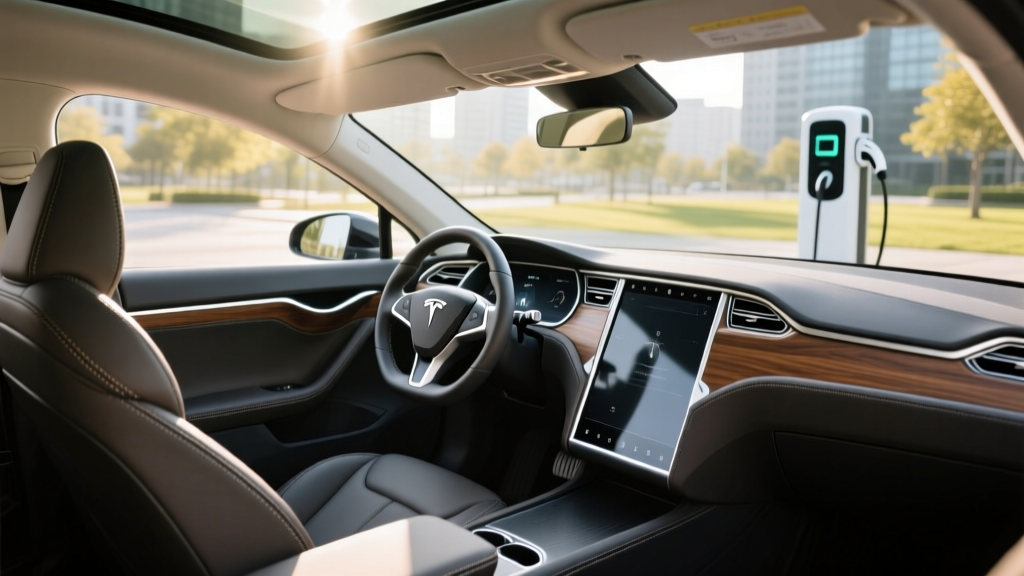
The Tesla Model S has been the flagship electric sedan since 2012, but the 2021 refresh — internally dubbed "Palladium" — fundamentally transformed its cabin. For 2026, the Model S continues with that updated architecture: a 17-inch center touchscreen (now horizontally oriented), a 12.3-inch digital instrument cluster, a rear 8-inch passenger display, and a yoke-style steering wheel as standard (a conventional round wheel is available as a no-cost option). The question buyers consistently ask is whether the Model S interior justifies a nearly $80,000 starting price when rivals like the Lucid Air, BMW i7, and Mercedes EQS bring more traditional luxury craftsmanship to the table.
The short answer: it depends on what you value. If you prioritize tech integration, over-the-air updates, and a driver-centric digital experience, the Model S cabin is still class-leading. If you want hand-stitched leather, real wood or metal trim, and hushed NVH (noise, vibration, harshness) levels at 80 mph, competitors have closed the gap — or surpassed it.
Below, we break down every dimension of the Model S — interior space, materials, powertrain, range, charging, pricing, and tax-credit eligibility — so you can decide if it's the right luxury EV sedan for you.
Interior Materials, Layout, and Build Quality
Tesla offers the Model S interior in three colorways for 2026: All Black, Black and White, and Cream — all using what Tesla calls "vegan leather" (a polyurethane-based synthetic). The seats themselves are well-bolstered, with 12-way power adjustment, heating for all five outboard positions, and ventilation for the front row. The headliner is Alcantara-like microsuede, and the dashboard top uses a soft-touch material with an aluminum or carbon-fiber-look accent strip spanning its width.
Build quality has improved markedly since the pre-2021 era. Panel gaps are tighter, door seals are more substantial, and the rattle-prone center console of earlier years has been replaced with a cleaner, more rigid assembly. That said, in our experience and in owner surveys, the Model S still doesn't match the panel consistency of a Mercedes EQS or the material richness of a Lucid Air Pure. You'll find some harder plastics on the lower door panels and rear seatbacks that feel out of place at this price point.
Infotainment and Digital Cockpit
The 17-inch center display runs Tesla's proprietary infotainment OS, which remains the most responsive and feature-rich system in any production car. Navigation, media, climate, vehicle settings, and even gaming (the Model S can run Cyberpunk 2077 at full fidelity while parked) all live on this single screen. The rear 8-inch touchscreen lets passengers control climate and media independently. Wireless phone charging, five USB-C ports (up to 65W), and a 22-speaker, 960-watt audio system are all standard.
Notably, the Model S still has no Apple CarPlay or Android Auto. Tesla's ecosystem is self-contained. For some buyers, this is a deal-breaker; for others, Tesla's native navigation and Spotify/Apple Music integration are sufficient.
Passenger Space and Cargo Capacity
The Model S is a full-size luxury liftback, and its dimensions reflect that. Here's how the interior space breaks down:
| Measurement | Specification |
|---|---|
| Front Headroom | 39.7 in |
| Rear Headroom | 38.1 in |
| Front Legroom | 42.7 in |
| Rear Legroom | 35.4 in |
| Front Shoulder Room | 58.3 in |
| Rear Shoulder Room | 55.5 in |
| Cargo Volume (rear seats up) | 28.0 cu ft |
| Cargo Volume (rear seats folded) | 79.7 cu ft |
| Frunk (front trunk) | 5.3 cu ft |
The liftback design is a practical advantage over traditional sedans like the EQS or i7. The hatch opening is wide, and the 28 cu ft trunk easily swallows four full-size suitcases. The 5.3 cu ft frunk adds room for a charging cable bag or a small backpack. However, rear legroom at 35.4 inches is tighter than the Lucid Air (38.0 in) and the BMW i7 (42.9 in). Taller passengers on long trips will notice.
Range, Battery, and Efficiency
The 2026 Model S Long Range uses a ~100 kWh battery pack (approximately 95 kWh usable). Tesla does not officially publish cell chemistry for the Model S, but teardown data and supply-chain reporting indicate an NMC (nickel manganese cobalt) chemistry supplied primarily by Panasonic at the Gigafactory in Nevada. NMC provides higher energy density than LFP, which is necessary to hit the Model S's range targets in a sedan footprint.
EPA Estimated Range (Long Range AWD): 402 miles
Real-World Highway (75 mph, 70°F): ~330–350 miles
Real-World Highway (75 mph, 30°F): ~270–300 miles
City/Commuting (stop-and-go, moderate climate): ~370–390 miles
Source: EPA via fueleconomy.gov; real-world estimates based on owner-reported data and independent testing.
The 402-mile EPA figure is among the highest of any production EV sold in the U.S. But as with all EVs, real-world range depends heavily on speed, temperature, and terrain. At sustained highway speeds above 75 mph, expect to lose roughly 13–18% versus the EPA sticker. In sub-freezing weather, battery resistance increases and cabin heating draws additional energy, pushing losses to 25–33%. The Model S uses a heat pump (standard since the Palladium refresh), which mitigates cold-weather loss compared to older resistance-heater setups, but physics still applies.
Efficiency is rated at 120 MPGe combined (city 124 / highway 116) per the EPA, translating to approximately 28 kWh per 100 miles. That's competitive with the Lucid Air Pure (which is lighter) and notably more efficient than heavier luxury EVs like the Mercedes EQS 580.
Charging Speed: DC Fast, Level 2, and Level 1
Charging speed remains a Tesla strong point, thanks to the Supercharger network and the vehicle's thermal management system. Here are the 2026 Model S charging specs:
| Charging Level | Power / Rate | Speed / Notes |
|---|---|---|
| DC Fast Charge (peak) | 250 kW | 10–80% in ~30 minutes; peak rate sustained only between ~10–35% SoC, tapering significantly above 60% |
| DC Fast Charge (V4 Supercharger) | Up to 250 kW | Model S is limited to 250 kW; does not support the 350+ kW architecture of newer platforms |
| Level 2 (Tesla Wall Connector) | 11.5 kW (48A) | ~34 miles of range per hour; full charge in ~9–10 hours |
| Level 2 (generic J1772/NACS adapter) | Up to 11.5 kW | Depends on EVSE and circuit; 40A circuit yields ~9.6 kW / ~28 mi/hr |
| Level 1 (120V household) | ~1.4 kW (12A) | ~3–4 miles of range per hour; emergency/trickle only |
The 250 kW peak DC rate means the Model S adds roughly 200 miles of range in about 15 minutes at a V3 or V4 Supercharger — but only when the battery is preconditioned (via navigation routing to the charger) and the state of charge is low. The charge curve tapers hard above 60% SoC; charging from 80–100% can take as long as the 10–80% session. For road-trip efficiency, plan stops around the 10–80% window.
At home, the Tesla Wall Connector on a 60A circuit delivers 11.5 kW, which is excellent for overnight replenishment. A typical daily commute of 40–60 miles requires only 1.5–2 hours of Level 2 charging. Most owners will never need to plug in every night.
Performance: 0–60, Horsepower, and Drivetrain
The 2026 Model S is offered in two trims:
| Trim | Drivetrain | Horsepower | 0–60 mph | Top Speed |
|---|---|---|---|---|
| Long Range | Dual-Motor AWD | 670 hp | 3.1 seconds | 155 mph |
| Plaid | Tri-Motor AWD | 1,020 hp | 1.99 seconds | 200 mph |
The Long Range is the volume seller and the more rational choice. Its 670 hp and 3.1-second 0–60 time are supercar-rivaling figures from just a few years ago, delivered with a silent, vibration-free launch. The Plaid's 1,020 hp and sub-2-second 0–60 are engineering showcases, but they come at a $30,000 premium and a range reduction to 359 miles EPA.
Both trims use Tesla's adaptive air suspension, which provides a compliant ride in Comfort mode and firm body control in Sport. The steering is quick but numb — a common critique among reviewers — and the yoke wheel, while offering an unobstructed view of the instrument cluster, requires an adjustment period for low-speed maneuvers and roundabouts.
Pricing, Tax Credits, and Total Cost
| Item | Long Range | Plaid |
|---|---|---|
| Base MSRP | $79,990 | $94,990 |
| Destination Fee | $1,995 | $1,995 |
| As-Tested (typical options) | ~$84,000–$88,000 | ~$100,000–$105,000 |
| Federal §30D Tax Credit | Not eligible — exceeds $55,000 sedan MSRP cap | |
This is a critical point for buyers: the Tesla Model S does not qualify for the $7,500 federal EV tax credit under IRS §30D rules. The law caps eligible sedans at an MSRP of $55,000, and the Model S starts at nearly $80,000. There is no workaround — even the point-of-sale transfer option does not apply here. Buyers should also be aware of the income caps (§30D phases out at $150,000 single / $300,000 joint AGI) and the battery-sourcing/critical-minerals requirements that affect other Tesla models.
For full details on eligibility rules, consult the IRS clean vehicle credits page.
5-Year Ownership Cost Estimate
Even without the federal credit, the Model S can be cost-effective versus gas-powered luxury sedans over five years. Here's a rough comparison against a BMW 5 Series (540i xDrive, ~$68,000 MSRP):
| Category | Model S LR | BMW 540i |
|---|---|---|
| Purchase Price (after incentives) | $79,990 | $68,000 |
| Fuel / Electricity (75,000 mi) | ~$3,800 | ~$9,500 |
| Maintenance (5 years) | ~$1,500 | ~$5,200 |
| Insurance (5-year avg) | ~$14,000 | ~$10,500 |
| Depreciation (est.) | ~$32,000 | ~$30,000 |
| Estimated 5-Year Total | ~$131,290 | ~$123,200 |
The Model S saves significantly on fuel and maintenance but carries higher insurance premiums (common for Teslas) and steeper upfront cost. Over five years, the gap narrows to roughly $8,000 — a modest premium for 402 miles of range and 670 hp.
Driver Assistance and Safety Technology
Every Model S ships with Tesla's Basic Autopilot, which includes adaptive cruise control, lane-centering, and automatic emergency braking. The optional Full Self-Driving (Supervised) package ($8,000 one-time or $99/month) adds automatic lane changes, traffic-light/stop-sign recognition, and Navigate on Autopilot.
Both Autopilot and FSD (Supervised) are SAE Level 2 driver-assistance systems. The driver must remain fully engaged, hands on the wheel (or torque-applied with the yoke), and eyes on the road at all times. These are not self-driving systems. Tesla's FSD branding has drawn regulatory scrutiny from NHTSA. Only Level 4 services like Waymo operate without a human driver.
Safety ratings are strong. The Model S earned a 5-star overall rating from NHTSA and has performed well in IIHS testing, though it has not received the IIHS Top Safety Pick+ designation in the most recent cycle due to headlight performance criteria.
Warranty Coverage
| Coverage | Term |
|---|---|
| Basic Vehicle Limited Warranty | 4 years / 50,000 miles |
| Battery & Drive Unit Warranty (Long Range) | 8 years / 150,000 miles (min. 70% retention) |
| Battery & Drive Unit Warranty (Plaid) | 8 years / 150,000 miles (min. 70% retention) |
The 8-year/150,000-mile battery warranty guarantees at least 70% capacity retention. In practice, Tesla's NMC packs in the Model S have shown approximately 8–12% degradation over the first 100,000 miles based on fleet data, meaning most owners will remain well within warranty thresholds. The 4-year/50,000-mile bumper-to-bumper is competitive with BMW and Mercedes but trails Lucid's 5-year/60,000-mile basic coverage.
Pros, Cons, and Who Should Buy
Pros
- 402-mile EPA range — among the longest of any EV sedan
- Access to Tesla Supercharger network (17,000+ stalls in North America)
- Class-leading infotainment responsiveness and feature set
- Sub-3.2s 0–60 with 670 hp (Long Range) — effortless performance
- Liftback cargo versatility (28 cu ft + 5.3 cu ft frunk)
- Over-the-air updates continuously add features
Cons
- Interior materials don't match the price point vs. Lucid, BMW, Mercedes
- Rear legroom (35.4 in) is tight for a full-size sedan
- No Apple CarPlay / Android Auto
- Yoke steering requires adaptation; not ideal for all drivers
- Not eligible for the $7,500 federal tax credit
- Insurance premiums run 25–40% higher than comparable ICE sedans
Who the Model S Suits Best
Buy it if: You want maximum EV range for frequent road trips, you value Tesla's Supercharger network and software ecosystem, you need hatchback cargo versatility, and you prioritize acceleration and tech over traditional luxury trim materials.
Look elsewhere if: Rear-seat comfort for adults is a priority (consider the Lucid Air or BMW i7), you want a traditionally opulent cabin, you need Apple CarPlay, or you're counting on the federal tax credit to bring the price down.
Frequently Asked Questions
What is the real-world range of the Tesla Model S?
The EPA rates the 2026 Model S Long Range at 402 miles. In real-world highway driving at 75 mph in moderate temperatures, expect roughly 330–350 miles. In cold weather (below freezing), that drops to approximately 270–300 miles. City driving with regenerative braking can approach the EPA figure.
How fast does the Model S charge at home and on the road?
On a Tesla Wall Connector (Level 2, 11.5 kW), the Model S gains about 34 miles of range per hour, fully charging in roughly 9–10 hours. On a V3/V4 Supercharger (DC fast charge at up to 250 kW), a 10–80% session takes approximately 30 minutes, though peak rates are only sustained in the lower portion of the charge curve.
Does the Tesla Model S qualify for the federal EV tax credit?
No. Under current IRS §30D rules, the Model S exceeds the $55,000 MSRP cap for sedans. It is not eligible for the $7,500 clean vehicle credit or the point-of-sale transfer. Some state-level incentives may still apply — check your local DMV or energy office.
Is the Model S interior better than the Lucid Air?
It depends on your priorities. The Lucid Air offers more rear legroom (38.0 in vs. 35.4 in), more traditional luxury materials (available Nappa leather, real wood, and metal), and a glass-canopy roof that creates an airier feel. The Model S counters with a more responsive infotainment system, a larger central touchscreen, and the Tesla software/OTA ecosystem. For pure material quality and space, the Air edges ahead; for tech integration, the Model S wins.
Is the yoke steering wheel practical for daily driving?
Most owners adapt within a week, but the yoke is divisive. It provides an unobstructed view of the instrument cluster and feels natural on highways. However, three-point turns, tight parking lots, and roundabouts require hand-over-hand maneuvers that the yoke doesn't support as intuitively as a round wheel. Tesla offers a conventional round wheel as a no-cost alternative at order time.
How does the Model S compare to the Mercedes EQS?
The EQS offers a quieter, more traditionally luxurious cabin, available rear-seat executive packages, and a more comfortable ride. The Model S counters with significantly longer EPA range (402 mi vs. the EQS 580's ~350 mi), faster acceleration, access to the Supercharger network, and a lower starting price. If cabin serenity and rear-seat luxury are paramount, the EQS is compelling. If range, performance, and charging infrastructure matter more, the Model S is the stronger pick.