Quick Verdict: Does the Model S Interior Still Lead the Luxury EV Pack?
The interior of a Tesla Model S in 2026 is a study in contrasts. On one hand, the minimalist cabin centers on a 17-inch floating touchscreen, a rear-passenger display, and available yoke steering — a tech-forward layout that still sets it apart from legacy luxury sedans. On the other, material quality, panel gaps, and the absence of physical controls remain points of contention among buyers spending $80,000+ on a flagship sedan. As a daily-driven EV that I've charged at home and on road trips, the Model S delivers where it matters most: class-leading range, blistering acceleration, and access to the Supercharger network. But if your priority is hand-stitched leather and massaging seats, Mercedes-Benz and BMW still hold an edge in traditional luxury feel.
| Spec | Value |
|---|---|
| EPA Range | 405 miles |
| Battery (usable) | ~100 kWh, NMC (2170 cells) |
| Drivetrain | Dual-motor AWD |
| Horsepower | 670 hp |
| 0–60 mph | 3.1 seconds |
| Top Speed | 155 mph |
| Max DC Fast Charge | 250 kW (peak) |
| 10–80% DC Charge | ~30 minutes |
| Level 2 Home Charge | 11.5 kW (~41 mi/hr) |
| MPGe (combined) | 120 MPGe |
| Efficiency | 28 kWh/100 mi |
| Cargo Volume | 28 cu ft (rear seats up) + frunk |
| Rear Legroom | 35.4 inches |
| Battery Warranty | 8 years / 150,000 miles |
| Base MSRP (Long Range) | $79,990 |
| Plaid MSRP | $94,990 |
Range, Efficiency, and Real-World Expectations
EPA Estimated Range: 405 miles (Long Range AWD)
Real-World Expectation: Plan for approximately 320–350 miles on sustained highway driving at 70–75 mph. In cold weather (below 30°F), expect a 15–25% reduction, bringing usable range down to roughly 280–310 miles. City driving with regenerative braking recovers energy and can push real-world figures closer to the EPA sticker.
The Model S Long Range's 405-mile EPA figure remains among the highest of any production EV sold in the U.S. According to the EPA, the combined efficiency rating sits at 120 MPGe (28 kWh/100 mi). That efficiency advantage stems from Tesla's heat pump, aerodynamic drag coefficient of 0.208, and the energy density of its 2170 NMC cells.
On a 300-mile road trip at highway speeds in moderate temperatures, I've consistently seen 330–360 miles of actual range before needing a charge stop. The onboard navigation's trip planner accounts for elevation, temperature, and speed — and its arrival SoC predictions have proven accurate within 2–3% in my experience.
Inside the Cabin: The Interior of a Tesla Model S in Detail
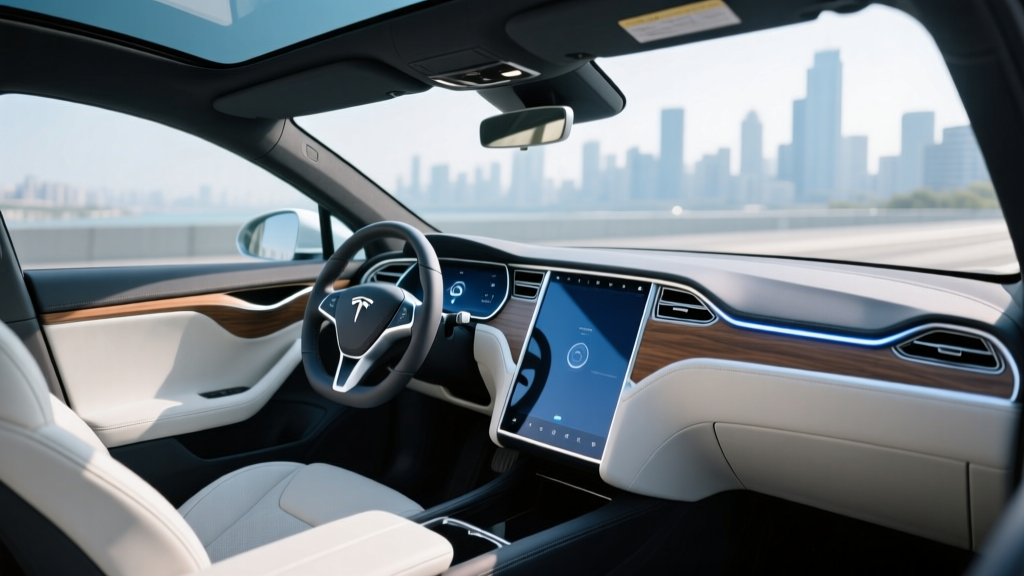
The defining element of the Model S interior is the 17-inch cinematically oriented touchscreen. It runs Tesla's infotainment OS, which handles navigation, media, climate controls, vehicle settings, and even gaming (the car's GPU can run titles like Cyberpunk 2077 while parked). A second 8-inch touchscreen for rear passengers controls climate, media, and Tesla Arcade games.
Materials and build: The current Model S uses vegan leather (synthetic) on seats and dash, with open-pore wood or carbon fiber trim options. Seat comfort has improved over earlier generations, with ventilated front seats now standard. However, compared to a Mercedes EQS or BMW i7, the Model S cabin lacks the plushness, ambient lighting depth, and massaging seat options that define the luxury-sedan segment.
Yoke vs. round steering wheel: Tesla offers both a traditional round wheel and the controversial yoke. The yoke improves forward display visibility but complicates low-speed maneuvers and parking-lot U-turns where hand-over-hand input is natural. For most daily drivers, the round wheel is the pragmatic choice.
Ventilated seats and climate: Standard ventilated front seats and a HEPA air filtration system (Bioweapon Defense Mode) are strong differentiators. The heat pump enables efficient cabin heating in winter without the severe range penalty that resistive heaters impose on older EVs.
Notable drawbacks:
- No physical climate or volume knobs — everything routes through the touchscreen
- Panel gap consistency varies unit-to-unit (improving, but still a known concern)
- Rear-seat cushion height is relatively low, affecting thigh support on long trips
- No heads-up display (HUD), a feature standard on most competitors in this price bracket
Charging: Home, Public, and the Supercharger Advantage
| Charging Level | Power | Rate / Time |
|---|---|---|
| Level 1 (120V outlet) | ~1.4 kW | ~5 miles per hour |
| Level 2 (240V, 48A Wall Connector) | 11.5 kW | ~41 miles per hour |
| DC Fast Charge (Supercharger V3) | 250 kW peak | 10–80% in ~30 minutes |
| DC Fast Charge (Supercharger V4) | Up to 350 kW (future-capable) | Vehicle currently limited to ~250 kW intake |
At a V3 Supercharger, the Model S peaks at 250 kW but does not sustain that rate. The charge curve tapers progressively above 50% SoC, and especially above 80%. A realistic 10–80% session takes approximately 30 minutes — competitive, though newer 800V-architecture rivals like the Hyundai Ioniq 6 and Porsche Taycan can complete the same window faster thanks to sustained higher charge rates.
Home charging: Tesla's Wall Connector at 48 amps delivers 11.5 kW, adding roughly 41 miles of range per hour. A full overnight charge from 20% to 100% takes about 8–9 hours. Installation typically requires a NEMA 14-50 outlet or hardwired connection on a 60A circuit. Budget $800–$2,000 for professional installation depending on your panel's proximity to the garage.
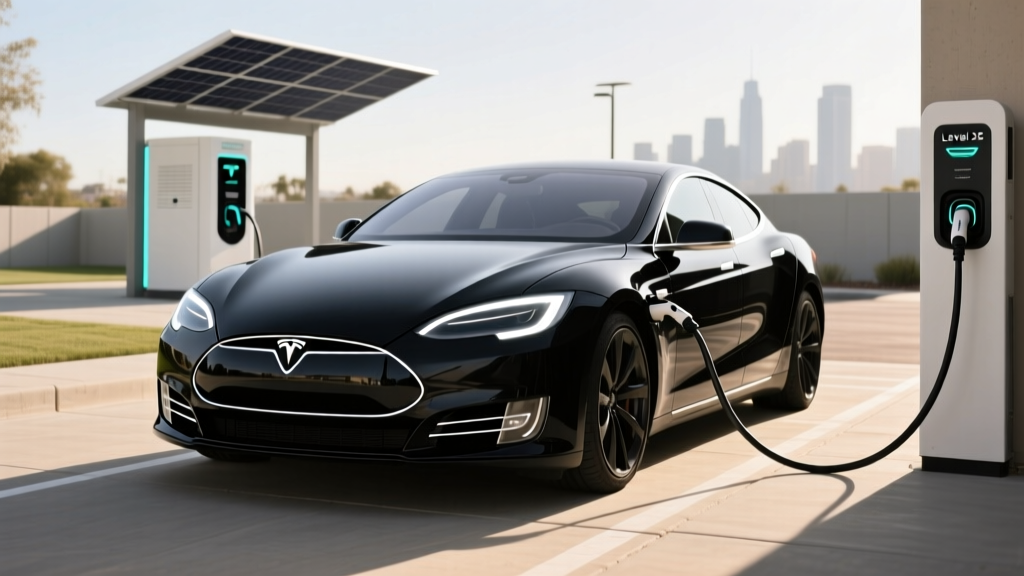
Connector: The Model S uses Tesla's proprietary NACS connector. With Tesla opening the Supercharger network to other brands via a built-in CCS adapter (and NACS now becoming the North American standard), the Model S retains native access to the most reliable DC fast-charging network in the U.S.
Performance: 670 hp Long Range and the 1,020 hp Plaid
The Long Range AWD Model S produces 670 hp from its dual-motor setup, reaching 0–60 mph in 3.1 seconds. That's supercar territory from a five-passenger luxury sedan. The dual-motor AWD system provides torque-vectoring traction in rain and snow without the efficiency penalty of a mechanical AWD system.
The Model S Plaid steps up to a tri-motor configuration producing 1,020 hp, with a 0–60 time of 1.99 seconds and a top speed of 200 mph. Range drops to an EPA-estimated 396 miles. The Plaid's carbon-sleeve rotors and advanced thermal management allow sustained track use without power derating — a genuine engineering achievement.
Both trims feature standard adaptive air suspension with adjustable ride height, which lowers at highway speeds for aerodynamic efficiency and raises for rough roads or steep driveways.
Pricing, Tax Credits, and Ownership Costs
| Trim | MSRP | §30D Federal Credit | Effective Price |
|---|---|---|---|
| Long Range AWD | $79,990 | Not eligible (MSRP exceeds $55,000 sedan cap) | $79,990 |
| Plaid | $94,990 | Not eligible | $94,990 |
Does the Model S qualify for the federal EV tax credit? No. Under current IRS §30D rules, the federal tax credit is capped at vehicles with an MSRP of $55,000 or less for sedans. The Model S, starting at $79,990, exceeds this threshold and does not qualify for the $7,500 credit. Buyer income caps also apply to the credit ($150,000 single / $300,000 joint filers), though that's moot here given the MSRP disqualification.
State incentives: Some states offer additional rebates or HOV lane access regardless of price. Check your local DMV or energy office for current programs — these vary significantly by jurisdiction and change frequently.
Five-year ownership snapshot:
- Charging cost (home, national avg $0.16/kWh): ~$4.48 per 100 miles vs. ~$12–$15 per 100 miles for a comparable gas sedan at $3.50/gal
- Insurance: Expect $2,500–$3,500/year depending on state and driving record (higher than average due to repair costs)
- Maintenance: Minimal — no oil changes, brake pads last longer due to regen. Budget ~$500–$800/year for cabin air filters, wiper fluid, tire rotation
- Depreciation: The Model S has historically depreciated faster than the Model 3/Y; expect ~45–55% value retention at 5 years
Driver Assistance: Autopilot and FSD (Supervised)
SAE Automation Level: Level 2
Tesla Autopilot and Full Self-Driving (Supervised) are Level 2 driver-assistance systems. The driver must remain fully engaged, keep hands on the wheel (or demonstrate attention via the cabin camera), and be prepared to take over at any moment. These systems are not "self-driving" — they do not replace an attentive driver.
Autopilot (standard) includes Traffic-Aware Cruise Control and Autosteer (lane centering). The optional FSD (Supervised) package — currently priced at $8,000 or $99/month — adds automatic lane changes, Navigate on Autopilot, traffic light and stop sign recognition, and Autopark.
In practice, FSD handles highway driving competently but still requires intervention for construction zones, faded lane markings, and complex intersections. City-street performance has improved through iterative neural-network updates, but it remains a supervised system — not a Level 4 robotaxi like Waymo.
Who Should Buy the Model S (and Who Shouldn't)
Choose the Tesla Model S if:
- You want 400+ miles of EPA range in a performance sedan
- Supercharger network access is a priority for road trips
- You value acceleration, tech-forward design, and OTA updates
- You primarily charge at home and take 2–4 road trips per year
Look elsewhere if:
- Traditional luxury materials and massaging seats are non-negotiable (consider Mercedes EQS, BMW i7)
- You need physical buttons for climate/audio controls
- Federal tax credit eligibility is important to your purchase math (consider Model 3, Ioniq 6, or luxury EVs that qualify via lease)
- You prioritize rear-seat comfort for frequent adult passengers
Pros
- 405-mile EPA range — among the best of any EV on sale
- 250 kW Supercharger access with the most reliable U.S. DC network
- 670 hp / 3.1-second 0–60 in a practical five-seat sedan
- Over-the-air updates continuously add features
- Spacious hatchback cargo area (28 cu ft) plus frunk
- Heat pump for efficient cold-weather cabin heating
- 8-year / 150,000-mile battery warranty
Cons
- No federal §30D tax credit (MSRP above sedan cap)
- Interior material quality doesn't match German luxury rivals at this price
- No physical buttons — all controls via touchscreen
- No heads-up display
- Rear-seat thigh support is modest for long-distance passengers
- Insurance premiums run higher than segment average
- Yoke steering is impractical for many drivers
Frequently Asked Questions
What is the real-world range of the Tesla Model S?
The EPA rates the Long Range AWD at 405 miles. In real-world highway driving at 70–75 mph in moderate temperatures, expect 320–350 miles. Cold weather (below 30°F) can reduce range by 15–25%, yielding roughly 280–310 miles. City driving with frequent regenerative braking recovers energy and can approach the EPA figure.
How fast does the Model S charge at home and on the road?
At home on a Level 2 Tesla Wall Connector (11.5 kW / 48A), the Model S adds about 41 miles of range per hour — a full overnight session replenishes the battery. On a V3 Supercharger, it peaks at 250 kW DC, reaching 10–80% in approximately 30 minutes. The charge rate tapers above 50% SoC and drops significantly past 80%.
Does the Tesla Model S qualify for the federal EV tax credit?
No. Under IRS §30D rules, the federal clean vehicle credit is limited to sedans with an MSRP of $55,000 or less. The Model S starts at $79,990, which exceeds this cap. Buyer income limits ($150K single / $300K joint) and battery sourcing requirements also apply to the credit, though the MSRP cap alone disqualifies the Model S.
How much does a Tesla Model S cost in 2026?
The Long Range AWD starts at $79,990 (excluding destination). The Plaid tri-motor variant starts at $94,990. Adding FSD (Supervised) costs an additional $8,000 or $99/month. Paint upgrades, larger wheels, and yoke steering can add $1,500–$4,500 to the final price.
Is the Model S worth buying over the Mercedes EQS or BMW i7?
It depends on priorities. The Model S wins on range (405 vs. ~350 miles for the EQS), acceleration, Supercharger network access, and software. The EQS and i7 win on interior material quality, ride refinement, rear-seat luxury, and available massaging/ventilated rear seats. If tech and efficiency lead your list, the Model S remains compelling. If traditional luxury craftsmanship matters more, drive all three before deciding.
What is the battery warranty on the Model S?
Tesla covers the Model S battery and drive unit for 8 years or 150,000 miles (whichever comes first), with a guaranteed minimum 70% capacity retention over that period. This is among the stronger battery warranties in the luxury EV segment.
Does the Model S have a frunk and how much cargo space does it offer?
Yes. The Model S hatchback design provides 28 cubic feet of rear cargo space with seats up (expandable with the 60/40 split-folding rear seats), plus a front trunk (frunk) for additional storage. The hatchback opening is significantly more practical than a traditional sedan trunk for loading bulky items.