The Tesla Model S Interior: From 2016 Minimalism to Today's Refresh
If you've searched for "Tesla Model S interior 2016" lately, you're likely one of two people: a used-EV shopper evaluating whether a pre-2021 Model S still holds up, or a current owner wondering how far the cabin has evolved since Tesla's flagship sedan launched its first major refresh. Either way, the interior of the Model S tells the story of Tesla's maturation as an automaker — from the sparse, button-heavy dashboard of 2016 to the yoke-ready, horizontally-screened, ventilated-seat cabin of the current generation.
This review examines what you're actually getting in a 2016-era Model S interior versus the 2026 model, while providing a full ownership profile of the current Model S Long Range and Plaid — including EPA range, real-world charging behavior, tax-credit eligibility, and whether buying new or used makes more financial sense in today's market.
EPA Estimated Range: 402 miles (Long Range) / 396 miles (Plaid)
Real-World Expectation: Plan for ~330–360 miles on highway road trips at 70–75 mph; expect 20–30% range loss in sustained sub-freezing temperatures (260–290 miles in cold highway driving). The 100 kWh (usable ~95 kWh) NMC battery delivers strong efficiency, but aerodynamic drag and cabin heating remain range killers at speed.
2016 vs 2026 Interior: A Side-by-Side Breakdown
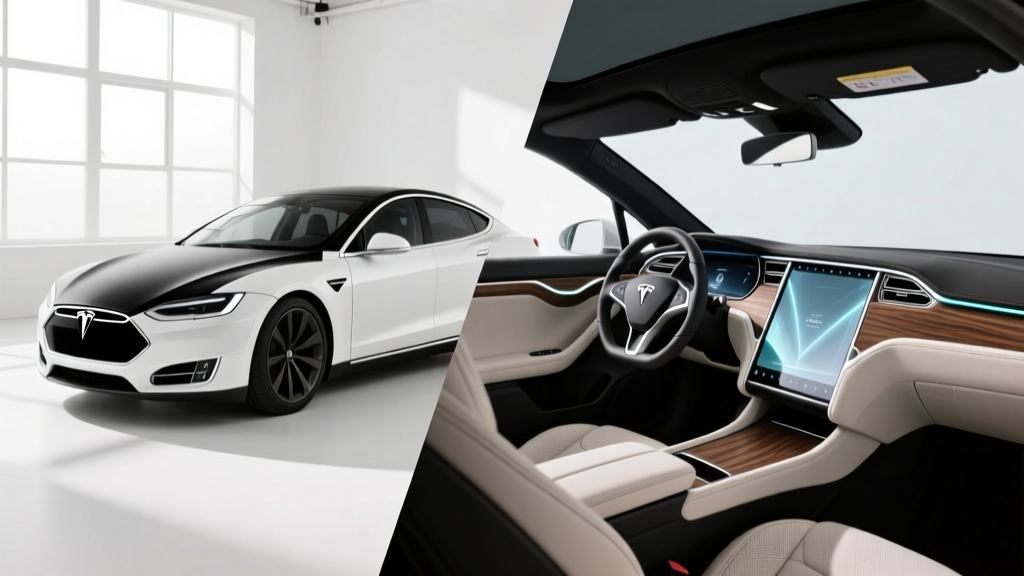
The 2016 Model S interior was defined by its 17-inch vertical touchscreen, a traditional round steering wheel, and a dashboard that Tesla carried over largely unchanged from the 2012 launch. Materials were adequate but drew criticism — synthetic leather (Tesla called it "vegan" before the term became standard), piano-black plastic that attracted fingerprints, and seats that lacked the bolstering of German rivals.
The 2021 "Palladium" refresh (carried into 2026) overhauled nearly everything:
| Feature | 2016 Model S | 2026 Model S |
|---|---|---|
| Touchscreen | 17" vertical, 1280×800 | 17" horizontal, 2200×1300, AMD Ryzen |
| Instrument Cluster | Small LCD behind wheel | 12.3" driver display |
| Rear Screen | None | 8" rear entertainment/climate screen |
| Steering Wheel | Round, traditional | Yoke or round (optional) |
| Seat Ventilation | No | Yes (front, standard) |
| Wireless Charging | No | Dual 15W pads, standard |
| Sound System | 12 speakers | 22 speakers, 960W |
| HVAC | Resistive heater | Heat pump (standard) |
| Processor | NVIDIA Tegra 3 (MCU1) | AMD Ryzen (MCU3) |
The single biggest interior pain point for 2016 owners is the MCU1 processor. Tesla's original NVIDIA Tegra 3 chip struggles with modern software — map rendering is sluggish, the browser is nearly unusable, and newer features like Theater mode and gaming aren't supported. Tesla offers an MCU retrofit (~$1,500–$2,500 depending on model year) that brings the infotainment closer to current standards, but it's a costly add for a used vehicle.
2026 Model S: Full Specs at a Glance
| Specification | Long Range | Plaid |
|---|---|---|
| EPA Range | 402 miles | 396 miles |
| Battery (usable) | ~95 kWh (NMC) | ~95 kWh (NMC) |
| Drivetrain | Dual-Motor AWD | Tri-Motor AWD |
| Horsepower | 670 hp | 1,020 hp |
| 0–60 mph | 3.1 sec | 1.99 sec |
| Top Speed | 155 mph | 200 mph |
| MPGe (combined) | 120 MPGe | 116 MPGe |
| Efficiency | 28 kWh/100mi | 29 kWh/100mi |
| Cargo (rear seats up) | 28 cu ft | 28 cu ft |
| Cargo (seats folded) | 79 cu ft | 79 cu ft |
| Frunk | ~3.1 cu ft | ~3.1 cu ft |
| Rear Legroom | 35.4 in | 35.4 in |
| Base MSRP | $79,990 | $94,990 |
| Battery Warranty | 8 yr / 150,000 mi | 8 yr / 150,000 mi |
Source: EPA fueleconomy.gov and Tesla Model S design page.
Charging Speed: DC Fast, Level 2, and the Curve Reality
The 2026 Model S uses Tesla's proprietary NACS connector natively — no adapter needed at Superchargers. It also supports CCS1 stations via Tesla's CCS adapter (included with newer vehicles, available as an accessory for older ones).
| Charging Method | Max Power | Speed | Notes |
|---|---|---|---|
| Level 1 (120V) | ~1.4 kW | 3–4 mi/hr | Emergency/trickle only |
| Level 2 (240V, 48A) | 11.5 kW | ~34 mi/hr | Home Wall Connector; ~10 hr for full charge |
| DC Fast (Supercharger V4) | 250 kW peak | 10–80% in ~27 min | Tapers significantly above 60%; preconditioning essential |
Charging curve reality: The Model S peaks at 250 kW only between roughly 10–25% State of Charge (SoC). By 50% SoC, the rate drops to ~150 kW, and above 80% it falls below 50 kW. This is standard behavior for NMC lithium-ion packs — the battery management system slows current to protect cell longevity. In practice, road-trip strategy means charging from 10% to 70% (about 20 minutes) and moving on rather than waiting for a full top-off.
Preconditioning matters. Navigate to a Supercharger using the car's built-in routing, and the battery will warm to optimal temperature before arrival. Without preconditioning — particularly in cold weather — peak charge rates can drop by 40–60%, turning a 25-minute stop into a 40-minute stop.
The 2016 Model S, by comparison, maxed out at ~120 kW on older V2 Superchargers and lacked the thermal management sophistication of the current pack. Used buyers should budget 35–45 minutes for a 10–80% charge on a 2016-era car.
Pricing, Tax Credits, and the Used-vs-New Decision
| Trim | Base MSRP | As-Tested (typical) | Federal Credit |
|---|---|---|---|
| Long Range | $79,990 | $83,490 (w/ FSD transfer) | $0 — exceeds MSRP cap |
| Plaid | $94,990 | $98,490 | $0 — exceeds MSRP cap |
| Used 2016 Model S 75D | ~$18,000–$24,000 | Varies | Up to $4,000 (used EV credit) |
New Model S tax credit situation: Under IRS §30D rules, the new-vehicle clean energy credit is capped at sedans with an MSRP of $55,000 or less. The Model S, starting at $79,990, does not qualify for the $7,500 federal credit regardless of your income or battery sourcing. This has been the case since the MSRP cap took effect.
Used 2016 Model S credit: The previously owned clean vehicle credit (§25E) offers up to $4,000 (30% of sale price, max $4,000) for used EVs priced at $25,000 or less, sold through a licensed dealer. Buyer income caps apply: $75,000 single / $112,500 head of household / $150,000 joint. A 2016 Model S 75D at $22,000 from a dealer could qualify for the full $4,000 — bringing effective cost to $18,000. This is the most affordable entry point into the Model S platform.
- Vehicle MSRP (used sale price) must be $25,000 or less
- Buyer AGI must not exceed $75K (single) / $150K (joint)
- Must purchase from a licensed dealer (private sales excluded)
- Vehicle must be at least 2 model years old (2016 qualifies)
- Credit is 30% of sale price, capped at $4,000
- Can be transferred to dealer at point of sale as a price reduction
- Consult a tax professional for your specific situation
Real-World Range: What Owners Actually Report
The 2026 Model S Long Range carries an EPA rating of 402 miles — among the highest of any production EV sold in the US. But EPA testing uses a mix of city and highway driving at moderate speeds with climate control in a controlled environment. Real-world results depend heavily on your driving pattern.
Highway road trips (70–80 mph): Expect 330–360 miles in mild weather (60–80°F). The Model S sedan's 0.208 Cd drag coefficient is excellent, but at highway speeds, aerodynamic drag dominates energy consumption. Owners consistently report 280–310 Wh/mi at 75 mph.
City/suburban driving: 370–400+ miles is achievable. Regenerative braking recovers energy in stop-and-go traffic, and the heat pump (standard since the Palladium refresh) dramatically reduces cabin-heating energy draw compared to the resistive heaters in 2016 models.
Cold weather (below 32°F): Plan for 260–300 miles on the highway. Battery internal resistance increases, cabin heating draws 2–5 kW continuously, and regenerative braking is limited until the pack warms. The 2016 Model S, lacking a heat pump, loses even more range in winter — owners report 200–240 miles from a full charge on a 75 kWh pack in January highway driving.
2016 Model S real-world range by variant:
- 60 kWh: EPA 210 mi → ~170 mi real-world highway
- 75 kWh: EPA 259 mi → ~210 mi real-world highway
- 90 kWh: EPA 294 mi → ~240 mi real-world highway
- 100 kWh: EPA 315 mi → ~260 mi real-world highway
Battery degradation on 2016 models varies widely. Most 100 kWh packs from that era retain 82–90% of original capacity after 100,000 miles. Tesla's battery warranty covers drops below 70% retention for 8 years/150,000 miles — meaning many 2016 Model S vehicles are now outside warranty coverage. Budget $12,000–$18,000 for an out-of-warranty battery replacement if you're shopping a high-mileage 2016 example.
Driver Assistance: Autopilot and FSD Supervised
Tesla Autopilot and Full Self-Driving (Supervised) are driver-assistance systems, not autonomous driving. The driver must remain fully attentive, keep hands on the wheel (or apply torque with the yoke), and be prepared to take over at any moment. Only Level 4 systems (like Waymo's robotaxi service) operate without a human driver.
The 2026 Model S ships with Basic Autopilot standard (adaptive cruise + lane centering on highways). The FSD (Supervised) add-on — currently $8,000 as a one-time purchase or $99/month — adds traffic-light recognition, city-street autosteer, and automatic parking. Hardware 4.0 cameras provide improved resolution over the Hardware 3.0 suite found in 2019–2022 models.
For 2016 Model S buyers: vehicles from that era shipped with Hardware 1.0 (Mobileye-based) or Hardware 2.0 (NVIDIA-based). Neither supports current FSD software. Tesla's Hardware 3.0 retrofit program has been available for some owners, but availability and cost vary. Don't buy a 2016 Model S expecting modern driver-assist capability without confirming the hardware generation.
- Does NOT make the car self-driving — you are the driver at all times
- Performance degrades in heavy rain, construction zones, and faded lane markings
- Phantom braking events remain a documented concern (see NHTSA ADAS investigations)
- Insurance premiums may be higher with FSD enabled — check with your provider
Pros and Cons: 2026 Model S and 2016 Used
- 402-mile EPA range eliminates range anxiety for most trips
- Access to 50,000+ Tesla Superchargers globally
- Tri-motor Plaid is among the fastest production cars ever built
- OTA updates continuously add features
- 28 cu ft cargo + 79 cu ft with seats folded — practical hatchback
- Heat pump standard (superior cold-weather efficiency)
- AMD Ryzen infotainment is responsive and modern
- $79,990+ starting price — no federal tax credit (MSRP cap)
- Rear seat legroom (35.4 in) trails the Lucid Air and BMW i7
- Yoke steering is polarizing and not universally preferred
- No physical buttons for climate — all screen-based
- Insurance costs run 20–40% higher than comparable ICE sedans
- Build quality improved but still inconsistent vs. German competitors
- Plaid's 1,020 hp is unusable on public roads — diminishing returns over Long Range
- $18,000–$28,000 entry price — one of the cheapest large luxury EVs
- Eligible for up to $4,000 used EV tax credit (§25E)
- Still fast: 75D does 0–60 in 4.2 sec, P100D in 2.5 sec
- Supercharger access included
- Hatchback practicality, air suspension ride quality
- MCU1 infotainment is painfully slow without expensive retrofit
- No heat pump — winter range drops significantly
- Battery likely out of warranty — replacement costs $12K–$18K
- Older Autopilot hardware (HW1/HW2) can't run current FSD
- Charging limited to ~120 kW (vs. 250 kW on new)
- Interior materials haven't aged well — seat bolsters, trim rattle
- Safety tech outdated vs. 2026 standards (no rear cross-traffic, etc.)
Who Should Buy the Model S — and Who Shouldn't
- You need 350+ real-world miles for frequent road trips
- You want the fastest Supercharger access with no adapters needed
- You value OTA updates and a modern infotainment system
- Budget allows $80K+ without relying on federal tax credits
Choose a used 2016 Model S if:
- Budget is under $25K and you want a large luxury EV
- Your commute is under 100 miles round-trip (range is sufficient)
- You can charge at home (Level 2) and accept slower DC charging
- You understand out-of-warranty battery risk and budget accordingly
Look elsewhere if:
- You need maximum rear-seat space → consider Lucid Air or BMW i7
- You want federal tax credit on a new EV → Model 3/Y, Hyundai Ioniq 6, or BMW i4 qualify
- You prefer traditional luxury interiors → Mercedes EQS or BMW i7 offer more conventional opulence
Frequently Asked Questions
What is the real-world range of the 2026 Tesla Model S?
The EPA rates the Long Range at 402 miles and the Plaid at 396 miles. In real-world highway driving at 70–75 mph, expect 330–360 miles in mild weather and 260–300 miles in freezing temperatures. City driving with regenerative braking can approach or match the EPA figure.
How fast does the Model S charge at home and on the road?
At home on a Level 2 Tesla Wall Connector (48A, 11.5 kW), the Model S adds about 34 miles of range per hour — a full charge takes roughly 10 hours. On a V4 Supercharger, it peaks at 250 kW and charges from 10–80% in approximately 27 minutes, though the rate tapers significantly above 60% SoC.
Does the 2026 Tesla Model S qualify for the federal EV tax credit?
No. Under current IRS §30D rules, new sedans must have an MSRP of $55,000 or less to qualify. The Model S starts at $79,990, disqualifying it regardless of buyer income or battery sourcing. However, a used 2016 Model S priced at $25,000 or less may qualify for the $4,000 previously owned vehicle credit (§25E) if income caps are met.
Is a 2016 Model S worth buying in 2026?
It depends on budget and risk tolerance. At $18,000–$24,000 (with up to $4,000 in used-EV credits), it's an affordable luxury EV with Supercharger access and decent range. However, the outdated MCU1 infotainment, slower 120 kW charging, lack of a heat pump, and out-of-warranty battery are real compromises. Budget an additional $2,000–$3,000 for an MCU upgrade and set aside reserves for potential battery service.
How does the Model S compare to the Lucid Air?
The Lucid Air Pure (372 mi EPA, ~$69,900) undercuts the Model S on price and nearly matches its range, while offering more rear-seat room. The Air Grand Touring (516 mi EPA) exceeds the Model S in range significantly. However, Tesla's Supercharger network remains more extensive and reliable than third-party CCS networks, and the Model S has a longer track record of OTA improvements. Choose the Model S for charging infrastructure and software; choose the Air for interior space and efficiency.
What is the battery warranty on the Tesla Model S?
Tesla covers the Model S battery and drive unit for 8 years or 150,000 miles (whichever comes first), with a minimum 70% capacity retention threshold. For a 2016 model, this warranty has expired or will expire in 2024–2025 depending on the original delivery date. Out-of-warranty battery replacements typically cost $12,000–$18,000 depending on the pack size and service provider.