Quick Verdict: A Premium EV With Shrinking Incentive Options
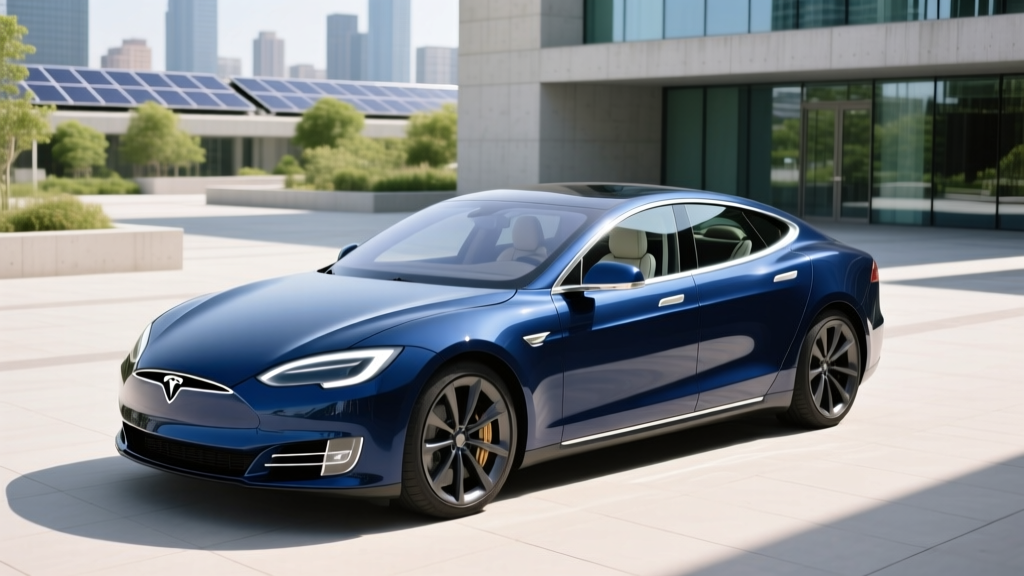
The 2026 Tesla Model S remains one of the longest-range, quickest-charging luxury sedans available — but if you're researching Tesla Model S incentives, the answer is complicated. At a starting MSRP of $79,990, the Model S exceeds the IRS §30D federal tax credit MSRP cap for sedans ($55,000), meaning new buyers cannot claim the $7,500 credit on a fresh purchase. Used Model S vehicles may qualify for up to $4,000 under the pre-owned EV credit, and state-level incentives vary. This review covers what the Model S actually delivers in range, charging, and daily usability so you can decide if the premium is worth it — incentive or not.
Range, Efficiency, and Real-World Expectations
Real-World Expectation: 320–350 miles at sustained highway speeds (70–80 mph); 280–310 miles in freezing temperatures with cabin heating. Plaid trim with 21" wheels drops to an EPA 359 miles, real-world ~290–320 highway.
The Long Range Model S pairs a 100 kWh (usable ~95 kWh) NMC (nickel manganese cobalt) battery pack with Tesla's heat pump and octovalve thermal management system. On the EPA combined cycle, it achieves 124 MPGe — translating to roughly 30 kWh per 100 miles. That's strong efficiency for a 4,500+ lb sedan producing 670 horsepower.
In practice, efficiency varies significantly with driving style. At 65 mph on a flat, temperate day, owners consistently report 350+ miles of usable range. Push to 80 mph or tackle mountain passes, and consumption climbs to 35–38 kWh/100mi, shrinking effective range closer to 280 miles. Cold-weather testing at 20°F shows a 15–25% range reduction depending on preconditioning habits. Tesla's battery preconditioning feature — which warms the pack when navigation is set to a Supercharger — is essential for maintaining charge speed and range in winter.
| Specification | Long Range | Plaid |
|---|---|---|
| EPA Range | 402 mi | 359 mi |
| Battery (Usable) | ~95 kWh, NMC | ~95 kWh, NMC |
| Horsepower | 670 hp | 1,020 hp |
| 0–60 mph | 3.1 sec | 1.99 sec |
| Drivetrain | Dual-Motor AWD | Tri-Motor AWD |
| MPGe (Combined) | 124 MPGe | 116 MPGe |
| Top Speed | 155 mph | 200 mph |
| Base MSRP | $79,990 | $94,990 |
Charging Speed: DC Fast and Home Level 2
The Model S supports Tesla's NACS (North American Charging Standard) connector natively — no adapter needed at Superchargers, and an increasing number of third-party networks now offer NACS compatibility as the industry standardizes.
| Charging Level | Power / Rate | Speed / Time |
|---|---|---|
| Level 1 (120V) | ~1.4 kW | ~3–4 mi/hr |
| Level 2 (240V, 48A) | 11.5 kW | ~34 mi/hr; full charge in ~10 hr |
| DC Fast (V3 Supercharger) | Peak 250 kW | 10–80% in ~27 min |
| DC Fast (V4 Supercharger) | Peak 250 kW (NACS) | 10–80% in ~27 min |
At a V3 or V4 Supercharger, the Model S peaks at 250 kW — but only for a narrow window between roughly 10–30% state of charge. By 50% SoC, the rate tapers to ~150 kW, and above 80% it drops below 60 kW. This charge-curve taper is why Tesla (and most EV makers) quote 10–80% times rather than 0–100%. For road trips, plan to charge from 10–80% and drive on; topping off to 100% adds significant time with diminishing returns.
For home charging, the Mobile Connector with a NEMA 14-50 outlet delivers up to 30 miles of range per hour at 32A. Tesla's Wall Connector at 48A bumps that to 34 mi/hr — enough to fully replenish overnight. Installation typically requires a 60A dedicated circuit; budget $500–$2,000 for a licensed electrician depending on panel proximity and local permitting. If your home panel is at capacity (common in older homes with 100A service), a panel upgrade to 200A can add $1,500–$3,000.
Pricing, Trims, and the Tax Credit Reality
This is where Tesla Model S incentives get tricky for new buyers. The IRS §30D federal EV tax credit has an MSRP cap of $55,000 for sedans. Since both the Long Range ($79,990) and Plaid ($94,990) far exceed that threshold, neither qualifies for the $7,500 new-vehicle credit — regardless of your income or the battery's critical-mineral sourcing.
| Trim | MSRP | Federal Credit (New) | Effective Price |
|---|---|---|---|
| Long Range | $79,990 | $0 (exceeds $55K sedan cap) | $79,990 |
| Plaid | $94,990 | $0 (exceeds $55K sedan cap) | $94,990 |
| Used Model S (qualifying) | $30,000–$55,000 | Up to $4,000 (§25E) | Varies |
Used Model S opportunity: The §25E pre-owned EV credit offers up to $4,000 (or 30% of the sale price, whichever is lower) for qualifying used EVs purchased from a dealer. The vehicle must be at least two model years old, sold for $25,000 or less, and the buyer must meet income caps ($75,000 single / $150,000 joint). A 2021–2022 Model S Long Range in the $40,000–$50,000 range won't hit the $25K price cap, but older 2018–2020 examples might. Check IRS §25E guidelines for the latest eligibility rules before purchasing.
State incentives: Several states offer rebates that aren't subject to the federal MSRP cap. California's CVRP was discontinued, but programs like Colorado's innovative motor vehicle credit (up to $5,000 for EVs, income-dependent) and various utility-company rebates may apply. Always verify current state and local incentive availability through your state energy office or utility provider.
Add $1,990 for Tesla's Full Self-Driving (Supervised) package and $2,500–$4,500 for premium paint and larger wheels, and a well-equipped Long Range can approach $87,000 before destination fees.
Performance, Tech, and Daily Livability
The dual-motor Long Range delivers 670 hp and a 3.1-second 0–60 mph time — quicker than nearly any combustion sedan in its price bracket. The tri-motor Plaid's 1,020 hp and sub-2-second sprint are supercar territory, but the Long Range is the rational pick for most buyers: you gain 43 miles of range and save $15,000.
Inside, the 17-inch landscape touchscreen handles infotainment, climate, and vehicle settings. Wireless phone charging, ventilated front seats, a 22-speaker audio system, and a rear-seat entertainment screen are standard. Tesla's Autopilot (SAE Level 2) includes adaptive cruise and lane-keeping; the optional FSD (Supervised) package adds automated lane changes, traffic light recognition, and city-street navigation — but requires continuous driver supervision at all times. This is not autonomous driving.
Cargo and passenger space: The Model S offers 28.0 cubic feet of rear cargo space with the hatchback liftgate (seats-up), expanding to 79.0 cu ft with the 60/40 rear seats folded. The front trunk (frunk) adds 2.1 cu ft. Rear legroom measures 35.4 inches — adequate for adults on shorter trips but tighter than a Mercedes EQS (40.4 in) for long hauls. The yoke steering wheel remains standard; a round wheel is available at no cost.
Notable drawbacks: Panel gap consistency still lags German competitors. The yoke steering is divisive for low-speed maneuvers. There are no physical buttons for climate or wipers, which frustrates some drivers. And at this price point, the absence of a heads-up display or massaging seats (available in rivals like the Lucid Air and BMW i7) feels like an omission.
Warranty and Battery Longevity
Tesla covers the Model S battery and drive unit for 8 years or 150,000 miles (whichever comes first), with a minimum 70% capacity retention threshold over that period. The basic vehicle limited warranty is 4 years or 50,000 miles. These terms are competitive with Lucid (8 yr/100,000 mi battery) and slightly better than Mercedes' EV coverage.
NMC chemistry in the Model S has demonstrated strong real-world longevity. Data aggregated from fleet operators and owner reports suggests typical degradation of 8–12% over the first 100,000 miles, with the curve flattening significantly after year three. Tesla recommends charging to 80–90% for daily use and only charging to 100% when needed for long trips — a practice that extends NMC battery life. An out-of-warranty battery replacement runs approximately $15,000–$22,000 depending on the pack, though replacements are rare within the first decade of ownership.
Competitive Landscape: Model S vs. Lucid Air, Mercedes EQS, BMW i7
The Model S Long Range competes against the Lucid Air Pure ($74,990, EPA 419 mi), Mercedes-Benz EQS 450+ ($105,550, EPA 390 mi), and BMW i7 eDrive50 ($106,695, EPA 314 mi). The Lucid Air Pure beats the Model S on range and price but has a smaller Supercharger-equivalent charging network. The EQS and i7 offer superior interior materials and ride comfort but lag on efficiency and charging infrastructure access.
The Model S's strongest competitive advantage remains Tesla's Supercharger network — over 6,000 stations and 60,000+ stalls in North America, with unmatched reliability compared to Electrify America or EVgo. For road-trip-heavy owners, this is a tangible daily benefit.
Choose the Lucid Air if: Maximum EPA range and rear-seat comfort are priorities, and you primarily charge at home or use non-Tesla networks.
Choose the Mercedes EQS or BMW i7 if: Interior luxury, ride quality, and dealer service experience matter more than range or charging speed.
Pros and Cons
- 402-mile EPA range (Long Range) — among the longest of any production EV
- Supercharger network access — best-in-class reliability and coverage
- 250 kW DC fast charging with proven real-world charge curves
- 670 hp dual-motor AWD standard; 3.1-sec 0–60
- Over-the-air updates continuously add features
- 28.0 cu ft hatchback cargo + 2.1 cu ft frunk
- No federal tax credit on new purchases (MSRP exceeds $55K sedan cap)
- Panel fit and interior materials trail German luxury rivals
- Yoke steering divisive; no physical buttons for key functions
- No HUD, massaging seats, or executive rear-seat options
- Insurance costs 20–35% higher than comparable ICE sedans
- Rear legroom (35.4 in) tighter than Lucid Air and EQS
Frequently Asked Questions
Does the 2026 Tesla Model S qualify for the federal EV tax credit?
No. The IRS §30D new clean vehicle credit caps sedan eligibility at $55,000 MSRP. The Model S Long Range starts at $79,990, and the Plaid at $94,990 — both well above the threshold. Buyer income limits and battery sourcing requirements are irrelevant here because the MSRP cap disqualifies the vehicle first. See IRS §30D rules for full details.
Can I get any incentives on a used Tesla Model S?
Possibly. The §25E pre-owned clean vehicle credit offers up to $4,000 for used EVs priced at $25,000 or less, purchased from a licensed dealer. Buyer income caps apply ($75K single / $150K joint). Most used Model S vehicles still exceed the $25K price cap, but older 2018–2019 examples with higher mileage may qualify. Always verify current pricing and eligibility before committing.
What is the real-world highway range of the Model S?
Expect 320–350 miles at 70–80 mph in moderate temperatures. In freezing conditions (below 30°F), that drops to 280–310 miles even with preconditioning. The EPA's 402-mile figure assumes a mix of city and highway driving; sustained high-speed travel consumes more energy. Source: fueleconomy.gov.
How fast does the Model S charge at home?
With Tesla's Wall Connector on a 48A / 240V circuit, the Model S adds approximately 34 miles of range per hour (11.5 kW). A full charge from near-empty takes roughly 10 hours. On a standard 120V household outlet (Level 1), expect just 3–4 miles per hour — useful only for overnight top-ups or low-mileage drivers.
Is the Model S worth buying over the Lucid Air or Mercedes EQS?
If Supercharger access and proven long-range efficiency are your top priorities, yes. The Model S Long Range offers 402 miles of range and the most reliable DC fast-charging network available. If interior luxury, rear-seat space, or dealer-serviced maintenance matter more, the EQS or Lucid Air may be better fits — though at higher prices.
What is the battery warranty on the Model S?
Tesla covers the battery and drive unit for 8 years or 150,000 miles, whichever comes first, guaranteeing a minimum of 70% capacity retention. The basic vehicle warranty is 4 years or 50,000 miles. Out-of-warranty battery replacement costs approximately $15,000–$22,000.