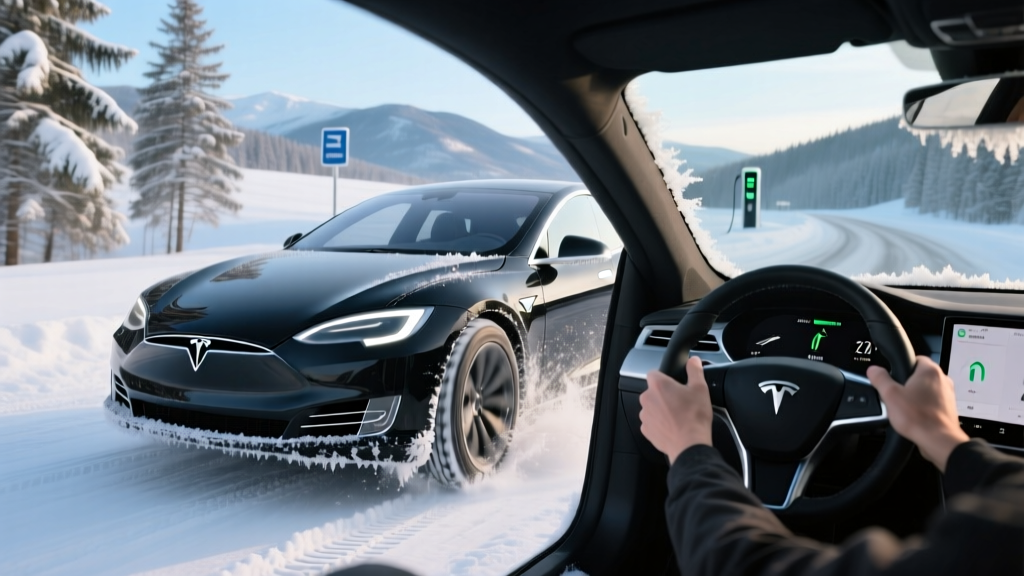
If you live where winter means plow-salted roads, sub-zero mornings, and slush-covered Superchargers, the question isn't whether a luxury electric sedan can handle the cold — it's how much range you'll actually lose and whether the drivetrain keeps you planted on ice. The 2026 Tesla Model S, with its dual-motor all-wheel drive and active thermal management, remains one of the most capable EVs for winter duty. But physics doesn't care about badge prestige: cold air thickens battery electrolyte, cabin heating devours energy, and snowy roads raise rolling resistance. Here's what real ownership looks like when the thermometer drops.
2026 Tesla Model S at a Glance: Core Specifications
| Spec | Model S Long Range | Model S Plaid |
|---|---|---|
| EPA Range | 405 miles | 396 miles |
| Battery (usable) | ~100 kWh (NMC) | ~100 kWh (NMC) |
| Drivetrain | Dual-Motor AWD | Tri-Motor AWD |
| Horsepower | 670 hp | 1,020 hp |
| 0–60 mph | 3.1 sec | 1.99 sec |
| Top Speed | 155 mph | 200 mph |
| Peak DC Charge Rate | 250 kW | 250 kW |
| 10–80% DC Charge | ~27 min | ~27 min |
| Level 2 Rate (48A) | 11.5 kW (~44 mi/hr) | 11.5 kW (~44 mi/hr) |
| EPA Efficiency | 120 MPGe (28 kWh/100mi) | 116 MPGe (29 kWh/100mi) |
| Cargo (rear + frunk) | 28 cu ft + 3.1 cu ft | 28 cu ft + 3.1 cu ft |
| Rear Legroom | 40.9 in | 40.9 in |
| Curb Weight | 4,561 lb | 4,766 lb |
| Base MSRP (2026) | $79,990 | $94,990 |
| Battery Warranty | 8 yr / 150,000 mi | 8 yr / 150,000 mi |
Real-World Winter Range: What 405 EPA Miles Becomes at 20°F
Real-World Highway (55–70 mph, 45°F): ~320–340 miles
Winter Highway (20°F, heater on, snow tires): ~260–290 miles
Extreme Cold City/Stop-and-Go (0°F): ~240–270 miles
The EPA's 405-mile figure for the Model S Long Range assumes moderate temperatures, mixed driving, and minimal HVAC load. In practice, cold weather introduces three range penalties simultaneously:
- Battery internal resistance increases below ~40°F, reducing the usable energy the pack can deliver and accept during regenerative braking. Expect regen to be limited or unavailable for the first 10–20 minutes of driving unless the battery is preconditioned.
- Cabin and battery heating draw can consume 3–7 kW continuously. Unlike internal-combustion vehicles that waste engine heat for free, an EV must generate warmth electrically. The Model S uses a heat pump (introduced with the 2021 refresh), which is roughly 2–3x more efficient than resistive heating, but it still represents a significant energy draw in single-digit temperatures.
- Winter tires and road conditions increase rolling resistance by 5–10%, and plowed-snow slush adds drag. Speeds matter enormously: sustaining 75 mph in 15°F air will cut range harder than 55 mph in 35°F.
Owners in the Upper Midwest and New England consistently report 25–35% range reduction in sustained sub-freezing conditions. For a 405-mile EPA car, that means planning for roughly 270 miles of reliable winter range on a full charge — still enough for most commutes and manageable on road trips given the Supercharger network, but a real constraint if you regularly drive 200+ miles between stops in rural areas.
Snow and Ice Traction: Dual-Motor AWD Under Scrutiny
The Model S Long Range uses a permanent-magnet front motor and an induction rear motor, delivering independent torque to each axle within milliseconds. The tri-motor Plaid adds a second rear motor for torque vectoring across the rear axle. In snow, this setup offers several advantages over mechanical AWD systems:
- Instant torque response: Electric motors detect wheel slip and redistribute torque faster than any mechanical differential. Tesla's traction control modulates power hundreds of times per second.
- Low center of gravity: The floor-mounted battery pack gives the Model S a CG lower than most crossovers, reducing body roll and improving stability on icy curves.
- Weight distribution: Near 50/50 front-rear balance keeps both axles loaded for grip.
That said, AWD helps you accelerate in snow — it does not help you stop or corner beyond the limits of your tires. The stock Michelin Pilot Sport all-season tires that ship on the Model S are competent in light snow but are not winter-rated (no Three-Peak Mountain Snowflake symbol). For sustained winter driving below 40°F, dedicated winter tires (such as the Michelin X-Ice Snow or Nokian Hakkapeliitta R5 in 19-inch fitment) transform the car's behavior, cutting braking distances on ice by 20–30% compared to all-seasons.
Ground clearance is the Model S's winter weak point. At 4.8 inches (with adaptive air suspension in its default setting), it sits lower than most crossovers. The air suspension can raise the car to approximately 6.1 inches in "Very High" mode, which helps over plow ridges and drifted driveways, but this is still modest compared to a Subaru Outback's 8.7 inches. Deep unplowed roads or steep, icy driveways with berms will challenge the sedan's undercarriage.
Cold-Weather Charging: What Happens at the Supercharger in January
| Charging Level | Power / Rate | Speed (miles added/hr) | Notes |
|---|---|---|---|
| Level 1 (120V, 12A) | ~1.4 kW | ~3–4 mi/hr | Emergency/trickle only |
| Level 2 (240V, 48A Wall Connector) | 11.5 kW | ~44 mi/hr | Full charge in ~10 hr |
| DC Fast Charge (V3 Supercharger) | Peak 250 kW | ~200 mi in 15 min (warm) | 10–80% in ~27 min |
| DC Fast Charge (cold pack, <32°F, no preconditioning) | ~50–100 kW initially | ~60–90 mi/hr initially | Speeds recover as pack warms |
The Model S peaks at 250 kW on V3 Superchargers, and on a warm battery in moderate temperatures, you'll see that peak sustained from roughly 10–45% state of charge before tapering. A 10–80% session takes approximately 27 minutes.
In winter, the story changes dramatically unless you precondition. The Model S navigation system automatically begins heating the battery when you route to a Supercharger, bringing the pack into its optimal 90–110°F charging window before you arrive. If you precondition correctly, winter charging speeds are nearly identical to summer speeds.
If you arrive at a Supercharger with a cold-soaked battery (parked outside overnight, no preconditioning), the charge rate can initially be limited to 50–100 kW as the thermal management system diverts energy to warming the cells. The first 10–15 minutes of a cold session may feel agonizingly slow. Always navigate to the charger via the car's built-in routing to trigger preconditioning — or manually activate it 30–45 minutes before arrival.
Home Level 2 charging via the Tesla Wall Connector at 48 amps delivers 11.5 kW, adding roughly 44 miles of range per hour. A full 10–100% charge takes approximately 10 hours, which works well for overnight replenishment. In extreme cold, a small fraction of that energy goes to battery thermal management rather than storage, so expect slightly longer top-off times in deep winter.
Pricing, Trims, and Federal Tax Credit Reality
| Trim | Base MSRP | Destination | Typical As-Tested | §30D Credit Eligible? |
|---|---|---|---|---|
| Model S Long Range | $79,990 | $1,990 | $81,980–$87,000+ | No — exceeds $55,000 sedan MSRP cap |
| Model S Plaid | $94,990 | $1,990 | $96,980–$105,000+ | No — exceeds $55,000 sedan MSRP cap |
The IRS §30D federal tax credit caps eligible sedans at a $55,000 MSRP. The Model S, starting at $79,990, does not qualify for the $7,500 new-vehicle credit regardless of buyer income or battery sourcing. Buyers seeking a Tesla with federal credit eligibility should look at the Model 3 (which starts below the cap, though eligibility depends on battery-component and critical-mineral sourcing requirements that shift annually).
Some states offer additional incentives that are not MSRP-capped — for example, certain utility rebates or state-level EV credits — but these vary by jurisdiction. Check your state energy office or utility provider for current programs.
Daily Livability: Interior, Cargo, and Winter-Specific Tech
The Model S interior is minimalist by design: a 17-inch center touchscreen controls nearly all vehicle functions, supplemented by a 12.3-inch driver instrument cluster and a small rear passenger screen. Heated front and rear seats are standard, as is a heated steering wheel — both essential winter comfort features that draw far less energy than blasting cabin air heating.
Cargo capacity is generous for a sedan: 28 cubic feet behind the rear seats (with a wide hatchback opening that swallows ski bags and winter gear) plus a 3.1-cubic-foot front trunk (frunk). The frunk is particularly useful for stowing wet boots, ice scrapers, and winter emergency kits away from the cabin.
Standout winter-relevant technology includes:
- Tesla app remote preconditioning: Warm the cabin and battery while plugged in at home, using grid power rather than battery energy. This is a significant winter advantage — you leave home with a warm battery and a toasty cabin, preserving your full range for the road.
- Sentry Mode and Dashcam: Records incidents in icy parking lots where door-dings and slide-into-your-car events are more common.
- Over-the-air updates: Tesla regularly refines traction control algorithms and thermal management via software, meaning a 2022 Model S may actually handle snow slightly better today than when it was built.
- Autopilot (Level 2): Tesla's driver-assistance suite includes adaptive cruise, lane centering, and automatic emergency braking. In winter, note that lane markings obscured by snow or slush can degrade lane-centering performance. The driver must remain fully engaged — this is SAE Level 2 automation, not self-driving.
Notable drawbacks for winter buyers: the panoramic glass roof, while beautiful, can create a cold radiant effect on your head in extreme temperatures even with the cabin heated. Some owners apply ceramic tint film to reduce this. The flush door handles, while sleek, can freeze shut in ice storms — a common complaint in freezing-rain climates. And the lack of physical buttons means adjusting climate settings requires screen interaction, which is less ideal with gloved hands.
Pros and Cons: Model S as a Winter Daily Driver
Winter Pros
- Dual/tri-motor AWD with instant torque vectoring provides excellent snow traction
- Heat pump is more efficient than resistive heating, reducing winter range penalty vs older EVs
- App-based preconditioning while plugged in preserves range and ensures a warm cabin
- 405-mile EPA range means even with 30% cold loss, ~280 miles remain — ample for most winter commutes
- Supercharger network is the most reliable DC fast-charging ecosystem in North America, critical when winter road trips demand dependable stops
- Low center of gravity and balanced weight distribution aid stability on icy roads
Winter Cons
- 4.8-inch ground clearance (6.1 in max air suspension) limits deep-snow capability
- Stock all-season tires are inadequate for sustained winter conditions — budget $1,200–$1,800 for dedicated winter tires on a second set of wheels
- Flush door handles can freeze shut in ice storms
- No federal §30D tax credit due to MSRP cap — this is a full-price purchase
- 250 kW peak charge rate, while fast, trails newer 800V architectures (Hyundai Ioniq 5 at 350 kW, Lucid Air at 300+ kW)
- Minimalist interior lacks physical climate buttons — awkward with winter gloves
Should You Buy the Model S for Snow Country — or Look Elsewhere?
The 2026 Model S Long Range is a genuinely capable winter vehicle if your use case aligns with its strengths: long highway commutes, access to home Level 2 charging, and a willingness to invest in winter tires. Its AWD system is among the best in any production sedan, and the range buffer — even diminished by cold — exceeds what most drivers need between stops.
However, if deep snow, unplowed roads, or steep icy driveways are your daily reality, a higher-clearance EV like the Tesla Model Y, Rivian R1S, or Hyundai Ioniq 5 (with 6.2 inches of clearance) will serve you better. If federal tax credit eligibility matters to your budget, the Model S is disqualified by price, and you should consider the Model 3 Long Range AWD or the BMW i4 xDrive40.
Choose a competitor if: You need more ground clearance, want the federal credit, or prefer physical controls and a traditional luxury interior (consider the BMW i5 xDrive40 or Lucid Air Pure AWD).
Frequently Asked Questions
Does the Tesla Model S lose range in cold weather?
Yes. Expect a 25–35% range reduction in sustained sub-freezing temperatures compared to the 405-mile EPA estimate. That translates to roughly 260–290 real-world winter miles for the Long Range model. Preconditioning while plugged in and using seat heaters instead of cabin air heat can recover some of this loss.
Is the Tesla Model S good in snow?
With proper winter tires, the Model S is excellent in snow. Its dual-motor AWD system responds to slip faster than mechanical systems, and the low center of gravity aids stability. Ground clearance (4.8 inches standard) is the main limitation in deep or unplowed snow.
How do I precondition the Model S battery for winter charging?
Enter a Supercharger as your navigation destination in the car's built-in maps. The vehicle will automatically begin warming the battery en route, typically starting 30–60 minutes before arrival depending on ambient temperature and distance. You can also precondition from the Tesla app while the car is plugged in at home.
Does the Model S qualify for the $7,500 federal EV tax credit?
No. Under current IRS §30D rules, sedans must have an MSRP at or below $55,000 to qualify. The Model S starts at $79,990 and is ineligible regardless of buyer income or battery sourcing.
Should I get winter tires for the Model S?
Absolutely, if you drive regularly below 40°F or in snow. The stock all-season tires are not winter-rated. A set of dedicated winter tires (such as Michelin X-Ice Snow or Bridgestone Blizzak LM005 in the correct 19- or 21-inch fitment) dramatically improves braking, cornering, and acceleration grip on ice and packed snow. Budget $1,200–$1,800 for tires plus a second set of wheels.
What is the Model S battery warranty?
Tesla covers the Model S battery and drive unit for 8 years or 150,000 miles, whichever comes first, with a minimum 70% capacity retention guarantee. This warranty applies regardless of climate, though Tesla notes that battery degradation accelerates slightly in extreme heat and extreme cold if the vehicle is regularly stored at very low or very high states of charge without thermal management.
How does the Model S compare to the Lucid Air in winter?
The Lucid Air Pure AWD offers comparable range (419 miles EPA) and a more traditional luxury interior with physical climate controls. However, Tesla's Supercharger network remains a significant winter road-trip advantage — Lucid owners rely on Electrify America and other third-party networks, which have historically lower uptime in remote cold-weather corridors. The Air also has slightly more ground clearance at 5.0 inches.
Sources: EPA Fuel Economy (fueleconomy.gov), Tesla Model S specifications (tesla.com/models), IRS Clean Vehicle Credits (irs.gov).