Quick Verdict: The Model S in the HW4 Era
If you've been searching for when did Model S get HW4, the answer traces back to early 2023, when Tesla began fitting its refreshed AI4 (commonly called Hardware 4) computer and higher-resolution camera suite into newly built Model S sedans. By mid-2023, all North American Model S production had transitioned to HW4. Now in the 2026 model year, the Model S Long Range and Plaid remain the flagship of Tesla's sedan lineup — a pair of luxury electric sedans that blend class-leading range with rapid DC charging and the most advanced driver-assistance hardware Tesla has ever shipped.
This review covers everything a 2026 buyer needs: real-world range versus the EPA sticker, charging speed and curve behavior, performance data, interior practicality, pricing with federal tax-credit nuances, and how the Model S stacks up against rivals like the Lucid Air, BMW i7, and Mercedes-Benz EQS.
Range and Efficiency: EPA Numbers vs Real-World Reality
The 2026 Tesla Model S Long Range carries an EPA-estimated range of 402 miles on its 100 kWh (usable) battery pack. The performance-oriented Plaid trim drops to an EPA-estimated 396 miles due to wider tires and more aggressive powertrain mapping. Both trims use Tesla's 4680-format cells in a structural battery pack with NMC (nickel manganese cobalt) chemistry, chosen for its high energy density — a necessity for a sedan chasing the 400-mile mark.
- City/commute driving (mild weather): 370–395 miles — regen braking and lower speeds help you approach the EPA sticker.
- Highway driving (70–80 mph): 310–340 miles — aerodynamic drag at sustained speed cuts range roughly 15–20%.
- Cold weather (below 32°F / 0°C): 260–310 miles — expect 20–30% range loss depending on cabin heating demand and battery preconditioning habits.
- Plaid track/Sport mode: Significantly less — aggressive acceleration can halve range on spirited drives.
Source: EPA Fuel Economy — Tesla Model S
Efficiency is rated at 124 MPGe combined (Long Range), which translates to roughly 27 kWh per 100 miles. That's competitive with the Lucid Air Grand Touring but less efficient than the smaller Tesla Model 3, which benefits from lower mass. The Model S's heat pump — standard since the 2021 refresh — helps mitigate cold-weather losses, but physics still governs: a 5,000-lb luxury sedan moving at highway speed demands real energy.
| Spec | Long Range | Plaid |
|---|---|---|
| EPA Range | 402 mi | 396 mi |
| Battery (usable) | ~100 kWh, NMC | ~100 kWh, NMC |
| Drivetrain | Dual-Motor AWD | Tri-Motor AWD |
| Horsepower | 670 hp | 1,020 hp |
| 0–60 mph | 3.1 sec | 1.99 sec |
| Top Speed | 155 mph | 200 mph |
| MPGe (combined) | 124 MPGe | 119 MPGe |
| Efficiency | 27 kWh/100 mi | 28 kWh/100 mi |
| Max DC Charge Rate | 250 kW | 250 kW |
| 10–80% DC Fast Charge | ~27 min | ~27 min |
| Level 2 Home Charging | 11.5 kW (~44 mi/hr) | 11.5 kW (~44 mi/hr) |
| Base MSRP | $79,990 | $94,990 |
| Battery Warranty | 8 yr / 150,000 mi | 8 yr / 150,000 mi |
Charging Speed: Supercharger Network and Home Setup
The Model S supports a peak DC fast-charge rate of 250 kW at Tesla V3 Superchargers (and compatible V4 stalls with a CCS/NACS cable). In practice, you'll see 250 kW only in a narrow state-of-charge window — roughly 10% to 25% SoC — before the charge curve tapers progressively. The 10–80% session takes approximately 27 minutes under ideal conditions (warm battery, preconditioned via navigation routing to the charger).
| Charging Level | Power | Miles of Range Added per Hour | Notes |
|---|---|---|---|
| Level 1 (120V household) | ~1.4 kW | ~5 mi/hr | Emergency/trickle only |
| Level 2 (240V, Wall Connector) | 11.5 kW | ~44 mi/hr | Full overnight charge in ~9 hrs |
| DC Fast Charge (V3 Supercharger) | Up to 250 kW | ~750 mi/hr (peak) | 10–80% in ~27 min; tapers above 50% |
| DC Fast Charge (CCS adapter) | Up to 250 kW | Varies by station | Non-Tesla networks via included NACS-to-CCS adapter |
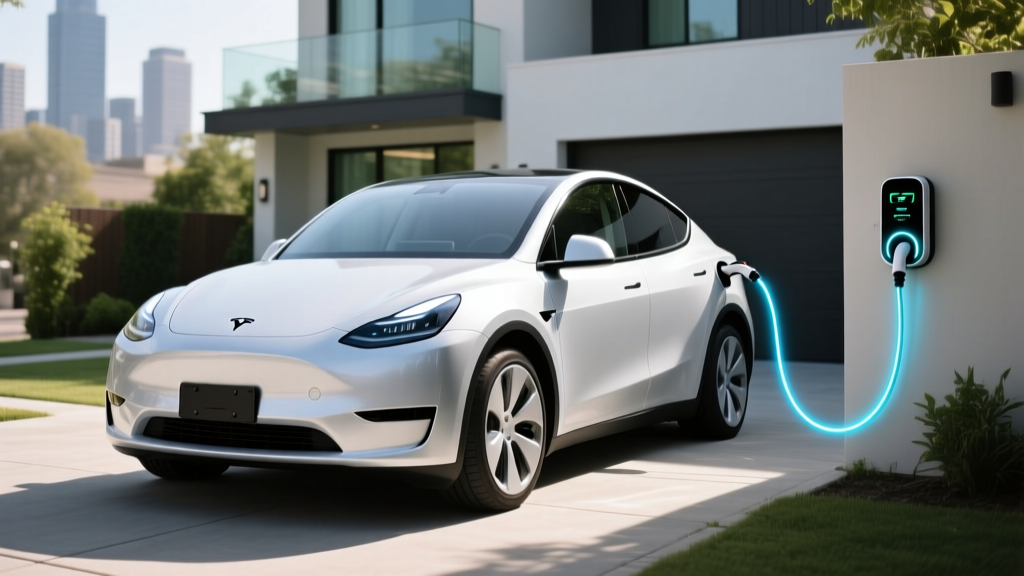
At home, the Tesla Wall Connector on a 60-amp circuit delivers the full 11.5 kW, adding about 44 miles of range per hour. A full 0–100% charge takes roughly 9 hours — fine for overnight replenishment. If your home has a standard 40-amp dryer-style circuit, expect about 7.7 kW and a 12-hour fill. Panel upgrades may be needed for homes with older 100-amp electrical service; consult a licensed electrician for a site assessment.
Charging-curve reality check: Peak kW is a headline number, not a sustained rate. Above 50% SoC, the Model S tapers to roughly 100–120 kW. Above 80%, it drops further to under 50 kW. For road trips, plan your Supercharger stops around the 15–80% window to minimize time at the stall.
Performance: Long Range vs Plaid
The Long Range's dual-motor AWD setup produces 670 horsepower and a 3.1-second 0–60 mph time — figures that would have defined a supercar a decade ago. The Plaid adds a third rear motor for 1,020 horsepower and a claimed 1.99-second 0–60 (on prepped surface with rollout subtracted). In real-world roll-on acceleration, the Plaid feels telekinetic; the Long Range feels merely ferocious.
Both trims use adaptive air suspension with automatic ride-height adjustment. The Plaid adds track-oriented cooling upgrades and carbon-sleeve rotors (optional) for sustained high-speed driving. The steering is quick but light by sports-sedan standards — this is a grand tourer, not a track car, despite the Plaid's numbers.
HW4 (AI4) Hardware and Autopilot / FSD Capabilities
The transition to HW4 — which Tesla internally calls AI4 — was the key upgrade that made the current Model S a meaningfully better platform for driver assistance. HW4 features:
- Higher-resolution cameras (5 MP vs 1.2 MP on HW3) with improved low-light performance
- Wider field-of-view front camera for better intersection and cut-in detection
- ~2x the compute throughput of HW3, enabling more complex neural-network inference
- Removed ultrasonic sensors (USS) — Tesla replaced them with vision-based Tesla Vision parking assist, which has drawn mixed owner reviews for accuracy
Tesla Autopilot and Full Self-Driving (Supervised) are SAE Level 2 driver-assistance systems. The driver must remain fully attentive, hands on or near the wheel, and ready to take over at any moment. These systems are not self-driving. Only Level 4 services like Waymo operate without a human driver in defined areas.
FSD (Supervised) costs $8,000 as a one-time purchase or $99/month in 2026. It adds automatic lane changes, traffic-light and stop-sign recognition, and city-street navigation. The system has improved substantially on HW4 hardware, but it still requires vigilant supervision — especially in construction zones, heavy rain, and unprotected left turns. Owners should view FSD as a convenience layer, not a replacement for attention.
Interior, Cargo, and Technology
The Model S interior remains minimalist by luxury-sedan standards: a 17-inch center touchscreen dominates the dash, with a 12.3-inch driver display and a rear-seat entertainment screen. Build quality has improved since the 2021 refresh, with ventilated front seats, a panoramic glass roof, and available cream, black, or white vegan leather.
Dimensions and space:
- Cargo (rear trunk + frunk): 28.0 cu ft total — substantially more than the BMW i7 (22 cu ft) and competitive with the Lucid Air (32 cu ft)
- Rear legroom: 35.4 inches — adequate for adults but tighter than the long-wheelbase Mercedes EQS
- Front headroom: 40.5 inches (with glass roof)
- Seating: 5-passenger standard; no executive rear-seat package like German rivals offer
The yoke steering wheel is standard, with a round wheel available as a no-cost option. Wireless phone charging, HEPA air filtration (Bioweapon Defense Mode), and a 22-speaker audio system round out the tech. Notably absent: Apple CarPlay and Android Auto — Tesla's proprietary infotainment remains a walled garden, which is a dealbreaker for some luxury buyers accustomed to phone projection.
- Class-leading 402-mile EPA range (Long Range)
- Access to Tesla Supercharger network — the most reliable DC network in North America
- HW4/AI4 cameras are a meaningful upgrade over HW3 for FSD performance
- Blistering acceleration across both trims
- Generous cargo space with frunk + trunk
- Over-the-air updates continuously add features
- No Apple CarPlay / Android Auto
- Rear seat space trails German luxury competitors
- Vision-only parking (no ultrasonic sensors) frustrates some owners
- $80K+ starting price; Plaid exceeds $95K before options
- FSD (Supervised) remains Level 2 — not autonomous despite the name
- Insurance costs run 20–40% higher than comparable ICE luxury sedans
Pricing, Trims, and Federal Tax Credit Eligibility
The 2026 Tesla Model S is offered in two trims:
- Long Range: $79,990 MSRP (destination included)
- Plaid: $94,990 MSRP
Options like FSD, premium paint colors (Ultra Red, Solid Black), and 21-inch wheels can push an as-tested Long Range past $90,000 and a Plaid over $105,000.
| Item | Long Range | Plaid |
|---|---|---|
| Base MSRP | $79,990 | $94,990 |
| §30D Federal Credit Eligibility | See IRS rules below — income & sourcing apply | |
| Typical As-Tested (w/ FSD + paint) | ~$89,990 | ~$104,990 |
- MSRP cap: Sedans must have an MSRP at or below $55,000 to qualify. The Model S at $79,990+ exceeds this cap and does NOT qualify for the new-vehicle §30D credit.
- Buyer income cap: AGI must not exceed $150K (single) / $300K (joint) — irrelevant here since MSRP already disqualifies.
- Battery sourcing & critical minerals: Must meet escalating domestic-content thresholds — moot for Model S due to MSRP cap.
- Used-vehicle credit (§25E): A pre-owned Model S priced under $25,000 may qualify for up to $4,000 — but 2026 market prices for HW4-equipped used Model S vehicles remain well above that threshold.
Bottom line on incentives: The Model S does not qualify for the federal new-EV tax credit due to its MSRP. Some states (California, Colorado, Massachusetts) offer their own rebates or HOV-lane access — check your state's energy office for current programs. Tesla's referral credits and occasional promotional pricing may provide modest savings.
Model S vs Key Competitors: Is It Worth Buying?
The Model S competes in a narrow but growing segment of luxury electric sedans:
| Spec | Tesla Model S LR | Lucid Air Grand Touring | BMW i7 xDrive60 | Mercedes EQS 580 |
|---|---|---|---|---|
| EPA Range | 402 mi | 516 mi | 318 mi | 371 mi |
| 0–60 mph | 3.1 sec | 3.0 sec | 4.5 sec | 4.1 sec |
| Max DC Charge | 250 kW | 300 kW | 195 kW | 200 kW |
| Base MSRP | $79,990 | $125,600 | $120,675 | $105,550 |
| Charging Network | Supercharger | EA / NACS adapter | EA / CCS | EA / CCS |
| ADAS Hardware | HW4 (AI4) | DreamDrive Pro | Highway Assistant | Drive Pilot (L3, limited) |
- Choose the Model S Long Range if: You want 400+ miles of range, best-in-class Supercharger access, strong performance, and a tech-forward cabin — and you don't need rear-seat limousine space.
- Choose the Model S Plaid if: You want hypercar acceleration in a daily-drivable sedan and plan to use track mode occasionally.
- Choose the Lucid Air if: Maximum range (516 mi) and interior luxury are top priorities, and budget allows $125K+.
- Choose the BMW i7 or Mercedes EQS if: You prioritize rear-seat comfort, traditional luxury build quality, CarPlay, and dealership service networks over range and performance.
Warranty and Ownership Costs
Tesla provides an 8-year / 150,000-mile battery and drive-unit warranty with a minimum 70% capacity retention threshold. The basic vehicle warranty is 4 years / 50,000 miles. Compared to Hyundai's 10-year / 100,000-mile EV powertrain coverage, Tesla's battery warranty is solid but not class-leading on duration.
Ownership costs beyond the purchase price deserve attention:
- Insurance: Expect $2,800–$4,200/year depending on state, age, and driving record — significantly higher than a BMW 5 Series or Mercedes E-Class.
- Home charging installation: $500–$2,000 for a Wall Connector install on an existing 60A circuit; $2,000–$5,000+ if a panel upgrade is needed.
- Maintenance: Minimal — no oil changes, brake pad wear is reduced by regen. Budget for cabin air filters, wiper fluid, tire rotation, and eventual tire replacement (the Model S eats through tires faster than lighter EVs due to its weight and torque).
- Depreciation: The Model S has historically depreciated 40–55% over 5 years, steeper than some German rivals. Tesla's periodic price cuts on new vehicles have accelerated used-market depreciation.
Frequently Asked Questions
When did the Model S get HW4 (Hardware 4)?
Tesla began installing HW4 (also called AI4) in Model S vehicles built starting in early 2023, with full production transition by mid-2023. All 2024, 2025, and 2026 Model S vehicles come with HW4 standard. If you're buying a used 2023 Model S, confirm the build date and HW version in the vehicle's software menu under "Additional Vehicle Information."
What is the real-world range of the Model S Long Range?
Expect 310–340 miles on highway road trips at 70–80 mph, and 370–395 miles in mixed city/suburban driving in mild weather. In freezing temperatures, plan for 260–310 miles. The EPA rates it at 402 miles, but sustained highway speed and cold weather are the two biggest range reducers.
How fast does the Model S charge at home and on the road?
At home on a Level 2 Wall Connector (11.5 kW), the Model S adds ~44 miles of range per hour, fully charging overnight in ~9 hours. On a V3 Supercharger, it peaks at 250 kW and charges from 10–80% in approximately 27 minutes, though the rate tapers significantly above 50% SoC.
Does the Model S qualify for the federal EV tax credit?
No. The IRS §30D credit has a $55,000 MSRP cap for sedans. The Model S starts at $79,990, which disqualifies it regardless of your income or the battery's sourcing. Check IRS.gov for current rules, as legislation can change.
Is the Model S worth buying over the Lucid Air or BMW i7?
It depends on priorities. The Model S wins on value (lowest base price in this comparison), Supercharger network access, and software/OTA features. The Lucid Air wins on range and interior luxury. The BMW i7 and Mercedes EQS win on rear-seat comfort, traditional build quality, and dealer service. Test-drive all three before committing.
Can I retrofit HW4 onto an older Model S?
Tesla has not offered an official HW3-to-HW4 retrofit program for the Model S as of 2026. Some HW3-to-HW4 upgrades have been available for Model 3 and Model Y through service centers, but Model S availability is limited and inconsistent. If HW4 is a priority, buy a 2023.5+ or newer vehicle.
How long will the Model S battery last?
Tesla's NMC 4680 cells are designed for long cycle life. Real-world data from high-mileage owners suggests 10–15% degradation over 100,000 miles, with the battery retaining 80–85% capacity at 150,000 miles. The 8-year/150,000-mile warranty covers defects and capacity loss below 70%. Full battery replacement outside warranty currently costs $15,000–$22,000 depending on the pack.