Quick Verdict: The Benchmark That Refuses to Slow Down
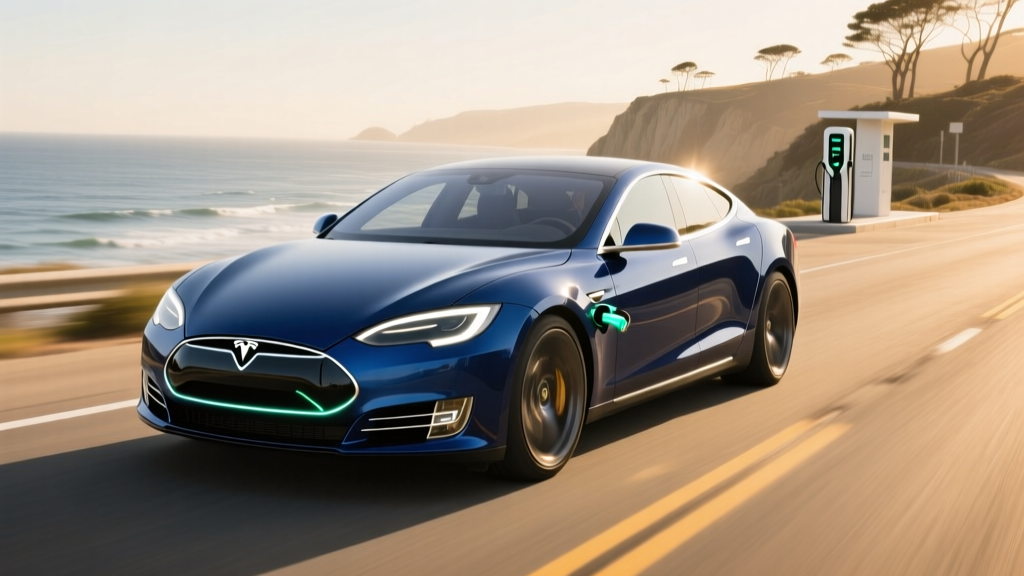
The Tesla Model S remains the original luxury electric sedan that forced an entire industry to pivot. For 2026, it continues to offer a blend of blistering straight-line performance, class-leading Supercharger network access, and a minimalist tech cabin that polarizes buyers. With up to 1,020 horsepower in the Plaid trim and an EPA-estimated range of up to 402 miles in the Long Range variant, the Model S is a masterclass in dual-purpose engineering: it's a comfortable daily commuter that can embarrass supercars at stoplights.
But the luxury EV landscape has shifted dramatically. The Lucid Air, Porsche Taycan, Mercedes EQS, and BMW i7 all bring compelling alternatives with superior interior finishes, quieter cabins, and in some cases, faster charging architectures. This review breaks down the exact horsepower figures, real-world range expectations, charging curves, and ownership economics to determine if the Model S still deserves its flagship status in 2026.
Model S Specs: Horsepower, Range, Battery & Pricing
| Specification | Model S Long Range (AWD) | Model S Plaid (Tri-Motor AWD) |
|---|---|---|
| Horsepower | 670 hp | 1,020 hp |
| Drivetrain | Dual-Motor AWD | Tri-Motor AWD |
| 0-60 mph | 3.1 seconds | 1.99 seconds |
| Top Speed | 155 mph | 200 mph |
| EPA Range | 402 miles | 359 miles |
| Battery (usable) | ~95 kWh (NMC) | ~95 kWh (NMC) |
| Max DC Fast Charge | 250 kW | 250 kW |
| 10-80% DCFC Time | ~30 min | ~30 min |
| Level 2 Home Charge | 11.5 kW (~34 mi/hr) | 11.5 kW (~34 mi/hr) |
| MPGe (City/Hwy/Combined) | 124 / 116 / 120 MPGe | 119 / 112 / 116 MPGe |
| Cargo Volume | 28 cu ft (rear) + frunk | 28 cu ft (rear) + frunk |
| Base MSRP (2026) | $79,990 | $94,990 |
Sources: Tesla Model S Design Studio, EPA fueleconomy.gov
Performance Deep-Dive: What 670 to 1,020 Horsepower Actually Feels Like
The horsepower on Tesla Model S trims isn't just a marketing number — it translates to instantaneous, linear torque that internal combustion engines can't replicate without complex gearing and turbo spool-up. The dual-motor Long Range produces 670 hp, which is more than sufficient to deliver a 3.1-second 0-60 mph sprint. That puts it in the territory of a Porsche 911 Carrera 4S, but with the added benefit of silent, effortless acceleration from any speed.
The tri-motor Plaid is in a different universe. With 1,020 hp and a 1.99-second 0-60 time (with rollout subtracted), it's one of the quickest production cars ever built. The carbon-sleeved rotors in the Plaid's rear motors allow them to spin at up to 20,000 RPM, eliminating the power falloff that typically plagues single-speed EVs at high velocity. On a drag strip or a freeway on-ramp, the Plaid pulls with relentless force well past 100 mph.
However, there's a practical caveat: the Plaid's extreme power comes at the cost of about 43 miles of EPA range compared to the Long Range. For buyers who won't regularly exploit tri-motor acceleration, the Long Range's 670 hp is already absurdly fast for daily driving.
Real-World Range: What the EPA Sticker Doesn't Tell You
EPA Estimated Range: 402 miles (Long Range) / 359 miles (Plaid)
Real-World Expectation: Expect approximately 320-350 miles on the Long Range in mixed highway driving at 70-75 mph. In cold weather (below 32°F), plan for a 20-30% range reduction, yielding roughly 250-290 miles. The Plaid will deliver roughly 280-310 highway miles under similar conditions.
Tesla's thermal management system, which includes a heat pump as standard, helps mitigate cold-weather losses better than many competitors. The Model S also excels at efficiency: the Long Range achieves 120 MPGe combined, meaning it uses relatively little energy per mile compared to heavier luxury EVs like the Mercedes EQS or BMW i7.
For context, on a 300-mile road trip at highway speeds in 50°F weather, the Long Range should arrive with a comfortable buffer. In sub-freezing conditions or at speeds above 80 mph, you'll want to plan a Supercharger stop.
Charging: Supercharger Network Advantage vs. 800V Competitors
The Model S charges at a peak rate of 250 kW on Tesla's V3 Superchargers, which is adequate but no longer class-leading. The Porsche Taycan and Hyundai Ioniq 5, with their 800V architectures, can peak above 270-350 kW. However, Tesla's real advantage is network reliability and ubiquity — Superchargers are overwhelmingly functional, well-placed, and require no app fiddling or payment setup.
| Charging Level | Power / Rate | Estimated Time / Range Added |
|---|---|---|
| Level 1 (120V) | ~1.4 kW | ~3-4 miles per hour |
| Level 2 (240V, 48A) | 11.5 kW | ~34 miles per hour; full charge in ~10 hours |
| DC Fast (V3 Supercharger) | Peak 250 kW | 10-80% in ~30 minutes; ~200 miles in 15 min |
Charge curve reality: The Model S will peak near 250 kW only between roughly 10-30% state of charge. Above 50%, the rate tapers significantly — by 80%, you're looking at roughly 70-90 kW. This is why Tesla (and all EV manufacturers) quote 10-80% times rather than 0-100%. Charging from 80-100% on DCFC can take as long as 10-80%, so it's best reserved for home Level 2 sessions.
At home on a Tesla Wall Connector (48 amps), the Model S adds about 34 miles of range per hour. A full overnight charge from 20% to 80% takes roughly 5-6 hours, which is more than adequate for daily use.
Pricing, Trims & Federal Tax Credit Eligibility
| Trim | 2026 MSRP | Federal §30D Credit Eligibility |
|---|---|---|
| Model S Long Range | $79,990 | Not eligible (exceeds $55,000 sedan MSRP cap) |
| Model S Plaid | $94,990 | Not eligible (exceeds $55,000 sedan MSRP cap) |
The Tesla Model S does not qualify for the $7,500 federal EV tax credit under IRS §30D rules. The credit has a strict MSRP cap of $55,000 for sedans (and $80,000 for SUVs/pickups/vans), and both Model S trims far exceed this threshold. Additionally, buyer income caps apply ($150,000 single / $300,000 joint filers), and battery critical-mineral sourcing requirements must be met. Since the Model S is classified as a sedan, the lower $55K cap applies regardless of buyer income.
Some buyers may find relief through state-level incentives (California's CVRP, Colorado's state credit, etc.), but these vary significantly by jurisdiction. Check your state's energy office for current programs. The point-of-sale transfer option, introduced in 2024, also does not apply here due to the MSRP exclusion.
As-tested pricing for a well-equipped Model S Long Range with Full Self-Driving (Supervised) capability, premium interior, and 21-inch wheels can approach $90,000 before delivery fees and taxes.
Interior, Tech & Daily Livability
The Model S interior remains a study in minimalism. The 17-inch center touchscreen dominates the dashboard and controls nearly every vehicle function, from climate to glovebox release. The 2026 refresh includes an improved rear-seat entertainment screen, ventilated front seats, and a premium 22-speaker audio system that rivals anything from Burmester or Bowers & Wilkins.
Standout tech:
- Autopilot / FSD (Supervised): Tesla's Level 2 driver-assist system remains one of the most capable on the market for highway lane-keeping and navigation-based lane changes. However, it is not self-driving — the driver must remain fully engaged and hands on the wheel at all times (SAE Level 2).
- Over-the-air updates: Tesla regularly pushes feature improvements, entertainment additions, and efficiency tweaks without a dealership visit.
- Yoke steering (optional): Polarizing. Some drivers adapt quickly; others find it impractical for low-speed maneuvers and parking. A conventional round wheel is available at no extra cost.
Cargo and passenger space: The Model S offers 28 cubic feet of rear cargo space (with seats up), which is generous for a sedan, plus a front trunk (frunk) for additional storage. Rear legroom is adequate for adults at 35.4 inches, though the sloping roofline cuts into headroom for taller passengers. Compared to the Lucid Air or Mercedes EQS, the Model S rear seat feels noticeably more compact.
Warranty & Long-Term Ownership
Tesla provides a 4-year/50,000-mile basic vehicle warranty and an 8-year/150,000-mile battery and drive unit warranty with a minimum 70% capacity retention threshold. This is competitive with most luxury EVs, though Lucid offers a slightly more generous 8-year/100,000-mile basic warranty on the Air.
The NMC battery chemistry in the Model S is proven and reliable, with real-world data from high-mileage owners showing degradation of roughly 10-15% over the first 100,000 miles. Tesla's thermal management system is among the best in the industry for preserving long-term battery health. Routine maintenance is minimal: cabin air filter replacement, tire rotation, brake fluid checks, and wiper blade swaps. Expect lower long-term maintenance costs compared to any internal combustion luxury sedan.
Pros, Cons & Who Should Buy
Pros
- Class-leading EPA range (402 mi Long Range)
- Supercharger network reliability and coverage
- Brutal acceleration across both trims (670-1,020 hp)
- Excellent software and OTA update cadence
- Strong efficiency (120 MPGe combined)
- Generous cargo space for a sedan (28 cu ft + frunk)
Cons
- No federal tax credit eligibility (MSRP cap exceeded)
- Interior quality lags behind Lucid, Mercedes, BMW
- DCFC peak of 250 kW trails 800V competitors
- Rear seat space is tight for a $80K+ luxury sedan
- Yoke steering is an acquired taste (optional, but pushed)
- Insurance premiums tend to be higher than average
Who it's for: The Model S is best suited for tech-forward buyers who prioritize performance, range, and Supercharger convenience over traditional luxury opulence. It's an excellent road-trip EV thanks to its range and charging network. Commuters will appreciate the efficiency and one-pedal driving. Families with older children will find it adequate, but those needing spacious rear seats should cross-shop the Lucid Air or BMW i7.
Competitor Comparison: Model S vs. Lucid Air vs. Porsche Taycan
| Attribute | Tesla Model S LR | Lucid Air Pure | Porsche Taycan 4S |
|---|---|---|---|
| Horsepower | 670 hp | 430 hp | 562 hp |
| 0-60 mph | 3.1 sec | 5.0 sec | 3.8 sec |
| EPA Range | 402 mi | 419 mi | 288 mi |
| Max DCFC | 250 kW | 200 kW | 270 kW |
| Base MSRP | $79,990 | $69,900 | $103,800 |
| Interior Luxury | Good | Excellent | Excellent |
| Charging Network | Supercharger (best) | Electrify America + NACS adapter | Electrify America + NACS adapter |
The Lucid Air Pure offers more range and a more luxurious interior at a lower price, but lacks Tesla's Supercharger ecosystem. The Porsche Taycan delivers superior driving dynamics and build quality but sacrifices significant range and costs more. The Model S occupies a unique middle ground: unmatched performance-per-dollar and charging infrastructure, with an interior that's functional rather than lavish.
FAQ
What is the real-world range of the Tesla Model S?
Expect 320-350 highway miles from the Long Range in mild weather, and 250-290 miles in freezing conditions. The Plaid delivers roughly 280-310 highway miles.
How fast does the Model S charge at home and on DC fast chargers?
On a Level 2 home charger (11.5 kW), it adds about 34 miles per hour. On a V3 Supercharger (250 kW peak), it charges from 10-80% in approximately 30 minutes.
Does the Tesla Model S qualify for the federal EV tax credit?
No. Both trims exceed the $55,000 MSRP cap for sedans under IRS §30D rules. State incentives may still apply.
Is the Model S worth buying over the Lucid Air or Porsche Taycan?
Choose the Model S if Supercharger access, maximum acceleration, and Tesla's software ecosystem are top priorities. Choose the Lucid Air for range and luxury, or the Taycan for driving dynamics and build quality.
What's the biggest drawback of the Model S in 2026?
The interior materials and rear-seat space don't match the price point when compared to newer competitors like the Lucid Air, Mercedes EQS, or BMW i7. The 250 kW peak charging rate also trails some 800V rivals.