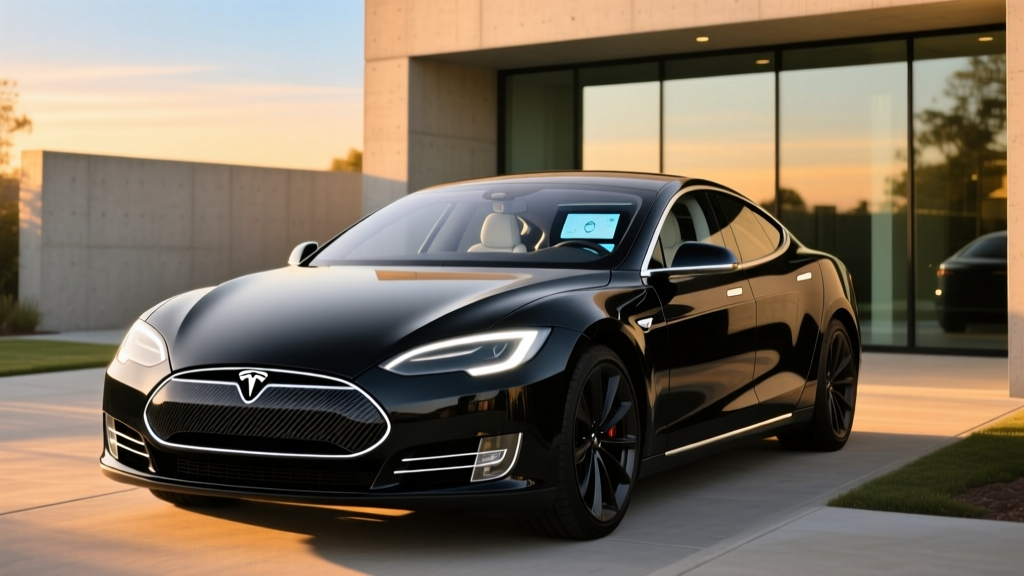
The Tesla Model S didn't just enter the market — it created the modern premium electric sedan category. If you've ever asked when did Tesla Model S come out, the answer is June 22, 2012, when the first deliveries rolled out of the Fremont, California factory. Over a dozen years later, the 2026 Model S remains Tesla's flagship sedan, competing against the Lucid Air, Mercedes EQS, and BMW i7 with a refreshed interior, improved powertrain efficiency, and the latest Autopilot hardware.
This review covers the 2026 Tesla Model S lineup — Long Range and Plaid — with exact EPA range figures, charging speeds, pricing, tax-credit eligibility, and real-world ownership insights that spec sheets leave out.
Tesla Model S Timeline: From 2012 Debut to 2026
Understanding the Model S's evolution helps explain what you're buying today. Here are the milestones that shaped the current generation:
- 2012: Model S launches with 60, 85, and Performance trims; up to 265 miles EPA range.
- 2015: Autopilot hardware introduced; Ludicrous Mode debuts.
- 2016: Facelift with new front fascia (removes black grille).
- 2019: Raven update adds adaptive air suspension and permanent-magnet front motor.
- 2021: Major "Palladium" refresh — new interior with 17-inch landscape screen, yoke steering option, tri-motor Plaid (1,020 hp), and structural battery pack.
- 2024–2025: HW4 Autopilot computer, improved battery chemistry, and NACS standardization.
- 2026: Continued refinement with updated efficiency mapping, new colorways, and FSD (Supervised) improvements.
The 2026 Model S is built on the Palladium platform introduced in 2021, meaning you're getting the most advanced version of Tesla's original sedan — not a carryover.
2026 Tesla Model S Specs at a Glance
| Spec | Long Range | Plaid |
|---|---|---|
| EPA Range | 402 miles | 359 miles |
| Battery (usable) | ~100 kWh (NMC) | ~100 kWh (NMC) |
| Drivetrain | Dual-Motor AWD | Tri-Motor AWD |
| Horsepower | 670 hp | 1,020 hp |
| 0–60 mph | 3.1 seconds | 1.99 seconds |
| Top Speed | 155 mph | 200 mph |
| Max DC Fast Charge | 250 kW | 250 kW |
| 10–80% DC Time | ~27 minutes | ~27 minutes |
| Level 2 Charge Rate | 11.5 kW (~44 mi/hr) | 11.5 kW (~44 mi/hr) |
| MPGe (combined) | 122 MPGe | 116 MPGe |
| Efficiency | 28 kWh/100 mi | 30 kWh/100 mi |
| Base MSRP | $79,990 | $94,990 |
| Battery Warranty | 8 yr / 150,000 mi | 8 yr / 150,000 mi |
Source: fueleconomy.gov, Tesla.com
Real-World Range: What to Actually Expect
Long Range: EPA 402 mi → Expect ~340–360 mi highway (70–80 mph), ~300–320 mi in freezing weather.
Plaid: EPA 359 mi → Expect ~300–320 mi highway, ~260–280 mi in freezing weather.
The Model S Long Range's 402-mile EPA rating is among the highest of any production EV sold in the U.S. But EPA testing uses a mix of city and highway driving at moderate speeds with climate control at 72°F. Real-world conditions tell a more nuanced story.
Highway driving at 75–80 mph typically yields 85–90% of the EPA rating in mild weather (60–80°F). That's roughly 340–360 miles on a full charge for the Long Range — still exceptional, but plan your road-trip charging stops around the 300-mile mark for a safety buffer.
Cold weather (below 32°F) hits all EVs. The Model S's battery thermal management system preconditioning helps, but expect a 15–25% range reduction. In sustained sub-freezing driving, 300–320 miles (Long Range) is realistic. The heat pump, standard since the Palladium refresh, significantly reduces cabin-heating energy draw compared to older resistive heaters.
City and suburban driving at lower speeds with frequent regenerative braking can actually exceed the EPA estimate, sometimes hitting 410+ miles in ideal conditions. The Model S's efficiency of 28 kWh/100 mi (Long Range) is competitive with the Lucid Air Grand Touring (29 kWh/100 mi) and far better than the Mercedes EQS 580 (33 kWh/100 mi).
Charging Speed: DC Fast, Level 2, and Supercharger Access
| Charging Level | Power / Rate | Miles Added per Hour | Notes |
|---|---|---|---|
| Level 1 (120V) | ~1.4 kW | ~5 mi/hr | Emergency/trickle only |
| Level 2 (240V, 48A) | 11.5 kW | ~44 mi/hr | Full charge in ~9 hours |
| DC Fast (V3 Supercharger) | Peak 250 kW | ~200 mi in 15 min | 10–80% in ~27 min |
| DC Fast (V4 Supercharger) | Peak 250 kW | ~200 mi in 15 min | CCS adapter not needed (NACS native) |
The Model S peaks at 250 kW on DC fast chargers — specifically Tesla's V3 and V4 Superchargers. That peak rate is sustained roughly from 10% to 30% State of Charge (SoC), after which the charge curve tapers progressively. From 50–80%, expect roughly 100–130 kW sustained. This taper is why the 10–80% time is ~27 minutes rather than the ~18 minutes you'd calculate from peak rate alone.
Preconditioning is critical. When you navigate to a Supercharger in the Tesla navigation system, the car automatically warms the battery to optimal charging temperature. Without preconditioning (e.g., arriving at a non-navigated charger in cold weather), peak rates may be limited to 100–150 kW until the battery warms up.
Home Level 2 charging at 11.5 kW (48 amps on a 60-amp circuit) adds roughly 44 miles of range per hour, fully replenishing the 100 kWh battery in about 9 hours. Most owners install a Tesla Wall Connector ($420 for the unit) on a NEMA 14-60 or hardwired 60-amp circuit. Expect $800–$2,000 for professional installation depending on panel proximity and local permit requirements.
The Model S uses the NACS (North American Charging Standard) connector natively — no adapter needed for Tesla Superchargers. For non-Tesla DC fast chargers using CCS, Tesla provides a CCS adapter ($250) or you can use the growing number of Superchargers opened to other brands.
Performance and Drivetrain
The dual-motor Long Range delivers 670 horsepower and a 3.1-second 0–60 mph time — quicker than most sports cars and all but irrelevant for daily driving. The tri-motor Plaid's 1,020 hp and 1.99-second 0–60 is supercar territory, though sustaining that performance requires the battery to be preconditioned and above 50% SoC.
Both trims feature adaptive air suspension with automatic ride-height adjustment. The suspension lowers at highway speeds for aerodynamic efficiency (improving range by 2–3%) and raises for speed bumps or steep driveways. Handling is composed for a 4,700+ lb sedan, though the Model S prioritizes grand-touring comfort over the sharper dynamics of a Porsche Taycan or BMW i7.
The tri-motor Plaid uses two rear motors and one front motor with torque vectoring, enabling precise power distribution during hard cornering. Track mode (Plaid only) allows custom front/rear torque bias, but this is a track-day feature, not a daily-driving tool.
Pricing, Trims, and Federal Tax Credit Eligibility
| Trim | Base MSRP | Destination | Typical As-Tested | §30D Credit Eligible? |
|---|---|---|---|---|
| Long Range | $79,990 | $1,390 | $83,000–$88,000 | No (MSRP exceeds $55K sedan cap) |
| Plaid | $94,990 | $$1,390 | $98,000–$105,000 | No (MSRP exceeds $55K sedan cap) |
Neither 2026 Model S trim qualifies for the federal §30D EV tax credit. Under current IRS rules, new clean vehicle credits are capped at $55,000 MSRP for sedans (and $80,000 for SUVs/trucks/vans). The Model S, classified as a sedan, far exceeds this threshold regardless of trim or options.
Additionally, §30D has buyer income caps ($150,000 single / $300,000 joint modified AGI) and critical-mineral/battery-component sourcing requirements that change annually. Even if the MSRP cap didn't disqualify the Model S, these sourcing rules would need independent verification.
State incentives vary. Some states offer rebates or HOV-lane access that partially offset the lack of federal credit. Check your state's energy office or DMV for current programs — these change frequently and are outside the scope of this review.
Interior, Cargo, and Technology
The Palladium-generation interior (2021–present) is a significant step up from the pre-2021 Model S, with ventilated front seats, a rear-seat touchscreen, premium materials, and a 22-speaker audio system. The 17-inch landscape touchscreen handles nearly all vehicle controls, climate, media, and navigation.
Key dimensions:
- Cargo (rear trunk): 28 cu ft (with rear seats up)
- Frunk (front trunk): 5.3 cu ft
- Total cargo: ~33.3 cu ft — competitive with midsize luxury sedans but less than hatchback rivals like the Lucid Air
- Rear legroom: 40.9 inches
- Front legroom: 42.7 inches
- Seating: 5 passengers standard
Standout tech:
- Yoke or round steering wheel (buyer's choice at order)
- Rear-seat 8-inch touchscreen for climate and media
- Wireless phone charging (two pads)
- Gaming-capable infotainment (AMD Ryzen processor)
- Over-the-air updates (continuous feature additions)
- Sentry Mode (360° camera-based security)
Notable drawbacks:
- No physical stalks for turn signals or wipers on yoke-equipped models (steering-wheel buttons instead — polarizing)
- Rear visibility is limited by the sloping roofline
- No Apple CarPlay or Android Auto (Tesla-native system only)
- Panel-gap consistency has improved but still trails German competitors
Autopilot, FSD, and Driver Assistance
Autopilot and Full Self-Driving (Supervised) are SAE Level 2 driver-assistance systems. The driver must remain fully engaged, hands on the wheel (or torque applied with yoke), and eyes on the road at all times. These systems do NOT make the Model S a self-driving vehicle.
The 2026 Model S ships with HW4 (Hardware 4), Tesla's latest Autopilot computer with higher-resolution cameras and improved neural-network processing. Standard Autopilot includes Traffic-Aware Cruise Control and Autosteer (lane-centering on marked highways). The optional FSD (Supervised) package ($8,000 or $99/month) adds automatic lane changes, Navigate on Autopilot (highway on/off-ramp handling), Autopark, and Smart Summon.
In practice, FSD (Supervised) handles most highway and suburban driving competently but requires regular driver intervention in construction zones, unprotected left turns, and complex intersections. It's a convenience tool, not a replacement for attention. Tesla's safety data shows engagement with FSD reduces certain collision types, but NHTSA continues to investigate Autopilot-related incidents, and the regulatory landscape remains active.
Warranty and Long-Term Ownership
| Component | Coverage |
|---|---|
| Basic Vehicle | 4 years / 50,000 miles |
| Battery & Drive Unit | 8 years / 150,000 miles |
| Battery Retention Guarantee | Minimum 70% capacity during warranty period |
The 8-year/150,000-mile battery and drive unit warranty is generous and covers the Model S well beyond typical ownership periods. The 70% capacity retention threshold means Tesla will repair or replace the battery if it degrades below 70% of original capacity within the warranty window. Real-world data from Tesla's fleet suggests the 100 kWh NMC pack retains roughly 85–90% capacity at 100,000 miles, with degradation slowing significantly after the initial 10–15% loss in the first 20,000 miles.
Out-of-warranty battery replacement currently costs approximately $13,000–$16,000 for the Model S pack (parts and labor). This is a worst-case scenario; most owners will never face this cost.
Who Should Buy the 2026 Tesla Model S?
Choose the Model S Long Range if:
- You want 350+ real-world highway miles with Supercharger access for cross-country road trips
- You value a proven EV platform with over a decade of refinement
- You commute long distances and want minimal charging stops
- You want flagship sedan luxury without the Lucid Air's premium pricing
Choose the Model S Plaid if:
- You want supercar-rivaling acceleration in a daily-drivable four-door
- Track capability matters to you (Torque Vectoring, Track Mode)
- Budget allows $95K+ and you don't need maximum range
Look elsewhere if:
- You need federal tax credit eligibility (consider Model 3, Model Y, or Ioniq 5)
- You prefer physical controls, Apple CarPlay, or a traditional luxury brand experience
- You need SUV cargo space or towing capacity (Model X or Rivian R1S)
Model S vs. Key Competitors
| Spec | Tesla Model S LR | Lucid Air Pure | Mercedes EQS 450+ | BMW i7 xDrive60 |
|---|---|---|---|---|
| EPA Range | 402 mi | 419 mi | 390 mi | 318 mi |
| Base MSRP | $79,990 | $69,900 | $105,550 | $120,295 |
| 0–60 mph | 3.1s | 5.2s | 5.9s | 4.5s |
| Max DC Charge | 250 kW | 200 kW | 200 kW | 195 kW |
| Charging Network | Supercharger (native) | NACS (adapter) | CCS | CCS |
| §30D Credit | No | No | No | No |
The Model S occupies a unique position: it undercuts German luxury sedans on price while matching or exceeding their range and charging speed. The Lucid Air Pure offers more range at a lower price but lacks the Supercharger network advantage and has fewer service centers. The EQS and i7 deliver superior interior refinement and dealership support but at significantly higher cost and with slower charging.
Frequently Asked Questions
When did the Tesla Model S first come out?
The Tesla Model S began customer deliveries on June 22, 2012, from Tesla's Fremont, California factory. It was Tesla's second production vehicle (after the Roadster) and the first mass-market vehicle built on a dedicated EV platform.
What is the real-world range of the 2026 Model S?
The Long Range achieves ~340–360 miles at highway speeds in mild weather, dropping to ~300–320 miles in freezing temperatures. The Plaid delivers ~300–320 miles highway, ~260–280 in cold weather. City driving can exceed EPA estimates due to regenerative braking.
How fast does the Model S charge at home and on the road?
On a Level 2 home charger (11.5 kW), the Model S adds ~44 miles per hour, fully charging in ~9 hours. On a V3/V4 Supercharger, it peaks at 250 kW and charges 10–80% in approximately 27 minutes, though the rate tapers above 50% SoC.
Does the 2026 Model S qualify for the federal EV tax credit?
No. Under IRS §30D rules, new sedans must have an MSRP at or below $55,000 to qualify. The Model S starts at $79,990, well above the cap. No trim or configuration is eligible regardless of buyer income or battery sourcing.
Is the Model S worth buying over the Lucid Air or Mercedes EQS?
The Model S Long Range offers the best combination of range, charging speed, performance, and price in the premium EV sedan segment, plus exclusive Supercharger access. Choose the Lucid Air for maximum range at a lower price, the EQS or i7 for traditional luxury dealership experience, or the Model S if you value the Supercharger network and Tesla's software ecosystem.
What battery chemistry does the Model S use?
The 2026 Model S uses an NMC (nickel manganese cobalt) lithium-ion battery pack with approximately 100 kWh of usable capacity. NMC offers higher energy density than LFP (lithium iron phosphate), which is why it's used in Tesla's long-range and performance vehicles. Tesla recommends charging NMC packs to 80% for daily use and 100% only for trips — unlike LFP packs, which tolerate regular 100% charges.