There Is No Flying Tesla Car — But the Model S Still Commands Attention
If you've searched for a "flying Tesla car," you're not alone — the phrase pulls steady curiosity online. But let's settle this immediately: Tesla does not manufacture a flying car, and no production Tesla vehicle has airborne capability. Elon Musk's aerospace ventures (SpaceX) and occasional jokes about a "Roadster with thrusters" have fueled the myth, but as of 2026, every Tesla is firmly grounded.
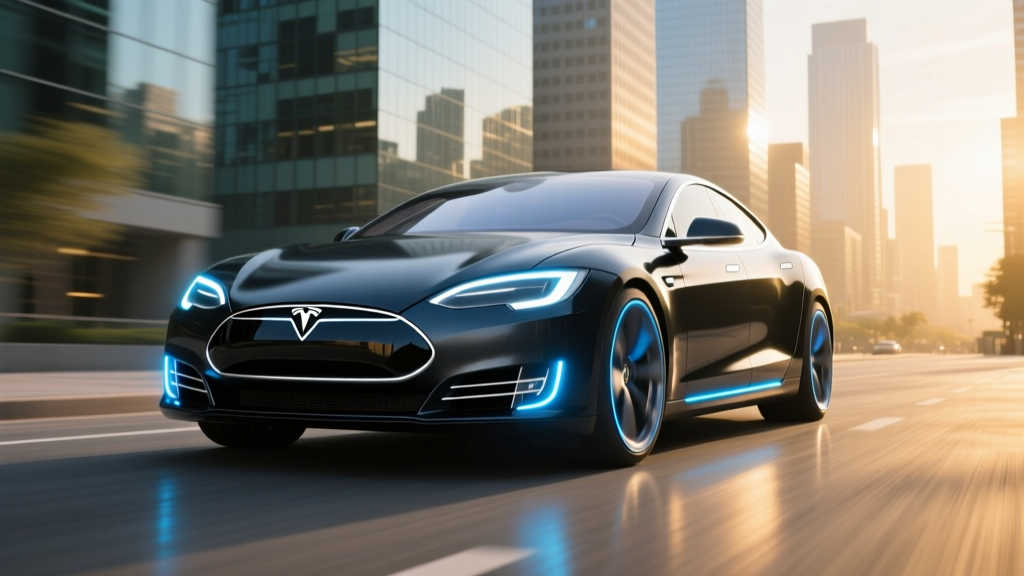
What Tesla does make is the Model S — the sedan that launched the modern EV movement and continues to set benchmarks for range, performance, and charging infrastructure. If you landed here hunting for a flying Tesla, you'll leave with something more useful: a data-driven, no-fluff review of the 2026 Model S with every number a serious buyer needs.
2026 Tesla Model S: Core Specifications at a Glance
| Spec | Model S Long Range | Model S Plaid |
|---|---|---|
| EPA Range | 402 miles | 359 miles |
| Battery (usable) | ~95 kWh (NMC) | ~95 kWh (NMC) |
| Drivetrain | Dual-Motor AWD | Tri-Motor AWD |
| Horsepower | 670 hp | 1,020 hp |
| 0–60 mph | 3.1 seconds | 1.99 seconds |
| Top Speed | 155 mph | 200 mph |
| Max DC Fast Charge | 250 kW | 250 kW |
| 10–80% DC Charge | ~30 min | ~30 min |
| Level 2 Home Charge | 11.5 kW (~34 mi/hr) | 11.5 kW (~34 mi/hr) |
| MPGe (combined) | 120 MPGe | 116 MPGe |
| Base MSRP | $74,990 | $89,990 |
| Battery Warranty | 8 yr / 150,000 mi | 8 yr / 150,000 mi |
Source: fueleconomy.gov and Tesla Model S Design Studio. Specs reflect the 2026 model year and are subject to change.
Range: EPA Sticker vs. Real-World Expectations
EPA estimate: 402 miles (Long Range) / 359 miles (Plaid)
Real-world highway (70 mph, mild weather): ~330–360 miles (Long Range)
Real-world winter (30°F, mixed driving): ~280–310 miles (Long Range)
Plaid under aggressive driving: expect 250–290 miles
The Model S Long Range's 402-mile EPA figure remains one of the highest of any production EV sold in the U.S. But EPA testing cycles include generous low-speed city segments that flatter large-battery EVs. On sustained highway runs at 70+ mph, energy consumption climbs significantly — the sedan's aerodynamic drag coefficient of 0.208 helps, but physics still wins.
Cold weather compounds the loss. The Model S uses a heat pump (standard since the 2021 refresh), which mitigates cabin-heating energy draw compared to resistive heaters. However, lithium-ion cells inherently lose efficiency below freezing, and battery preconditioning only partially offsets this. Plan for a 20–30% range reduction in sustained sub-freezing conditions.
For the Plaid trim, the tri-motor setup draws more energy under hard acceleration, and the performance-oriented tire compound adds rolling resistance. Treat 359 EPA miles as an optimistic ceiling; 280–320 miles is more realistic for mixed driving.
Charging: DC Fast-Charge Speed and Home Setup
| Charging Level | Power / Voltage | Miles Added per Hour | Notes |
|---|---|---|---|
| Level 1 (120V outlet) | ~1.4 kW | ~3–4 mi/hr | Emergency/trickle only |
| Level 2 (240V home) | 11.5 kW (48A) | ~34 mi/hr | Full charge in ~9 hours |
| DC Fast Charge (V3 Supercharger) | Up to 250 kW | Up to 200 mi in 15 min | Peak rate, tapers above 60% |
| DC Fast Charge (CCS adapter) | Up to 250 kW | Similar to V3 Supercharger | Requires Tesla CCS adapter |
The Model S charges on Tesla's North American Charging Standard (NACS) connector natively. At a V3 Supercharger (250 kW peak), Tesla claims up to 200 miles of range in 15 minutes under ideal conditions — meaning a warm, preconditioned battery at a low state of charge.
The charging-curve reality: Peak 250 kW is only sustained briefly, typically between 10–30% state of charge. Above 50%, the rate tapers progressively. By 80%, you're pulling roughly 60–80 kW. A 10–80% session takes approximately 28–32 minutes at a V3 Supercharger. This is slower than Hyundai/Kia's 800V architecture (which sustains higher rates longer), a genuine competitive disadvantage for Tesla in 2026.
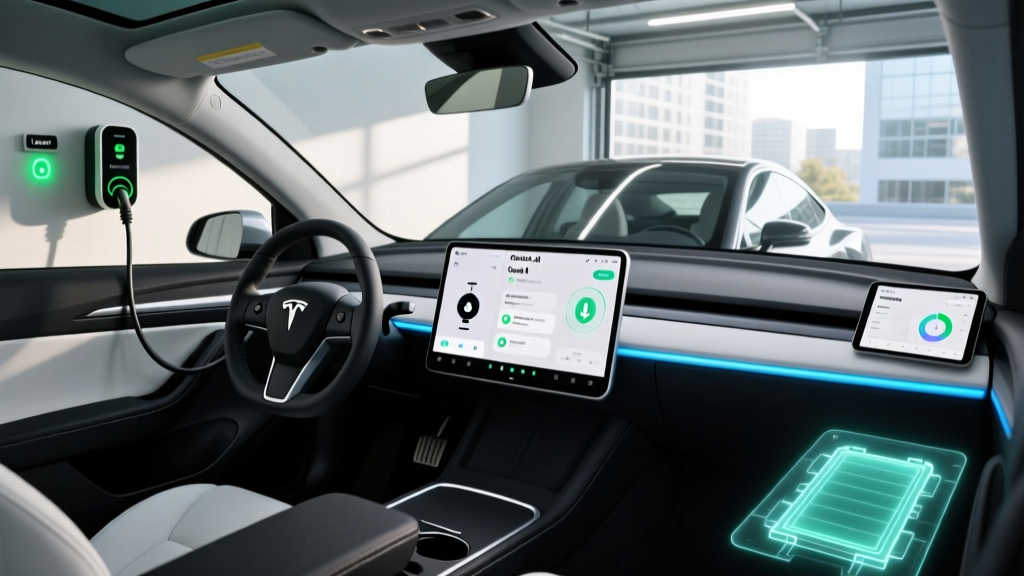
For home charging, the onboard charger accepts up to 11.5 kW on a 60-amp circuit (48A continuous). A Tesla Wall Connector installed on a dedicated 60A breaker delivers roughly 34 miles of range per hour — sufficient to fully replenish the 95 kWh battery overnight.
Performance, Drivetrain, and the Plaid Factor
The Model S Long Range pairs dual permanent-magnet motors (one front, one rear) for all-wheel drive and 670 combined horsepower. The 3.1-second 0–60 mph time is quick by any measure, but it's the Plaid that draws headlines.
The Plaid's tri-motor setup — one front, two rear — generates 1,020 hp and achieves a verified 1.99-second 0–60 time on a prepared surface with rollout subtracted. This makes it one of the quickest production cars ever built, regardless of powertrain. The carbon-sleeved rotors in the rear motors allow sustained high-RPM operation without thermal derating, a genuine engineering achievement.
However, the Plaid's performance comes with trade-offs: lower EPA range (359 vs. 402 miles), stiffer ride quality from the adaptive air suspension's sport calibrations, and higher tire wear from the aggressive compound and instant torque delivery.
Pricing, Trims, and Federal Tax Credit Eligibility
| Trim | Base MSRP | As-Tested (typical options) | §30D Federal Credit Eligible? |
|---|---|---|---|
| Model S Long Range | $74,990 | $78,000–$82,000 | No — exceeds $55,000 sedan MSRP cap |
| Model S Plaid | $89,990 | $93,000–$98,000 | No — exceeds $55,000 sedan MSRP cap |
Here's the hard truth on the federal EV tax credit (IRS §30D): the Model S does not qualify. Under current IRS rules, new electric sedans must have an MSRP at or below $55,000 to be eligible for the up-to-$7,500 credit. Both Model S trims clear that cap by a wide margin. Additionally, the credit phases out for buyers with modified adjusted gross income above $150,000 (single) or $300,000 (joint).
For buyers who still want a Tesla and need the credit, the Model 3 (starting ~$38,990) and certain Model Y configurations (SUV classification, $80,000 MSRP cap) remain eligible — subject to battery sourcing and critical mineral requirements that shift annually. Always verify current-year rules at IRS.gov before purchasing.
Interior Space, Tech, and Daily Livability
The Model S cabin offers 28 cubic feet of trunk space (with the rear seats up) plus a 5.3-cubic-foot frunk — generous for a sport sedan. Rear legroom measures approximately 35.4 inches, adequate for adults but tighter than a Mercedes EQS or BMW i7.
The 17-inch center touchscreen (landscape orientation, 2200 x 1300 resolution) handles nearly all vehicle controls, including climate, glovebox, and mirror adjustment. A 12.3-inch digital instrument cluster sits behind the yoke-style steering wheel (a round wheel is now a no-cost option). Rear passengers get their own 8-inch screen for climate and entertainment.
Autopilot comes standard and includes adaptive cruise control, lane-keeping, and automatic emergency braking. Full Self-Driving (Supervised) is a $8,000 add-on (or $99/month subscription) that enables city-street navigation, traffic-light recognition, and lane changes. Critical clarification: FSD Supervised is an SAE Level 2 driver-assistance system. You must keep your hands on the wheel and eyes on the road at all times. Tesla is not selling a self-driving car.
Tesla Autopilot and FSD (Supervised) are SAE Level 2 systems — the driver remains fully responsible for vehicle operation. Level 4 (true driverless operation in defined areas) is currently only available through commercial robotaxi services like Waymo, not through any consumer vehicle purchase.
Pros, Cons, and Who Should Buy the Model S
✅ Pros
- Best-in-class EPA range (402 mi Long Range)
- Access to Tesla Supercharger network (17,000+ U.S. stalls)
- Plaid performance is supercar-level at sedan pricing
- Over-the-air updates continuously add features
- Strong resale value relative to luxury EV competitors
- Heat pump standard for cold-weather efficiency
❌ Cons
- No federal tax credit (MSRP exceeds $55K sedan cap)
- 250 kW peak DC charge rate trails 800V competitors
- Build quality and panel gaps still draw criticism
- Yoke steering polarizing; round wheel availability varies
- Insurance premiums run 20–40% above segment average
- Rear seat comfort below Mercedes/BMW luxury standards
Who this EV suits best: The Model S Long Range is ideal for tech-forward professionals and road-trip enthusiasts who prioritize range and Supercharger access above traditional luxury refinement. The Plaid targets performance buyers who want hypercar acceleration with four doors and a frunk. Neither trim is ideal for buyers who need maximum rear-seat comfort, want the federal tax credit, or prefer the ride quality and material quality of German luxury sedans.
Frequently Asked Questions
Is Tesla making a flying car?
No. Tesla has never announced, prototyped, or patented a flying car. The concept circulates as an internet meme, partly fueled by Elon Musk's involvement with SpaceX. Every Tesla vehicle — Model S, 3, X, Y, and Cybertruck — is a ground-based electric vehicle.
What is the real-world range of the 2026 Tesla Model S?
The EPA rates the Long Range at 402 miles and the Plaid at 359 miles. Real-world highway driving at 70 mph typically yields 330–360 miles (Long Range). In freezing weather, expect 280–310 miles. These are estimates — your results depend on speed, terrain, temperature, and driving style.
How fast does the Model S charge?
On a V3 Supercharger (250 kW peak), the Model S adds up to 200 miles in 15 minutes under ideal conditions. A 10–80% session takes roughly 28–32 minutes. At home on a Level 2 Wall Connector (11.5 kW), expect about 34 miles of range per hour, or a full overnight charge.
Does the Tesla Model S qualify for the federal EV tax credit?
No. Under IRS §30D rules, new sedans must have an MSRP at or below $55,000 to qualify. The Model S starts at $74,990. Buyers seeking a Tesla with credit eligibility should look at the Model 3 or select Model Y configurations, subject to income and battery-sourcing requirements.
How does the Model S compare to the Lucid Air or Mercedes EQS?
The Lucid Air Grand Touring offers 516 miles of EPA range and faster 300+ kW charging, but at a higher starting price (~$110,000) and with a smaller service network. The Mercedes EQS 450+ provides superior interior luxury and ride comfort at ~350 miles of range but lacks Supercharger access (though it now supports NACS via adapter). The Model S wins on charging infrastructure, performance-per-dollar (Plaid), and software. It loses on interior material quality and DC charge rate.
What is the Model S battery warranty?
Tesla covers the Model S battery and drive unit for 8 years or 150,000 miles, whichever comes first, with a minimum 70% capacity retention guarantee. This is competitive with the luxury EV segment, though some competitors (Hyundai/Genesis) offer 10-year battery coverage.
Additional sources: NHTSA Model S Safety Ratings