The 2013 Tesla Model S Fires That Put EV Safety Under the Microscope
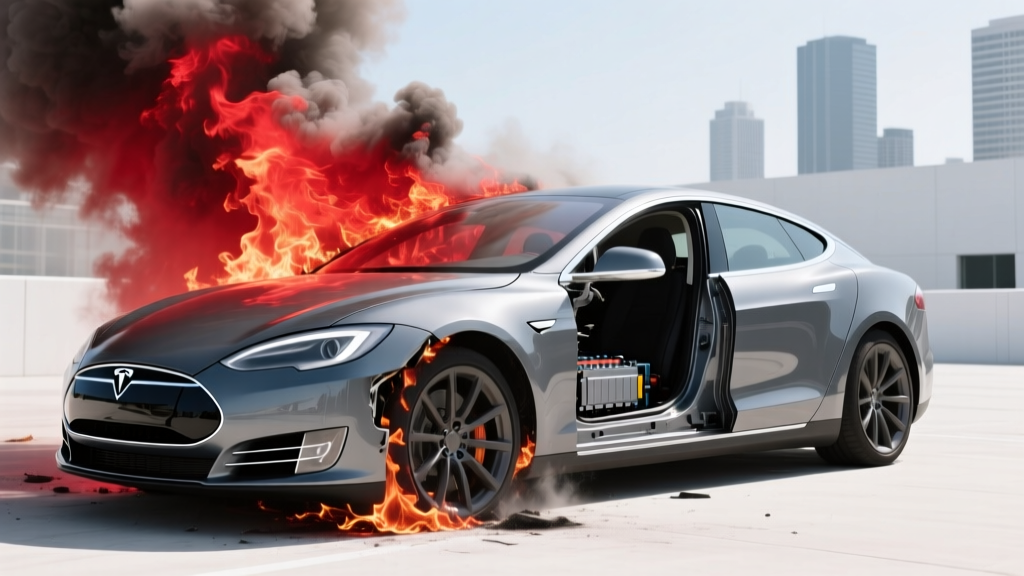
In late 2013, a string of high-profile Tesla Model S battery fires — spanning Washington state, Mexico, and Tennessee — became the first major safety controversy in the modern EV era. The incidents prompted the National Highway Traffic Safety Administration (NHTSA) to open a preliminary evaluation, rattled Tesla's stock, and forced the company to engineer new underbody protection within weeks. More than a decade later, those events remain a reference point for anyone researching EV battery safety.
This article unpacks what actually happened in each 2013 fire, how NHTSA responded, what engineering changes Tesla made, and how the current-generation Model S stacks up on safety, range, charging, and value in 2026. If you're cross-shopping a luxury EV sedan and the keyword "Tesla Model S fires Washington Mexico Tennessee 2013 NHTSA investigation" brought you here, you'll leave with both the historical record and the hard specs you need to decide.
Timeline: The Three Fires That Triggered the Investigation
All three incidents involved the original 2012–2013 Model S with the 85 kWh battery pack and the early flat-floor skateboard architecture. None resulted in occupant fatalities, and in each case the vehicle's warning systems gave the driver time to exit. But the visual spectacle of lithium-ion cells venting and burning drew intense media coverage.
October 1, 2013 — Kent, Washington
A Model S struck a large curved piece of metal — later identified as a "three-ball tow hitch" — that had fallen from a semi-trailer on Highway 167 near Kent, Washington. The object pierced the 0.25-inch aluminum armor plate beneath the battery pack, penetrated a single module of the 85 kWh NMC (nickel-manganese-cobalt) battery, and initiated a thermal event. The driver received a dashboard warning and pulled over; the car burned after he exited. NHTSA opened its preliminary evaluation (PE13-022) on October 24, 2013, citing this and the subsequent incidents.
October 18, 2013 — Mérida, Mexico
A second Model S caught fire after the driver reportedly hit a large metallic object on a highway near Mérida, Mexico. Photos circulated widely on social media. Tesla later stated the fire originated in the front trunk (frunk) area, not the battery pack, and was likely caused by an unrelated 12-volt electrical short or a combustible item stored in the frunk. The NHTSA investigation focused primarily on the U.S. incidents, but the Mexico event amplified public concern.
November 6, 2013 — Smyrna, Tennessee
A Model S struck a trailer hitch that had fallen off a truck near Smyrna, Tennessee. The hitch penetrated the underbody, damaging battery modules and starting a fire. Again, the driver was alerted and exited safely. This third roadway-debris fire in roughly five weeks cemented the pattern NHTSA was evaluating.
What Tesla Changed: Titanium Shields and Software
In March 2014, Tesla announced a three-layer underbody protection system for all new Model S vehicles and a free retrofit for existing owners:
- Layer 1 — Rounded hollow shaft: Deflects debris upward and away from the pack.
- Layer 2 — Titanium plate: Stops smaller, high-speed fragments.
- Layer 3 — Shallow-angle aluminum shield: Absorbs remaining energy and ramps the car over obstacles.
Tesla also released an over-the-air software update that raised the car's ride height automatically at highway speeds (above 60 mph) to increase ground clearance. These changes satisfied NHTSA, and the preliminary evaluation was closed without a formal defect finding.
2026 Tesla Model S: Full Spec Breakdown
The current Model S shares little beyond the nameplate with the 2013 car that burned on Highway 167. The platform was comprehensively refreshed for 2021 ("Palladium" architecture) and has received incremental updates through the 2026 model year. Here's what you're looking at today.
| Attribute | Model S Long Range (Dual Motor) | Model S Plaid (Tri-Motor) |
|---|---|---|
| Base MSRP | $79,990 | $94,990 |
| EPA Range | 402 mi | 359 mi |
| Battery (usable) | ~100 kWh NMC | ~100 kWh NMC |
| Drivetrain | Dual-motor AWD | Tri-motor AWD |
| Horsepower | 670 hp | 1,020 hp |
| 0–60 mph | 3.1 sec | 1.99 sec |
| Top Speed | 155 mph | 200 mph |
| Peak DC Fast Charge | 250 kW (V3 Supercharger) | 250 kW (V3 Supercharger) |
| 10–80% DC Time | ~30 min | ~30 min |
| Level 2 Home Charge | 11.5 kW (~44 mi/hr) | 11.5 kW (~44 mi/hr) |
| MPGe (combined) | 120 MPGe | 116 MPGe |
| Efficiency | 28 kWh/100 mi | 29 kWh/100 mi |
| Cargo (rear + frunk) | 28 cu ft + 3.1 cu ft | 28 cu ft + 3.1 cu ft |
| Rear Legroom | 35.4 in | 35.4 in |
| Battery/Drive Unit Warranty | 8 yr / 150,000 mi | 8 yr / 150,000 mi |
Source: fueleconomy.gov and Tesla's 2026 model-year specifications. Prices exclude destination.
Real-World Range: What the EPA Number Doesn't Tell You
EPA sticker: 402 miles
70-mph highway loop (70°F): expect ~340–360 miles
Cold weather (30°F, highway): expect ~280–310 miles (30–35% reduction due to cabin heating and increased battery resistance)
Plaid, aggressive driving: expect ~260–290 miles — tri-motor drag and heavier right foot eat range quickly
The Model S Long Range remains one of the longest-range EVs sold in the U.S., but 402 miles is an EPA blended cycle that includes low-speed city driving where regenerative braking recaptures energy. At a sustained 75–80 mph on an interstate, aerodynamic drag dominates, and the car's 0.208 Cd coefficient — impressive for a sedan — can't fully offset the physics of speed. In sub-freezing temperatures, the heat pump helps, but cabin demand and reduced lithium-ion mobility still cut usable range by roughly a third. Plan road trips around 280–300 miles between charges in winter to maintain a safety buffer.
Charging Speed: DC Fast, Level 2, and the 250 kW Ceiling
| Level | Power / Voltage | Rate (miles added per hour) | Typical Use |
|---|---|---|---|
| Level 1 (120V) | ~1.4 kW | ~4–5 mi/hr | Emergency / trickle |
| Level 2 (240V, 48A) | 11.5 kW | ~44 mi/hr | Home overnight (Wall Connector) |
| DC Fast (V3 Supercharger) | 250 kW peak | ~200 mi in 15 min | Road trips |
The Model S charges on Tesla's proprietary NACS connector, which became the North American standard adopted by Ford, GM, Rivian, and others starting in 2024–2025. On a V3 Supercharger (250 kW peak), the pack ramps quickly to about 150 kW, sustains that rate through roughly 50% state of charge, then tapers. The 10–80% session takes approximately 30 minutes — competitive but not class-leading; Hyundai/Kia's 800-volt E-GMP vehicles can do 10–80% in about 18 minutes on a 350 kW charger.
At home, the Tesla Wall Connector on a 60-amp circuit delivers 11.5 kW, adding roughly 44 miles of range per hour. A full 0–100% charge takes about 10 hours — fine for overnight. If your home has a 200-amp panel with spare capacity, installation typically runs $800–$2,000 including the $475 Wall Connector and electrician labor; a panel upgrade to 200A can add $1,500–$3,500.
Federal Tax Credit: Does the 2026 Model S Qualify?
This is where luxury EV buyers need to pay close attention. Under current IRS §30D rules, the Model S faces multiple disqualifying hurdles:
- MSRP cap: §30D limits the credit to sedans priced at or below $55,000. The Model S starts at $79,990 — well above the cap.
- Buyer income cap: Adjusted gross income must not exceed $150,000 (single), $225,000 (head of household), or $300,000 (joint). Many Model S buyers exceed these thresholds.
- Battery sourcing: Even if the price and income qualified, the battery's critical-mineral and component sourcing must meet escalating annual percentages set by the Inflation Reduction Act. Tesla's supply chain has diversified, but the MSRP cap alone eliminates eligibility.
Bottom line: The 2026 Model S does not qualify for the $7,500 federal EV tax credit. Always verify current rules at IRS.gov before purchasing, as legislation can change.
Safety Then and Now: From 2013 Fires to 5-Star Ratings
The 2013 fires were caused by high-energy roadway debris impacts — an edge case for any vehicle, not just EVs. Today's Model S benefits from:
- The titanium/aluminum underbody shield system introduced in 2014 and refined since.
- Cell-level thermal barriers and improved pack venting that limit propagation if a single cell fails.
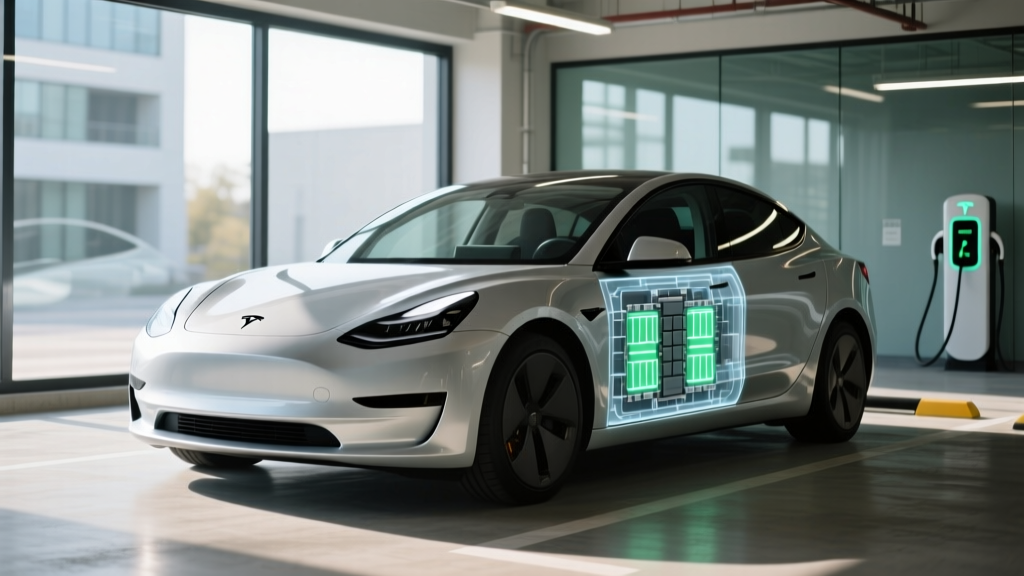
- A structural battery pack (on newer architectures) that contributes to torsional rigidity and side-impact protection.
The current Model S earned a 5-star overall rating from NHTSA and has been an IIHS Top Safety Pick+ in prior test cycles. Tesla's Autopilot driver-assist system is SAE Level 2 — meaning the driver must remain fully engaged and supervise the system at all times. Full Self-Driving (Supervised) adds automated lane changes and city-street navigation but remains Level 2; it is not autonomous driving.
Pros, Cons, and Who the Model S Is For
- 402-mile EPA range (Long Range) — among the highest of any EV sold
- Access to Tesla's Supercharger network (20,000+ U.S. stalls)
- Tri-motor Plaid performance: 1,020 hp, 1.99-sec 0–60
- Over-the-air updates continuously add features
- Strong resale value relative to luxury EV peers
- Starts at $79,990 — no federal tax credit
- 250 kW peak DC charge is outpaced by 800V competitors
- Yoke steering controversial; traditional wheel optional
- Rear-seat space trails Mercedes EQS and BMW i7
- Panel gaps and interior fit/finish inconsistent vs. German rivals
Who Should Buy the Model S in 2026?
Road-trip commuters and tech-forward buyers who prioritize range, Supercharger access, and over-the-air feature evolution will find the Model S Long Range hard to beat. Performance seekers who want supercar acceleration with four doors will look to the Plaid. Luxury traditionalists who value cabin quietness, massaging seats, and rear-seat legroom should cross-shop the Mercedes EQS, BMW i7, and Lucid Air before committing.
Frequently Asked Questions
What caused the 2013 Tesla Model S fires in Washington, Mexico, and Tennessee?
The Washington and Tennessee fires were caused by large metal roadway debris (a tow hitch and a trailer hitch, respectively) striking the underside of the car at highway speed and penetrating the battery pack's thin aluminum shield. The Mexico fire was a separate front-trunk electrical event. NHTSA's investigation (PE13-022) concluded that Tesla's titanium underbody retrofit addressed the debris-penetration risk, and the evaluation was closed without a formal recall.
Is the current Tesla Model S at risk of battery fires?
All lithium-ion battery packs carry a non-zero fire risk, but the current Model S has multi-layer underbody armor, cell-level thermal propagation barriers, and a decade of pack-engineering refinement since 2013. EV battery fires remain statistically rare compared to internal-combustion vehicle fires per 100,000 vehicles on the road, according to data cited by NHTSA and the National Fire Protection Association.
How fast does the 2026 Model S charge on a road trip?
On a V3 Supercharger, the Model S peaks at 250 kW and adds roughly 200 miles in 15 minutes. A 10–80% session takes about 30 minutes. Plan for a 20–30 minute stop every 250–300 miles on a highway trip.
Does the Model S qualify for any EV tax credit in 2026?
No. The federal §30D credit caps eligible sedans at $55,000 MSRP; the Model S starts at $79,990. Some states offer separate incentives (e.g., California's CVRP or Colorado's state credit) that may apply — check your state's energy office for current programs.
How does the Model S compare to the Lucid Air and Mercedes EQS?
The Lucid Air Grand Touring offers 516 miles of EPA range and a more luxurious interior but starts above $120,000 and lacks Supercharger access. The Mercedes EQS 450+ delivers 390 miles of range and a quieter, more refined cabin at a similar price but charges slower (200 kW peak) and has a less intuitive infotainment system. The Model S wins on Supercharger convenience, OTA updates, and raw Plaid performance; it trails on interior luxury and rear-seat comfort.