The Tesla Model S in 2026: A European Perspective
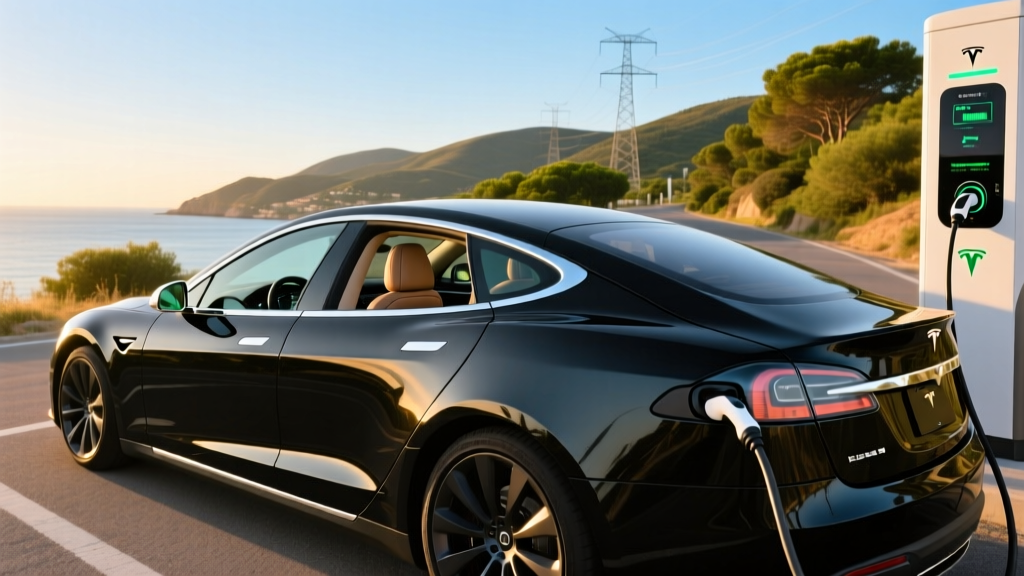
The Tesla Model S has been a fixture on European roads since 2013, but the current-generation version — refreshed with the Plaid powertrain and a minimalist interior — is a fundamentally different car from what early adopters remember. For European buyers evaluating the Model S Long Range and Model S Plaid in 2026, the calculus involves WLTP range figures that differ from U.S. EPA estimates, access to Tesla's vast Supercharger network across the continent, and stiff competition from homegrown rivals like the Porsche Taycan, BMW i7, and Mercedes-Benz EQS.
This review breaks down the exact specs that matter — range, charging speed, efficiency, and total cost — with real-world adjustments for European driving conditions, from Scandinavian winters to Mediterranean motorways.
| Spec | Model S Long Range | Model S Plaid |
|---|---|---|
| WLTP Range | 634 km (394 mi) | 600 km (373 mi) |
| EPA-Equivalent Range | ~405 mi (652 km) | ~396 mi (637 km) |
| Battery (usable) | ~95 kWh (NMC) | ~95 kWh (NMC) |
| Drivetrain | Dual-Motor AWD | Tri-Motor AWD |
| Power | 670 hp | 1,020 hp |
| 0–100 km/h (0–60 mph) | 3.2 s (3.1 s) | 2.1 s (2.0 s) |
| Top Speed | 250 km/h (155 mph) | 322 km/h (200 mph) |
| Max DC Charge Rate | 250 kW | 250 kW |
| 10–80% DC Charge Time | ~27 min | ~27 min |
| Level 2 AC Charge Rate | 16.5 kW (11 kW typical EU) | 16.5 kW (11 kW typical EU) |
| Efficiency (WLTP) | ~166 Wh/km | ~175 Wh/km |
| Cargo Volume | 793 L rear + 117 L frunk | 793 L rear + 117 L frunk |
| Base MSRP (Europe, approx.) | €94,990 | €114,990 |
| Warranty (Battery) | 8 yr / 240,000 km | 8 yr / 240,000 km |
Real-World Range: WLTP Sticker vs. European Roads
WLTP Sticker: 634 km (394 mi) for Long Range; 600 km (373 mi) for Plaid.
Real-World Expectation: Plan for 480–540 km (300–335 mi) on mixed European motorway driving at 120–130 km/h. In cold Nordic winters (below 0°C / 32°F), expect a 20–30% reduction — roughly 380–440 km (235–275 mi) effective range. City driving with regen braking can push closer to or slightly above the WLTP figure.
The WLTP test cycle tends to be more generous than the U.S. EPA standard, which rates the Long Range at roughly 405 miles and the Plaid at 396 miles. European drivers should use the EPA figure as a more realistic baseline for mixed driving, then apply environmental adjustments.
On a Berlin-to-Munich run (roughly 585 km / 363 mi) at sustained Autobahn speeds of 130 km/h with climate control active, the Long Range will likely require one Supercharger stop — typically 15–20 minutes at a V3 stall to add sufficient charge. This is where the Model S's efficiency advantage over heavier competitors like the EQS or i7 becomes tangible: fewer stops, shorter stops.
The heat pump, standard on all current Model S vehicles, recovers waste heat from the powertrain to warm the cabin, reducing winter range loss compared to older resistive-heater EVs. Preconditioning the battery while plugged in (or navigating to a Supercharger) further mitigates cold-weather impact by warming the cells for optimal discharge efficiency.
Charging Speed: Supercharger Network and Home Setup
| Charging Level | Power (kW) | Speed (km/hr added) | Notes |
|---|---|---|---|
| Level 1 (230V domestic, 10A) | ~2.3 kW | ~14 km/hr | Emergency/top-up only |
| Level 2 (Wall Connector, 3-phase 16A) | 11 kW | ~66 km/hr | Standard EU home install |
| Level 2 (Wall Connector, 3-phase 24A) | 16.5 kW | ~99 km/hr | Requires adequate home supply |
| DC Fast (V3 Supercharger) | Up to 250 kW peak | ~1,600 km/hr at peak | 10–80% in ~27 min |
| DC Fast (CCS adapter, third-party) | Up to 250 kW peak | Varies by station | Ionity, Fastned, EnBW, etc. |
kW vs. kWh reminder: kW (kilowatts) measures charging power — how fast energy flows into the battery. kWh (kilowatt-hours) measures total energy capacity — the size of the battery. The Model S has roughly 95 kWh of usable battery capacity and can accept up to 250 kW of charging power.
Tesla's V3 Superchargers, now widespread across Europe from Portugal to Finland, deliver up to 250 kW to the Model S. The charge curve peaks near 250 kW at low state of charge (SoC) and tapers progressively: expect roughly 200 kW average from 10–50%, dropping to around 100 kW by 70%, and further to 40–50 kW above 85%. This taper is a function of lithium-ion cell physics — pushing high current into a nearly full battery risks lithium plating and accelerated degradation, so the BMS (battery management system) throttles the rate.
For non-Tesla DC fast chargers using the CCS2 standard (the European norm), Tesla provides a CCS adapter — included with new vehicles in most EU markets. This opens access to networks like Ionity (up to 350 kW stalls, though the Model S caps at 250 kW), Fastned, Shell Recharge, and countless local operators. The adapter adds roughly 1 kg to your kit but dramatically expands your charging options on cross-border trips.
Home charging on a European 3-phase 11 kW wallbox will replenish the 95 kWh battery from empty in roughly 9–10 hours — easily achievable overnight. Most European homeowners with a garage or dedicated parking space will find 11 kW sufficient; a 22 kW home supply is uncommon and the car's onboard charger limits AC intake to 16.5 kW regardless.
Performance and Driving Dynamics
The Long Range's dual-motor AWD setup produces 670 hp and delivers a 3.2-second 0–100 km/h time. That is supercar territory from a five-seat luxury sedan weighing over 2,100 kg. The Plaid's tri-motor configuration — one front, two rear — generates 1,020 hp and achieves 2.1 seconds to 100 km/h, making it one of the fastest production sedans ever built, regardless of powertrain.
Beyond straight-line speed, the current Model S handles with composure that earlier generations lacked. The adaptive air suspension (standard on both trims) adjusts ride height and damping based on speed and road conditions. On twisty Alpine passes, body roll is well-controlled, though the car's mass is always apparent during direction changes. The steering is precise but light — more GT cruiser than sports sedan, which is how most European owners use it.
The yoke steering wheel remains controversial. Tesla offers a conventional round wheel as an alternative at no extra charge in most markets. For European city driving with frequent roundabouts and tight parking, the round wheel is the pragmatic choice; the yoke's advantage emerges mainly on open highways and track use.
Interior, Tech, and Practicality
The Model S interior is defined by its 17-inch center touchscreen — a landscape-oriented OLED panel that handles everything from navigation and media to vehicle settings and gaming. A second 8-inch screen serves rear-seat passengers for climate control and entertainment. The instrument cluster is a compact display behind the yoke/wheel showing speed, range, and navigation cues.
Build quality on the Fremont-built Model S sold in Europe has improved noticeably since the 2021 refresh, though panel-gap consistency and interior material quality still trail German competitors like the Mercedes EQS or BMW i7 at similar price points. The vegan leather seats are comfortable for long motorway stints, and the glass roof creates an airy cabin — though it can increase solar heat load in southern European summers, making preconditioning essential.
Cargo space: The rear trunk offers 793 liters (28.0 cu ft) with seats up, expanding to 1,744 liters (61.6 cu ft) with the 60/40 split rear seats folded. The front trunk (frunk) adds 117 liters (4.1 cu ft). This makes the Model S one of the most practical luxury sedans available — it swallows luggage for a family of four on a week-long trip without a roof box.
Rear-seat space: Legroom is 1,010 mm (39.8 in), adequate for adults on long journeys. Headroom is generous thanks to the flat floor and absence of a transmission tunnel. However, the seat cushion is relatively flat compared to the sculpted rear seats in an EQS, which affects thigh support on very long drives.
Autopilot, FSD, and Driver Assistance
SAE Automation Level: The Tesla Model S with Autopilot or Full Self-Driving (Supervised) operates at SAE Level 2. The driver must remain fully attentive, keep hands on the wheel (or apply torque to the yoke), and be prepared to take over at any moment. This is not autonomous driving. Only Level 4 systems (e.g., Waymo robotaxis in designated zones) operate without a human driver.
Tesla's Autopilot comes standard and includes adaptive cruise control, lane-keeping assist, and automatic emergency braking. The optional Full Self-Driving (Supervised) package — priced at approximately €7,500 in European markets where available — adds features like automatic lane changes, navigation-on-autopilot (ramp-to-ramp highway driving), and traffic light/stop sign recognition.
In European use, FSD's capabilities vary significantly by country. Features approved in the U.S. may not be active in all EU markets due to differing UNECE regulations governing driver-assistance systems. Lane-change automation, for instance, has more restrictive activation parameters under EU type-approval rules. Buyers should verify which FSD features are active in their specific country before purchasing the upgrade.
The system excels at reducing fatigue on long Autobahn or autoroute drives, where sustained highway cruising is the norm. It is less impressive in complex urban environments with construction zones, ambiguous lane markings, or aggressive merging traffic — situations where driver vigilance is non-negotiable.
What FSD (Supervised) does NOT do: It does not make the Model S a self-driving car. It cannot handle all weather conditions, construction zones, or unmapped roads. The driver is legally responsible for the vehicle at all times. Insurance liability rests with the driver, not Tesla.
Pricing, Tax Incentives, and European Ownership Costs
Pricing for the Model S in Europe varies by country due to VAT differences, registration taxes, and local EV incentives. As a baseline:
| Trim | Base Price (incl. VAT, approx.) | Destination/Delivery | As-Tested (typical config) |
|---|---|---|---|
| Model S Long Range | €94,990 | €1,200 | €100,000–€108,000 |
| Model S Plaid | €114,990 | €1,200 | €120,000–€132,000 |
U.S. Federal Tax Credit (§30D) — for U.S. buyers only: The Model S does not qualify for the U.S. federal EV tax credit of up to $7,500 under current IRS rules. The Long Range exceeds the $55,000 MSRP cap for sedans under §30D, and the Plaid far exceeds it. This is a non-factor for European buyers, but worth noting for cross-border shoppers or U.S. expats. Always verify current eligibility at irs.gov.
European incentives vary dramatically by country:
- Germany: The Umweltbonus purchase subsidy was reduced and restructured; as of 2026, incentives primarily target vehicles under €45,000 net, meaning the Model S does not qualify. Company-car tax benefits (0.25%–0.5% monthly BIK rate for EVs) remain a significant advantage for fleet/lease buyers.
- Norway: VAT exemption on EVs (up to NOK 500,000, with 25% VAT applied above that threshold) still provides a partial benefit, though the Model S falls partially into the taxable zone. No import duty, reduced annual road tax, and toll/parking exemptions apply.
- Netherlands: The SEPP subsidy is limited to lower-priced EVs; the Model S does not qualify. However, company-car drivers benefit from reduced bijtelling (addition to taxable income) for zero-emission vehicles.
- France: The bonus écologique is capped at vehicles under €47,000; the Model S is ineligible. The malus (penalty tax on high-CO₂ vehicles) does not apply to EVs, which saves money versus equivalent ICE sedans.
The bottom line: the Model S in Europe is priced as a premium luxury sedan and generally does not qualify for purchase subsidies aimed at mass-market EVs. Its financial advantages come from lower running costs (electricity vs. petrol/diesel), reduced company-car taxation in many markets, and exemption from congestion charges and low-emission zones.
Model S vs. European Competitors
| Attribute | Tesla Model S LR | Porsche Taycan GTS | Mercedes EQS 450+ | BMW i7 xDrive60 |
|---|---|---|---|---|
| WLTP Range | 634 km | ~630 km | ~780 km | ~625 km |
| Battery (usable) | ~95 kWh | ~100 kWh | ~108 kWh | ~102 kWh |
| Max DC Charge | 250 kW | 320 kW | 200 kW | 195 kW |
| 10–80% DC Time | ~27 min | ~18 min | ~31 min | ~34 min |
| Power | 670 hp | 598 hp | 360 hp | 544 hp |
| 0–100 km/h | 3.2 s | 3.7 s | 6.2 s | 4.7 s |
| Cargo (rear + frunk) | 793 + 117 L | 407 + 84 L | 610 L (no frunk) | 500 L (no frunk) |
| Base Price (EU approx.) | €94,990 | €145,000 | €120,000 | €135,000 |
The Model S occupies a unique position: it offers the most power and the largest cargo capacity at the lowest base price in this group. Its Supercharger network advantage is significant for cross-border European travel, though CCS2 fast-charging infrastructure is closing the gap rapidly.
The Porsche Taycan charges faster (320 kW peak with its 800V architecture) and delivers superior handling dynamics, but at a substantial price premium and with far less cargo space. The Mercedes EQS wins on WLTP range and rear-seat luxury, though it charges more slowly and lacks a frunk. The BMW i7 offers the most traditional luxury sedan experience with premium materials and a dedicated rear-seat entertainment suite, but cannot match the Model S on performance or efficiency.
Pros and Cons
Pros
- Class-leading cargo space (910 L combined) for a luxury sedan
- Access to Tesla Supercharger network — 60,000+ stalls globally, dense EU coverage
- Over-the-air updates continuously add features and refine performance
- Tri-motor Plaid offers hypercar acceleration in a practical package
- Strong efficiency (~166 Wh/km WLTP) relative to competitors
- Air suspension with adjustable ride height for varied European roads
Cons
- Interior material quality and build consistency lag German rivals at this price
- FSD (Supervised) feature availability varies by EU country due to UNECE regulations
- 250 kW peak DC charge rate trails the Taycan's 320 kW (800V architecture)
- Does not qualify for most European EV purchase subsidies due to price
- Yoke steering is polarizing and impractical for some drivers
- Service center density in some European regions remains limited vs. legacy brands
Who the Model S Suits Best
The Tesla Model S in Europe is best suited for:
- High-mileage commuters and business travelers who regularly cover 300+ km and benefit from fast DC charging and low per-km energy costs.
- Company-car drivers in markets with favorable EV BIK (benefit-in-kind) taxation, where the Model S's list price is offset by dramatically lower monthly tax liability versus an ICE equivalent.
- Performance-oriented families who need five seats, substantial cargo space, and supercar-rivaling acceleration without moving to an SUV.
- Tech-forward buyers who value OTA updates, integrated navigation with real-time Supercharger routing, and a software-defined driving experience.
It is less ideal for buyers prioritizing traditional luxury craftsmanship (consider the EQS or i7), those who need FSD functionality in countries where it is restricted, or budget-conscious shoppers who would be better served by a Model 3 or European alternatives in the €40,000–€60,000 range.
Warranty and Long-Term Ownership
Tesla covers the Model S with the following warranty terms in European markets:
- Vehicle Limited Warranty: 4 years / 80,000 km, whichever comes first
- Battery and Drive Unit Warranty: 8 years / 240,000 km, with a minimum 70% capacity retention threshold over the warranty period
The battery uses NMC (nickel-manganese-cobalt) chemistry, which offers high energy density but is more sensitive to sustained high SoC storage than LFP (lithium iron phosphate) cells. Best practice for longevity: charge to 80–90% for daily use, limit 100% charges to road trips, and avoid leaving the car at very low SoC (<10%) for extended periods. Tesla's BMS actively manages cell temperature and balancing, and real-world data from high-mileage European owners suggests degradation of roughly 8–12% over the first 160,000 km (100,000 mi), after which the curve flattens significantly.
Maintenance costs are low relative to ICE equivalents — no oil changes, no spark plugs, no transmission fluid. Brake pad replacement is infrequent thanks to regenerative braking, which handles most deceleration. The primary recurring costs are cabin air filter replacement (every 2–3 years), tire rotation/replacement (the car's weight and torque are hard on tires), and wiper fluid. Annual maintenance typically runs €300–€600, compared to €1,200–€2,500 for a comparable ICE luxury sedan.
Frequently Asked Questions
What is the real-world range of the Tesla Model S in Europe?
The WLTP-rated range is 634 km (Long Range) and 600 km (Plaid). In real-world European motorway driving at 120–130 km/h, expect 480–540 km. In cold winter conditions (sub-zero temperatures), plan for 380–440 km due to increased battery resistance and cabin heating demand. City driving with frequent regen braking can approach or exceed the WLTP figure.
How fast does the Model S charge at European Superchargers and at home?
At a Tesla V3 Supercharger (250 kW), the Model S charges from 10–80% in approximately 27 minutes, adding roughly 300 km of range in 15 minutes under ideal conditions. At home on a standard European 3-phase 11 kW wallbox, a full charge takes about 9–10 hours. On a 22 kW supply (rare in homes), the car's 16.5 kW onboard charger is the limiting factor.
Does the Tesla Model S qualify for European EV incentives?
In most European markets, the Model S is priced above the threshold for purchase subsidies, which typically target vehicles under €45,000–€50,000. However, company-car drivers benefit from significantly reduced BIK taxation in countries like Germany (0.25% monthly rate), the Netherlands (reduced bijtelling), and Norway (reduced benefit tax). Check your local authority for current rules.
Can I use non-Tesla chargers with the Model S in Europe?
Yes. Tesla includes a CCS2 adapter with new Model S vehicles sold in Europe, enabling charging at any CCS2-compatible DC fast charger — Ionity, Fastned, EnBW, Shell Recharge, and thousands of others. The car's navigation system can route through both Supercharger and third-party charging stations.
Is the Model S worth buying over the Porsche Taycan or Mercedes EQS?
Choose the Model S if you prioritize cargo space, Supercharger network access, performance-per-euro, and software features. Choose the Taycan if charging speed (320 kW) and driving dynamics matter most and you accept a higher price and less space. Choose the EQS if WLTP range (780 km), rear-seat luxury, and traditional build quality are your priorities. Each excels in different dimensions — there is no single "best" answer.
What is the battery warranty and expected degradation?
Tesla warrants the Model S battery for 8 years / 240,000 km with a minimum 70% capacity retention. Real-world data suggests approximately 8–12% degradation over the first 160,000 km with normal use. Following recommended charging practices (daily limit of 80–90%, avoiding prolonged storage at extreme SoC) helps maximize long-term battery health.
Sources: Tesla Europe specifications (tesla.com), fueleconomy.gov for EPA-equivalent data, IRS §30D tax credit rules.