Quick Verdict: Is the 2026 Tesla Model S Still the EV Benchmark?
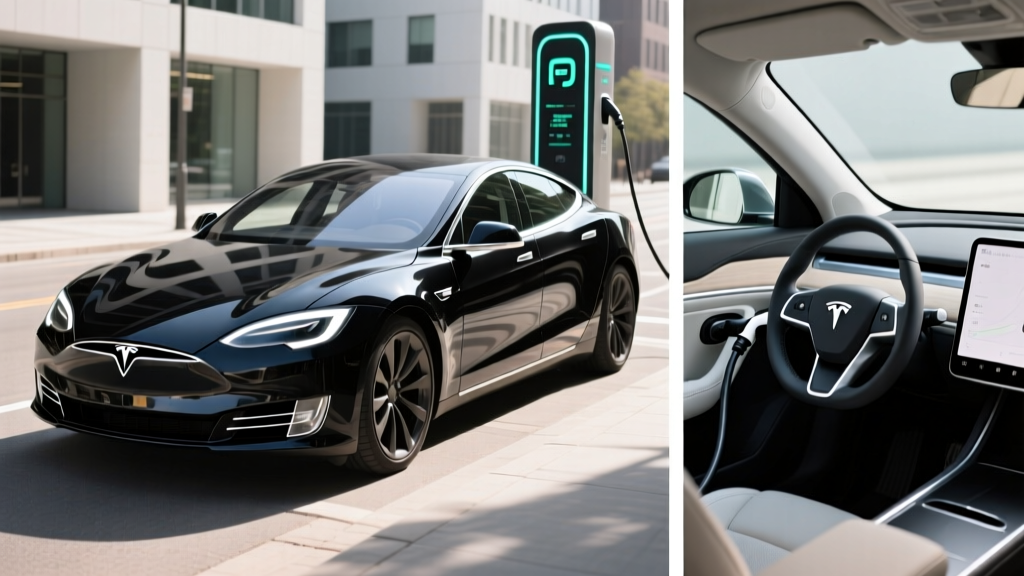
The 2026 Tesla Model S remains the reference point for premium electric sedans, even as rivals like the Lucid Air, BMW i5, and Mercedes EQE close the gap. With an EPA-estimated 402 miles of range on the Long Range trim and access to Tesla's 50,000+ global Supercharger network, the Model S delivers a practical electric drive plan for buyers who regularly cover long distances. But at a starting MSRP of $74,990, and with the federal §30D tax credit now subject to strict battery-sourcing and income requirements, the value equation has shifted. This review breaks down the exact numbers you need to decide whether the Model S fits your driving life in 2026.
Range, Efficiency, and Real-World Expectations
Real-World Expectation: 310–340 miles on highway road trips at 70–80 mph; 280–310 miles in freezing temperatures (below 32°F). City driving with regen braking can meet or exceed the EPA sticker.
The Model S Long Range pairs a 100 kWh (usable ~95 kWh) NMC (nickel manganese cobalt) lithium-ion battery pack with a dual-motor all-wheel-drive system. Efficiency comes in at 124 MPGe combined, translating to roughly 28 kWh per 100 miles — competitive for a 4,500+ lb luxury sedan.
Tesla's heat pump, standard since the 2021 refresh, significantly reduces cold-weather range loss compared to older resistive-heating EVs. Expect roughly 15–20% range reduction in sustained sub-freezing conditions, versus 25–35% on EVs without active thermal management. Preconditioning the battery before departure (scheduled via the Tesla app) recovers much of this loss by warming the pack to optimal operating temperature.
The Plaid trim (1,020 hp, tri-motor AWD) drops to an EPA-estimated 359 miles due to higher power draw, and real-world highway range typically lands between 270–310 miles.
| Spec | Long Range AWD | Plaid (Tri-Motor AWD) |
|---|---|---|
| EPA Range | 402 mi | 359 mi |
| Battery (Usable) | ~95 kWh, NMC | ~95 kWh, NMC |
| Horsepower | 670 hp | 1,020 hp |
| 0–60 mph | 3.1 sec | 1.99 sec |
| Drivetrain | Dual-Motor AWD | Tri-Motor AWD |
| MPGe (Combined) | 124 MPGe | 116 MPGe |
| Efficiency | 28 kWh/100 mi | 30 kWh/100 mi |
| Top Speed | 155 mph | 200 mph |
| Base MSRP | $74,990 | $89,990 |
Charging: DC Fast, Level 2, and the Supercharger Advantage
Charging speed remains a Tesla strong suit, though the gap has narrowed as 800V architectures from Hyundai/Kia and Lucid push peak rates higher. The 2026 Model S peaks at 250 kW on V3/V4 Superchargers using its native NACS connector — no adapter required.
| Charging Level | Power / Rate | Speed / Time |
|---|---|---|
| Level 1 (120V household) | ~1.4 kW | ~3–4 miles per hour |
| Level 2 (240V, Wall Connector) | 11.5 kW (48A) | ~34 miles per hour |
| DC Fast (Tesla Supercharger V3/V4) | Peak 250 kW | 10–80% in ~27 minutes |
| DC Fast (CCS via adapter) | Peak ~200 kW | 10–80% in ~33 minutes |
Charging curve reality: The 250 kW peak rate holds only between roughly 10–30% state of charge (SoC). The rate tapers to ~150 kW around 50% SoC, and drops further to ~60–80 kW above 80%. This is why Tesla (and most EV makers) quote 10–80% times — charging above 80% is painfully slow on any lithium-ion pack and should be reserved for destination charging or overnight sessions.
For home charging, the Tesla Wall Connector at 48 amps (11.5 kW) adds roughly 34 miles of range per hour. A full overnight session (10 hours) restores about 340 miles — more than enough for daily needs. Installation typically costs $800–$2,000 depending on panel capacity and run length; a 200-amp electrical panel is usually sufficient without an upgrade.
One critical advantage: Tesla's NACS connector and Supercharger network. As of 2026, Tesla operates over 6,500 Supercharger stations in North America. Non-Tesla EVs now access Superchargers via NACS adoption, but Tesla owners still benefit from seamless plug-and-charge integration, real-time stall availability in the navigation system, and automatic battery preconditioning when a Supercharger is set as your destination.
Performance, Ride Quality, and Daily Usability
The Model S Long Range hits 0–60 mph in 3.1 seconds — quicker than most sports cars and delivered with the silent, instant torque unique to electric drivetrains. The Plaid's 1.99-second sprint remains the quickest production sedan on the market, though it's a party trick most owners use exactly twice.
The adaptive air suspension (standard on both trims) offers adjustable ride height and damping, providing a comfortable highway cruiser setup or a firmer sport mode for canyon roads. The 2021+ refresh significantly improved ride quality over earlier Model S generations, with better isolation from road imperfections.
Cargo and passenger space:
- Trunk: 28.0 cu ft (rear seats up) / 64.9 cu ft (rear seats folded)
- Front trunk (frunk): 3.1 cu ft
- Rear legroom: 35.4 inches
- Front headroom: 39.3 inches
- Seating: 5 passengers (no third-row option)
The hatchback-style trunk lid makes loading bulkier items easier than a traditional sedan's trunk opening. However, rear-seat headroom is tighter than competitors like the BMW i5 or Lucid Air due to the sloping roofline, and taller passengers (6'2"+) may find long-distance rear-seat comfort marginal.
Interior, Technology, and Driver Assistance
The minimalist interior centers on a 17-inch landscape touchscreen that controls virtually all vehicle functions — climate, media, navigation, vehicle settings, and even the glovebox. A secondary 8-inch rear touchscreen handles rear-passenger climate and entertainment. The 12.3-inch digital instrument cluster behind the yoke (or optional round steering wheel) displays speed, range, and navigation.
Notable tech features:
- Over-the-air (OTA) software updates that add features post-purchase
- Sentry Mode (360° camera-based security recording)
- Dog Mode / Camp Mode (climate control for parked scenarios)
- 22-speaker 960W audio system with immersive sound
- Wireless phone charging (front and rear)
- HEPA air filtration with Bioweapon Defense Mode
Autopilot and FSD (Supervised): Every Model S includes Tesla's Basic Autopilot (traffic-aware cruise control and autosteer on marked highways). The optional Full Self-Driving (Supervised) package, currently $8,000 or $99/month, adds automatic lane changes, navigation-guided on/off-ramp transitions, traffic light and stop sign recognition, and Smart Summon.
FSD (Supervised) has improved significantly in urban environments through Tesla's end-to-end neural network approach, but it still requires active supervision and occasionally makes unexpected decisions at complex intersections or construction zones. It is not a substitute for an attentive driver.
Pricing, Trims, and Federal Tax Credit Eligibility
| Trim | Base MSRP | Destination | Total Before Credits | §30D Credit Eligibility |
|---|---|---|---|---|
| Long Range AWD | $74,990 | $1,390 | $76,380 | Not eligible (MSRP exceeds $55,000 sedan cap) |
| Plaid Tri-Motor AWD | $89,990 | $1,390 | $91,380 | Not eligible (MSRP exceeds $55,000 sedan cap) |
Tax credit reality check: Under IRS §30D rules, the federal EV tax credit for new vehicles is capped at $55,000 MSRP for sedans (SUVs and trucks have an $80,000 cap). The Model S, classified as a sedan, exceeds this threshold on every trim. As a result, no new Model S qualifies for the $7,500 federal tax credit regardless of buyer income or battery sourcing.
Buyer income limits also apply under §30D: modified adjusted gross income (MAGI) must not exceed $150,000 (single), $225,000 (head of household), or $300,000 (joint filers). Even if the Model S met the MSRP cap, higher-income buyers would be excluded. Always verify current-year rules at IRS.gov and consult a tax professional before making purchase decisions based on credits.
Used Model S option: The §25E used clean vehicle credit offers up to $4,000 (or 30% of the sale price, whichever is lower) for qualifying pre-owned EVs priced at or below $25,000 with income caps of $75,000/$112,500/$150,000. Finding a Model S at or under $25,000 is possible for 2018–2020 model years with higher mileage, making the used credit a viable path for budget-conscious buyers.
Warranty, Battery Longevity, and Ownership Costs
Tesla covers the Model S with the following warranty terms:
- Basic Vehicle: 4 years / 50,000 miles (bumper-to-bumper)
- Battery & Drive Unit: 8 years / 150,000 miles (Long Range), 8 years / 150,000 miles (Plaid), with minimum 70% capacity retention guaranteed
The 150,000-mile battery warranty is among the most generous in the industry. Real-world degradation data from Tesla's fleet shows NMC packs typically retain 85–90% capacity after 100,000 miles, with the most significant drop (~5%) occurring in the first 20,000 miles before stabilizing. A full battery replacement outside warranty currently costs approximately $12,000–$16,000 at a Tesla Service Center, though most owners never need one.
Estimated 5-year ownership costs (Long Range, 15,000 mi/year):
- Electricity (home charging at $0.14/kWh national avg): ~$2,940/year → $14,700 total
- Comparable gas sedan (25 MPG, $3.50/gal): ~$2,100/year → $10,500 total
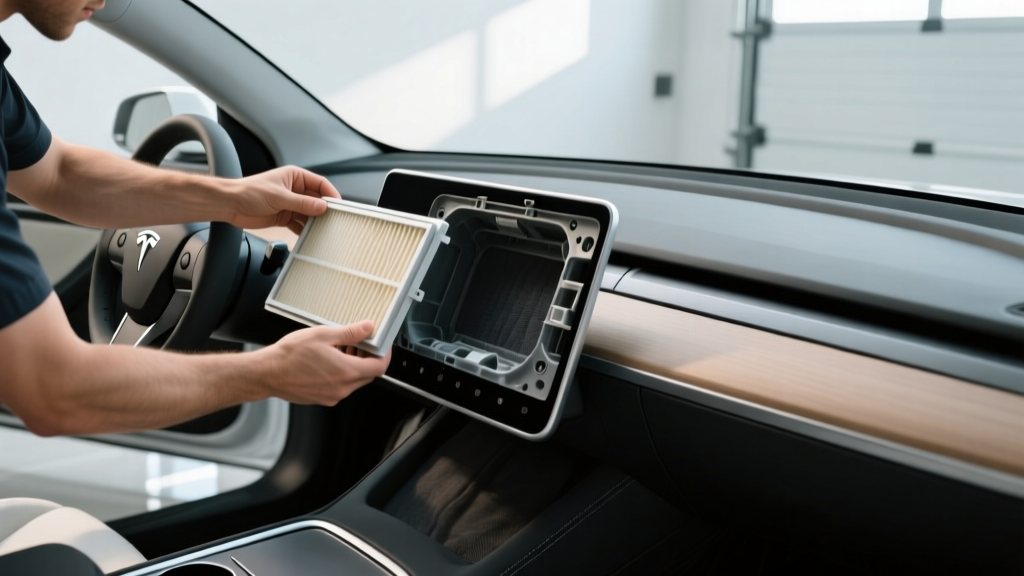
- Maintenance (tires, cabin filter, wiper fluid — no oil/brakes/transmission): ~$600/year → $3,000 total
- Insurance (national avg for Model S): ~$2,800–$3,500/year → $15,750 total
Insurance costs for the Model S run 30–50% higher than comparable gas sedans due to repair complexity and parts pricing. Tesla Insurance, available in select states, sometimes offers competitive rates by using real-time driving data. Always get quotes from multiple providers before purchase.
How the Model S Compares to Key Rivals
The Model S competes against a growing field of premium electric sedans. Here's how it stacks up on the metrics that matter:
- Lucid Air Pure (419 mi EPA, $69,900): Slightly more range and lower price, but a smaller service network and fewer public charging options. Best for range-maximizing buyers near Lucid service centers.
- BMW i5 eDrive40 (295 mi EPA, $57,200): More traditional luxury feel, qualifies for some incentives, but 100+ fewer miles of range. Best for brand-loyal BMW buyers who want an EV transition with familiar ergonomics.
- Mercedes-Benz EQE 350+ (305 mi EPA, $74,900): Superior interior materials and ride comfort, but significantly less range and slower DC charging (170 kW peak). Best for luxury-first buyers who prioritize cabin quality over efficiency.
- Porsche Taycan 4S (246 mi EPA, $92,700): Sharper driving dynamics and 800V architecture (270 kW charging), but far less range and higher price. Best for driving-enthusiast buyers who prioritize handling over distance.
Pros
- 402-mile EPA range — among the longest of any production EV
- Supercharger network: 6,500+ stations, seamless plug-and-charge
- 670 hp standard; 3.1-sec 0–60 without needing the Plaid
- OTA updates continually improve the vehicle post-purchase
- Hatchback cargo versatility (28 cu ft + frunk)
- 8-year/150,000-mile battery warranty with 70% retention guarantee
- Heat pump standard — strong cold-weather efficiency
Cons
- No federal tax credit (exceeds $55K sedan MSRP cap)
- Insurance costs 30–50% higher than comparable gas sedans
- Rear-seat headroom tight for passengers over 6'2"
- Yoke steering (standard) polarizing; round wheel is a no-cost option
- Minimalist interior lacks physical buttons — climate/media all screen-based
- FSD (Supervised) still requires full driver attention — not autonomous
- Service center wait times can be long in some metro areas
Who Should Buy the 2026 Tesla Model S?
The Model S is best suited for:
- Long-distance commuters and road trippers who need 350+ real-world miles of range and frequent Supercharger access on interstates.
- Tech-forward buyers who value OTA updates, app-based vehicle control, and the most integrated EV charging ecosystem.
- Performance-sedan buyers who want sports-car acceleration (3.1 sec 0–60) with four-door practicality and zero tailpipe emissions.
- Two-car households replacing a luxury gas sedan with an EV for daily driving and weekend trips.
Consider alternatives if you:
- Need a third row or maximum rear-seat space (look at the Model X or Rivian R1S)
- Want to maximize federal tax credits (the Model S does not qualify new)
- Prefer traditional luxury interiors with physical controls (BMW i5, Mercedes EQE)
- Have a strict budget under $60,000 (consider a used Model S with the §25E credit)
Frequently Asked Questions
What is the real-world range of the 2026 Tesla Model S?
The EPA rates the Long Range at 402 miles, but real-world highway driving at 70–80 mph typically yields 310–340 miles. In freezing weather, expect 280–310 miles. City driving with regenerative braking can match or slightly exceed the EPA estimate.
How fast does the Model S charge at home and on the road?
At home on a Level 2 Tesla Wall Connector (11.5 kW / 48A), the Model S adds about 34 miles of range per hour — a full overnight charge covers most weekly driving. On Tesla Superchargers, it peaks at 250 kW and charges from 10–80% in approximately 27 minutes. Charging slows significantly above 80% SoC due to battery protection protocols.
Does the 2026 Model S qualify for the federal EV tax credit?
No. Under current IRS §30D rules, the Model S exceeds the $55,000 MSRP cap for sedans. Neither the Long Range ($74,990) nor the Plaid ($89,990) qualifies for the $7,500 new-vehicle credit, regardless of buyer income. A used Model S priced at or below $25,000 may qualify for up to $4,000 under the §25E used-vehicle credit, subject to income limits. Verify current rules at IRS.gov.
Is the Model S worth buying versus the Lucid Air or BMW i5?
It depends on priorities. The Model S wins on Supercharger network access, proven long-range efficiency, and continuous OTA improvements. The Lucid Air Pure offers slightly more EPA range (419 mi) at a lower price but has a smaller service footprint. The BMW i5 costs less and offers a more traditional luxury experience but gives up over 100 miles of range. If charging infrastructure and range confidence matter most, the Model S still leads.
How long will the Model S battery last?
Tesla's NMC battery packs are warranted for 8 years or 150,000 miles with a guaranteed minimum 70% capacity retention. Fleet data shows typical degradation of 10–15% over 100,000 miles, with most of the loss occurring in the first 20,000 miles. With proper care (avoiding frequent 100% charges, using preconditioning, minimizing DC fast-charging to 100%), many packs exceed 200,000 miles before approaching the warranty threshold.
What are the biggest drawbacks of owning a Model S?
Insurance premiums run significantly higher than comparable gas sedans. The all-screen interface and yoke steering are polarizing. Rear headroom is limited for tall passengers. Federal tax credits are unavailable on new purchases. And while Tesla's mobile service handles many issues, physical service center appointments in some metro areas can involve multi-week wait times for complex repairs.
Sources: EPA range and efficiency data from fueleconomy.gov. Federal tax credit rules from IRS.gov §30D. Vehicle specifications from Tesla.com.