If you've searched for Tesla's flagship sedan recently, you may have noticed thinning inventory and shifting messaging from the automaker. The rumor that Tesla stops making Model S has circulated since late 2024, and as of the 2026 model year, the reality is nuanced: Tesla has not officially announced a full discontinuation, but production volumes have dropped dramatically, the model has received no meaningful refresh since the 2021 Plaid update, and several international markets have already seen it pulled from sale. For US buyers, the Model S remains orderable — but its long-term future is uncertain.
This review covers the final 2026 Tesla Model S specs, real-world performance data, charging reality, tax credit eligibility under current IRS §30D rules, and whether it still makes sense to buy — or whether you should look to the Lucid Air, BMW i5, or Mercedes-Benz EQS instead.
2026 Tesla Model S at a Glance: Final Production Specs
| Specification | Model S Long Range | Model S Plaid |
|---|---|---|
| EPA Range | 405 miles | 396 miles |
| Battery Capacity | ~100 kWh usable (NMC) | ~100 kWh usable (NMC) |
| Drivetrain | Dual-Motor AWD | Tri-Motor AWD |
| Horsepower | 670 hp | 1,020 hp |
| 0-60 mph | 3.1 seconds | 1.99 seconds |
| Top Speed | 155 mph | 200 mph |
| Max DC Fast Charge | 250 kW (peak) | 250 kW (peak) |
| 10-80% DC Charge Time | ~30 minutes | ~30 minutes |
| Level 2 Home Charging | 11.5 kW (~44 mi/hr) | 11.5 kW (~44 mi/hr) |
| MPGe (combined) | 120 MPGe | 116 MPGe |
| Efficiency | 28 kWh/100 mi | 29 kWh/100 mi |
| Cargo Volume | 28 cu ft (rear) + frunk | 28 cu ft (rear) + frunk |
| Base MSRP (2026) | $74,990 | $89,990 |
| Battery Warranty | 8 yr / 150,000 mi | 8 yr / 150,000 mi |
Sources: EPA fueleconomy.gov, Tesla Model S Specs.
Real-World Range: What 405 EPA Miles Actually Means
EPA Estimate: 405 miles (Long Range) / 396 miles (Plaid)
Real-World Expectation:
- City/mixed driving (moderate climate): ~370-390 miles
- Highway driving at 70-75 mph: ~300-330 miles
- Cold weather (below 30°F): ~260-300 miles (30-35% reduction)
- Cold + highway combined: ~220-260 miles
The Model S's ~100 kWh NMC (nickel manganese cobalt) battery pack gives it one of the largest energy reserves in any production EV, which translates to strong real-world range even after discounting. However, the sedan's age shows in efficiency: at 28 kWh per 100 miles, it's less efficient than newer competitors. The Lucid Air Grand Touring, by comparison, achieves 131 MPGe combined on a smaller 112 kWh pack, squeezing out 516 EPA miles.
Tesla's heat pump and thermal management system help mitigate cold-weather losses, but the Model S still suffers meaningful range reduction in sub-freezing conditions. Preconditioning the battery while plugged in — a feature accessible through the Tesla app — can recover some of that lost range and is essential before DC fast charging in cold weather.
Charging Speed: 250 kW Peak, But Watch the Curve
| Charging Method | Power | Speed / Time | Connector |
|---|---|---|---|
| Level 1 (120V household) | ~1.4 kW | ~5 miles per hour | NACS (native) |
| Level 2 (240V home, 48A) | 11.5 kW | ~44 miles per hour | NACS (native) |
| DC Fast Charge (Tesla Supercharger V3) | 250 kW peak | 10-80% in ~30 min | NACS (native) |
| DC Fast Charge (non-Tesla CCS via adapter) | Up to 250 kW | 10-80% in ~30-35 min | NACS + CCS adapter |
The Model S peaks at 250 kW on Tesla's V3 Superchargers, but as with all EVs, that peak is not sustained. The charging curve tapers significantly above 50% state of charge (SoC). In real-world testing, the Model S typically pulls 250 kW only between roughly 10-25% SoC, then drops to ~150 kW by 40%, and falls below 75 kW past 70%. This is why the 10-80% time is ~30 minutes rather than the theoretical ~20 minutes a sustained 250 kW rate would suggest.
Tesla now ships all vehicles with the NACS (North American Charging Standard) connector natively. For non-Tesla DC fast-charging networks like Electrify America or EVgo, you'll need the Tesla CCS adapter (included with recent deliveries or available for ~$175). The adapter works reliably but adds a connection point of potential failure.
For home Level 2 charging, the Model S accepts up to 11.5 kW on a 48-amp circuit, requiring a 60-amp breaker. A full charge from 10% to 100% at this rate takes roughly 9 hours — practical for overnight charging. Home installation costs for a Level 2 Wall Connector typically range from $800 to $2,500 depending on panel capacity and run length, according to industry electrician data.
Performance: The Plaid Remains a Benchmark
The Model S Plaid's tri-motor setup produces 1,020 horsepower and achieves a 1.99-second 0-60 mph time (with rollout subtracted, as Tesla reports it). Even without rollout subtraction, independent testing consistently shows 2.1-2.3 second 0-60 runs, making it one of the quickest production cars ever built. The Long Range variant's 670 hp and 3.1-second 0-60 time remain formidable for daily driving.
Both trims feature adaptive air suspension, which provides a comfortable ride in Normal mode and firms up substantially in Sport. The yoke steering wheel remains controversial — it's standard on Plaid and optional on Long Range — and takes significant adaptation for low-speed maneuvering and roundabouts. A conventional round wheel is available at no extra charge on the Long Range trim.
Handling has improved since the 2021 refresh with a wider rear track and updated damping, but the Model S is a large, heavy sedan (4,766 lbs for Long Range, 4,961 lbs for Plaid). It's a capable grand tourer, not a sports car. For track use, the Plaid includes a dedicated track mode with enhanced cooling, though sustained high-speed laps will still trigger thermal management intervention.
Pricing, Tax Credits, and the §30D Reality Check
| Trim | Base MSRP | Destination | Federal §30D Credit | Effective Price |
|---|---|---|---|---|
| Model S Long Range | $74,990 | $1,390 | $0 (MSRP cap exceeded) | $76,380 |
| Model S Plaid | $89,990 | $1,390 | $0 (MSRP cap exceeded) | $91,380 |
Federal Tax Credit Status: The Model S does NOT qualify for the IRS §30D federal EV tax credit. Under current rules, the credit is limited to sedans with an MSRP at or below $55,000 (the cap for sedans; SUVs/trucks/pickups have a $80,000 cap). Both Model S trims exceed this threshold significantly.
Additionally, buyer income caps apply to any §30D-eligible vehicle: modified AGI must not exceed $300,000 (joint filers), $225,000 (head of household), or $150,000 (single). Battery critical-mineral and component sourcing requirements further restrict eligibility for many 2026 EVs. Always verify current rules at IRS.gov or consult a tax professional.
The lack of a federal tax credit is a meaningful financial disadvantage against competitors. The BMW i5 eDrive40 starts at $66,800 and may qualify for partial incentives depending on sourcing and buyer income, while the Lucid Air Pure at $69,900 also sits above the sedan cap but offers substantially more range.
Interior, Tech, and Daily Livability
The Model S interior received a significant overhaul in 2021 with a minimalist horizontal 17-inch touchscreen, a rear-seat 8-inch display, ventilated front seats, and a premium 22-speaker audio system. Build quality has improved over earlier production years, though panel gap consistency still trails German competitors at this price point.
Passenger and cargo space:
- Front legroom: 42.7 inches
- Rear legroom: 35.4 inches
- Rear cargo (behind second row): 28.0 cu ft
- Front trunk (frunk): 3.1 cu ft
- Total cargo with rear seats folded: ~58 cu ft (estimated)
Rear-seat comfort is adequate for adults on shorter trips but the seat cushion is relatively flat and low, a common complaint versus the BMW i5 or Mercedes EQS. The glass roof provides an airy cabin but contributes to heat gain in warm climates — the 2021+ models have improved IR-rejecting glass, but a sunshade remains a worthwhile accessory.
Driver assistance: Tesla's Basic Autopilot (lane centering, adaptive cruise control) is standard. Full Self-Driving (Supervised) remains a $8,000 option or $99/month subscription. FSD is a SAE Level 2 system — the driver must remain fully engaged and supervise at all times. It is not autonomous driving. The system is capable on highways and has improved in city environments, but it still makes errors that require human intervention. Tesla's safety data reports are self-published; independent NHTSA and IIHS evaluations should be cross-referenced.
SAE Automation Level: Tesla Autopilot and FSD (Supervised) are Level 2 driver-assistance systems. The driver must keep hands on the wheel (or provide torque input), monitor the road, and be ready to take over instantly. This is not "self-driving" — only Level 4 systems like Waymo's robotaxi service operate without a human driver.
Model S vs. Key Competitors: Is It Still Worth Buying?
| Attribute | Tesla Model S LR | Lucid Air Pure | BMW i5 eDrive40 | Mercedes EQS 450+ |
|---|---|---|---|---|
| EPA Range | 405 mi | 419 mi | 295 mi | 390 mi |
| Base MSRP | $74,990 | $69,900 | $66,800 | $104,400 |
| §30D Credit Eligible | No (MSRP cap) | No (MSRP cap) | No (MSRP cap) | No (MSRP cap) |
| Max DC Charge | 250 kW | 220 kW | 205 kW | 200 kW |
| 0-60 mph | 3.1 sec | 5.0 sec | 5.7 sec | 5.9 sec |
| Efficiency | 28 kWh/100mi | 26 kWh/100mi | 30 kWh/100mi | 31 kWh/100mi |
| Infotainment | 17" Tesla OS | 34" glass cockpit | BMW iDrive 8.5 | MBUX Hyperscreen |
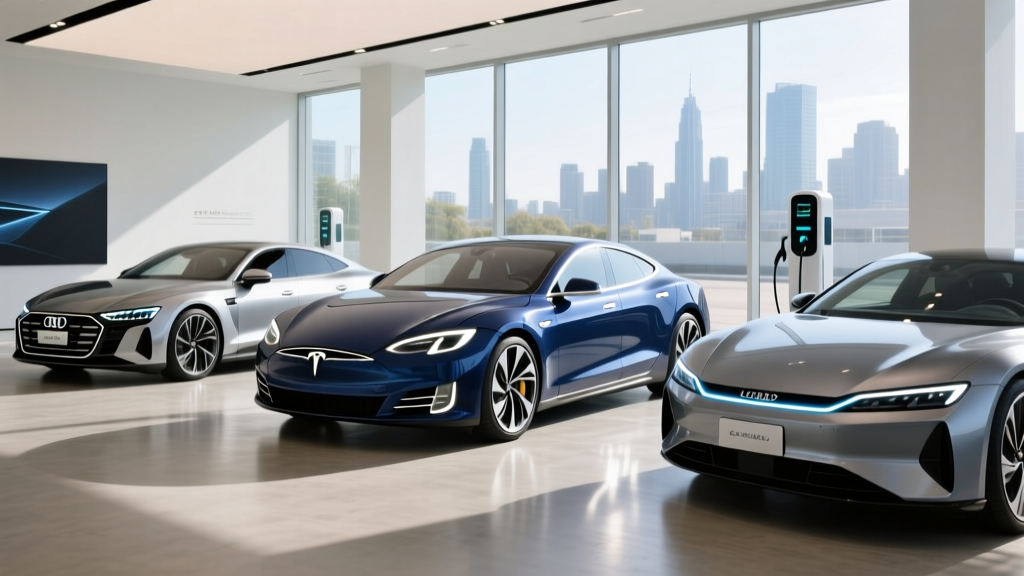
The Model S occupies an awkward position in 2026. It's more expensive than the Lucid Air Pure while offering less range and an older platform. It's faster than any competitor listed, but most luxury sedan buyers prioritize comfort and refinement over 0-60 times. The Supercharger network advantage has diminished as Tesla opened the network to NACS-equipped competitors starting in 2024.
The BMW i5 is the most well-rounded daily driver in this segment, with superior build quality, a conventional sedan layout, and a lower starting price — though at 295 miles of range, it's less suited to road trips. The Mercedes EQS offers the most luxurious interior but at a steep premium and with mediocre efficiency.
Biggest Pros and Cons
Pros
- Class-leading 405-mile EPA range (Long Range)
- Access to Tesla Supercharger network (17,000+ US stalls)
- Plaid variant offers unmatched straight-line performance
- Over-the-air updates continue to add features
- Strong 8-year/150,000-mile battery warranty
- Spacious 28 cu ft cargo area with rear hatchback design
- Proven powertrain with years of real-world reliability data
Cons
- No federal §30D tax credit (MSRP exceeds $55K sedan cap)
- Platform is aging — no major refresh since 2021
- Build quality still inconsistent at this price point
- Yoke steering is polarizing and impractical for some drivers
- Rear-seat comfort trails BMW i5 and Mercedes EQS
- Production volume declining — long-term parts/service uncertainty
- Resale value may suffer if full discontinuation is announced
Who Should Buy the 2026 Model S?
Choose the Model S Long Range if: You need maximum range for frequent long-distance travel, want Supercharger network convenience, value a hatchback-style cargo area, and don't need the latest interior luxury.
Choose the Model S Plaid if: You want the fastest-accelerating sedan available, plan to use track mode, and prioritize performance over value.
Look elsewhere if: You want the best interior quality (BMW i5, Mercedes EQS), maximum range per dollar (Lucid Air Pure), or federal tax credit eligibility (consider the Tesla Model 3 Long Range at ~$42,490, which falls under the sedan MSRP cap).
For commuters who charge at home and rarely road-trip, the Model S is more car than needed — a Model 3 or BMW i5 delivers comparable daily utility for $20,000-$30,000 less. For families, the Model S's hatchback cargo area is genuinely useful, but the rear seat isn't as accommodating as a Model X or Rivian R1S. For road trippers, the 405-mile range and Supercharger access remain compelling, though the Lucid Air matches or exceeds range with access to the growing NACS-compatible public network.
Frequently Asked Questions
Has Tesla officially discontinued the Model S?
As of early 2026, Tesla has not issued a formal discontinuation announcement for the Model S. However, production volumes have been significantly reduced, the vehicle has not received a major refresh since 2021, and several international markets no longer list it for sale. US buyers can still order the Model S, but long-term production commitment appears uncertain. Industry analysts widely expect the model to be phased out or replaced within the next 1-2 model years.
What is the real-world range of the Tesla Model S?
The EPA rates the Model S Long Range at 405 miles and the Plaid at 396 miles. In real-world highway driving at 70-75 mph, expect approximately 300-330 miles. In cold weather (below 30°F), range can drop to 260-300 miles for mixed driving. Preconditioning the battery and using seat heaters instead of cabin heat can help mitigate cold-weather losses.
How fast does the Model S charge at home and on DC fast chargers?
On a Level 2 home charger (48A/11.5 kW), the Model S adds approximately 44 miles of range per hour, with a full 10-100% charge taking about 9 hours. On a Tesla V3 Supercharger (250 kW peak), a 10-80% charge takes approximately 30 minutes, though the charge rate tapers significantly above 50% SoC. Non-Tesla DC chargers require the included CCS adapter.
Does the Tesla Model S qualify for the $7,500 federal EV tax credit?
No. Under IRS §30D rules, the federal clean vehicle credit for sedans is limited to vehicles with an MSRP of $55,000 or less. The Model S Long Range starts at $74,990 and the Plaid at $89,990, both far exceeding this cap. Additionally, buyer income limits and battery sourcing requirements apply to all §30D-eligible vehicles. Consult IRS.gov for current eligibility details.
Is the Model S worth buying vs. the Lucid Air or BMW i5?
It depends on your priorities. The Model S wins on Supercharger access and the Plaid's unmatched acceleration. The Lucid Air Pure offers more EPA range (419 miles) at a lower price ($69,900). The BMW i5 offers superior build quality and daily-driver refinement at $66,800, though with less range (295 miles). If long-term production support is a concern, the BMW and Lucid are newer platforms with longer expected production runs ahead.
What is the battery warranty on the Model S?
Tesla covers the Model S battery and drive unit for 8 years or 150,000 miles, whichever comes first, with a minimum 70% capacity retention guarantee. This is one of the more generous battery warranties in the segment and provides strong protection against premature degradation. Tesla's NMC packs have demonstrated approximately 10-12% degradation over 100,000 miles in fleet data, well within the warranty threshold.
Will Tesla release a next-generation Model S?
Tesla has not announced a direct successor to the Model S. The company's public roadmap has focused on higher-volume vehicles (next-gen compact platform, Cybertruck production ramp, Semi). If a flagship sedan successor arrives, it would likely not be before 2028-2029. Buyers wanting a long-term-supported Tesla sedan should consider the Model 3, which received a full "Highland" refresh in 2024 and remains a core production priority.