Is the Tesla Model S Discontinued? The Short Answer
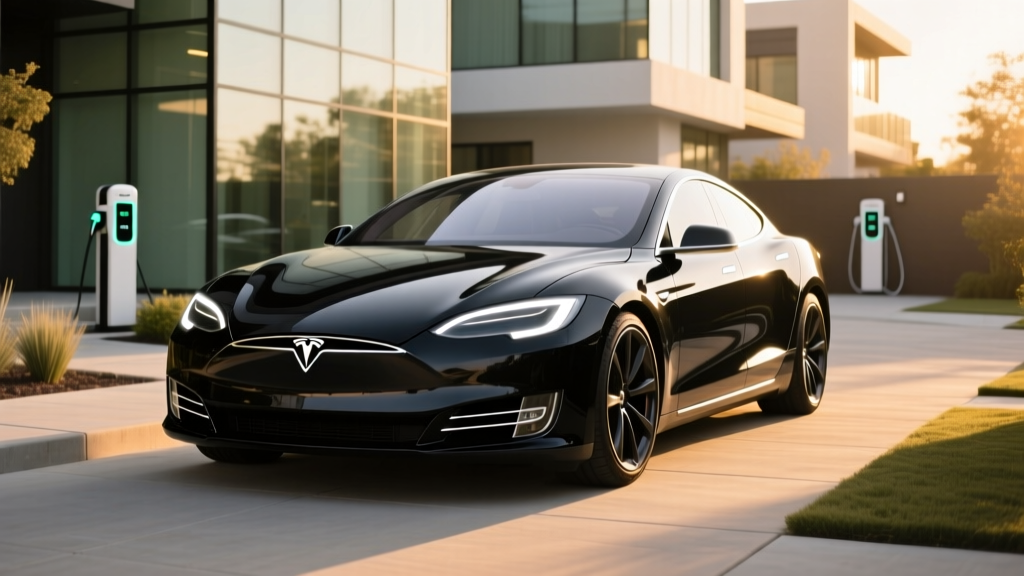
Rumors about the Tesla Model S being discontinued surface every few months, and the confusion is understandable. Tesla has periodically paused Model S and Model X production at the Fremont factory to retool lines, shifted marketing emphasis toward the Model Y and Cybertruck, and removed certain trim configurations from its configurator without notice. But as of early 2026, the Tesla Model S is not discontinued. It remains available for order in both Long Range and Plaid trims, with deliveries continuing across the United States.
What has changed is Tesla's production cadence. The company now builds Model S and Model X in smaller, demand-driven batches rather than maintaining continuous high-volume output. This means delivery timelines can stretch longer than for the Model 3 or Model Y, and some exterior color or wheel options may rotate in and out of availability. But the flagship sedan that launched the modern EV era is still very much a current-production vehicle.
This review covers the 2026 Tesla Model S in full — real-world range, charging speeds, performance, pricing, tax-credit status, and whether it still makes sense against a growing field of luxury EV sedans.
2026 Tesla Model S Specifications at a Glance
| Spec | Long Range (Dual-Motor AWD) | Plaid (Tri-Motor AWD) |
|---|---|---|
| EPA Range | 402 miles | 359 miles |
| Battery Capacity (usable) | ~100 kWh (NMC) | ~100 kWh (NMC) |
| Horsepower | 670 hp | 1,020 hp |
| 0–60 mph | 3.1 seconds | 1.99 seconds |
| Top Speed | 155 mph | 200 mph |
| Drivetrain | Dual-Motor AWD | Tri-Motor AWD |
| MPGe (combined) | 120 MPGe | 116 MPGe |
| Efficiency | 28 kWh/100 mi | 29 kWh/100 mi |
| Max DC Fast-Charge Rate | 250 kW | 250 kW |
| 10–80% DC Fast Charge | ~30 minutes | ~30 minutes |
| Level 2 Home Charge Rate | 11.5 kW (~44 mi/hr) | 11.5 kW (~44 mi/hr) |
| Cargo Volume | 28 cu ft (rear) + ~5 cu ft (frunk) | 28 cu ft (rear) + ~5 cu ft (frunk) |
| Rear Legroom | 35.4 inches | 35.4 inches |
| Base MSRP | $74,990 | $89,990 |
| Battery & Drive Unit Warranty | 8 years / 150,000 miles | 8 years / 150,000 miles |
Sources: EPA Fueleconomy.gov, Tesla official specifications. MSRP reflects base destination-included pricing before options; prices subject to change.
Real-World Range: What to Actually Expect
EPA Sticker: 402 miles (Long Range) / 359 miles (Plaid)
Real-World Highway (70–75 mph): Expect ~310–340 miles (Long Range), ~275–300 miles (Plaid)
Cold Weather (below 32°F): Subtract 20–30% — roughly 250–280 miles (Long Range) in freezing conditions
The Model S Long Range's 402-mile EPA estimate remains one of the highest of any production EV sold in the U.S. But EPA testing cycles include generous city-driving and low-speed segments that favor regenerative braking. In real-world highway driving at sustained speeds of 70–75 mph, energy consumption climbs significantly. Independent testing by outlets like Edmunds and InsideEVs has consistently shown that large, heavy EVs lose 15–20% versus their EPA sticker on long highway runs.
The Plaid's tri-motor setup adds weight and mechanical drag, which is why its EPA figure drops to 359 miles despite sharing the same ~100 kWh NMC (nickel manganese cobalt) battery pack. If your typical road trip involves 65 mph two-lane highways in moderate temperatures, you'll come closer to the sticker number. Sustained 80 mph interstate runs in summer heat or winter cold will push you toward the lower end of the real-world estimates.
One advantage the Model S retains: its large battery means even a 25% cold-weather reduction still leaves 250+ miles of usable range — more than most EVs can deliver on a good day.
Charging Speed: Supercharger Network and Home Setup
| Charging Level | Max Power (kW) | Miles of Range Added Per Hour | Notes |
|---|---|---|---|
| Level 1 (120V household) | ~1.4 kW | ~3–4 mi/hr | Emergency/trickle only; full charge takes days |
| Level 2 (240V home, Wall Connector) | 11.5 kW | ~44 mi/hr | Full 0–100% in ~9 hours; ideal overnight solution |
| DC Fast Charge (Tesla Supercharger V3) | 250 kW (peak) | ~200 mi in 15 min (at peak) | 10–80% in ~30 min; tapers significantly above 80% |
| DC Fast Charge (CCS adapter, non-Tesla networks) | ~150–170 kW (typical peak) | Varies by station | Requires Tesla CCS adapter; speeds depend on station hardware |
The Model S charges at a peak rate of 250 kW on Tesla's V3 Superchargers. That peak rate is achieved only at a low state of charge (typically 5–15% SoC) and with battery preconditioning active — the car heats the pack to the optimal temperature before you arrive at the charger via navigation routing.
Here's the charging-curve reality that spec sheets don't show: the Model S sustains roughly 200–250 kW from about 10% to 35% SoC, then steps down progressively. From 50% to 80%, you're typically seeing 80–120 kW. The 10–80% charge takes approximately 30 minutes under ideal conditions. Charging from 80% to 100% on DC fast charge is painfully slow — Tesla recommends charging to 100% only on Level 2 at home when needed for long trips.
For home charging, the Tesla Wall Connector at 48 amps delivers 11.5 kW, adding roughly 44 miles of range per hour. A full overnight charge from near-empty takes about 9 hours. Installation typically requires a NEMA 14-50 outlet or hardwired connection on a 60-amp circuit — budget $500–$1,500 for a licensed electrician, more if your panel needs upgrading to 200 amps.
Tesla's NACS (North American Charging Standard) connector is native to the Model S. With the included CCS adapter, you can also use Electrify America, EVgo, and other non-Tesla DC fast-charging networks, though speeds may be capped below the car's 250 kW maximum depending on the station.
Performance and Driving Dynamics
The Model S Long Range delivers 670 horsepower from its dual-motor all-wheel-drive powertrain, reaching 60 mph in 3.1 seconds. That's supercar territory from just a few years ago, and it's achieved with no drama — just instant, linear torque delivery that makes highway merging and passing effortless.
The Plaid trim adds a third rear motor for 1,020 horsepower and a 1.99-second 0–60 time (on a prepped surface with rollout subtracted, per Tesla's measurement). It's one of the quickest production cars ever made, regardless of powertrain. The Plaid also includes track-oriented cooling upgrades, carbon-sleeved rotors, and a yoke steering wheel as standard (a conventional round wheel is available at no cost).
Both trims use Tesla's adaptive air suspension, which provides adjustable ride height and damping. The ride quality has improved significantly since the 2021 refresh, with better isolation over rough pavement, though the Model S still favors sportiness over the pillowy isolation you'd find in a Mercedes EQS.
On the driver-assistance front, every Model S comes with Tesla's basic Autopilot (lane centering, adaptive cruise control). Full Self-Driving (FSD) Supervised is available as an $8,000 add-on or $99/month subscription.
Tesla Autopilot and FSD (Supervised) are SAE Level 2 driver-assistance systems. Despite the "Full Self-Driving" name, the driver must remain fully engaged, hands on or near the wheel, and eyes on the road at all times. The system does not make the car autonomous. Only Level 4 services like Waymo operate without a human driver in defined geofenced areas.
Pricing, Trims, and Federal Tax Credit Eligibility
| Trim | Base MSRP (incl. destination) | Typical As-Tested Price | Federal §30D Tax Credit |
|---|---|---|---|
| Long Range | $74,990 | $78,000–$84,000 (with FSD, color, wheels) | Not eligible (MSRP exceeds $55,000 sedan cap) |
| Plaid | $89,990 | $95,000–$105,000+ | Not eligible (MSRP exceeds $55,000 sedan cap) |
The 2026 Model S Long Range starts at $74,990, with the Plaid at $89,990. Adding FSD, premium paint colors (Ultra Red, Solid Black), and 21-inch wheels can push either trim $5,000–$15,000 above base.
Neither trim qualifies for the federal §30D EV tax credit. The IRS applies an MSRP cap of $55,000 for sedans (and $80,000 for SUVs, vans, and trucks). The Model S, classified as a sedan, exceeds this cap on both trims. Additionally, the credit has adjusted gross income limits ($300,000 for joint filers, $150,000 for single filers) and battery critical-mineral sourcing requirements that further narrow eligibility even for qualifying vehicles. For complete and current rules, consult the IRS clean vehicle credits page or a tax professional.
If you're considering a used Model S, the separate used clean vehicle credit (up to $4,000) may apply, subject to a $25,000 sale-price cap, which generally excludes most used Model S listings.
Interior, Cargo, and Technology
The Model S interior centers on a 17-inch landscape-oriented touchscreen running Tesla's proprietary infotainment software. The system handles navigation, media, climate, vehicle settings, and even gaming (the car can run titles like Cyberpunk 2077 while parked, using the full computing hardware). A secondary 8-inch screen for rear passengers controls climate and media. Wireless phone charging, heated and ventilated front seats, and a 22-speaker audio system are standard.
Cargo space remains a Model S advantage over competitors: 28 cubic feet behind the rear seats (it's a liftback, not a traditional trunk, so the opening is enormous), plus approximately 5 cubic feet in the front trunk (frunk). With the rear seats folded, total volume expands to roughly 79 cubic feet — rivaling many midsize SUVs.
Passenger space is adequate but not class-leading. Rear legroom measures 35.4 inches — comfortable for average-height adults but tighter than a Mercedes EQS or BMW i7. The low roofline also cuts into rear headroom for taller passengers. This is a sport sedan, not a limousine.
Notable drawbacks: The yoke steering wheel (standard on Plaid, optional on Long Range) requires an adjustment period and is genuinely frustrating during low-speed maneuvers like U-turns and parking. Build quality has improved since the early 2020s but still doesn't match German luxury rivals in panel-gap consistency and material richness. And Tesla's decision to eliminate ultrasonic parking sensors and rely solely on cameras for parking assist remains a point of owner frustration.
Warranty and Long-Term Ownership
Tesla provides a 4-year/50,000-mile basic vehicle warranty and an 8-year/150,000-mile battery and drive unit warranty. The battery warranty guarantees that the pack will retain at least 70% of its original capacity during the coverage period. If degradation falls below that threshold, Tesla will repair or replace the battery at no cost.
The Model S uses an NMC (nickel manganese cobalt) chemistry pack, which offers higher energy density than LFP (lithium iron phosphate) but is more sensitive to sustained high states of charge. Tesla recommends daily charging to 80–90% for routine use and reserving 100% charges for long trips. Real-world data from high-mileage Model S owners suggests typical degradation of 8–12% over the first 100,000 miles, with the curve flattening afterward.
Maintenance costs are low compared to internal-combustion equivalents — no oil changes, no transmission fluid, no spark plugs. Expect to replace cabin air filters, wiper blades, brake fluid (regenerative braking preserves pads, often lasting 100,000+ miles), and tires. The Model S's weight and instant torque are hard on tires; budget $1,200–$2,000 for a set of premium all-season or summer tires every 25,000–40,000 miles.
Insurance premiums for the Model S are among the highest in the EV segment. Average annual premiums run $3,000–$4,500 depending on your state, driving record, and coverage level. Always get a personalized quote before purchasing.
Is the Model S Worth Buying vs. Competitors?
✅ Pros
- Class-leading EPA range (402 mi, Long Range)
- Access to Tesla Supercharger network — the most reliable DC fast-charging system in the U.S.
- Plaid performance is otherworldly (1.99s 0–60)
- Massive liftback cargo area + frunk
- Over-the-air updates continuously add features
- Strong resale value relative to luxury EV competitors
- Low running costs (electricity vs. premium fuel)
❌ Cons
- No federal tax credit (exceeds sedan MSRP cap)
- Rear seat space and headroom lag German competitors
- Yoke steering is polarizing and impractical for some
- Build quality still not at Mercedes/BMW level
- High insurance premiums
- Charging capped at 250 kW (competitors like Lucid Air and Porsche Taycan charge faster or at higher sustained rates)
- Camera-only parking assist (no ultrasonic sensors)
The Model S competes against the Lucid Air (Pure starts at ~$69,900, 419-mile EPA range, qualifies for tax credit on lower trims), the Porsche Taycan (sportier handling, 800V architecture for faster sustained charging, but shorter range), the Mercedes EQS (more luxurious interior, similar price, shorter range), and the BMW i7 (larger, more comfortable rear seat, significantly more expensive).
The Model S's strongest arguments in 2026 are its Supercharger network access, proven long-range efficiency, and the Plaid's unmatched straight-line performance. Its weakest arguments are its aging platform (the core architecture dates to 2012, despite multiple refreshes), the lack of tax-credit eligibility, and interior quality that hasn't kept pace with newer rivals.
- Road-trippers who value the 402-mile range and Supercharger reliability above all else
- Performance enthusiasts who want Plaid-level acceleration in a practical four-door
- Tech-forward buyers who prefer Tesla's software ecosystem and OTA update cadence
- Commuters with home Level 2 charging who want minimal running costs on a 300+ mile battery
- Buyers who prioritize rear-seat luxury and ride comfort (look at EQS or i7)
- Budget-conscious shoppers who want the $7,500 federal tax credit (look at Lucid Air Pure or Model 3)
- Drivers who want the fastest possible DC charging for frequent road trips (Porsche Taycan or Lucid Air with 900V+ architectures)
Frequently Asked Questions
Is the Tesla Model S being discontinued in 2026 or 2027?
As of early 2026, Tesla has not announced any discontinuation date for the Model S. The car remains available for order in Long Range and Plaid trims. However, Tesla's production of the Model S has shifted to smaller, demand-based batches, which can create the impression of discontinuation when configurator options temporarily disappear or delivery estimates stretch out. Elon Musk has previously stated that Tesla will continue producing the Model S and Model X as long as there is demand, but the company's long-term product roadmap beyond 2027 has not been publicly detailed.
What is the real-world range of the 2026 Model S?
The Long Range model carries an EPA estimate of 402 miles. In real-world highway driving at 70–75 mph in moderate temperatures, expect approximately 310–340 miles before needing to charge. In cold weather (below freezing), that drops to roughly 250–280 miles. The Plaid trim delivers about 275–300 miles on the highway in fair conditions.
How fast does the Model S charge on DC fast chargers and at home?
On a Tesla V3 Supercharger, the Model S peaks at 250 kW and charges from 10–80% in approximately 30 minutes with battery preconditioning active. At home on a Level 2 Wall Connector (11.5 kW / 48 amps), the car gains about 44 miles of range per hour, with a full charge from near-empty taking roughly 9 hours.
Does the 2026 Tesla Model S qualify for the federal EV tax credit?
No. Under current IRS §30D rules, new sedans must have an MSRP at or below $55,000 to qualify. The Model S Long Range starts at $74,990 and the Plaid at $89,990 — both well above the cap. Buyer income limits and battery-sourcing requirements add further restrictions even for vehicles that meet the price cap. Always verify current rules at irs.gov.
Is the Model S better than the Lucid Air?
It depends on your priorities. The Lucid Air Pure offers comparable range (419 miles EPA) at a lower starting price (~$69,900) and qualifies for the federal tax credit on certain trims. The Air also has a more spacious rear seat and 900V+ charging architecture. However, the Model S offers access to the Tesla Supercharger network (still the most reliable public charging option in the U.S.), more mature software, and the Plaid's unmatched acceleration. If Supercharger access and performance matter most, the Model S wins. If value, rear-seat comfort, and tax-credit eligibility are priorities, the Lucid Air is compelling.
How much does it cost to replace a Model S battery?
Out-of-warranty battery replacements for the Model S currently run between $13,000 and $20,000, depending on the pack configuration and labor. However, the 8-year/150,000-mile warranty (with a 70% capacity retention guarantee) covers most premature degradation scenarios. Real-world data suggests the NMC packs in current Model S vehicles degrade approximately 8–12% over 100,000 miles, well within the warranty threshold.