The Tesla Model S has been the benchmark luxury electric sedan since 2012, and even as newer competitors arrive, its combination of range, performance, and Supercharger-network access keeps it relevant. But for buyers evaluating whether this full-size sedan fits their garage, their family, and their budget, the details matter. This guide breaks down every critical dimension of the Tesla Model S — exterior footprint, interior space, cargo capacity — alongside the powertrain specs, charging performance, and ownership economics you need before signing a purchase agreement.
Exterior Dimensions of the Tesla Model S
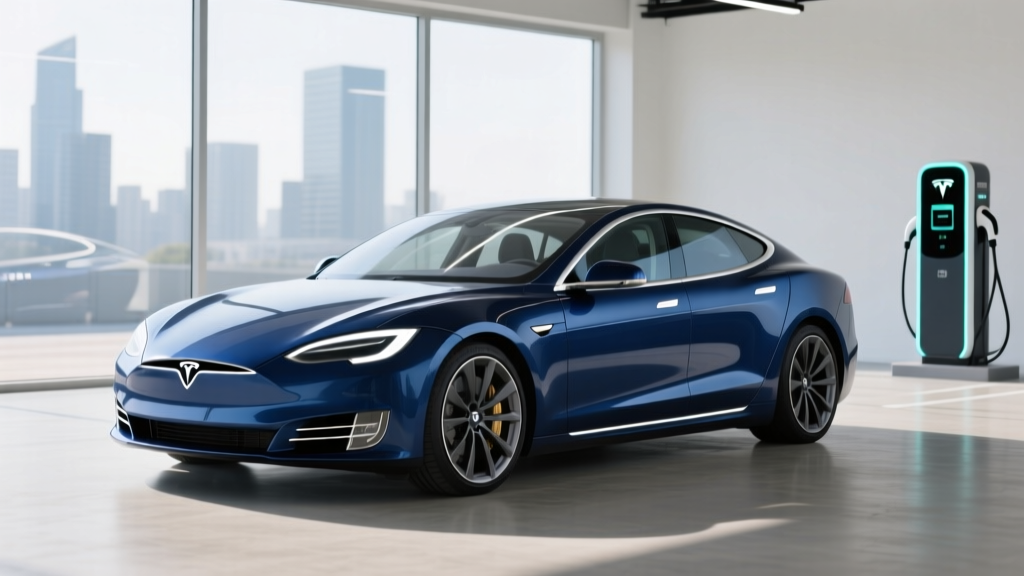
The Model S occupies the full-size luxury sedan segment, competing on size with the BMW 7 Series, Mercedes-Benz S-Class, and Porsche Taycan. Its low-slung, aerodynamic profile (drag coefficient of 0.208 Cd) contributes directly to its class-leading efficiency, but the footprint is substantial. Here are the exact exterior dimensions for the current Model S:
| Measurement | Value |
|---|---|
| Overall Length | 196.0 in (4,978 mm) |
| Overall Width (mirrors folded) | 77.8 in (1,976 mm) |
| Overall Width (mirrors out) | 86.2 in (2,189 mm) |
| Overall Height | 56.9 in (1,445 mm) |
| Wheelbase | 116.5 in (2,960 mm) |
| Front Track | 66.9 in (1,699 mm) |
| Rear Track | 67.3 in (1,710 mm) |
| Ground Clearance | 5.4 in (137 mm) |
| Curb Weight (Long Range) | 4,561 lbs (2,069 kg) |
| Curb Weight (Plaid) | 4,766 lbs (2,162 kg) |
| Drag Coefficient (Cd) | 0.208 |
Garage-fit note: At nearly 196 inches long and over 77 inches wide with mirrors folded, the Model S requires a full-size garage bay. If your garage is under 20 feet deep or has narrow door openings (under 80 inches), measure carefully before committing. The 86.2-inch width with mirrors extended is relevant for tight parking structures and narrow lane driving.
Interior Space: Passenger Dimensions and Comfort
The Model S seats five adults (or four in the optional Executive Rear Seating configuration with a fixed center console). The flat floor — a benefit of the skateboard battery architecture — gives the rear middle seat usable foot space, something rare in this segment.
| Measurement | Front | Rear |
|---|---|---|
| Headroom | 39.3 in | 38.1 in |
| Legroom | 42.7 in | 35.4 in |
| Shoulder Room | 58.4 in | 55.2 in |
| Hip Room | 55.0 in | 54.0 in |
Compared to the Porsche Taycan (33.6 inches rear legroom), the Model S offers meaningfully more rear-seat space. Taller passengers (6'2" and above) will find adequate but not generous rear headroom due to the sloping roofline. The panoramic glass roof creates an airy cabin feel but does reduce insulation slightly — expect more solar heat gain in summer than a traditional steel roof, though Tesla's UV/IR filtering glass mitigates most of it.
Cargo Capacity: Trunk, Frunk, and Folding Seats
The Model S offers dual cargo areas — a rear hatchback trunk and a front trunk (frunk) — giving it more total storage than most traditional luxury sedans with conventional trunk lids.
| Area | Volume |
|---|---|
| Rear Trunk (seats up) | 25.0 cu ft |
| Rear Trunk (seats folded, to roof) | 79.3 cu ft |
| Front Trunk (Frunk) | 5.3 cu ft |
| Total (seats up) | 30.3 cu ft |
The hatchback design is a practical advantage over the Taycan's traditional trunk opening. The 60/40 split-folding rear seats allow long items (skis, lumber, furniture boxes) to pass through while still seating one rear passenger. The 5.3 cu ft frunk is best suited for a charging cable bag, small groceries, or a carry-on suitcase — it's not large enough for a full suitcase set.
| Spec | Tesla Model S | Porsche Taycan |
|---|---|---|
| Length | 196.0 in | 195.4 in |
| Wheelbase | 116.5 in | 114.2 in |
| Rear Legroom | 35.4 in | 33.6 in |
| Total Cargo (seats up) | 30.3 cu ft | 15.3 cu ft |
| EPA Range (best trim) | 402 mi | 283 mi |
Range, Battery, and Efficiency
The current Model S is offered in two trims: Long Range and Plaid. Both use a 100 kWh battery pack (approximately 95 kWh usable capacity) with NMC (Nickel Manganese Cobalt) chemistry — Tesla does not use LFP in the Model S lineup, reserving that for the standard-range Model 3 and Model Y.
Model S Long Range: EPA 402 miles. Real-world expectation: ~340–360 miles on highway trips at 70–80 mph; ~300–330 miles in cold weather (below 32°F) due to battery heating demands and cabin HVAC load. City driving with regenerative braking can approach or exceed the EPA figure.
Model S Plaid: EPA 396 miles (19" wheels) / 359 miles (21" Arachnid wheels). Real-world: ~320–350 miles highway; expect 280–310 miles in winter conditions.
Source: EPA Fuel Economy — Tesla Model S
| Spec | Long Range | Plaid |
|---|---|---|
| EPA Range | 402 mi | 396 mi (19") / 359 mi (21") |
| Battery (Usable) | ~95 kWh (NMC) | ~95 kWh (NMC) |
| Drivetrain | Dual Motor AWD | Tri-Motor AWD |
| Horsepower | 670 hp | 1,020 hp |
| 0–60 mph | 3.1 sec | 1.99 sec |
| Top Speed | 155 mph | 200 mph |
| EPA Efficiency (Combined) | 120 MPGe (28 kWh/100mi) | 116 MPGe (29 kWh/100mi) |
The Long Range's 120 MPGe combined is exceptional for a 4,500+ lb luxury sedan. For context, that translates to roughly $0.04–$0.05 per mile on the national average electricity rate of $0.16/kWh — compared to $0.14–$0.18 per mile for a 25-MPG gas sedan at $3.50/gallon. Over 15,000 annual miles, that's roughly $1,350–$1,950 in annual fuel savings.
Charging Speeds: DC Fast, Level 2, and Supercharger Access
The Model S charges via the NACS (North American Charging Standard) connector natively — no adapter needed for Tesla Superchargers. This remains a significant ownership advantage: the Supercharger network offers the highest reliability and coverage of any DC fast-charging network in North America.
| Charging Method | Power | Speed / Time |
|---|---|---|
| DC Fast Charge (Supercharger V3/V4) | Peak 250 kW | 10–80% in ~25 min; adds up to 200 mi in 15 min |
| DC Fast Charge (CCS via adapter) | Up to 250 kW (station-dependent) | Varies by station capability |
| Level 2 (Tesla Wall Connector, 48A) | 11.5 kW | ~41 miles per hour of charging; full charge ~9 hours |
| Level 2 (Generic J1772 w/ NACS adapter) | Up to 11.5 kW | Same as above (amperage-dependent) |
| Level 1 (120V household outlet) | ~1.4 kW | ~4–5 miles per hour; emergency/trickle only |
Charging curve reality: The Model S peaks at 250 kW only at low state-of-charge (roughly 5–25%). From 25–50% it sustains around 180–200 kW, then tapers progressively. Above 80% SoC, expect speeds to drop below 60 kW. This is why Tesla and most EV guides recommend charging to 80% on road trips — the time penalty from 80–100% is disproportionate. For daily driving, Tesla recommends a charge limit of 80% for NMC batteries to maximize longevity.
Preconditioning matters: Navigate to a Supercharger using the car's built-in navigation and the Model S will automatically warm the battery en route. Without preconditioning (e.g., arriving at a DC fast charger from a cold start without nav routing), peak charge rates can be cut by 30–50% in cold weather. This is a common real-world complaint among new EV owners unfamiliar with thermal management.
Pricing, Trims, and Federal Tax Credit Eligibility
The Model S sits in the luxury price tier, and federal tax credit eligibility is constrained by IRS §30D rules — specifically the MSRP cap, buyer income limits, and battery-sourcing requirements.
| Trim | Base MSRP | As-Tested (typical options) | §30D Credit Eligible? |
|---|---|---|---|
| Long Range | $79,990 | $85,000–$92,000 | ❌ No — exceeds $55,000 sedan MSRP cap |
| Plaid | $94,990 | $100,000–$115,000 | ❌ No — exceeds $55,000 sedan MSRP cap |
Key tax credit rules (§30D, per IRS.gov):
- MSRP Cap for sedans: $55,000 — the Model S exceeds this in every configuration, making it ineligible for the new-vehicle federal credit.
- Buyer income caps: $150K single / $225K head of household / $300K joint filers (MAGI).
- Battery sourcing requirements: Critical minerals and battery component sourcing thresholds that tighten annually through 2032.
- Point-of-sale transfer: Eligible buyers can transfer the credit to the dealer for an immediate price reduction — but only if the vehicle itself qualifies.
The Model S does not qualify for the $7,500 federal tax credit. Buyers should check their state for any local incentives — some states (California, Colorado, Massachusetts) offer rebates that apply regardless of MSRP, though amounts and eligibility vary by jurisdiction. Consult your state's energy or DMV website for current programs.
Lease workaround: The commercial clean vehicle credit (§45W) may allow leasing companies to capture a credit and pass savings through reduced lease payments. Tesla has periodically offered lease options on the Model S — check current availability and whether any savings are passed through.
Tech, Driver Assistance, and Ownership Experience
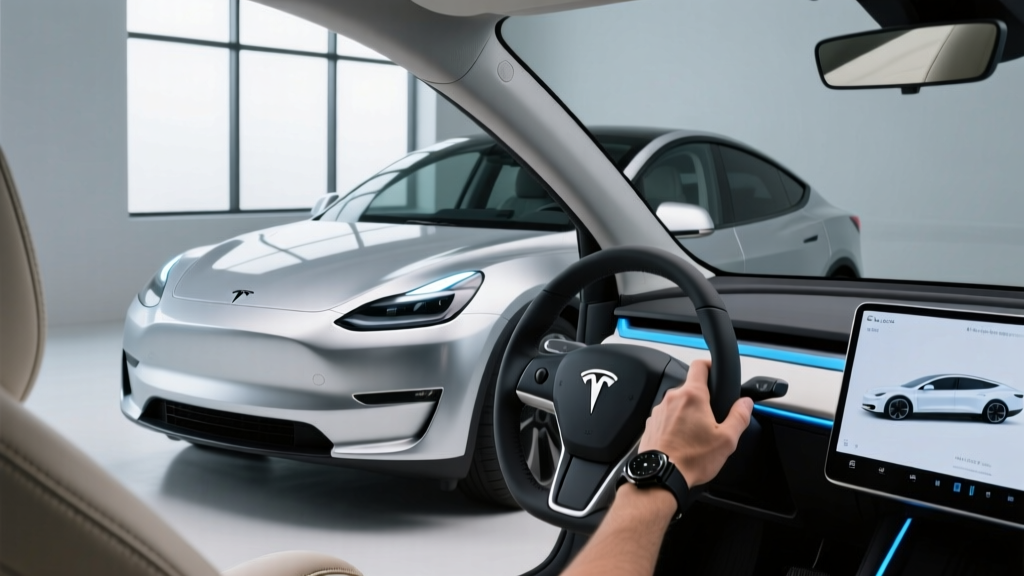
The Model S interior centers on a 17-inch floating touchscreen (tilting, 2200×1300 resolution) that controls virtually all vehicle functions. A 12.3-inch digital instrument cluster sits behind the yoke (or optional round steering wheel), and rear passengers get an 8-inch screen for climate and entertainment.
Standout tech features:
- Autopilot (standard): Traffic-aware cruise control, autosteer on divided highways, lane-keeping. SAE Level 2 — driver must remain engaged with hands on wheel and eyes on road.
- Full Self-Driving Supervised ($8,000 option): Adds automatic lane changes, navigate-on-autopilot, traffic light/stop sign recognition, and parking assist. Still SAE Level 2 — not autonomous. The driver bears full legal responsibility at all times.
- Over-the-air updates: Tesla regularly pushes software updates adding features, efficiency improvements, and UI refinements.
- 17-speaker 960W audio system with immersive sound processing.
- Gaming-capable processor (up to 10 teraflops) for in-car gaming while parked or charging.
- HEPA air filtration with Bioweapon Defense Mode — genuinely useful in wildfire-smoke regions.
Both Autopilot and FSD Supervised are SAE Level 2 driver-assistance systems. They do not make the Model S autonomous. The driver must continuously supervise the system, keep hands on the steering wheel, and be prepared to take over instantly. Only Level 4 services like Waymo operate without a driver. Tesla's naming of "Full Self-Driving" has been the subject of regulatory scrutiny — treat it as an advanced driver assist, not a replacement for attention.
Notable drawbacks:
- No physical buttons for climate, volume, or glovebox — everything routes through the touchscreen, which frustrates some buyers.
- Build quality has improved but still shows occasional panel-gap variation compared to German luxury OEMs.
- The yoke steering wheel, while optional, is polarizing — particularly for low-speed maneuvers and roundabouts where hand-over-hand is natural.
- Rear visibility is compromised by the thick C-pillars and small rear window; rely on the backup camera.
- Insurance costs are notably higher than average — expect $2,800–$4,200/year depending on location, driving record, and trim (Plaid is significantly more expensive to insure).
Warranty Coverage
| Coverage | Terms |
|---|---|
| Basic Vehicle (bumper-to-bumper) | 4 years / 50,000 miles |
| Battery & Drive Unit | 8 years / 150,000 miles |
| Battery Capacity Retention | Minimum 70% over warranty period |
The 8-year/150,000-mile battery warranty is competitive with the luxury EV segment. Tesla guarantees that the battery will retain at least 70% of its original capacity during the warranty period. Real-world degradation data from high-mileage Model S owners suggests NMC packs typically lose 10–15% capacity over the first 100,000 miles, with the curve flattening thereafter. Battery replacement outside warranty currently ranges from $12,000–$20,000 depending on pack configuration and labor.
Who Should Buy the Tesla Model S?
- Frequent road-trippers who value 400-mile range and Supercharger network reliability above all else.
- Performance sedan buyers who want supercar acceleration (Plaid's 1.99-sec 0–60) with four usable seats and daily-drivable comfort.
- Tech-forward professionals who appreciate OTA updates, the Supercharger ecosystem, and the Tesla app integration.
- Commuters with home charging who want to eliminate gas station visits and benefit from low per-mile electricity costs.
- You need federal tax credit eligibility — the Model S doesn't qualify due to the $55K sedan MSRP cap.
- You prefer traditional luxury interior materials and physical controls — the Porsche Taycan or BMW i7 may suit better.
- You need third-row seating or SUV cargo flexibility — look at the Model X or Rivian R1S.
- You're on a tighter budget — the Model 3 Performance offers 315-mile range and 2.9-sec 0–60 for roughly half the price.
Frequently Asked Questions
What is the real-world range of the Tesla Model S?
The EPA rates the Model S Long Range at 402 miles and the Plaid at 396 miles (19" wheels). In real-world highway driving at 70–80 mph, expect 340–360 miles for Long Range and 320–350 for Plaid. In cold weather (below 32°F), reduce those figures by 15–20% due to battery thermal management and cabin heating demands. City driving with regenerative braking can approach or slightly exceed EPA estimates.
How fast does the Model S charge at home and on the road?
On a Tesla Supercharger (V3 or V4), the Model S peaks at 250 kW and charges from 10–80% in approximately 25 minutes, adding up to 200 miles of range in 15 minutes. At home with a Tesla Wall Connector (48 amps, 240V), it charges at 11.5 kW, adding roughly 41 miles per hour — a full charge takes about 9 hours. A standard 120V outlet provides only 4–5 miles per hour and is suitable only for emergency or trickle charging.
Does the Tesla Model S qualify for the federal EV tax credit?
No. Under IRS §30D rules, new sedans must have an MSRP of $55,000 or less to qualify. The Model S starts at $79,990 (Long Range) and exceeds the cap in every configuration. Additionally, buyers must meet income limits ($150K single / $300K joint) and battery-sourcing requirements. Check your state's incentive programs separately — some states offer rebates without MSRP restrictions.
Is the Tesla Model S worth buying vs. the Porsche Taycan or BMW i7?
It depends on priorities. The Model S wins on range (402 vs. 283 miles EPA for the Taycan), Supercharger access, cargo space (30.3 vs. 15.3 cu ft), and price. The Taycan wins on driving dynamics, build quality, 800V charging architecture, and interior luxury feel. The BMW i7 offers a more traditional luxury experience with a larger rear seat but less range (318 miles). For pure EV practicality and road-trip capability, the Model S leads. For driving engagement and traditional luxury, the Taycan is hard to beat.
What are the biggest pros and cons of the Model S?
Pros: Best-in-class range (402 mi), Supercharger network access, blistering acceleration (1.99 sec Plaid), spacious hatchback cargo, continuous OTA improvements, HEPA air filtration, low per-mile energy cost.
Cons: No federal tax credit, high insurance costs, touchscreen-only controls, yoke steering is polarizing, premium pricing, build quality still trails German luxury OEMs, NMC battery requires 80% daily charge limit for longevity.
How do the dimensions of the Tesla Model S compare to a standard garage?
At 196 inches long, 77.8 inches wide (mirrors folded), and 56.9 inches tall, the Model S fits in most standard two-car garages (typically 20×20 feet minimum). However, if your garage is under 20 feet deep, the 196-inch length leaves less than 2 feet of clearance when the garage door is closed — tight for walking around the car. Width-wise, 77.8 inches with mirrors folded is manageable, but the 86.2-inch width with mirrors out requires care in tight parking structures. Measure your garage depth and door opening width before ordering.
Sources: EPA Fuel Economy, IRS Clean Vehicle Credits, Tesla Motors official specifications. Prices and specifications reflect the 2026 model year and are subject to change. Tax credit eligibility depends on individual circumstances — consult a tax professional.