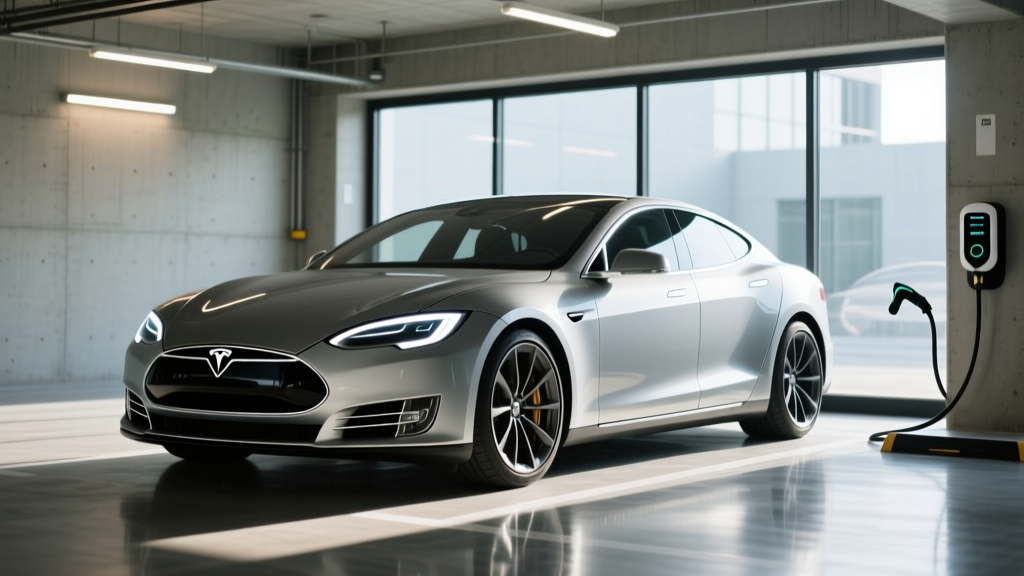
The Tesla Model S remains one of the heaviest sedans on the road — electric or otherwise. If you've been searching how much does Model S weigh, the short answer is that curb weight ranges from approximately 4,561 lbs for the Long Range to 5,390 lbs for the Plaid, according to Tesla's official specifications. But weight is only part of the engineering story. That mass sits low in the chassis thanks to a floor-mounted battery pack, giving the Model S a center of gravity closer to a sports car than a 5,000-lb luxury sedan.
In this deep-dive profile, we unpack what that weight means for real-world range, charging behavior, efficiency, and tire wear — alongside every spec a 2026 buyer needs before signing the order sheet.
Model S Curb Weight by Trim: The Numbers
Weight matters in an EV. Heavier vehicles require more energy to accelerate, climb grades, and sustain highway speeds — but they also benefit from greater regenerative braking potential and, in the Model S's case, superior traction from the low-slung battery mass.
| Specification | Model S Long Range | Model S Plaid |
|---|---|---|
| Curb Weight | ~4,561 lbs | ~5,390 lbs |
| Gross Vehicle Weight Rating (GVWR) | ~5,600 lbs | ~6,100 lbs |
| Weight Distribution (F/R) | ~48/52% | ~47/53% |
| Drivetrain | Dual Motor AWD | Tri-Motor AWD |
| Horsepower | 670 hp | 1,020 hp |
| 0–60 mph | 3.1 seconds | 1.99 seconds |
| Top Speed | 155 mph | 200 mph |
The roughly 830-lb gap between trims comes from the Plaid's third rear motor (the "Plaid" tri-motor setup), heavier half-shafts, upgraded cooling circuits for sustained track use, and additional structural bracing. That extra mass is noticeable in efficiency figures but largely invisible behind the wheel thanks to 1,020 hp.
EPA Range vs. Real-World Expectations
- Long Range: 402 miles (EPA)
- Plaid: 396 miles (EPA, 19" wheels) / ~359 miles (21" Arachnid wheels)
The Model S's EPA-rated efficiency lands at roughly 124 MPGe combined for the Long Range, translating to about 27–28 kWh per 100 miles in mixed driving. That's competitive with the Lucid Air Grand Touring but slightly behind the BMW i7 xDrive60, which benefits from a newer, more thermally efficient powertrain.
Tesla's heat pump — standard since the 2021 refresh — significantly reduces cold-weather cabin-heating energy draw compared to older resistive heaters. Preconditioning the battery while plugged in (via Scheduled Departure or the Tesla app) is the single most effective way to preserve range in winter.
Battery Chemistry, Capacity, and Degradation
Both Model S trims use a ~100 kWh (usable ~95 kWh) NMC (nickel-manganese-cobalt) battery pack. Tesla does not offer LFP chemistry in the Model S — that's reserved for the Standard Range Model 3 and Model Y, where lower energy density is acceptable given the smaller, lighter vehicles.
| Attribute | Model S (NMC) | LFP (for reference, Model 3 RWD) |
|---|---|---|
| Usable Capacity | ~95 kWh | ~57.5 kWh |
| Energy Density | Higher (more range per kg) | Lower |
| Cycle Life | ~1,500–2,000 full cycles | ~3,000+ full cycles |
| Recommended Daily Charge | 80% for daily, 100% for trips | 100% OK regularly |
| Cold-Weather Performance | Better low-temp discharge | More range loss in cold |
NMC chemistry gives the Model S its range and performance advantage but requires more careful charge-habit management. Keeping daily charge at 80% and only charging to 100% before long trips will maximize long-term State of Health (SoH). Tesla's battery warranty covers 8 years or 150,000 miles (whichever comes first) with a minimum 70% capacity retention threshold — one of the more generous thresholds in the luxury EV segment.
Charging Speed: DC Fast, Level 2, and Level 1
The Model S supports Tesla's V3 and V4 Supercharger network natively, with no adapter needed. For non-Tesla DC fast chargers, Tesla now ships all new vehicles with a NACS connector, and the legacy CCS adapter is available for purchase.
| Charging Level | Max Power | Speed / Time |
|---|---|---|
| Level 1 (120V household) | ~1.4 kW | ~3–4 miles per hour |
| Level 2 (240V home, 48A) | ~11.5 kW | ~34–38 miles per hour |
| Level 2 (Tesla Wall Connector, 60A) | ~11.5 kW (vehicle-limited) | ~34–38 miles per hour |
| DC Fast Charge (V3 Supercharger) | Peak 250 kW | 10–80% in ~27 minutes |
| DC Fast Charge (V4 Supercharger) | Peak 250 kW (current Model S limit) | 10–80% in ~27 minutes |
A critical ownership note: the Model S's charge curve tapers significantly above 80% State of Charge. The last 20% can take as long as the first 70%. On road trips, plan to charge to 80% and move on — charging to 100% at a Supercharger wastes time and stresses the battery.
Home charging on a Level 2 Wall Connector at 48 amps will fully replenish a depleted Long Range battery in roughly 9–10 hours, making overnight charging effortless. A 200-amp electrical panel is generally sufficient, but homes with older 100-amp service may need a panel upgrade — budget $1,500–$3,000 for that work via a licensed electrician.
Interior Space, Cargo, and Practicality
Despite its performance focus, the Model S is a genuinely practical five-seat luxury sedan with class-leading cargo versatility thanks to its hatchback liftgate and front trunk (frunk).
| Measurement | Specification |
|---|---|
| Seating Capacity | 5 passengers |
| Front Headroom | 39.7 inches |
| Front Legroom | 42.7 inches |
| Rear Headroom | 38.1 inches |
| Rear Legroom | 35.4 inches |
| Cargo Volume (rear seats up) | 28.0 cu ft |
| Cargo Volume (rear seats folded) | 79.3 cu ft |
| Frunk Volume | ~3.1 cu ft |
The 79.3 cu ft max cargo figure with seats folded rivals many compact SUVs. The hatchback opening is wide and the load floor flat — practical for IKEA runs or road-trip luggage that would overwhelm a traditional sedan trunk. The frunk is modest compared to the Model 3/Y but useful for charging cables and a small bag.
Tech, Autopilot, and the FSD Reality Check
The Model S ships with a 17-inch center touchscreen (landscape orientation, tilting), a 12.3-inch driver instrument cluster, and a rear-seat 8-inch display for climate and entertainment controls. The yoke steering wheel is standard; a round wheel is available at no cost.
FSD (Supervised) costs $8,000 as a one-time purchase or $99/month as of 2026. It adds automatic lane changes, traffic-light and stop-sign recognition, and Navigate on Autopilot for highway interchanges. Real-world performance varies significantly by geography and road-marking quality. It's a convenience feature, not a replacement for attentive driving.
- Navigate unmapped or poorly marked roads reliably
- Handle construction zones without driver intervention
- Operate in heavy snow, fog, or blinding rain
- Remove the driver's legal responsibility for the vehicle
Pricing, Tax Credits, and Total Cost
| Trim | Base MSRP | Typical As-Tested |
|---|---|---|
| Model S Long Range | $79,990 | $84,000–$92,000 |
| Model S Plaid | $94,990 | $102,000–$115,000 |
Options that push the as-tested price higher include FSD ($8,000), premium paint colors ($1,500–$2,500), 21-inch Arachnid wheels ($4,500), and the yoke steering wheel (no-cost option but often paired with the Plaid).
- MSRP Cap: Sedans must be ≤$55,000 — the Model S exceeds this cap and does NOT qualify for the new-vehicle §30D credit.
- Buyer Income Cap: AGI ≤$150,000 (single) / ≤$300,000 (joint) — even if the car qualified, many buyers would exceed the limit.
- Battery Sourcing: Critical minerals and battery components must meet phased-in domestic/free-trade sourcing thresholds — moot for Model S given the MSRP disqualification.
- Point-of-Sale Transfer: Available for qualifying vehicles — not applicable here.
- Bottom Line: The Model S does not qualify for the federal $7,500 new-EV tax credit. Check IRS §30D guidelines for the latest rules. Some state-level incentives (e.g., California, Colorado) may still apply — consult your state energy office or a tax professional.
Without the federal credit, the Long Range effectively starts at its full MSRP. For buyers coming from a luxury ICE sedan (BMW 5 Series, Mercedes E-Class), the total cost of ownership can still be compelling thanks to zero fuel costs, minimal maintenance (no oil changes, fewer brake replacements due to regen), and strong resale value.
Who Should Buy the Model S — And Who Shouldn't
- Class-leading 402-mile EPA range (Long Range)
- Supercharger network access — most reliable DC fast-charging ecosystem in North America
- Hatchback practicality with 79.3 cu ft max cargo
- 1,020 hp Plaid is one of the quickest production cars ever made
- Over-the-air updates continuously add features
- Strong resale value relative to German luxury EVs
- Does not qualify for $7,500 federal tax credit (MSRP exceeds $55K sedan cap)
- Interior materials don't match Mercedes EQS or BMW i7 at this price point
- No Apple CarPlay or Android Auto
- Rear-seat comfort is adequate but not executive-class
- Panel gaps and paint quality remain inconsistent vs. legacy luxury OEMs
- Yoke steering is polarizing and not ideal for low-speed maneuvering
- You need 350+ real-world highway miles and access to the most reliable fast-charging network
- You want sports-car acceleration in a practical five-seat sedan
- You value OTA software updates and Tesla's tech ecosystem
- You don't need executive rear-seat luxury
- Interior craftsmanship and ride comfort are top priorities
- You want Apple CarPlay integration
- Back-seat passengers are VIPs (BMW i7 with Executive Lounge)
- Efficiency-per-mile matters more than raw performance (Lucid Air Grand Touring)
Frequently Asked Questions
How much does the Tesla Model S weigh compared to competitors?
The Model S Long Range at ~4,561 lbs is lighter than the Mercedes EQS 580 (~5,800 lbs) and BMW i7 xDrive60 (~6,050 lbs), but heavier than the Lucid Air Grand Touring (~4,900 lbs with its larger battery). Tesla's weight advantage versus the German luxury EVs comes from a more compact powertrain and less sound-deadening mass.
Does the Model S qualify for any EV tax credits in 2026?
No federal §30D credit — the $55,000 MSRP cap for sedans disqualifies it. Some states offer separate rebates or HOV-lane access. Consult IRS guidelines and your state's energy office.
What is the real-world highway range of the Model S Plaid?
Expect roughly 290–330 miles at 75 mph in moderate temperatures on 19" wheels. The 21" Arachnid wheels reduce EPA range to ~359 miles and real-world highway range to approximately 260–300 miles. Aggressive driving in the Plaid will push consumption well above 30 kWh/100mi.
How long does the Model S battery last?
Tesla's NMC packs in the Model S are designed for 1,500–2,000+ full charge cycles. At 402 miles per cycle, that's theoretically 600,000+ miles before significant degradation — though real-world data from high-mileage owners suggests 10–15% degradation at 150,000 miles is typical. The 8-year/150,000-mile warranty with a 70% retention floor provides a safety net.
Is the Model S worth buying over the Lucid Air in 2026?
If Supercharger access, proven reliability data, and tri-motor performance (Plaid) matter most, the Model S wins. If interior luxury, efficiency (Lucid Air achieves ~4.5 mi/kWh vs. Tesla's ~3.6), and a more traditional steering wheel appeal to you, the Lucid Air Grand Touring is the stronger luxury play. Both are exceptional — they serve different buyer priorities.