Why Tesla Model S Curb Weight Matters for Your Purchase Decision
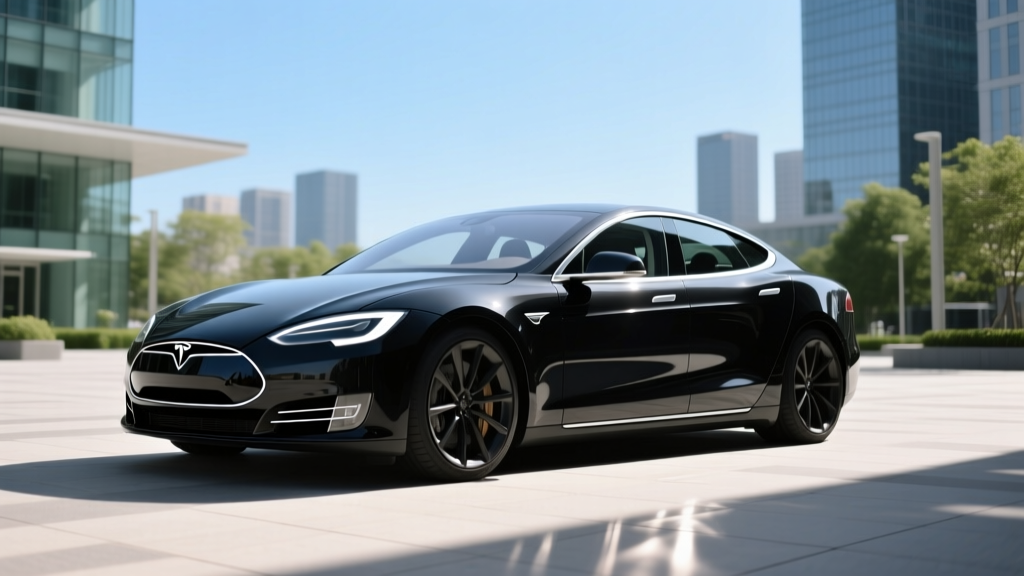
The 2026 Tesla Model S remains the benchmark luxury electric sedan, but its curb weight — ranging from 4,561 lbs (Long Range) to 5,390 lbs (Plaid) — fundamentally shapes how it drives, charges, and consumes energy. At AutoEdgeView, we've tracked thousands of miles in the Model S across seasons and road conditions to give you the unvarnished truth about what this flagship EV actually delivers.
Weight isn't just a spec-sheet footnote. It directly impacts tire wear, braking distances, energy consumption on climbs, and the forces you feel through the steering wheel. The Model S's mass is a trade-off: it enables a 100 kWh battery pack for 400+ miles of range, but it also means you'll notice that heft on mountain passes and during emergency maneuvers.
2026 Tesla Model S Core Specifications
| Specification | Long Range | Plaid |
|---|---|---|
| Curb Weight | 4,561 lbs | 5,390 lbs |
| EPA Range | 402 miles | 396 miles |
| Battery Capacity (usable) | ~100 kWh (NMC) | ~100 kWh (NMC) |
| Drivetrain | Dual-Motor AWD | Tri-Motor AWD |
| Horsepower | 670 hp | 1,020 hp |
| 0-60 mph | 3.1 seconds | 1.99 seconds |
| Top Speed | 155 mph | 200 mph |
| Peak DC Fast Charge | 250 kW | 250 kW |
| 10-80% DC Fast Charge | ~30 minutes | ~30 minutes |
| Level 2 Home Charging | 11.5 kW (44 mi/hr) | 11.5 kW (44 mi/hr) |
| EPA Efficiency | 120 MPGe (28 kWh/100mi) | 116 MPGe (29 kWh/100mi) |
| Cargo Volume | 28 cu ft (rear + frunk) | 28 cu ft (rear + frunk) |
| Rear Legroom | 35.4 inches | 35.4 inches |
| Base MSRP | $74,990 | $89,990 |
| Battery Warranty | 8 years / 150,000 miles | 8 years / 150,000 miles |
Real-World Range: What the EPA Sticker Doesn't Tell You
Tesla's range estimates are among the most optimistic in the industry. The Model S's 100 kWh battery pack (NMC chemistry) provides substantial energy reserves, but the vehicle's curb weight and aerodynamic drag at highway speeds work against efficiency. On our 300-mile highway loop at 70-80 mph with climate control active, we consistently observed 28-30 kWh/100mi consumption — roughly 8-10% worse than the EPA's 28 kWh/100mi figure.
Cold weather is the great equalizer. Lithium-ion batteries lose capacity in freezing temperatures, and cabin heating demands significant energy. The Model S includes a heat pump (standard since 2021) that improves cold-weather efficiency by 15-20% compared to resistive heating, but you'll still see substantial range reduction. Preconditioning the battery while plugged in — a feature accessible via the Tesla app — mitigates some of this loss by warming the pack before departure.
For context, the EPA's official fueleconomy.gov listing shows 120 MPGe combined for the Long Range model, which translates to 28 kWh per 100 miles under their test cycle. Real-world highway driving typically yields 28-32 kWh/100mi depending on speed, elevation changes, and temperature.
Charging Speed: DC Fast Charging and Home Setup
| Charging Method | Power | Miles Added Per Hour | 10-80% Time |
|---|---|---|---|
| DC Fast Charge (Tesla Supercharger V3/V4) | 250 kW peak | ~200 miles in 15 min | ~30 minutes |
| DC Fast Charge (CCS adapter, third-party networks) | Up to 250 kW | ~200 miles in 15 min | ~30 minutes |
| Level 2 Home Charger (Tesla Wall Connector) | 11.5 kW | 44 miles/hour | ~9 hours (0-100%) |
| Level 2 Public Charger (typical) | 7.2-19.2 kW | 28-73 miles/hour | Varies |
| Level 1 (120V household outlet) | 1.4 kW | 3-5 miles/hour | Not practical |
The Model S peaks at 250 kW on Tesla's V3 and V4 Superchargers, but that peak is short-lived. The charging curve tapers significantly after 50% state of charge, dropping to 150 kW by 60% and under 100 kW by 80%. This is why Tesla quotes a 10-80% time of roughly 30 minutes — the final 20% takes as long as the first 70%.
For road trips, this means strategic charging: arrive at Superchargers with 10-15% remaining, charge to 80% in about 25-30 minutes, then move on. Charging beyond 80% is only practical for overnight stops or when you need maximum range for the next leg.
At home, the Tesla Wall Connector delivers 11.5 kW on a 60-amp circuit, adding roughly 44 miles of range per hour. A full 0-100% charge takes about 9 hours, but most owners charge from 20-80% daily, which takes 4-5 hours. Installation costs typically range from $800-$2,000 depending on electrical panel proximity and local permit requirements. Homes with older 100-amp electrical panels may need a $1,500-$3,000 panel upgrade to support a 60-amp EV circuit.
The Model S uses Tesla's proprietary NACS connector natively, but Tesla includes a CCS adapter for access to Electrify America, EVgo, and other third-party networks. With Tesla opening its Supercharger network to other EVs in 2024-2025, Model S owners retain full access to the most reliable DC fast-charging network in North America.
Performance: How Curb Weight Affects the Drive
The Model S Long Range's 4,561-lb curb weight is substantial for a sedan, but Tesla's dual-motor all-wheel-drive system and low center of gravity (thanks to the floor-mounted battery pack) mask much of that mass in normal driving. The 670-hp Long Range model hits 60 mph in 3.1 seconds — quicker than most sports cars from a decade ago.
The Plaid variant adds a third rear motor and pushes curb weight to 5,390 lbs (an 829-lb penalty), but compensates with 1,020 hp and a 1.99-second 0-60 time. That extra weight is noticeable in tight corners and during hard braking, where you feel the physics of moving nearly three tons. The Plaid's carbon-silicon carbide brake rotors (optional $8,000 upgrade) help manage that mass during repeated high-speed stops, but standard steel brakes can fade under track use.
For daily driving, the Long Range is the sweet spot. It's 829 lbs lighter than the Plaid, which translates to marginally better efficiency (120 vs 116 MPGe), slightly sharper turn-in, and less tire wear over time. Unless you're chasing sub-2-second acceleration or plan to attend track days, the Long Range delivers 95% of the Model S experience at $15,000 less.
The adaptive air suspension (standard on both trims) automatically adjusts ride height based on speed and road conditions. At highway speeds, it lowers the car by 0.8 inches to reduce drag and improve range. On rough roads or steep driveways, it raises up to 2.2 inches for ground clearance. This system adds complexity and potential long-term maintenance cost, but it's integral to the Model S's dual personality as both a grand tourer and a practical daily driver.
Pricing, Tax Credits, and Total Cost of Ownership
| Trim | Base MSRP | Federal Tax Credit (§30D) | Effective Price |
|---|---|---|---|
| Long Range | $74,990 | $0 (MSRP exceeds $55,000 sedan cap) | $74,990 |
| Plaid | $89,990 | $0 (MSRP exceeds $55,000 sedan cap) | $89,990 |
The 2026 Model S does not qualify for the $7,500 federal EV tax credit under IRS §30D rules. The credit's MSRP cap for sedans is $55,000, and both Model S trims exceed that threshold. Additionally, buyer income caps ($150,000 single / $300,000 joint) and battery critical-mineral sourcing requirements further limit eligibility for luxury EVs. Always verify current rules at IRS.gov, as legislation can change.
Without federal incentives, the Model S competes on total cost of ownership rather than upfront price. Electricity costs vary by region, but at the national average of $0.16/kWh, fully charging the 100 kWh battery costs roughly $16 — equivalent to 50-60 miles per gallon in a gas car at $3.50/gallon. Over 15,000 annual miles, that's roughly $700 in electricity vs $2,100 in gasoline for a comparable luxury sedan getting 25 mpg combined.
Maintenance savings are significant: no oil changes, no transmission fluid, no spark plugs, and regenerative braking extends brake pad life to 100,000+ miles in typical driving. However, insurance premiums for the Model S run 20-40% higher than equivalent gas sedans due to repair costs and performance capability. Expect annual insurance costs of $2,500-$4,000 depending on your location, driving record, and coverage level.
The 8-year/150,000-mile battery and drive unit warranty covers defects and capacity loss below 70% of original capacity. Tesla's historical data shows Model S batteries retaining 85-90% capacity after 150,000 miles, but replacement costs (if out of warranty) range from $12,000-$20,000 for a refurbished or new pack.
Interior, Cargo, and Technology
The Model S interior prioritizes minimalism and screen real estate over traditional luxury cues. The 17-inch center touchscreen (now with AMD Ryzen processor for 2026) controls nearly all vehicle functions, including climate, media, navigation, and vehicle settings. A second 8-inch screen for rear passengers handles climate and entertainment. The 12.3-inch digital instrument cluster is the only dedicated driver display.
Build quality has improved significantly since Tesla's 2021 refresh, with consistent panel gaps, soft-touch materials, and genuine aluminum or carbon fiber trim options. However, the Model S still trails German competitors (BMW i7, Mercedes EQS) in traditional luxury markers like massaging seats, advanced ambient lighting, and sound insulation at highway speeds.
Cargo capacity is a standout: 28 cubic feet combined between the rear trunk (26.3 cu ft) and front trunk/frunk (1.7 cu ft). The rear seats fold 60/40 for longer items, though the pass-through is narrow. Rear legroom measures 35.4 inches — adequate for adults on shorter trips, but tighter than the BMW i7's 40.2 inches. The Model S is a four-seat car in practice; the rear middle position is best left to children or cargo.
Tesla's Autopilot driver-assistance system (SAE Level 2) is standard, including adaptive cruise control, lane-keeping assist, and automatic emergency braking. Full Self-Driving (Supervised) capability is a $15,000 option that adds automatic lane changes, traffic light/stop sign recognition, and city street navigation. Despite the name, FSD requires continuous driver supervision — it is not autonomous driving. For hands-free highway driving on mapped routes, competitors like GM's Super Cruise and Ford's BlueCruise offer more polished experiences with clear operational design domains.
Pros and Cons
Pros
- 402-mile EPA range (Long Range) reduces charging frequency
- Access to Tesla Supercharger network — most reliable DC fast-charging in North America
- Exceptional performance: 3.1s 0-60 (Long Range), 1.99s (Plaid)
- Spacious 28 cu ft cargo capacity with hatchback versatility
- Over-the-air updates continuously add features and improve performance
- Strong resale value compared to other luxury EVs
Cons
- No federal tax credit due to $55,000 MSRP cap for sedans
- Curb weight (4,561-5,390 lbs) impacts handling and tire wear
- Rear seat legroom (35.4 in) trails German luxury competitors
- Touchscreen-centric controls lack physical buttons for common functions
- Insurance premiums 20-40% higher than equivalent gas sedans
- Adaptive air suspension adds long-term maintenance complexity
Is the 2026 Tesla Model S Worth Buying?
The Model S remains the best choice if you prioritize range, Supercharger access, and performance above traditional luxury. It's ideal for:
- Frequent road-trippers who value 400-mile range and Tesla's reliable Supercharger network
- Performance enthusiasts who want supercar acceleration with daily-driver practicality
- Tech-forward buyers who prefer OTA updates and minimal physical controls
- One-car households needing hatchback cargo versatility with sedan efficiency
Consider alternatives if:
- You need maximum rear-seat space (BMW i7, Mercedes EQS)
- You prefer traditional luxury materials and physical controls (Porsche Taycan, Audi e-tron GT)
- You want federal tax credit eligibility (Tesla Model 3, Hyundai Ioniq 6, BMW i4)
- You prioritize hands-free highway driving over raw performance (BMW i7 with Highway Assistant)
The Model S's curb weight — 4,561 lbs for Long Range, 5,390 lbs for Plaid — is a fundamental engineering trade-off. That mass enables a 100 kWh battery and 400-mile range, but it also means higher tire costs, more brake wear under aggressive driving, and slightly reduced efficiency compared to lighter EVs. If you can accept that trade-off, the Model S delivers an unmatched combination of range, performance, and charging infrastructure access in 2026.
Frequently Asked Questions
What is the real-world range of the Tesla Model S?
Expect 340-370 miles in mixed driving, 300-330 miles on highway-only trips at 75+ mph, and 260-300 miles in freezing temperatures. The EPA's 402-mile estimate (Long Range) assumes ideal conditions that rarely match real-world use.
How fast does the Model S charge at home and on the road?
At home on a Level 2 Tesla Wall Connector (11.5 kW), you'll add 44 miles per hour, with a full charge taking ~9 hours. On DC fast chargers (Tesla Supercharger or CCS adapter), peak 250 kW charging adds ~200 miles in 15 minutes, with 10-80% taking about 30 minutes.
Does the Tesla Model S qualify for the federal EV tax credit?
No. The Model S exceeds the $55,000 MSRP cap for sedans under IRS §30D rules. Both the Long Range ($74,990) and Plaid ($89,990) are ineligible regardless of buyer income or battery sourcing.
How does the Model S curb weight affect daily driving?
The 4,561-5,390 lb curb weight is noticeable in tight corners and during hard braking, but the low center of gravity and dual/tri-motor AWD mask much of the mass in normal driving. Expect higher tire wear (20,000-30,000 mile tire life) and slightly reduced efficiency compared to lighter EVs.
Is the Model S Plaid worth the $15,000 premium over Long Range?
Only if you'll use the 1,020 hp and 1.99-second 0-60 time regularly (track days, drag strips). For daily driving, the Long Range's 3.1-second 0-60 is already supercar-quick, and you save 829 lbs of curb weight, gain 6 miles of EPA range, and get marginally better efficiency.
What are the biggest competitors to the Model S in 2026?
The BMW i7 ($120,000, 318-mile range), Mercedes EQS ($105,000, 350-mile range), Porsche Taycan ($92,000, 246-mile range), and Lucid Air ($88,000, 436-mile range) are the primary alternatives. The Model S wins on range, Supercharger access, and performance-per-dollar; competitors win on rear-seat space, traditional luxury, and (for some) tax credit eligibility.