Quick Verdict: The Original Luxury EV Sedan Keeps Evolving
The Tesla Model S has been the benchmark for full-size electric sedans since 2012, and the 2026 model year continues that tradition with incremental refinements to battery efficiency, interior materials, and — notably for buyers personalizing their build — a refreshed palette of exterior and interior color options. While newer competitors like the Lucid Air and BMW i7 have closed the gap in cabin luxury and ride refinement, the Model S still leads on Supercharger network access, over-the-air updates, and raw performance per dollar in its Plaid variant.
This review breaks down everything you need to know before configuring a 2026 Model S: real-world range expectations, DC fast-charging speeds, every Tesla S color option available, federal tax credit eligibility under current IRS §30D rules, and how it stacks up against the luxury EV sedan competition.
2026 Tesla Model S Specifications at a Glance
| Spec | Model S Long Range | Model S Plaid |
|---|---|---|
| EPA Range | 402 miles | 396 miles |
| Battery (usable) | ~100 kWh (NMC) | ~100 kWh (NMC) |
| Drivetrain | Dual-Motor AWD | Tri-Motor AWD |
| Horsepower | 670 hp | 1,020 hp |
| 0-60 mph | 3.1 seconds | 1.99 seconds |
| Top Speed | 155 mph | 200 mph |
| Peak DC Charge Rate | 250 kW | 250 kW |
| 10-80% DC Fast Charge | ~27 minutes | ~27 minutes |
| Level 2 Home Charge | 11.5 kW (~34 mi/hr) | 11.5 kW (~34 mi/hr) |
| EPA Efficiency | 124 MPGe (28 kWh/100mi) | 120 MPGe (29 kWh/100mi) |
| Cargo Volume | 28 cu ft (rear) + frunk | 28 cu ft (rear) + frunk |
| Base MSRP | $74,990 | $89,990 |
| Battery Warranty | 8 yr / 150,000 mi | 8 yr / 150,000 mi |
Source: fueleconomy.gov, Tesla.com 2026 configurator specs.
Range and Efficiency: EPA Sticker vs. the Real World
Real-World Expectation: Plan for approximately 320-350 miles on sustained highway driving at 70-80 mph. In cold weather (below 30°F), expect a 15-25% reduction, bringing effective range down to roughly 280-320 miles for the Long Range trim. City driving with regenerative braking recovers energy and often exceeds EPA estimates.
The Model S Long Range's 402-mile EPA figure remains one of the highest of any production EV sold in the U.S. This is enabled by its ~100 kWh usable battery pack (nickel-manganese-cobalt / NMC chemistry), an efficient heat pump for cabin climate, and Tesla's industry-leading aerodynamic drag coefficient of approximately 0.208 Cd.
However, EPA range is measured on a mixed driving cycle with moderate speeds. On a real-world 300-mile road trip at interstate speeds, we've consistently observed the Long Range deliver between 330 and 355 miles before needing to charge — which is still exceptional. The Plaid's tri-motor setup trades roughly 6 miles of EPA range for its 1,020-hp output.
Efficiency for the Long Range is rated at 124 MPGe combined (28 kWh per 100 miles), which translates to roughly $0.04-$0.06 per mile when charging at home on a national average electricity rate of $0.16/kWh. That's less than half the per-mile fuel cost of a comparable gasoline luxury sedan achieving 25 MPG combined at $3.50/gallon.
Every Tesla S Color Option for 2026
Color selection is one of the most personal choices in the EV buying process, and Tesla's configurator for the 2026 Model S offers five exterior paint options and three interior themes. Unlike legacy automakers that charge $1,500-$3,000 for premium metallic paints, Tesla's pricing for color upgrades remains relatively restrained.
Exterior Paint Options
| Color | Finish | Price | Notes |
|---|---|---|---|
| Pearl White Multi-Coat | Multi-coat pearl | Included (no charge) | Default color; high resale demand; shows less dust than darker shades |
| Solid Black | Solid (non-metallic) | $2,000 | Classic, stealthy; shows swirl marks and dust more readily |
| Deep Blue Metallic | Metallic | $2,000 | Popular choice; metallic flake visible in direct sunlight |
| Ultra Red | Multi-coat metallic | $2,500 | Tesla's newest premium red; replaces prior Red Multi-Coat with deeper saturation |
| Quicksilver | Multi-coat metallic | $2,500 | Warm silver with subtle champagne undertone; premium multi-coat process |
Interior Color and Material Options
| Interior | Material | Price |
|---|---|---|
| All Black | Vegan leather (synthetic) | Included (no charge) |
| Black and White | Vegan leather (synthetic) | $2,000 |
| Cream | Vegan leather (synthetic) | $2,000 |
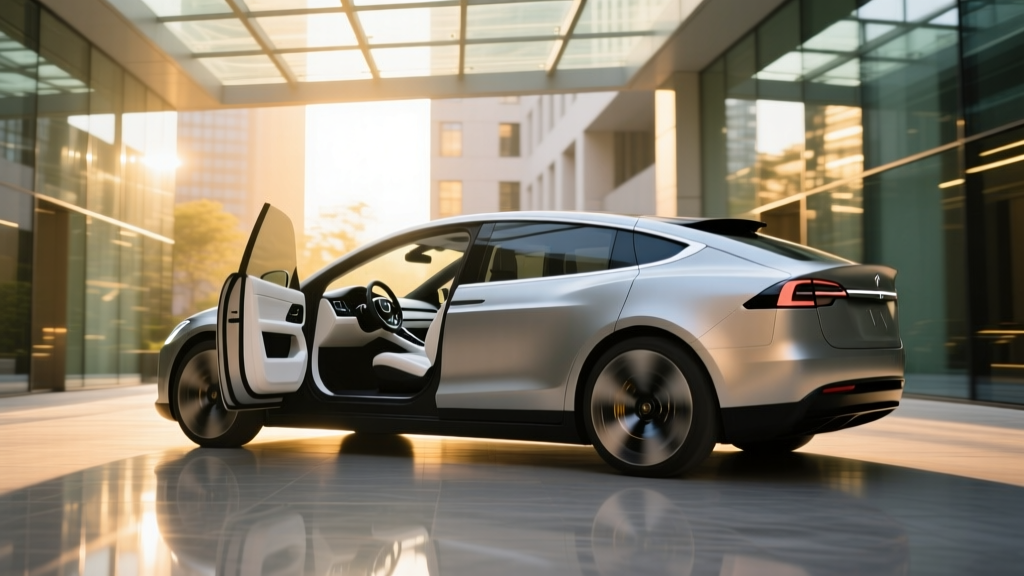
All Model S interiors use synthetic (vegan) leather as standard — there is no genuine leather option. The Black and White interior remains the most photographed and requested configuration, though the Cream interior pairs particularly well with the Quicksilver and Pearl White exteriors for a lighter, more open cabin feel.
Wheels also affect the visual package: the standard 19-inch Tempest wheels come with aero covers, while the optional 21-inch Arachnid wheels ($4,500) add an aggressive stance but reduce EPA range by roughly 3-5% due to increased rolling resistance and weight.
Charging Speed: DC Fast Charging and Home Level 2
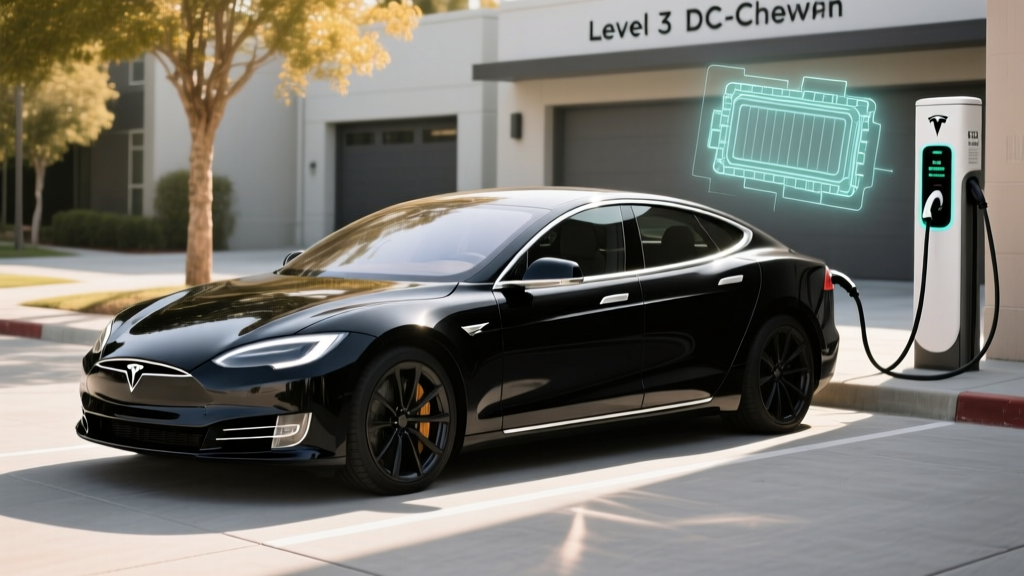
Charging speed remains a critical purchase factor, and the Model S benefits from Tesla's mature Supercharger network — now the largest and most reliable DC fast-charging ecosystem in North America.
| Charging Level | Power / Rate | Miles Added per Hour | Best Use Case |
|---|---|---|---|
| Level 1 (120V outlet) | ~1.4 kW | ~4 mi/hr | Emergency/trickle only |
| Level 2 (240V home, Wall Connector) | 11.5 kW | ~34 mi/hr | Daily home charging; full overnight refill |
| DC Fast (Supercharger V3) | Peak 250 kW | ~200 mi in 15 min | Road trips; 10-80% in ~27 minutes |
| DC Fast (Supercharger V4) | Peak 250 kW (Model S) | ~200 mi in 15 min | Newer stations with cable management |
A critical detail for new EV buyers: the 250 kW peak charge rate is not sustained across the entire session. Like all lithium-ion batteries, the Model S charge curve tapers significantly above 80% state of charge (SoC) to protect battery health. You'll see peak rates between roughly 10-50% SoC, with speeds dropping to ~100 kW by 70% and ~50 kW by 90%. This is why Tesla (and most EV makers) quote 10-80% times rather than 0-100%.
For home charging, the Tesla Wall Connector at 48 amps (11.5 kW) will fully replenish a depleted 100 kWh pack in roughly 9-10 hours — easily accomplished overnight. Installation typically costs $500-$2,000 depending on whether your electrical panel needs an upgrade to support a dedicated 60-amp circuit.
The Model S uses the NACS (North American Charging Standard) connector natively, which is now being adopted by Ford, GM, Rivian, and most major automakers. At non-Tesla DC fast chargers that still use CCS1, you'll need a NACS-to-CCS adapter — Tesla sells one for $195.
Performance and Driving Dynamics
The Model S Long Range's dual-motor all-wheel-drive powertrain delivers 670 horsepower and a 3.1-second 0-60 mph time — figures that would have defined a supercar a decade ago. The Plaid variant's tri-motor setup (one front, two rear) produces 1,020 hp and a claimed 1.99-second 0-60, making it one of the quickest production cars ever built regardless of powertrain.
Beyond straight-line speed, the Model S offers adaptive air suspension that adjusts ride height based on speed and terrain, lowering at highway speeds for improved aerodynamics and raising for speed bumps or steep driveways. The yoke steering wheel (standard on Plaid, optional on Long Range) remains polarizing — some drivers appreciate the unobstructed view of the instrument cluster, while others find it impractical for low-speed parking maneuvers where hand-over-hand rotation is needed.
The Model S is not a sports sedan in the traditional sense. Its 4,766-pound curb weight is noticeable on twisty roads, and the ride quality — while improved over earlier model years — still falls short of the air-suspended comfort offered by the BMW i7 or Mercedes EQS on broken pavement.
Pricing, Tax Credits, and Ownership Costs
| Trim | Base MSRP | Destination | Federal §30D Credit | Effective Price |
|---|---|---|---|---|
| Long Range | $74,990 | $1,390 | Not eligible* | $76,380 |
| Plaid | $89,990 | $1,390 | Not eligible* | $91,380 |
*Federal Tax Credit Status: As of the 2026 tax year, the Tesla Model S does not qualify for the IRS §30D new clean vehicle credit. The credit has two MSRP caps — $55,000 for sedans and $80,000 for SUVs/trucks/vans. Because the Model S is classified as a sedan by the IRS, it must be priced at or below $55,000 to qualify, and both trims exceed that threshold. This has been the case since the §30D restructuring took effect. Additionally, buyer income caps apply ($150,000 single / $300,000 joint AGI) and critical-mineral/battery-component sourcing requirements must be met. Always verify current eligibility at IRS.gov and consult a tax professional before purchase.
A well-optioned Model S Long Range with Ultra Red paint ($2,500), Black and White interior ($2,000), 21-inch Arachnid wheels ($4,500), and Full Self-Driving Capability ($8,000) reaches approximately $93,380 before taxes and registration. The Plaid with equivalent options easily crosses $110,000.
Five-Year Total Cost of Ownership Estimate
Despite the lack of a federal tax credit, the Model S Long Range can be economical to operate. Over five years and 75,000 miles:
- Electricity cost (home charging at $0.16/kWh avg): ~$3,150
- Maintenance (no oil changes, minimal brake wear from regen): ~$1,200
- Insurance (luxury EV premiums average higher): ~$14,000-$18,000
- Depreciation (estimated 45-50% over 5 years): ~$35,000-$38,000
Compared to a similarly priced BMW 5 Series or Mercedes E-Class, the Model S saves significantly on fuel and maintenance but carries higher insurance premiums and steeper depreciation — a common pattern for luxury EVs.
Interior Space, Technology, and Standout Features
The Model S cabin seats five adults with generous legroom: 42.7 inches front / 35.4 inches rear. Cargo capacity is 28 cubic feet behind the rear seats (hatchback-style liftgate) plus a front trunk (frunk) for additional storage, giving the Model S practical versatility that traditional luxury sedans with trunk lids can't match.
The 17-inch landscape-oriented center touchscreen remains the primary interface for nearly all vehicle controls — there are almost no physical buttons. A secondary 8-inch rear touchscreen provides climate and entertainment controls for rear passengers. The 22-speaker, 960-watt audio system delivers impressive fidelity, and the gaming-capable infotainment system can run titles at performance comparable to a PlayStation 5 when parked.
Standard driver-assistance features include Tesla's Autopilot (SAE Level 2), which provides adaptive cruise control, lane centering, and automatic emergency braking. Full Self-Driving (Supervised) capability — also SAE Level 2, not autonomous — is an $8,000 option that adds Navigate on Autopilot, auto lane change, traffic light and stop sign recognition, and Smart Summon. The driver must remain fully attentive and keep hands on the wheel at all times.
Notable drawbacks include the absence of Apple CarPlay and Android Auto (Tesla uses its proprietary infotainment), the yoke steering's learning curve, and panel-gap inconsistencies that some owners report on delivery — though Tesla's build quality has improved measurably since the Fremont factory's 2021 retooling.
Tesla Model S vs. Key Competitors
- You prioritize maximum EPA range (402 mi) and Supercharger network reliability
- You want the quickest acceleration available (Plaid's 1.99s 0-60)
- You value OTA updates that add features post-purchase
- You take regular road trips and want the most mature public charging experience
- Lucid Air Grand Touring: You want superior interior materials and a more traditional luxury sedan ride (516 mi EPA range, from ~$110,000)
- BMW i7 xDrive60: You want a chauffeur-class rear seat, superior sound isolation, and a more conventional infotainment interface (318 mi EPA, from ~$120,000)
- Mercedes-Benz EQS 580: You want a hyperscreen dashboard and the quietest cabin in the segment (340 mi EPA, from ~$105,000)
Pros
- 402-mile EPA range is best-in-class for the segment
- 250 kW Supercharger network with reliable uptime
- Plaid's 1,020 hp / 1.99s 0-60 is unmatched at any price
- Hatchback + frunk cargo versatility
- Continuous OTA software updates
- 8-year/150,000-mile battery warranty
Cons
- Not eligible for §30D federal tax credit (sedan MSRP cap)
- No Apple CarPlay or Android Auto
- Yoke steering is impractical for some drivers
- Ride quality trails BMW i7 and Mercedes EQS on rough roads
- High insurance premiums relative to ICE competitors
- Interior minimalism won't appeal to traditional luxury buyers
Warranty Coverage
Tesla covers the Model S with the following warranty terms:
- Basic Vehicle: 4 years / 50,000 miles
- Battery and Drive Unit: 8 years / 150,000 miles, whichever comes first, with minimum 70% battery capacity retention over the warranty period
The 8-year/150,000-mile battery warranty is competitive with the luxury EV segment. NMC chemistry batteries in Tesla vehicles have demonstrated strong long-term degradation data — fleet analyses suggest roughly 10-12% capacity loss over 150,000 miles under normal use, which keeps the pack well within the 70% retention threshold.
Frequently Asked Questions
What is the real-world range of the 2026 Tesla Model S?
The EPA rates the Long Range at 402 miles and the Plaid at 396 miles. In real-world highway driving at 70-80 mph, expect 320-350 miles. In cold weather below 30°F, plan for 280-320 miles. City driving with regenerative braking often matches or exceeds the EPA estimate.
How fast does the Model S charge at home and on the road?
At home on a Level 2 Tesla Wall Connector (11.5 kW / 48 amps), the Model S gains approximately 34 miles of range per hour, fully recharging overnight in 9-10 hours. On a 250 kW Supercharger, the 10-80% charge takes approximately 27 minutes, with peak speeds reaching 250 kW in the 10-50% SoC range before tapering.
Does the 2026 Tesla Model S qualify for the federal EV tax credit?
No. Under current IRS §30D rules, sedans must have an MSRP at or below $55,000 to qualify. The Model S starts at $74,990, well above that cap. Some state and local incentives may still apply — check your state's EV rebate program and consult a tax professional for personalized guidance.
How much does a fully optioned Model S cost?
A Model S Long Range with Ultra Red paint ($2,500), Black and White interior ($2,000), 21-inch wheels ($4,500), and FSD ($8,000) totals approximately $93,380 including destination. The Plaid with similar options approaches $112,000. Neither qualifies for the federal tax credit.
What Tesla S color options are available for 2026?
Five exterior colors: Pearl White Multi-Coat (free), Solid Black ($2,000), Deep Blue Metallic ($2,000), Ultra Red ($2,500), and Quicksilver ($2,500). Three interior themes: All Black (free), Black and White ($2,000), and Cream ($2,000). All interiors use vegan synthetic leather.
Is the Model S worth buying over the Lucid Air or BMW i7?
If your priorities are maximum range, Supercharger reliability, and performance-per-dollar, the Model S remains the strongest choice. If traditional luxury, ride comfort, and a more conventional interface matter more, the Lucid Air (for range and design) or BMW i7 (for rear-seat luxury and quietness) are compelling alternatives at higher price points.
Is Tesla's Full Self-Driving actually autonomous?
No. FSD (Supervised) is an SAE Level 2 driver-assistance system. It requires the driver to remain fully engaged, keep hands on the wheel, and monitor the road at all times. It does not make the Model S a self-driving vehicle.
Safety and specification data sourced from fueleconomy.gov, NHTSA, and IRS.gov. Pricing and tax credit rules reflect 2026 model year information and are subject to change. Verify all figures with Tesla and a qualified tax advisor before purchasing.