The Tesla Model S remains one of the most accomplished electric sedans on the market, but prospective buyers consistently ask one question above all others: how long to charge a Tesla Model S? The answer depends heavily on which charging method you use, the state of the battery when you plug in, and whether you're charging a Long Range or Plaid variant. In this review, we cover every charging scenario — from a 250 kW Supercharger session to overnight home replenishment — alongside the full ownership picture: real-world range, performance, pricing, tax-credit eligibility, and how the 2026 Model S stacks up against luxury EV rivals.
2026 Tesla Model S: Core Charging & Performance Specs
| Specification | Model S Long Range | Model S Plaid |
|---|---|---|
| EPA Range | 402 miles | 396 miles |
| Battery (usable) | ~95 kWh (NMC) | ~95 kWh (NMC) |
| Max DC Fast Charge | 250 kW peak | 250 kW peak |
| 10–80% DC Time | ~27 minutes | ~27 minutes |
| Level 2 Home Rate | 11.5 kW (48A) | 11.5 kW (48A) |
| Miles per Hour (L2) | ~34 mi/hr | ~34 mi/hr |
| 0–60 mph | 3.1 seconds | 1.99 seconds |
| Horsepower | 670 hp | 1,020 hp |
| Drivetrain | Dual-Motor AWD | Tri-Motor AWD |
| MPGe (combined) | 120 MPGe | 116 MPGe |
| Efficiency | 28 kWh/100 mi | 29 kWh/100 mi |
| Base MSRP | $79,990 | $94,990 |
| Battery Warranty | 8 yr / 150,000 mi | 8 yr / 150,000 mi |
Source: EPA fueleconomy.gov and Tesla's official specifications.
How Long to Charge a Tesla Model S: Every Method Explained
Charging time is a function of power (kW) and battery capacity (kWh). The Model S's ~95 kWh battery is large by EV standards, meaning it holds a lot of energy but also takes longer to fill than a smaller-pack vehicle. Here's how each method performs in practice.
| Charging Method | Power (kW) | Miles Added per Hour | 10–80% Time | Best Use Case |
|---|---|---|---|---|
| Tesla Supercharger V3 (DC) | 250 kW peak | ~1,000+ mi/hr (peak) | ~27 minutes | Road trips |
| CCS DC Fast Charger (adapter) | Up to 250 kW | ~1,000+ mi/hr (peak) | ~27 minutes | Non-Tesla networks |
| Home Level 2 (Wall Connector, 60A circuit) | 11.5 kW | ~34 mi/hr | ~7.5 hours (full) | Overnight charging |
| Home Level 2 (40A circuit) | 9.6 kW | ~28 mi/hr | ~9 hours (full) | Standard 50A breaker |
| Level 1 (120V outlet) | ~1.4 kW | ~4 mi/hr | ~68 hours (full) | Emergency/top-up only |
Understanding the DC Fast-Charge Curve
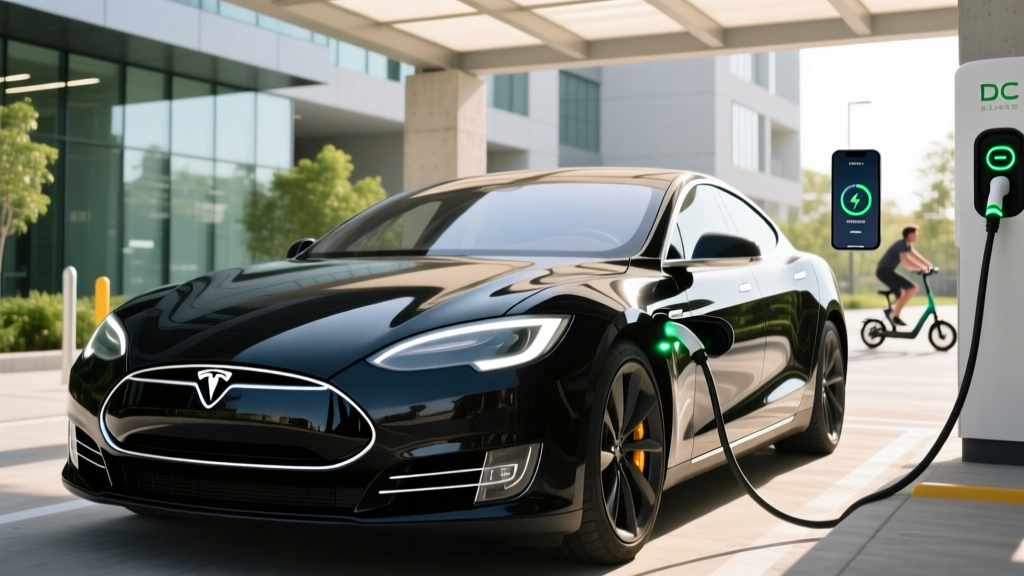
The 250 kW peak rate is exactly that — a peak. The Model S achieves it only when the battery is preconditioned (warmed to optimal temperature via navigation to a Supercharger) and at a low state of charge, typically below 30%. As the battery fills, the charge rate tapers to protect cell longevity. Expect roughly 250 kW from 10–30%, dropping to ~150 kW through 50%, and falling below 60 kW past 80%. This taper is why the 10–80% metric is the industry standard: the last 20% can take nearly as long as the first 70%.
On a non-Tesla network using Tesla's CCS adapter, performance depends on the station's output. A 350 kW Electrify America stall won't charge the Model S faster than 250 kW because that's the car's onboard limit. However, a 50 kW CHAdeMO or older CCS station will be dramatically slower — budget 90+ minutes for a meaningful session on those.
Home Charging: What You Actually Need
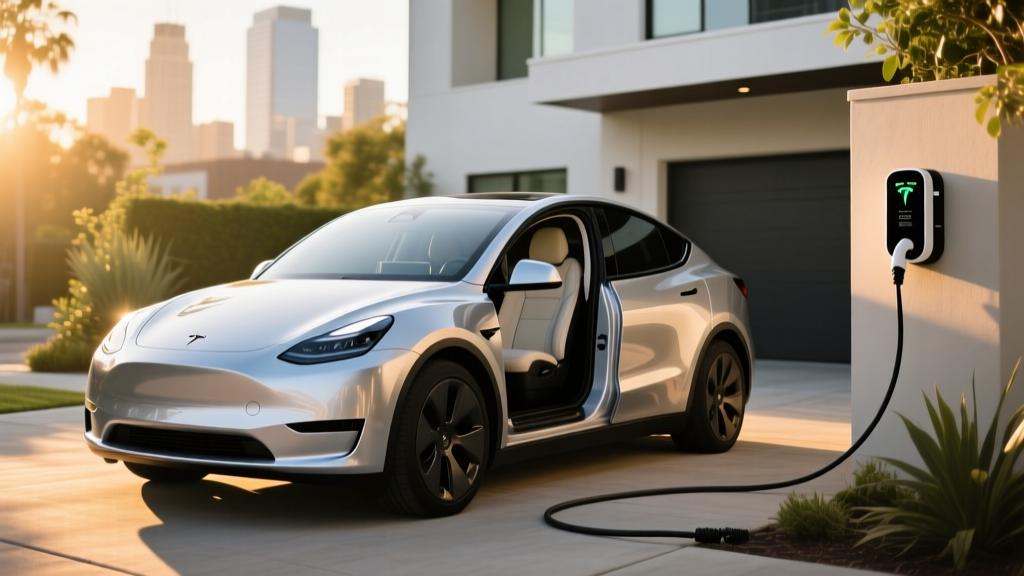
The Tesla Wall Connector on a 60-amp circuit delivers 48 amps (11.5 kW), replenishing roughly 34 miles of range per hour. For most owners driving 30–50 miles daily, that means plugging in at night restores your full daily consumption in under two hours. A full 0–100% charge takes about 7.5 hours at this rate.
If your electrical panel supports only a 50-amp breaker (common in older homes), you'll charge at 40 amps / 9.6 kW, adding ~28 miles per hour. The upgrade from a 50A to a 60A circuit typically costs $200–$600 from a licensed electrician, depending on conduit run length and panel proximity — a worthwhile investment for daily convenience.
The EPA rates the 2026 Model S Long Range at 402 miles and the Plaid at 396 miles. In real-world driving, expect:
- City/suburban (moderate climate): 370–400 miles — EVs are most efficient in stop-and-go thanks to regenerative braking.
- Highway (70–80 mph, 70°F): 310–350 miles — aerodynamic drag dominates at speed.
- Cold weather (below 30°F, mixed driving): 260–320 miles — battery chemistry slows, and cabin heating draws significant energy even with the Model S's heat pump.
On a 300-mile winter road trip at highway speed, plan one Supercharger stop to arrive comfortably. In summer, the same trip is doable without stopping.
Performance, Efficiency, and Daily Livability
The Model S Long Range delivers 670 horsepower from its dual-motor all-wheel-drive powertrain, hitting 60 mph in 3.1 seconds — quicker than most sports sedans costing twice as much. The tri-motor Plaid is in hypercar territory at 1,020 hp and a 1.99-second 0–60 time, though sustaining that performance generates heat that limits repeated launches.
Efficiency-wise, the Long Range achieves 120 MPGe combined (28 kWh/100 miles), which is strong for a 4,700-pound luxury sedan. For cost context, at the U.S. average electricity rate of ~$0.17/kWh, driving 100 miles costs roughly $4.76 — compared to about $12–$15 in a similarly quick gasoline sedan getting 22 mpg.
Interior Space, Cargo, and Tech
The Model S offers 28 cubic feet of cargo space behind the rear seats (including the rear trunk and front trunk/frunk). Rear legroom measures 35.4 inches — adequate for adults on moderate trips but tighter than a Mercedes EQS or BMW i7. The 17-inch center touchscreen handles nearly all vehicle functions, including climate, media, navigation, and vehicle settings. A secondary 8-inch rear touchscreen provides rear-passenger climate and entertainment control.
The yoke steering wheel is standard, though a round wheel is now available as a no-cost option. Build quality has improved meaningfully since the 2021 refresh, with tighter panel gaps and better material quality, though some competitors still edge ahead in fit and finish at this price point.
Driver-Assist Technology
Tesla's Autopilot (included) provides adaptive cruise control and lane-centering on highways. Full Self-Driving (Supervised), a $8,000 add-on or $99/month subscription, adds automated lane changes, navigation-based on-ramp-to-off-ramp steering, and traffic-light recognition.
Both Autopilot and FSD (Supervised) are SAE Level 2 driver-assistance systems. The driver must remain fully attentive, keep hands on the wheel (or demonstrate engagement via torque), and be prepared to take over instantly. These are not self-driving systems. Only Level 4 services like Waymo operate without a human driver in geofenced areas.
Pricing, Trims, and Federal Tax Credit Eligibility
The 2026 Tesla Model S is offered in two trims:
| Trim | Base MSRP | Destination | As-Tested (typical) | §30D Tax Credit Eligible? |
|---|---|---|---|---|
| Long Range | $79,990 | $1,990 | $81,980 | No — exceeds MSRP cap |
| Plaid | $94,990 | $1,990 | $96,980+ | No — exceeds MSRP cap |
Why the Model S Does Not Qualify for the Federal EV Tax Credit
Under IRS §30D rules, the federal clean vehicle credit provides up to $7,500 for qualifying new EVs. However, sedans must have an MSRP at or below $55,000 to qualify (the cap is $80,000 for SUVs, vans, and trucks). Because the Model S is classified as a sedan and starts at $79,990, it exceeds the cap regardless of trim or options.
Additional §30D requirements — buyer income caps ($150,000 single / $300,000 joint AGI), critical-mineral sourcing, and battery-component manufacturing rules — are moot here because the MSRP cap alone disqualifies it. Always verify current-year rules at IRS.gov, as legislation can change.
Some states offer their own rebates or tax credits that have no MSRP cap (for example, certain utility-company rebates or state-level luxury-EV programs). Check your state's energy office or utility provider for local incentives.
Tesla Model S vs. Key Competitors
The luxury electric sedan segment has expanded significantly. Here's how the Model S compares on the metrics buyers care about most:
| Metric | Tesla Model S LR | Lucid Air Pure | Mercedes EQS 450+ | BMW i7 xDrive50 |
|---|---|---|---|---|
| EPA Range | 402 mi | 419 mi | 390 mi | 318 mi |
| 10–80% DC Charge | ~27 min | ~30 min | ~31 min | ~34 min |
| Max DC kW | 250 kW | 200+ kW | 200 kW | 195 kW |
| 0–60 mph | 3.1 sec | 5.2 sec | 5.9 sec | 4.5 sec |
| Starting MSRP | $79,990 | $69,900 | $105,550 | $124,200 |
| Supercharger Access | Native | Adapter needed | Adapter needed | Adapter needed |
The Model S's biggest charging advantage is native Tesla Supercharger access — still the most reliable and widespread DC fast-charging network in North America, with over 20,000 stalls. Competitors now access the Supercharger network via NACS adapters, but the experience is still smoother in a Tesla: plug-and-charge with no app or RFID card required.
The Lucid Air Pure undercuts the Model S on price and beats it on range, but its Supercharger access requires an adapter and its DC charge rate is lower. The Mercedes EQS and BMW i7 offer significantly more interior luxury and rear-seat comfort but cost 30–55% more and don't match Tesla's charging infrastructure advantage.
Pros
- 402-mile EPA range is among the longest of any EV sold
- Native Supercharger network — most reliable road-trip charging
- 3.1-second 0–60 in Long Range; 1.99s in Plaid
- Continuous OTA updates add features over time
- Strong efficiency (28 kWh/100 mi) for a large sedan
- Over-the-air performance and feature upgrades
Cons
- No federal tax credit — sedan MSRP exceeds $55K cap
- Rear-seat comfort trails EQS/i7 at this price
- 250 kW peak DC rate trails some 800V competitors
- Yoke steering is polarizing (round wheel now optional)
- Insurance costs run 15–30% above segment average
- FSD (Supervised) remains Level 2 — not autonomous
Who Should Buy the 2026 Tesla Model S?
The Model S is best suited for:
- Frequent road-trippers who value 400+ miles of range and the reliability of the Supercharger network over luxury-brand cachet.
- Performance-oriented buyers who want supercar acceleration with four doors and practical cargo space.
- Tech-forward commuters who prioritize OTA updates, app integration, and the Tesla ecosystem over traditional luxury materials.
- Home-charging owners with access to Level 2 charging who can wake up to a full battery every morning, making public charging a road-trip-only concern.
It's less ideal for buyers who prioritize rear-seat luxury (consider the EQS or i7), those who need the federal tax credit to justify the purchase, or anyone uncomfortable with Tesla's minimalist, screen-centric interior philosophy.
Warranty and Long-Term Battery Outlook
Tesla covers the Model S battery and drive unit for 8 years or 150,000 miles, whichever comes first, with a minimum 70% capacity retention threshold. The vehicle limited warranty is 4 years / 50,000 miles.
The Model S uses NMC (nickel manganese cobalt) battery chemistry, which offers high energy density (enabling that 402-mile range) but requires more careful charge management than LFP chemistry. Best practices for long-term NMC health:
- Set daily charge limit to 80% — use 100% only for road trips.
- Avoid leaving the car at very low SoC (below 10%) for extended periods.
- Use DC fast charging sparingly for daily needs; Level 2 is gentler on cells.
- Keep the car plugged in during extreme cold so the battery thermal management system can maintain optimal temperature.
Real-world data from Tesla's impact reports and third-party fleet analyses (including Tesla's own fleet data) show Model S batteries retaining approximately 88–90% capacity at 100,000 miles, well within the warranty threshold. Out-of-warranty battery replacement, should it ever be needed, currently runs $12,000–$18,000 depending on the pack and labor.
Frequently Asked Questions
How long does it take to charge a Tesla Model S at a Supercharger?
At a V3 Supercharger (250 kW), with a preconditioned battery, the Model S charges from 10% to 80% in approximately 27 minutes. Tesla's "15 minutes for 200 miles" claim holds roughly true when arriving at a low state of charge. Past 80%, the rate tapers sharply — avoid charging to 100% on road trips unless necessary.
How long does home charging take for the Model S?
On a Tesla Wall Connector with a 60-amp circuit (11.5 kW), a full charge from 0–100% takes about 7.5 hours. For typical daily driving of 40–60 miles, you'll replenish in roughly 1.5–2 hours overnight. On a standard 120V outlet (Level 1), expect about 4 miles of range per hour — adequate only for emergency top-ups or very low-mileage drivers.
Can I charge a Tesla Model S at non-Tesla charging stations?
Yes. Tesla includes a CCS adapter with new vehicles, enabling access to Electrify America, EVgo, ChargePoint, and other CCS-equipped networks. The Model S can accept up to 250 kW on compatible CCS stations. Charging at CHAdeMO stations requires a separate adapter and is limited to ~50 kW.
Does the Tesla Model S qualify for the $7,500 federal EV tax credit?
No. Under current IRS §30D rules, sedans must have an MSRP of $55,000 or less to qualify. The Model S starts at $79,990 and exceeds this cap in every configuration. It also does not qualify for the $4,000 used-EV credit due to its price. Check your state for potential local incentives that may not have MSRP caps.
What is the real-world range of the Tesla Model S?
The EPA rates the Long Range at 402 miles. Real-world results vary: expect 370–400 miles in city driving, 310–350 miles at sustained highway speeds (70–80 mph), and 260–320 miles in cold weather (below 30°F). The heat pump helps mitigate winter losses, but extreme cold still impacts lithium-ion chemistry significantly.
Is the Tesla Model S worth buying over the Lucid Air or Mercedes EQS?
If charging infrastructure reliability and performance-per-dollar matter most, the Model S wins — its Supercharger access and 3.1-second 0–60 time are hard to match. If rear-seat luxury and traditional build quality are priorities, the EQS or i7 are stronger. The Lucid Air Pure offers more range at a lower price but with less proven charging infrastructure access and a smaller service network.