The Short Answer: Tesla Does Not Build a Model S Cabriolet
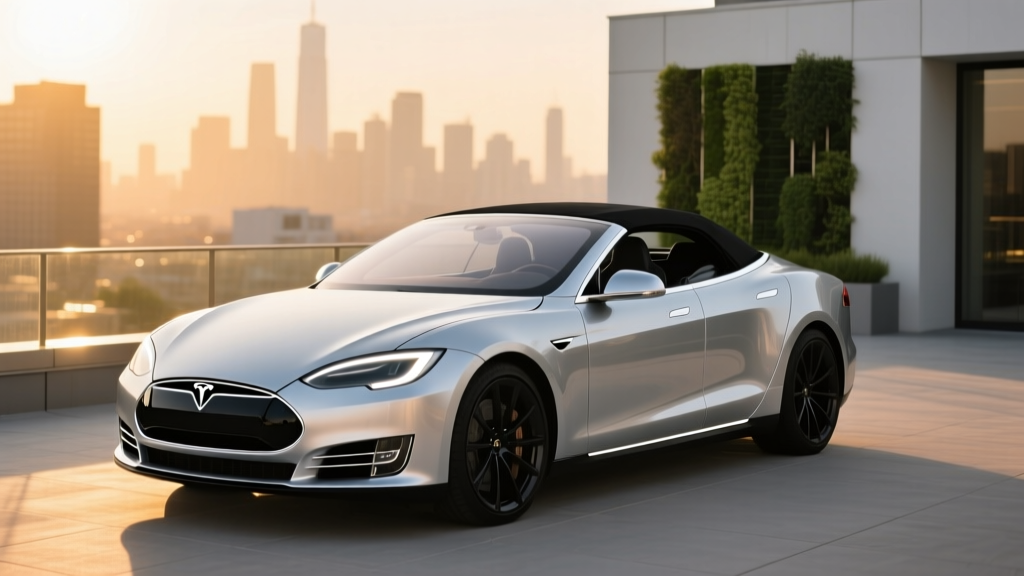
If you've been searching for a Tesla Model S cabriolet, here is the unvarnished truth: Tesla has never produced a factory convertible variant of the Model S. As of the 2026 model year, the Model S is offered exclusively as a four-door liftback sedan in two trims — the dual-motor Long Range and the tri-motor Plaid. No retractable soft-top, no folding hardtop, no roadster body style.
That hasn't stopped a small but persistent aftermarket from attempting open-air conversions, and it hasn't stopped EV shoppers from wondering whether a drop-top luxury EV is viable. This review covers the current 2026 Tesla Model S platform in full — range, charging, performance, pricing, and tax-credit eligibility — while addressing the convertible question head-on: what aftermarket options exist, what the engineering risks are, and which production EVs actually offer an open-air experience today.
2026 Tesla Model S: What Tesla Actually Sells
The 2026 Model S continues with the refreshed architecture introduced in 2021 (the "Palladium" platform), featuring a yoke or conventional steering wheel option, a 17-inch center touchscreen, a rear-seat entertainment display, and Tesla's latest hardware suite for Autopilot and Full Self-Driving (Supervised).
| Specification | Model S Long Range | Model S Plaid |
|---|---|---|
| Drivetrain | Dual-Motor AWD | Tri-Motor AWD |
| Horsepower | 670 hp | 1,020 hp |
| 0–60 mph | 3.1 seconds | 1.99 seconds |
| Top Speed | 155 mph | 200 mph |
| Battery (usable) | ~95 kWh (NMC) | ~95 kWh (NMC) |
| EPA Range | 402 miles | 396 miles |
| MPGe (combined) | 120 MPGe | 116 MPGe |
| Efficiency | 28 kWh/100 mi | 29 kWh/100 mi |
| Max DC Fast Charge | 250 kW (V3 Supercharger) | 250 kW (V3 Supercharger) |
| 10–80% DC Time | ~30 minutes | ~30 minutes |
| Level 2 Home Charge | 11.5 kW (~44 mi/hr) | 11.5 kW (~44 mi/hr) |
| Cargo (rear + frunk) | 26.3 cu ft + 3.1 cu ft | 26.3 cu ft + 3.1 cu ft |
| Rear Legroom | 35.4 inches | 35.4 inches |
| Base MSRP | $84,990 | $104,990 |
| Battery Warranty | 8 yr / 150,000 mi | 8 yr / 150,000 mi |
| Basic Warranty | 4 yr / 50,000 mi | 4 yr / 50,000 mi |
Source: Tesla Model S official specs and fueleconomy.gov.
Charging Speed: DC Fast Charging and Home Setup
The Model S uses a NACS (North American Charging Standard) connector natively — Tesla's own plug, which is now the industry standard adopted by Ford, GM, Rivian, Hyundai, and others. This gives the Model S seamless access to the entire Tesla Supercharger network, widely regarded as the most reliable public DC fast-charging infrastructure in the U.S.
| Charging Level | Power (kW) | Speed (miles of range/hr) | Notes |
|---|---|---|---|
| Level 1 (120V household) | ~1.4 kW | ~5 mi/hr | Emergency/top-off only |
| Level 2 (240V home Wall Connector) | 11.5 kW | ~44 mi/hr | Full charge in ~9 hours |
| DC Fast (V3 Supercharger) | Up to 250 kW peak | ~200 mi in 15 min | Tapers significantly above 80% SoC |
| DC Fast (V4 Supercharger) | Up to 250 kW (vehicle-limited) | Similar to V3 | Model S architecture caps at ~250 kW |
Charging curve reality: The Model S peaks near 250 kW only at low state-of-charge (roughly 5–25% SoC) and with battery preconditioning active. From 50–80%, speeds taper to roughly 100–130 kW. The 10–80% time of approximately 30 minutes reflects this taper. The Model S does not support 800V architecture (unlike the Hyundai Ioniq 5 or Porsche Taycan), which limits its peak charge rate relative to newer platforms. For a ~95 kWh battery, 250 kW represents roughly a 2.6C charge rate — adequate but no longer class-leading in 2026.
Aftermarket Convertible Conversions: What Exists and the Risks
A handful of specialty shops — most notably AAZN (formerly known for Tesla Model 3 convertible conversions) and a few European coachbuilders — have offered aftermarket drop-top conversions on Tesla sedans. These are not endorsed by Tesla and carry significant caveats:
- Structural integrity: The Model S uses a unibody aluminum-intensive structure. Removing the roof compromises torsional rigidity. Reputable converters add reinforcement subframes, but the result is heavier and never as rigid as a factory-engineered convertible.
- Warranty void: Any structural modification will void Tesla's battery and powertrain warranty (8 years / 150,000 miles). Tesla service centers may refuse to work on a modified vehicle.
- Cost: Professional aftermarket convertible conversions typically run $25,000–$45,000 on top of the vehicle purchase price, bringing a converted Model S Long Range to well over $110,000.
- Safety: No aftermarket Tesla convertible has been crash-tested by NHTSA or IIHS. Rollover protection is an open question.
- Resale: Modified vehicles are difficult to insure and resell. Most EV buyers want stock, warrantied vehicles.
For buyers determined to combine open-air driving with electric propulsion, production alternatives exist — though none are sedans.
Pricing, Tax Credits, and Real Ownership Cost
The 2026 Model S starts at $84,990 for the Long Range and $104,990 for the Plaid. Adding options (Ultra Red paint, 21-inch Arachnid wheels, FSD Supervised) can push a Long Range above $95,000 and a Plaid past $115,000.
| Item | Long Range | Plaid |
|---|---|---|
| Base MSRP | $84,990 | $104,990 |
| Typical as-tested (options + destination) | ~$90,000–$95,000 | ~$110,000–$115,000 |
| Federal §30D EV Tax Credit | Not eligible (MSRP cap exceeded) | Not eligible (MSRP cap exceeded) |
| Estimated 5-yr electricity cost (15k mi/yr) | ~$4,200 | ~$4,350 |
| Estimated 5-yr insurance | ~$18,000–$24,000 | ~$22,000–$28,000 |
Federal tax credit ineligibility: Under IRS §30D rules, the new clean vehicle credit is capped at sedans with an MSRP of $55,000 or less (the cap is $80,000 for SUVs, vans, and pickups). Since the Model S is classified as a sedan and starts at $84,990, it exceeds the MSRP cap regardless of your income level. Additionally, buyer income limits apply ($150,000 single / $300,000 joint AGI), and battery component and critical mineral sourcing requirements must be met. Even if the MSRP cap were not a barrier, the Model S's battery sourcing would need to meet 2026 phase-in thresholds. Consult a tax professional and review current rules at IRS.gov §30D.
Some states offer their own rebates or incentives that are not subject to the federal MSRP cap — check your state's energy or DMV website for current programs.
Who Should Buy the Model S (and Who Shouldn't)
The 2026 Model S remains one of the most capable electric sedans on the market, but it occupies a narrow lane:
Pros
- Class-leading EPA range (402 mi) among luxury electric sedans
- Supercharger network access (most reliable public charging in the U.S.)
- Exceptional straight-line performance (1.99s 0–60 on Plaid)
- Spacious liftback cargo area (26.3 cu ft) — more practical than most sedans
- Over-the-air updates keep the vehicle current years after purchase
- 8-year / 150,000-mile battery warranty
Cons
- No federal tax credit (MSRP exceeds $55K sedan cap)
- 250 kW peak charge rate trails 800V competitors (Taycan, Ioniq 5)
- Build quality inconsistency remains a reported concern
- Yoke steering is polarizing; conventional wheel costs extra on some configs
- Insurance premiums significantly above average for the segment
- Aging platform design (Palladium refresh was 2021 — interior feels dated vs. Lucid Air)
Best for: High-mileage commuters who want maximum range, frequent road-trippers who rely on the Supercharger network, and performance enthusiasts (Plaid trim). The liftback cargo area makes it surprisingly practical for families who don't need SUV height.
Not ideal for: Budget-conscious buyers (the Hyundai Ioniq 6 offers 361 miles for ~$40K less and qualifies for the tax credit), luxury sedan shoppers prioritizing interior refinement (Lucid Air, Mercedes EQS), or anyone wanting a convertible EV (no factory option exists).
Competitors: How the Model S Stacks Up
| Spec | Tesla Model S LR | Lucid Air Pure | BMW i5 eDrive40 | Mercedes EQS 450+ |
|---|---|---|---|---|
| EPA Range | 402 mi | 419 mi | 295 mi | 390 mi |
| Base MSRP | $84,990 | $74,900 | $70,200 | $104,400 |
| 0–60 mph | 3.1 sec | 5.2 sec | 5.7 sec | 5.9 sec |
| Max DC Charge | 250 kW | 200 kW | 205 kW | 200 kW |
| Federal Credit | No | Partial* | Partial* | No |
| Convertible Option | No | No | No | No |
*Credit eligibility depends on trim MSRP, buyer income, and battery sourcing — verify current rules.
None of the current luxury electric sedans offer a factory convertible. If open-air EV driving is a priority, the only production options in 2026 are limited: the Mini Cooper SE Convertible (limited availability, ~150-mile range) and the upcoming next-generation Tesla Roadster (announced but not yet in production — Tesla has delayed this model repeatedly since 2017, and it should not be counted on for near-term delivery).
Frequently Asked Questions
Does Tesla make a Model S convertible or cabriolet?
No. Tesla has never offered a factory convertible version of the Model S. The 2026 Model S is a four-door liftback sedan only. Aftermarket conversions exist but void the warranty, compromise structural safety, and cost $25,000–$45,000 on top of the vehicle price.
What is the real-world range of the 2026 Tesla Model S?
The EPA rates the Long Range at 402 miles. In real-world highway driving (70 mph, moderate temperatures), expect 320–350 miles. In cold weather (below freezing), range drops to roughly 280–320 miles. The Plaid's higher-performance motors reduce range slightly to 396 EPA miles, with similar real-world reductions.
How fast does the Model S charge at home and on the road?
On a Level 2 home charger (Tesla Wall Connector at 11.5 kW / 48 amps), the Model S gains approximately 44 miles of range per hour, fully charging in about 9 hours. On a V3 Supercharger, it peaks at 250 kW and charges from 10–80% in roughly 30 minutes — though the charge curve tapers significantly above 50% state-of-charge.
Does the 2026 Model S qualify for the $7,500 federal EV tax credit?
No. Under current IRS §30D rules, new clean vehicle credits for sedans are capped at an MSRP of $55,000. The Model S starts at $84,990, exceeding this cap. Buyer income limits and battery-sourcing requirements add further restrictions. Consult IRS.gov or a tax professional for your specific situation.
Is the Model S worth buying over the Lucid Air or BMW i5?
It depends on your priorities. The Model S wins on performance (especially Plaid), Supercharger access, and cargo practicality. The Lucid Air Pure offers more EPA range (419 mi) at a lower starting price. The BMW i5 offers better build quality and a more traditional luxury experience. If you rely on road trips and the Supercharger network, the Model S remains compelling. If interior refinement or value is paramount, look elsewhere.
What EV convertible options actually exist in 2026?
Very few. The Mini Cooper SE Convertible is the only mass-market electric convertible currently available, with limited range (~150 miles) and limited production. The Tesla Roadster (2nd generation) remains announced but not in production. No luxury electric sedan — Tesla, Lucid, BMW, Mercedes, or Porsche — offers a factory convertible body style.
Is Tesla's Autopilot or FSD self-driving?
No. Tesla Autopilot and Full Self-Driving (Supervised) are SAE Level 2 driver-assistance systems. The driver must remain fully attentive, keep hands on the wheel, and be prepared to take over at any moment. These systems do not make the vehicle autonomous. Only Level 4 services like Waymo operate without a driver — and those are limited to specific geofenced areas.