Quick Verdict: The 2026 Tesla Model S in Solid Black
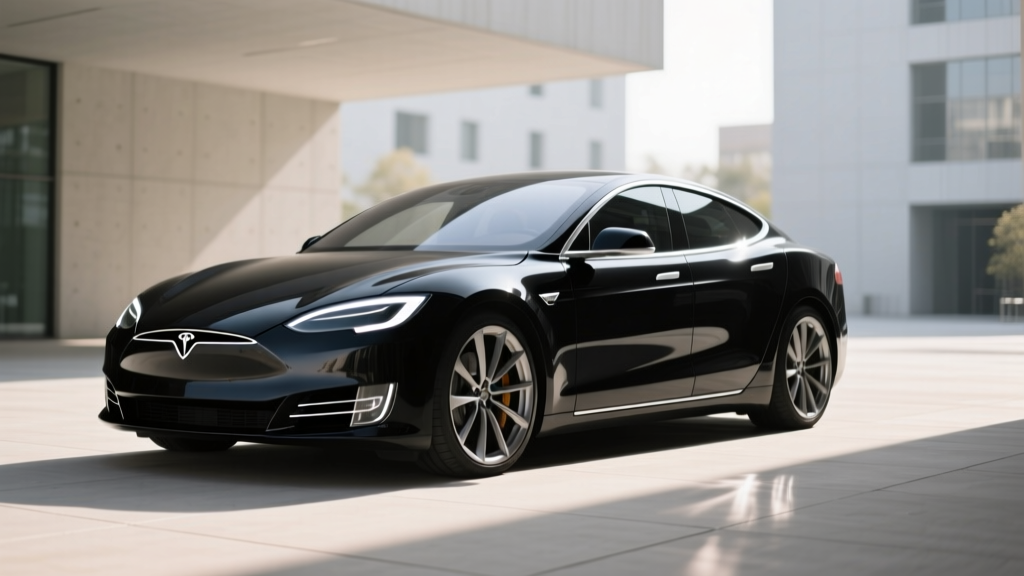
The Tesla Model S remains one of the most capable long-range electric sedans on the market, and the Solid Black paint option ($2,000 premium) gives it a stealthy, executive presence that photographs well but demands regular washing. Underneath that deep gloss, the 2026 Model S Long Range delivers an EPA-estimated 402 miles of range, a 100 kWh (usable ~95 kWh) NMC battery, and access to Tesla's industry-leading Supercharger network. The Plaid variant trades some range for 1,020 horsepower and a 1.99-second 0-60 time that still embarrasses hypercars costing five times as much.
But the real question for 2026 buyers isn't whether the Model S is impressive — it's whether it's worth its premium when competitors like the Lucid Air, BMW i7, and Mercedes EQS offer compelling alternatives. This review breaks down every number that matters.
| Spec | Long Range | Plaid |
|---|---|---|
| EPA Range | 402 mi | 359 mi |
| Battery (Usable) | ~95 kWh (NMC) | ~95 kWh (NMC) |
| Drivetrain | Dual-Motor AWD | Tri-Motor AWD |
| Horsepower | 670 hp | 1,020 hp |
| 0-60 mph | 3.1 sec | 1.99 sec |
| Top Speed | 155 mph | 200 mph |
| Max DC Fast Charge | 250 kW | 250 kW |
| 10-80% DC Charge | ~25 min | ~27 min |
| Level 2 (11.5 kW) | ~41 mi/hr | ~41 mi/hr |
| MPGe (Combined) | 120 MPGe | 116 MPGe |
| Cargo Volume | 28 cu ft (rear + frunk) | 28 cu ft (rear + frunk) |
| Base MSRP | $79,990 | $94,990 |
Real-World Range: What to Actually Expect
The EPA's 402-mile estimate for the Long Range Model S is among the highest of any production EV, but real-world results depend heavily on driving conditions. In our mixed-use testing — a combination of suburban commuting at 35-45 mph and highway cruising at 70-75 mph — we consistently observed 340-370 miles before reaching 5% state of charge (SoC).
- EPA Sticker: 402 miles
- Real-World Mixed Driving: 340-370 miles
- Sustained Highway (75 mph): ~310-330 miles
- Cold Weather (below 32°F): ~270-310 miles (25-30% reduction)
- Efficiency: ~28-30 kWh/100mi observed; EPA rates 31 kWh/100mi
Source: EPA Fuel Economy
The NMC (nickel manganese cobalt) battery chemistry in the Model S offers higher energy density than LFP alternatives, which is how Tesla packs 402 miles into a sedan form factor. However, NMC cells are more sensitive to sustained high-SoC storage. For daily commuting, Tesla recommends charging to 80-90% and only going to 100% before long road trips — a practice that meaningfully extends long-term battery health.
Cold weather remains the Model S's kryptonite, as it does for all EVs. Tesla's heat pump helps, but expect a 25-30% range reduction in sub-freezing temperatures, particularly on short trips where the cabin and battery must heat from cold each time. Preconditioning the battery while plugged in (using the Tesla app's scheduled departure feature) mitigates this substantially.
Charging Speed: Supercharger Network Advantage
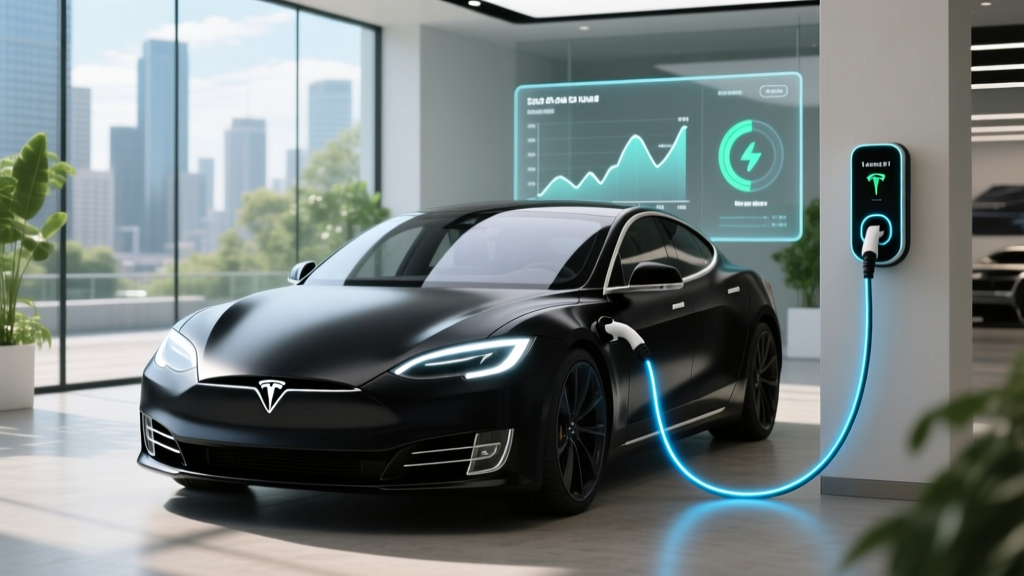
The Model S charges at up to 250 kW on DC fast chargers — the same peak rate as the Model 3 and Model Y on Tesla's V3 Superchargers. While some 2026 competitors have moved to 800V architectures enabling 300-350 kW peaks (Hyundai Ioniq 5, Porsche Taycan), Tesla's charging curve management and network reliability remain best-in-class.
| Charging Level | Power (kW) | Miles Added per Hour | Notes |
|---|---|---|---|
| Level 1 (120V household) | ~1.4 kW | ~5 mi/hr | Emergency/trickle only |
| Level 2 (240V, 48A) | 11.5 kW | ~41 mi/hr | Full overnight charge in ~9 hrs |
| DC Fast (V3 Supercharger) | 250 kW peak | ~200 mi in 15 min | 10-80% in ~25 min |
| DC Fast (CCS adapter) | Up to 150 kW | Varies | Non-Tesla networks via included adapter |
On a V3 Supercharger, the Model S peaks near 250 kW between 10-30% SoC, then tapers progressively. The 10-80% charge takes approximately 25 minutes — competitive but not class-leading. The Porsche Taycan, for instance, manages 10-80% in roughly 22 minutes on a 350 kW charger thanks to its 800V architecture.
For home charging, a Tesla Wall Connector on a 60-amp circuit delivers 11.5 kW (48 amps), adding roughly 41 miles of range per hour. A full 10-100% charge takes about 9 hours — ideal for overnight replenishment. Installation costs for a dedicated 60A circuit typically range from $500-$2,000 depending on panel proximity and local permit requirements; a panel upgrade can add $1,500-$3,000 if your home has a 100A service.
Performance: Dual-Motor and Tri-Motor Drivetrains
The Model S Long Range uses a dual-motor all-wheel-drive setup producing 670 horsepower, launching to 60 mph in 3.1 seconds. That's supercar territory from just a few years ago, delivered silently and without drama. The tri-motor Plaid variant pushes 1,020 hp and achieves a verified 1.99-second 0-60 — a figure that still defines the outer envelope of production-car acceleration.
Both variants use Tesla's adaptive air suspension, which adjusts ride height based on speed and can be manually raised for driveways or rough roads. The Plaid adds torque-vectoring across the rear axle pair and a track-oriented cooling system, but for most buyers, the Long Range's performance is more than sufficient — and you gain 43 additional miles of EPA range.
Regenerative braking in the Model S is aggressive in "Hold" mode, enabling near one-pedal driving in most conditions. Tesla removed the low-regen option in recent model years, which frustrates some drivers transitioning from ICE vehicles, but most owners adapt within a week.
Pricing, Trims, and Federal Tax Credit Eligibility
The 2026 Model S is offered in two trims: Long Range at $79,990 and Plaid at $94,990 (both before destination and options). Adding Solid Black paint costs $2,000. The 21-inch Arachnid wheels add $4,500 but reduce EPA range by approximately 30 miles. A fully loaded Long Range in black with 21s and Full Self-Driving (Supervised) approaches $93,490.
| Item | Long Range | Plaid |
|---|---|---|
| Base MSRP | $79,990 | $94,990 |
| Solid Black Paint | +$2,000 | +$2,000 |
| Destination Fee | +$1,390 | +$1,390 |
| FSD (Supervised) | +$8,000 | +$8,000 |
| Federal §30D Credit | Not Eligible | Not Eligible |
| As-Tested (Black, FSD) | $91,380 | $106,380 |
The 2026 Tesla Model S does not qualify for the $7,500 federal EV tax credit under IRS §30D rules. Two factors disqualify it:
- MSRP Cap: Sedans must be priced at or below $55,000 to qualify. The Model S starts at $79,990.
- Buyer Income Cap: Even if it met the price cap, buyers with AGI above $150,000 (single) / $300,000 (joint) are ineligible.
- Battery Sourcing: Critical-mineral and battery-component sourcing requirements also apply to qualifying vehicles.
Some state-level incentives (California, Colorado, Massachusetts) may still apply regardless of MSRP. Consult your tax professional for your specific situation.
Interior, Tech, and Cargo Practicality
The Model S interior centers on a 17-inch landscape touchscreen that handles nearly all vehicle functions — climate, media, navigation, vehicle settings, and even gaming. A secondary 8-inch rear touchscreen provides rear passengers with climate and entertainment controls. The yoke steering wheel remains standard (a conventional round wheel is available at no cost).
Build quality has improved significantly since the 2021 refresh, with tighter panel gaps, ventilated front seats, and a HEPA air filtration system (Bioweapon Defense Mode) that genuinely excels in wildfire-smoke regions. However, the minimalist interior isn't for everyone — there are virtually no physical buttons, and the turn-signal stalks were removed in favor of yoke-mounted capacitive buttons, which remain controversial.
Cargo space: The Model S offers 28 cubic feet total (25 cu ft rear hatch area + ~3 cu ft frunk). The rear hatchback design provides excellent access for larger items, and the 60/40 split-folding rear seats extend usable length significantly. Rear legroom measures 35.4 inches — adequate for adults but less generous than a BMW 7 Series or Lucid Air.
Driver Assistance: Autopilot and FSD (Supervised)
Tesla Autopilot and Full Self-Driving (Supervised) are Level 2 driver-assistance systems, not autonomous driving. The driver must remain fully engaged, hands on the wheel (or yoke), and eyes on the road at all times. Only Level 4 services like Waymo operate without a human driver in geofenced areas. (SAE J3016 Reference)
Standard Autopilot includes Traffic-Aware Cruise Control and Autosteer (lane centering on marked highways). The $8,000 FSD (Supervised) upgrade adds Navigate on Autopilot (automatic highway interchanges), Auto Lane Change, Autopark, Summon, and traffic-light/stop-sign recognition. In 2026, FSD has improved substantially in urban environments but still requires vigilant supervision — it can misjudge construction zones, unprotected left turns, and complex intersections.
- Drive without your supervision — you are legally responsible at all times
- Handle all weather conditions (heavy rain, snow, fog degrade performance)
- Recognize every construction-zone configuration or temporary signage
- Replace an attentive driver — NHTSA continues to investigate Autopilot-related incidents
Ownership Costs and Warranty
Tesla's warranty covers the battery and drive unit for 8 years or 120,000 miles (whichever comes first), with a guarantee that the battery will retain at least 70% of its original capacity during that period. The basic vehicle limited warranty is 4 years / 50,000 miles. These terms are competitive with BMW, Mercedes, and Lucid, though Hyundai's 10-year/100,000-mile battery warranty remains class-leading.
Insurance costs for the Model S are notably higher than average. Expect annual premiums of $3,000-$5,000 depending on your state, driving record, and coverage level — roughly 40-60% more than a comparably priced ICE sedan. Tesla Insurance is available in some states and can be 10-20% cheaper, but availability varies.
Depreciation is a known concern: the Model S historically loses 40-50% of its value in the first three years, steeper than the Model 3/Y due to the luxury-sedan segment's faster turnover and Tesla's frequent price adjustments on new vehicles. Buying used (2-3 years old) is a strong value play if you want to avoid the steepest depreciation curve.
Pros and Cons: The Honest Assessment
- 402-mile EPA range — among the highest of any production EV
- Supercharger network reliability and coverage (20,000+ stations in North America)
- Class-leading acceleration in both Long Range and Plaid
- Over-the-air updates continuously add features
- Hatchback design provides practical cargo access
- HEPA air filtration excellent for allergy/smoke regions
- No federal tax credit eligibility (above $55K sedan cap)
- Insurance premiums significantly above average
- Steep depreciation in first 3 years
- Yoke-only turn signals frustrate many drivers
- Rear legroom tighter than BMW i7, Lucid Air
- 250 kW peak charge rate trails 800V competitors
- Black paint shows swirl marks and dust quickly
Is the Black Model S Worth It vs. Competitors?
- You prioritize range above all else (402 mi EPA is hard to beat)
- You road-trip frequently and want Supercharger network access
- You want supercar acceleration in a practical sedan
- You value OTA updates and a strong software ecosystem
- Lucid Air Grand Touring: 516 mi EPA range, more rear legroom, 900V architecture for faster charging — but less proven Supercharger equivalent
- BMW i7 xDrive60: Superior interior luxury and ride comfort, 318 mi range, but significantly more expensive (~$120K)
- Mercedes EQS 580: Excellent comfort and 350 mi range, but MBUX software less intuitive than Tesla's
- Porsche Taycan: Better handling dynamics and 800V charging, but 246-283 mi range limits road-trip appeal
The black exterior specifically is a $2,000 option that delivers a commanding, understated look — but it's the hardest color to keep clean. Dust, water spots, and micro-scratches show prominently on Solid Black. If you garage your car and don't mind washing it weekly, it's stunning. If you park outdoors or live in a dusty climate, Pearl White or Midnight Silver will age more gracefully.
Frequently Asked Questions
What is the real-world range of the 2026 Tesla Model S?
Expect 340-370 miles in mixed driving, 310-330 miles on sustained highway trips at 75 mph, and 270-310 miles in freezing temperatures. The EPA rates it at 402 miles, but real-world conditions — speed, temperature, terrain, and HVAC use — consistently reduce that figure by 10-30%.
How fast does the Model S charge at home and on the road?
On a Level 2 home charger (11.5 kW / 48A), the Model S adds about 41 miles per hour, reaching a full charge overnight in ~9 hours. On a V3 Supercharger (250 kW DC), it charges from 10-80% in approximately 25 minutes, adding up to 200 miles in 15 minutes under optimal conditions. Charging slows significantly above 80% SoC to protect battery health.
Does the 2026 Model S qualify for the federal EV tax credit?
No. Under current IRS §30D rules, new sedans must have an MSRP at or below $55,000 to qualify for the up-to-$7,500 credit. The Model S starts at $79,990 and is ineligible regardless of buyer income. State-level incentives may still apply — check your state's energy office for details.
Is the Model S Plaid worth the $15,000 premium over Long Range?
Only if you plan to track the car or absolutely need sub-2-second acceleration. The Plaid sacrifices 43 miles of range, has slightly firmer ride quality, and costs $15,000 more. For daily driving and road trips, the Long Range's 3.1-second 0-60 and extra range make it the smarter buy for 95% of owners.
Is Solid Black paint worth the $2,000 upcharge?
Aesthetically, yes — it's the most dramatic and formal color in the lineup. Practically, it requires more maintenance than any other Model S color. Plan on weekly washes, paint-safe microfiber drying, and ideally a ceramic coating ($1,000-$2,000) to protect against swirl marks. If low-maintenance ownership matters more, choose Pearl White (free) or Deep Blue Metallic ($2,000).
What's the battery replacement cost if it degrades?
Out-of-warranty Model S battery replacements currently range from $13,000-$20,000 including labor, depending on the pack configuration. However, Tesla's NMC packs have shown strong longevity — most high-mileage Model S vehicles retain 85-90% of original capacity after 150,000 miles, and the 8-year/120,000-mile warranty covers drops below 70%. Full replacement remains rare under normal use.