The Tesla Model S Battery: What Powers the Original EV Sedan
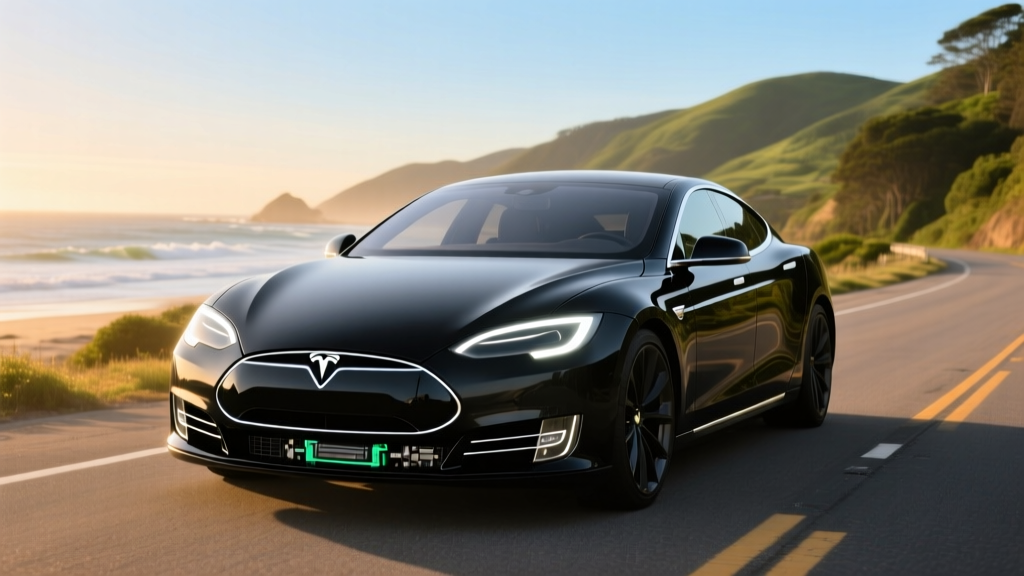
The Tesla Model S remains one of the longest-range electric sedans on the market, and its battery pack is central to that claim. Whether you're researching the batteri Tesla Model S (as many European and bilingual buyers search for it) or evaluating this car against the Lucid Air or Mercedes EQS, understanding the pack chemistry, real-world range, charging behavior, and long-term degradation is essential before spending north of $80,000.
This review covers the 2025/2026 Tesla Model S Long Range and Plaid variants with exact numbers — no marketing fluff, no vague "long range" promises. We'll dissect the battery capacity, chemistry, EPA vs. real-world range, DC fast-charging curves, home charging logistics, warranty coverage, and federal tax credit eligibility under current IRS §30D rules.
| Specification | Long Range | Plaid |
|---|---|---|
| EPA Range | 402 miles | 359 miles |
| Battery Capacity (usable) | ~100 kWh (NMC) | ~100 kWh (NMC) |
| Drivetrain | Dual-Motor AWD | Tri-Motor AWD |
| Horsepower | 670 hp | 1,020 hp |
| 0–60 mph | 3.1 seconds | 1.99 seconds |
| Peak DC Fast Charge | 250 kW | 250 kW |
| 10–80% DC Charge Time | ~30 minutes | ~30 minutes |
| Level 2 Home Charge (48A) | ~11.5 kW / ~34 mi/hr | ~11.5 kW / ~34 mi/hr |
| MPGe (Combined) | 120 MPGe | 116 MPGe |
| kWh/100 mi | 28 kWh | 29 kWh |
| Base MSRP | $79,990 | $94,990 |
| Battery Warranty | 8 yr / 150,000 mi | 8 yr / 150,000 mi |
Battery Chemistry, Capacity, and Architecture
The Tesla Model S uses a nickel-manganese-cobalt (NMC) lithium-ion battery pack with approximately 100 kWh of usable capacity. Tesla does not publish exact cell-level specs, but teardown analyses and regulatory filings consistently point to a pack in the 95–100 kWh usable range (with a small buffer above and below to protect against overcharge and deep discharge). The Model S has never used LFP (lithium iron phosphate) chemistry — that's reserved for the Standard Range Model 3 and Model Y rear-wheel-drive variants, where lower energy density is acceptable in exchange for lower cost and longer cycle life.
NMC vs. LFP — why it matters here: NMC chemistry offers higher energy density (more kWh per kilogram), which is why the Model S can pack ~100 kWh into a sedan form factor and achieve 402 miles of EPA range. The trade-off is slightly faster degradation over time compared to LFP, and a higher sensitivity to sustained 100% state of charge (SoC). Tesla recommends daily charging to 80–90% for NMC packs and saving 100% for road trips.
The pack uses Tesla's structural battery architecture with 4680-format cells in newer builds (2023+), which improves thermal management and reduces internal resistance. The Model S employs an active liquid thermal management system — critical for maintaining charge speed and battery health in both extreme heat and cold.
Real-World Range: EPA Sticker vs. What You'll Actually Get
| Condition | Long Range (EPA 402 mi) | Plaid (EPA 359 mi) |
|---|---|---|
| EPA Combined | 402 mi | 359 mi |
| Highway (70 mph, mild weather) | ~330–350 mi | ~295–315 mi |
| City / Suburban Mixed | ~370–395 mi | ~340–355 mi |
| Cold Weather (20°F, highway) | ~260–300 mi | ~230–270 mi |
| Cold Weather + Cabin Heat | ~240–280 mi | ~210–250 mi |
Source: fueleconomy.gov for EPA figures; real-world estimates based on owner-reported data and independent testing.
The Model S Long Range's 402-mile EPA estimate is among the highest of any production EV sedan. But EPA tests use a mix of city and highway driving cycles with moderate temperatures. On a sustained 70–75 mph highway run in 65°F weather, expect roughly 330–350 miles before needing to stop — still exceptional, but roughly 13–18% below the sticker.
Cold weather is the bigger variable. At 20°F with cabin heating, range drops to approximately 260–300 miles. The Model S includes a heat pump (standard since the 2021 refresh), which recovers waste heat from the drivetrain to warm the cabin more efficiently than resistive heating. This mitigates cold-weather losses compared to older EVs, but physics still wins: battery chemistry slows in cold, and heating demands energy. Preconditioning the battery while plugged in (using the Tesla app before departure) recovers some range by warming the pack to optimal operating temperature.
Charging Speed: DC Fast Charging and Home Level 2
| Charging Level | Power (kW) | Miles Added per Hour | Notes |
|---|---|---|---|
| Level 1 (120V, 12A) | ~1.4 kW | ~3–4 mi/hr | Emergency/trickle only |
| Level 2 (240V, 48A) | ~11.5 kW | ~34 mi/hr | Home Wall Connector; full charge ~9 hrs |
| Level 2 (240V, 32A) | ~7.7 kW | ~23 mi/hr | Common portable/mobile connector |
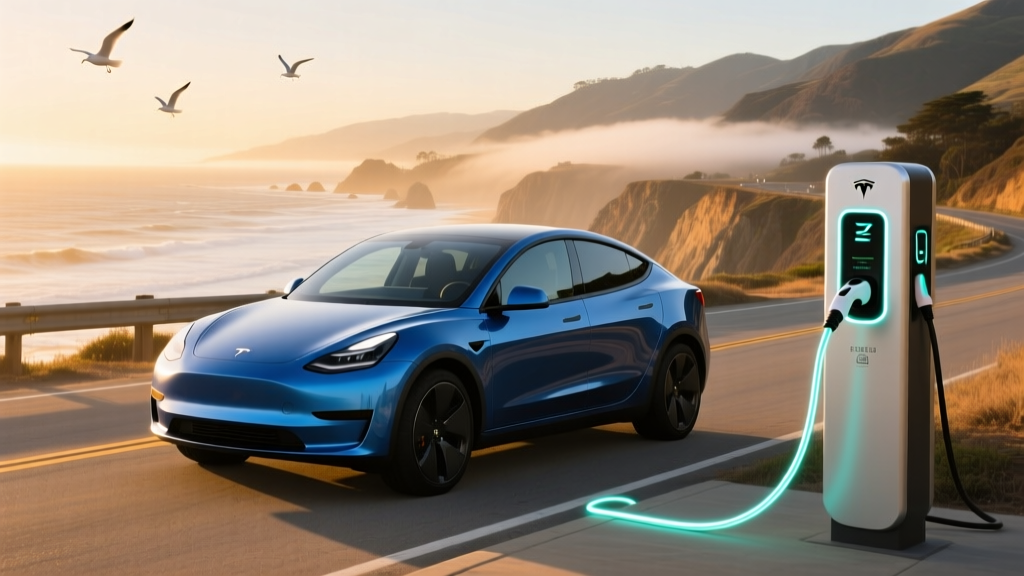
| DC Fast (Tesla Supercharger V3) | Up to 250 kW peak | ~75 mi in 5 min (peak) | 10–80% in ~30 min |
| DC Fast (CCS via adapter) | Up to 250 kW peak | Similar to Supercharger | Requires Tesla CCS adapter |
DC fast charging reality: The Model S peaks at 250 kW on Tesla V3 Superchargers, but that peak only holds from roughly 10–30% SoC. By 50%, the rate tapers to ~150 kW, and above 80% it drops sharply to ~50 kW and below. A realistic 10–80% session takes approximately 30 minutes at a V3 Supercharger. If you arrive at a V4 Supercharger or a third-party CCS station, speeds may vary — some Electrify America and EVgo stations cap at 150 kW depending on the stall, adding 5–10 minutes.
Preconditioning matters. If you navigate to a Supercharger in the Tesla's built-in navigation, the car automatically begins warming the battery pack 10–20 minutes before arrival. This is essential for achieving peak charge rates, especially in cold weather. Without preconditioning, a cold pack may only accept 80–120 kW initially, adding 10+ minutes to your stop.
Home charging: With a Tesla Wall Connector on a 60-amp circuit (48A continuous), the Model S charges at ~11.5 kW, adding roughly 34 miles of range per hour. A full overnight charge from 20% to 90% takes about 6 hours — more than enough for any daily commute. Installation of a 60-amp dedicated circuit typically costs $500–$2,000 depending on panel proximity and local permit requirements. If your home has a 200-amp electrical panel with available capacity, this is straightforward. Older homes with 100-amp panels may need an upgrade ($1,500–$3,000+).
Performance and Efficiency by the Numbers
The Model S Long Range delivers 670 horsepower from its dual-motor AWD setup and hits 0–60 mph in 3.1 seconds. The Plaid variant's tri-motor configuration produces 1,020 horsepower and a claimed 1.99-second 0–60 — making it one of the quickest production cars ever built, period.
Efficiency is where the Model S shows its engineering maturity. The Long Range achieves 120 MPGe combined (28 kWh/100 mi), which is competitive with the Lucid Air Grand Touring (131 MPGe) and significantly better than the Mercedes EQS 450+ (97 MPGe). The Plaid's efficiency drops slightly to 116 MPGe (29 kWh/100 mi) — a modest penalty for tri-motor performance.
For context, at the US average electricity rate of ~$0.16/kWh (EIA data), driving the Model S Long Range costs approximately $4.48 per 100 miles, compared to ~$12–14 for a 30-MPG gas sedan at $3.50/gallon. Over 15,000 miles annually, that's roughly $1,200–$1,500 in annual fuel savings.
Pricing, Trims, and Federal Tax Credit Eligibility
| Trim | Base MSRP | As-Tested (typical options) | §30D Federal Credit |
|---|---|---|---|
| Long Range | $79,990 | $83,000–$88,000 | See eligibility below |
| Plaid | $94,990 | $98,000–$105,000 | See eligibility below |
Federal tax credit reality check: Under current IRS §30D rules, the Model S faces a significant hurdle. The federal EV tax credit has an MSRP cap of $55,000 for sedans (the cap is $80,000 for SUVs, trucks, and vans). Since the Model S is classified as a sedan by the IRS, neither the Long Range nor the Plaid qualifies for the $7,500 federal tax credit based on MSRP alone. This is a hard disqualifier regardless of battery sourcing or buyer income.
For reference, the §30D credit requirements include:
- MSRP cap: $55,000 for sedans; $80,000 for SUVs/trucks/vans
- Buyer income cap: $150,000 single / $300,000 joint MAGI
- Battery sourcing: Critical minerals and battery component requirements phase in annually
- Point-of-sale transfer: Eligible credits can be applied at purchase as a discount
Source: IRS.gov — Clean Vehicle Credits. Always verify current rules with a tax professional before purchasing.
The Model S does not qualify for the used EV credit (§25E) at new purchase, though buyers purchasing a qualifying pre-owned Model S (under $25,000, from a dealer, meeting income caps) may be eligible for up to $4,000.
Interior Space, Cargo, and Practicality
The Model S is a full-size luxury sedan, and its packaging reflects Tesla's skateboard-platform advantage — no transmission tunnel, no engine bay intrusion.
| Front Legroom | 42.7 inches |
| Rear Legroom | 35.4 inches |
| Front Headroom | 38.8 inches |
| Rear Headroom | 38.1 inches |
| Cargo (rear trunk) | 26.3 cu ft |
| Cargo (rear seats folded) | 64.9 cu ft |
| Frunk (front trunk) | 5.3 cu ft |
| Total Cargo Volume | ~31.6 cu ft (seats up) |
The rear trunk opening is a hatchback design (liftback), which makes loading bulky items far easier than a traditional sedan trunk. The 5.3-cu-ft frunk is useful for charging cables, a laptop bag, or groceries. Total cargo capacity with seats folded rivals some midsize SUVs.
However, rear-seat comfort is a known compromise. The seat cushion is relatively flat and low — taller passengers on long trips report inadequate thigh support. The Lucid Air and Mercedes EQS both offer noticeably more rear-seat luxury and legroom. The Model S prioritizes driving dynamics and efficiency over chauffeured comfort.
Technology, Driver Assistance, and Standout Features
The Model S features a 17-inch center touchscreen (landscape orientation, 2200×1300 resolution) running Tesla's proprietary infotainment OS. It includes native navigation, Spotify/Apple Music integration, a full web browser, and access to Tesla's gaming library (Cyberpunk 2077, Stardew Valley) — playable while parked via the yoke or standard steering wheel.
Driver assistance — SAE Level 2, not self-driving:
Tesla Autopilot and Full Self-Driving (Supervised) are SAE Level 2 driver-assistance systems. The driver must remain fully engaged, hands on the wheel (or torque-monitored), and eyes on the road at all times. These systems do NOT make the vehicle autonomous. Only Level 4 services like Waymo operate without a human driver in geofenced areas.
Autopilot (standard) includes adaptive cruise control, lane centering, and automatic emergency braking. FSD (Supervised), available as a $8,000 option or $99/month subscription, adds automatic lane changes, on/off-ramp navigation, traffic light/stop sign recognition, and city-street steering assistance. In practice, FSD (Supervised) handles many suburban and highway scenarios competently but still requires frequent driver intervention in construction zones, complex intersections, and adverse weather. It is not a substitute for an attentive driver.
Unique features: The Model S includes a HEPA air filtration system with "Bioweapon Defense Mode" (pressurizes the cabin with filtered air), a 22-speaker audio system, ventilated front seats, and over-the-air (OTA) software updates that regularly add features. The yoke steering wheel (optional) remains polarizing — great for screen visibility, awkward for low-speed parking maneuvers.
Battery Warranty and Long-Term Degradation
Tesla covers the Model S battery and drive unit with an 8-year / 150,000-mile warranty (whichever comes first), with a minimum 70% capacity retention guarantee. If the battery degrades below 70% of its original capacity within the warranty period, Tesla will repair or replace it at no cost.
Real-world degradation data: Analysis of owner-reported data (aggregated by sources like Recurrent Auto and TeslaFi) shows that Model S packs typically lose 5–8% capacity in the first 50,000 miles, then degrade more slowly — averaging roughly 10–14% total loss by 150,000 miles. This means a 402-mile-new Model S might realistically offer ~345–360 miles of range at 150,000 miles. These figures vary based on charging habits (frequent DC fast charging and regular 100% charges accelerate degradation) and climate (extreme heat is harder on NMC than moderate climates).
Out-of-warranty replacement cost: If the battery fails after the warranty period, a Model S battery replacement currently costs approximately $15,000–$22,000 (parts and labor, depending on the service center and whether a refurbished pack is available). This is a significant expense that buyers planning to own the car beyond 8 years should factor in.
Who the Tesla Model S Is For — and Who Should Look Elsewhere
- 402-mile EPA range — among the longest of any EV sedan
- Access to the Tesla Supercharger network (250 kW, 50,000+ stalls globally)
- Class-leading performance (Plaid: 1.99s 0–60)
- Strong efficiency (120 MPGe) for a 4,800-lb sedan
- Hatchback cargo versatility + frunk
- OTA updates continuously improve the car
- Heat pump standard for cold-weather efficiency
- Does NOT qualify for $7,500 federal tax credit (sedan MSRP cap)
- Rear seat comfort lags Lucid Air, Mercedes EQS
- 250 kW peak DC charge rate trails Hyundai Ioniq 5 / Kia EV6 (350 kW)
- No Apple CarPlay or Android Auto
- High insurance premiums (avg. $2,800–$3,500/yr)
- Yoke steering wheel impractical for some drivers
- Starting near $80K with no credit offset
- Choose the Model S Long Range if: You need maximum range for frequent 300+ mile road trips, value Supercharger network access, and prioritize driving dynamics over rear-seat luxury.
- Choose the Model S Plaid if: You want supercar performance in a daily-drivable sedan and budget is flexible above $95K.
- Look at the Lucid Air if: Rear-seat comfort, interior luxury, and slightly better efficiency (131 MPGe) matter more than Supercharger access.
- Look at the Mercedes EQS if: You want a traditional luxury experience, superior ride quality, and don't mind lower range (350 mi) and efficiency.
- Consider the Model Y or BMW i5 if: You need federal tax credit eligibility (Model Y qualifies as an SUV under the $80K cap; i5 may qualify depending on trim).
Frequently Asked Questions
What is the real-world range of the Tesla Model S?
The EPA rates the Model S Long Range at 402 miles and the Plaid at 359 miles. In real-world highway driving at 70 mph in moderate temperatures, expect approximately 330–350 miles (Long Range) and 295–315 miles (Plaid). In cold weather (20°F) with cabin heating, range drops to roughly 260–300 miles for the Long Range. The heat pump helps, but cold chemistry losses are unavoidable.
How fast does the Tesla Model S charge at home and on the road?
On a Tesla Wall Connector (Level 2, 48A/11.5 kW), the Model S adds about 34 miles of range per hour — a full overnight session easily covers any daily driving. On a Tesla V3 Supercharger (DC fast, up to 250 kW), a 10–80% charge takes approximately 30 minutes with battery preconditioning. Peak rate only holds from ~10–30% SoC; expect tapering above 50%.
Does the Tesla Model S qualify for the federal EV tax credit?
No. Under current IRS §30D rules, the federal EV tax credit has an MSRP cap of $55,000 for sedans. The Model S starts at $79,990 (Long Range) and $94,990 (Plaid), both well above the sedan cap. This disqualification applies regardless of buyer income or battery sourcing. Consult IRS.gov for current rules, as legislation can change.
How long does the Tesla Model S battery last?
Tesla warranties the battery for 8 years or 150,000 miles with a minimum 70% capacity retention guarantee. Real-world data suggests most Model S packs retain 86–90% capacity at 150,000 miles when charged responsibly (daily limit of 80–90%, moderate DC fast charging). Out-of-warranty replacement costs $15,000–$22,000 if needed.
Is the Tesla Model S worth buying vs. the Lucid Air or Mercedes EQS?
The Model S wins on range (402 mi vs. Lucid Air Grand Touring's 516 mi EPA but at higher cost), Supercharger network access, and performance-per-dollar (Plaid). The Lucid Air offers a more luxurious interior, better rear-seat comfort, and higher efficiency. The Mercedes EQS delivers traditional luxury and ride quality but sacrifices range and efficiency. If Supercharger access and proven EV infrastructure matter most, the Model S remains compelling. If interior luxury and rear-seat experience are priorities, test-drive the Lucid Air.
What battery chemistry does the Tesla Model S use?
The Model S uses NMC (nickel-manganese-cobalt) lithium-ion cells. NMC offers higher energy density than LFP (lithium iron phosphate), enabling the 100 kWh pack to fit in a sedan. The trade-off is that NMC degrades slightly faster than LFP over time and should not be routinely charged to 100% — Tesla recommends an 80–90% daily limit for NMC packs.