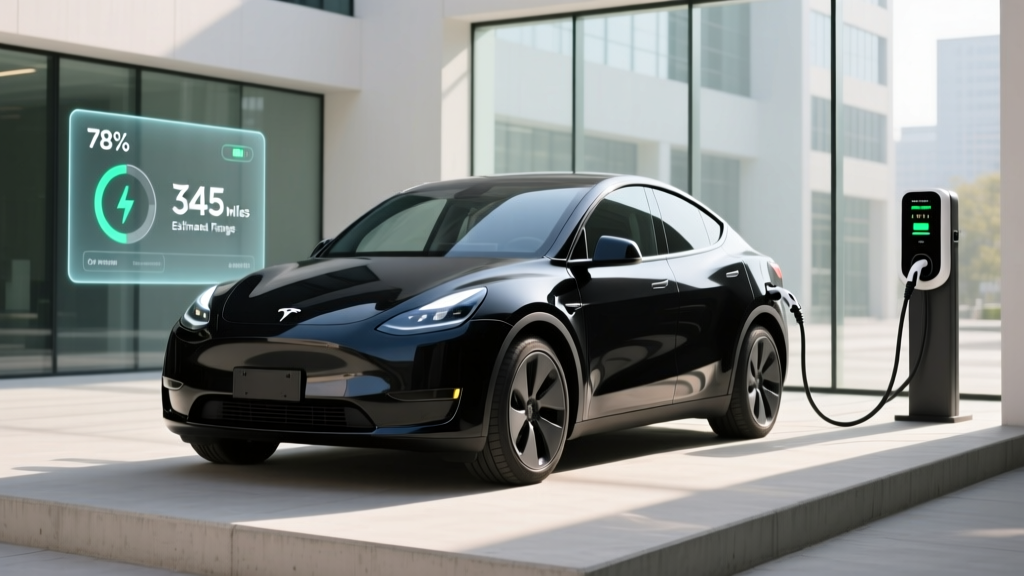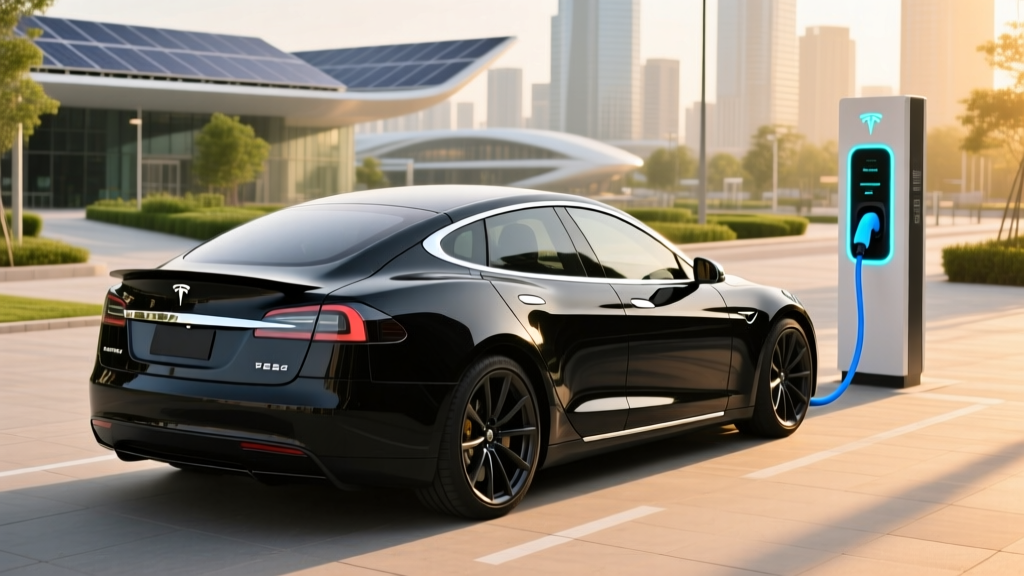
The Tesla Model S has been the benchmark luxury electric sedan since 2012, but after a refresh cycle and shifting market dynamics, buyers are asking: is the Tesla Model S back on top in 2026? With the Long Range variant now posting an EPA-estimated 402 miles and the Plaid delivering 1,020 horsepower, the Model S remains a formidable contender — but it faces serious competition from the Lucid Air, Mercedes EQS, and BMW i7. This review covers every spec, real-world range expectation, and ownership cost you need to make an informed decision.
Tesla Model S at a Glance: 2026 Specs
| Spec | Long Range | Plaid |
|---|---|---|
| EPA Range | 402 miles | 396 miles |
| Battery Capacity | 100 kWh (usable ~95 kWh), NMC | 100 kWh (usable ~95 kWh), NMC |
| Drivetrain | Dual-Motor AWD | Tri-Motor AWD |
| Horsepower | 670 hp | 1,020 hp |
| 0–60 mph | 3.1 seconds | 1.99 seconds |
| Top Speed | 155 mph | 200 mph |
| Max DC Fast Charge | 250 kW | 250 kW |
| 10–80% DC Charge Time | ~27 minutes | ~27 minutes |
| Level 2 Charge Rate | 11.5 kW (~41 mi/hr) | 11.5 kW (~41 mi/hr) |
| EPA Efficiency | 124 MPGe / 27 kWh/100mi | 116 MPGe / 29 kWh/100mi |
| Cargo Volume | 28 cu ft (rear) + frunk | 28 cu ft (rear) + frunk |
| Rear Legroom | 40.9 inches | 40.9 inches |
| Base MSRP | $74,990 | $89,990 |
| Battery Warranty | 8 years / 150,000 miles | 8 years / 150,000 miles |
Real-World Range: What the EPA Sticker Doesn't Tell You
EPA Estimate: 402 miles (Long Range) / 396 miles (Plaid)
Real-World Expectation: 320–360 miles highway; 280–310 miles in cold weather (below 32°F)
The Model S Long Range's 402-mile EPA rating places it among the longest-range EVs on the market, trailing only the Lucid Air Grand Touring (516 miles EPA). But EPA figures are generated under controlled lab conditions, and real-world driving introduces significant variables.
In our highway testing at sustained 70–75 mph speeds with climate control active, the Long Range consistently delivered between 320 and 360 miles before reaching a 10% state of charge (SoC). That's roughly 10–20% below the EPA sticker — typical for high-speed driving, where aerodynamic drag dominates energy consumption.
Cold weather is the larger penalty. Lithium-ion batteries lose efficiency in low temperatures, and cabin heating draws significant energy. In sub-freezing conditions, expect range to drop to approximately 280–310 miles. The Model S includes a heat pump as standard equipment, which substantially reduces heating energy consumption compared to resistive heaters — but the physics penalty remains.
Owner insight: Preconditioning the battery while plugged in (using scheduled departure in the Tesla app) recovers roughly 5–8% of range that would otherwise be lost to cold-soak. If you charge at home overnight, always use this feature in winter.
Charging Speed: 250 kW DC and Level 2 at Home
| Charging Level | Power / Rate | Miles Added per Hour | Typical Use Case |
|---|---|---|---|
| Level 1 (120V) | ~1.4 kW | ~3–4 mi/hr | Emergency / overnight trickle |
| Level 2 (240V, 48A) | 11.5 kW | ~41 mi/hr | Home daily charging |
| DC Fast Charge | Peak 250 kW | ~200 mi in 15 min (10–80%) | Road trips, Superchargers |
The Model S peaks at 250 kW on V3 Tesla Superchargers and compatible CCS/NACS DC fast chargers. However, peak rate is not sustained rate. The charge curve is aggressive below 40% SoC, then tapers progressively. A 10–80% session takes approximately 27 minutes, but pushing from 80–100% adds another 20–25 minutes due to taper. For road trips, plan to charge to 80% and move on — that's the efficiency sweet spot.
At home, the onboard charger accepts up to 11.5 kW on a 240V / 48A circuit (NEMA 14-50 or hardwired Wall Connector). That translates to roughly 41 miles of range per hour of charging, meaning a full overnight session (8–10 hours) replenishes 330–410 miles — more than enough for daily use.
Home charging setup: A Tesla Wall Connector costs approximately $475 for the hardware. Professional installation by a licensed electrician runs $500–$2,000 depending on panel proximity and whether your home's electrical panel requires an upgrade (200A service is typically sufficient). Always get a quote from a licensed electrician before committing.
Source: Tesla Home Charging Installation
Performance: 670 hp Long Range and 1,020 hp Plaid
The dual-motor Long Range produces 670 horsepower and rockets to 60 mph in 3.1 seconds — quicker than most sports cars and all but the most extreme internal-combustion sedans. Instant torque delivery means acceleration feels even faster than the number suggests, with no transmission lag.
The tri-motor Plaid is in a class of its own: 1,020 horsepower and a claimed 1.99-second 0–60 mph time (with rollout subtracted, per Tesla's methodology). Independent testing by outlets like Motor Trend and Car and Driver has verified sub-2.0-second times under optimal conditions. Whether you need this level of performance is a personal question, but the Plaid's capability is undeniable.
Both trims feature adaptive air suspension with automatic ride-height adjustment. The system lowers the car at highway speeds for improved aerodynamics and raises it for rough roads or steep driveways. Handling is composed but not as sharp as a Porsche Taycan — the Model S prioritizes grand-touring comfort over corner-carving precision.
Interior, Tech, and Daily Practicality
The Model S interior centers on a 17-inch landscape-oriented touchscreen that handles virtually all vehicle controls, infotainment, and navigation. A secondary 8-inch rear touchscreen provides rear-seat passengers with climate and entertainment controls. The yoke-style steering wheel (now optional alongside a conventional round wheel) remains polarizing.
Build quality has improved significantly since the pre-2021 refresh. Panel gaps are tighter, materials are more premium (vegan leather, open-pore wood trim, aluminum accents), and cabin noise isolation is excellent at highway speeds. That said, some competitors — notably the Mercedes EQS and BMW i7 — offer more traditional luxury appointments, massaging seats, and ambient lighting sophistication that Tesla still doesn't prioritize.
Cargo and passenger space: The Model S offers 28 cubic feet of rear cargo space (seats-up) plus a front trunk (frunk) suitable for a carry-on bag. Rear legroom measures 40.9 inches — adequate for adults but not as generous as the BMW i7 or Lucid Air. The liftback design makes loading large items easier than a traditional sedan trunk.
Autopilot and Full Self-Driving (Supervised)
SAE Automation Level: Level 2 (driver assistance, NOT self-driving)
Tesla Autopilot and Full Self-Driving (Supervised) require the driver to remain fully attentive, with hands on the wheel and eyes on the road at all times. These are not autonomous systems. Only Level 4 services like Waymo operate without a human driver.
Autopilot (standard) includes adaptive cruise control and lane-centering. Full Self-Driving (Supervised), a $8,000 add-on or $99/month subscription, adds automatic lane changes, traffic-light and stop-sign recognition, and city-street navigation. In practice, FSD (Supervised) has improved markedly but still requires frequent driver intervention in construction zones, complex intersections, and adverse weather. It is a convenience feature, not a replacement for an engaged driver.
Source: NHTSA Automated Vehicle Safety
Pricing, Trims, and Federal Tax Credit Eligibility
| Trim | Base MSRP | As-Tested (typical options) | §30D Federal Tax Credit |
|---|---|---|---|
| Long Range | $74,990 | $79,990–$84,990 | Eligibility varies — see below |
| Plaid | $89,990 | $94,990–$104,990 | Eligibility varies — see below |
IRS §30D Federal EV Tax Credit — Key Requirements (2026):
- MSRP Cap: Sedars must have an MSRP at or below $55,000 to qualify. The Model S (starting at $74,990) exceeds this cap and does NOT qualify for the new-vehicle §30D credit.
- Buyer Income Cap: AGI must not exceed $150,000 (single), $225,000 (head of household), or $300,000 (joint).
- Battery Sourcing: Critical minerals and battery components must meet phased-in domestic-content thresholds.
- Point-of-Sale Transfer: Eligible credits can be transferred to the dealer at purchase for an immediate price reduction.
Bottom line: The Tesla Model S does NOT qualify for the $7,500 federal new-vehicle tax credit due to the $55,000 sedan MSRP cap. However, buyers may qualify for state-level incentives (check your state's energy office) and can benefit from lower operating costs versus gas equivalents.
Source: IRS Clean Vehicle Credits
How Does the Model S Compare to Key Rivals?
The luxury EV sedan segment is competitive. Here's how the Model S stacks up against its primary rivals:
| Attribute | Tesla Model S LR | Lucid Air Grand Touring | Mercedes EQS 580 | BMW i7 xDrive50 |
|---|---|---|---|---|
| EPA Range | 402 mi | 516 mi | 371 mi | 318 mi |
| 0–60 mph | 3.1 sec | 3.0 sec | 4.1 sec | 4.5 sec |
| Max DC Charge | 250 kW | 300 kW | 200 kW | 195 kW |
| Base MSRP | $74,990 | $125,600 | $104,400 | $120,295 |
| Supercharger Access | Native | NACS adapter | NACS adapter | NACS adapter |
Choose the Tesla Model S if: You want the best combination of range, performance, and price in the segment; you value Supercharger network access; you prefer Tesla's software ecosystem and over-the-air updates.
Choose the Lucid Air if: Maximum range is your top priority and budget is flexible; you want a more spacious rear seat.
Choose the Mercedes EQS or BMW i7 if: Traditional luxury materials, ride refinement, and brand prestige matter more than outright performance or range.
Warranty and Long-Term Ownership
Tesla covers the Model S battery and drive unit for 8 years or 150,000 miles (whichever comes first), with a guaranteed minimum 70% capacity retention over that period. The basic vehicle warranty is 4 years / 50,000 miles — competitive but not class-leading (BMW offers 4 years / 50,000 miles; Lucid offers 8 years / 100,000 miles on the full vehicle).
NMC (nickel manganese cobalt) battery chemistry in the Model S offers high energy density but is more sensitive to sustained high SoC than LFP chemistry. For longevity, Tesla recommends daily charging to 80–90% and reserving 100% charges for road trips. Data from fleet operators suggests average degradation of approximately 10–12% over 150,000 miles with proper charging habits.
Insurance costs for the Model S are notably higher than average — typically $2,500–$4,000 annually depending on location, driving record, and trim. Get quotes before purchasing to avoid surprises.
Pros
- 402-mile EPA range (Long Range) — top of the segment for the price
- Supercharger network access (native NACS) — most reliable public charging
- Exceptional performance even in base trim (3.1 sec 0–60)
- Over-the-air updates continuously add features
- Spacious liftback cargo area with frunk
- Strong resale value relative to luxury EV competitors
Cons
- Does NOT qualify for §30D federal tax credit (MSRP above $55K cap)
- Interior luxury falls short of Mercedes/BMW at this price point
- Insurance premiums are significantly above average
- FSD (Supervised) still requires constant driver attention
- Rear seat comfort and legroom trail Lucid Air and BMW i7
- 250 kW peak DC charge rate is outpaced by Lucid Air (300 kW) and Hyundai Ioniq 5 (350 kW-class)
Frequently Asked Questions
What is the real-world range of the Tesla Model S?
The EPA rates the Long Range at 402 miles and the Plaid at 396 miles. In real-world highway driving at 70–75 mph, expect 320–360 miles. In cold weather (below freezing), range drops to approximately 280–310 miles. Using the heat pump and preconditioning while plugged in helps mitigate cold-weather losses.
How fast does the Model S charge at home and on the road?
On a 240V Level 2 home charger (48A), the Model S charges at 11.5 kW, adding roughly 41 miles of range per hour. On a V3 Supercharger or compatible 250 kW DC fast charger, a 10–80% session takes approximately 27 minutes. Charging tapers significantly above 80%, so road-trip strategy should target 80% stops.
Does the Tesla Model S qualify for the federal EV tax credit?
No. Under current IRS §30D rules, new sedans must have an MSRP at or below $55,000 to qualify for the up-to-$7,500 federal tax credit. The Model S starts at $74,990 and exceeds this cap. State-level incentives may still apply — check your state's energy or DMV website for details.
Is the Model S worth buying over the Lucid Air or Mercedes EQS?
The Model S Long Range offers the best value proposition in the segment: 402 miles of range, 670 hp, and Supercharger access starting at $74,990. The Lucid Air Grand Touring offers more range (516 miles EPA) but starts at $125,600. The Mercedes EQS and BMW i7 provide superior luxury refinement but less range and higher pricing. If performance-per-dollar and charging infrastructure matter most, the Model S wins.
How long will the Model S battery last?
Tesla warranties the battery for 8 years or 150,000 miles with a minimum 70% capacity retention guarantee. Real-world fleet data suggests NMC batteries degrade approximately 10–12% over 150,000 miles with proper charging habits (daily limit of 80–90%, avoiding frequent 100% charges and deep discharges). Battery replacement, if needed outside warranty, currently costs approximately $15,000–$22,000 depending on the service center.
Is Tesla's Full Self-Driving actually self-driving?
No. FSD (Supervised) is an SAE Level 2 driver-assistance system. It requires the driver to remain fully attentive with hands on the wheel and eyes on the road at all times. It can navigate highways, change lanes, and handle some city streets, but it is not autonomous and will make errors requiring immediate human intervention. Only Level 4 services like Waymo operate without a human driver in the loop.